
AROL 225 Final, Fall 2008
American University of Beirut · The Roman and Byzantine Near East · 2 pages
More AROL 225 files
Show the text of this final exam
1
AROL 225 – The Roman Near East
06 February 2009 8am to 10am
FINAL EXAMINATION
Take your time to organize your answers and write clearly.
Answer all the questions in Section A and Section B,
choose one question from Section C
Read each question carefully and make sure you answer the question fully.
You may answer the questions in any order, but clearly indicate the number of the
question in your exam booklet.
Time limit: 2 hours.
Section A (35%) Answer each question
(either choose a, b or c or write 1-4 sentences):
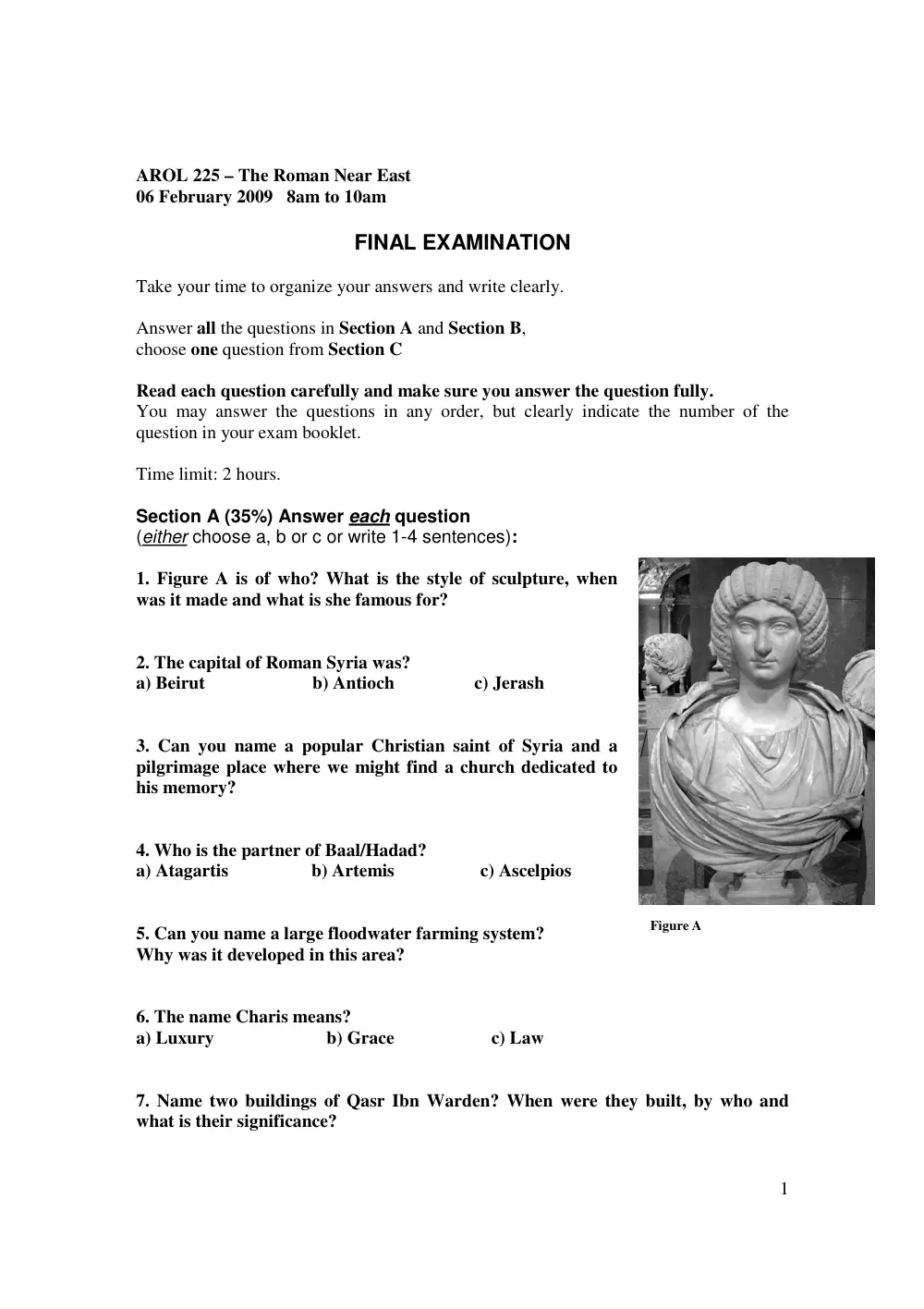
1. Figure A is of who? What is the style of sculpture, when
was it made and what is she famous for?
2. The capital of Roman Syria was?
a) Beirut
b) Antioch
c) Jerash
3. Can you name a popular Christian saint of Syria and a
pilgrimage place where we might find a church dedicated to
his memory?
4. Who is the partner of Baal/Hadad?
a) Atagartis
b) Artemis
c) Ascelpios
5. Can you name a large floodwater farming system?
Why was it developed in this area?
6. The name Charis means?
a) Luxury
b) Grace
c) Law
7. Name two buildings of Qasr Ibn Warden? When were they built, by who and
what is their significance?
Figure A
2
Section B (15%) Answer the question fully:
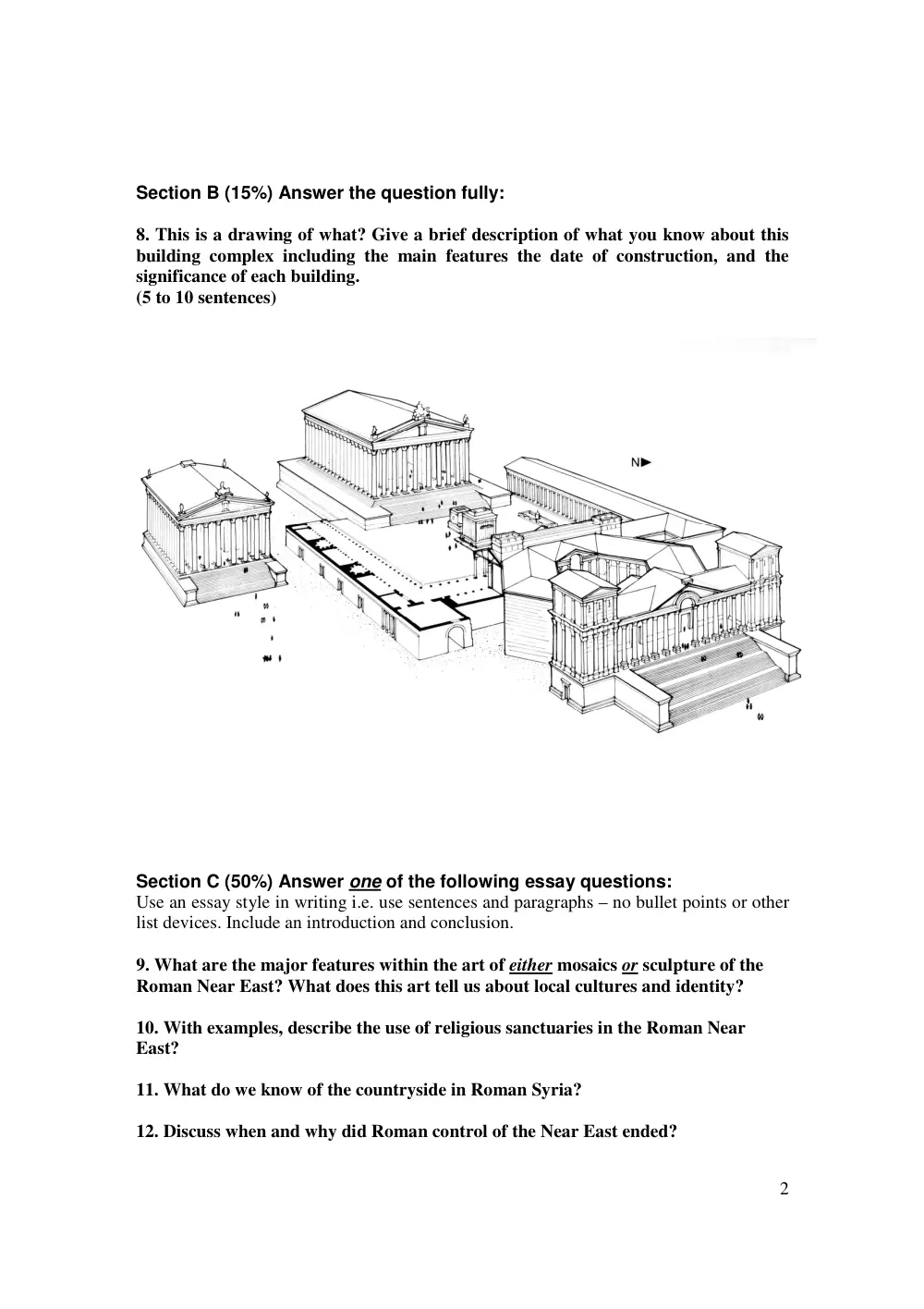
8. This is a drawing of what? Give a brief description of what you know about this
building complex including the main features the date of construction, and the
significance of each building.
(5 to 10 sentences)
Section C (50%) Answer one of the following essay questions:
Use an essay style in writing i.e. use sentences and paragraphs – no bullet points or other
list devices. Include an introduction and conclusion.
9. What are the major features within the art of either mosaics or sculpture of the
Roman Near East? What does this art tell us about local cultures and identity?
10. With examples, describe the use of religious sanctuaries in the Roman Near
East?
11. What do we know of the countryside in Roman Syria?
12. Discuss when and why did Roman control of the Near East ended?