
BIO 200 Chapter 7, Fall 2015
American University of Beirut · Diversity of Life · 15 pages


Showing the first 10 of 15 pages. Download the PDF to see all of it.
More BIO 200 files
- Questions Chapter 16 · Fall 2015ChapterView
- Questions Chapter 15 · Fall 2015ChapterView
- Questions Chapter 1 · Fall 2015ChapterView
- Questions Chapter 10 · Fall 2015ChapterView
- Questions Chapter 11 · Fall 2015ChapterView
- Questions Chapter 12 · Fall 2015ChapterView
- Questions Chapter 13 · Fall 2015ChapterView
- Questions Chapter 14 · Fall 2015ChapterView
Show the text of this chapter
Biochemical Pathways –
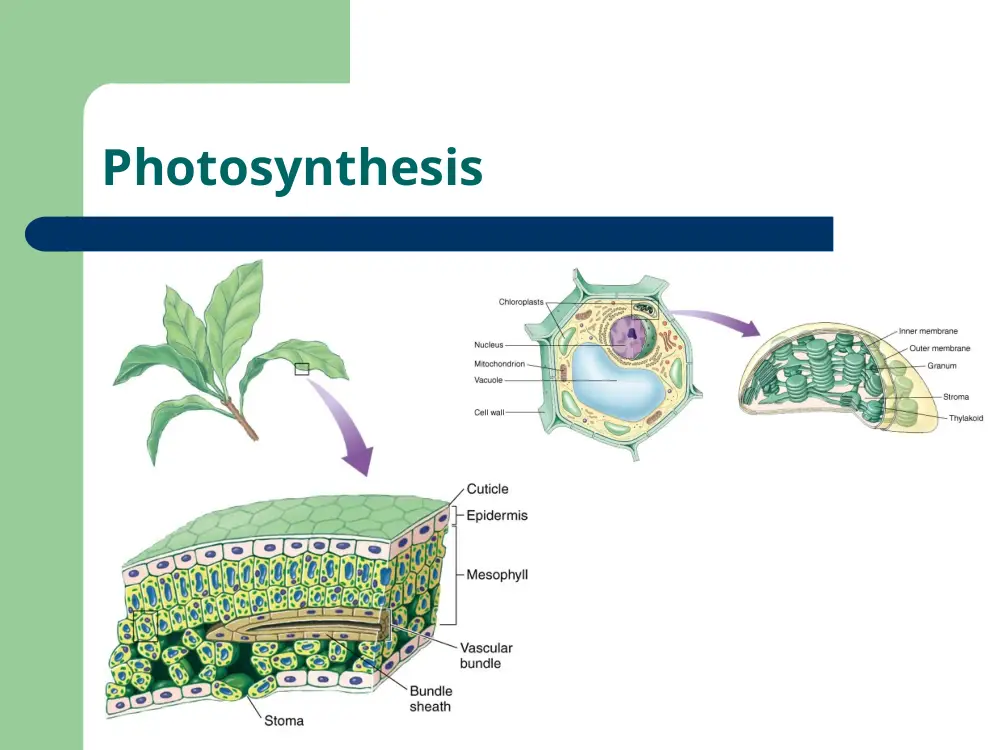
Photosynthesis
CHAPTER 7
Photosynthesis
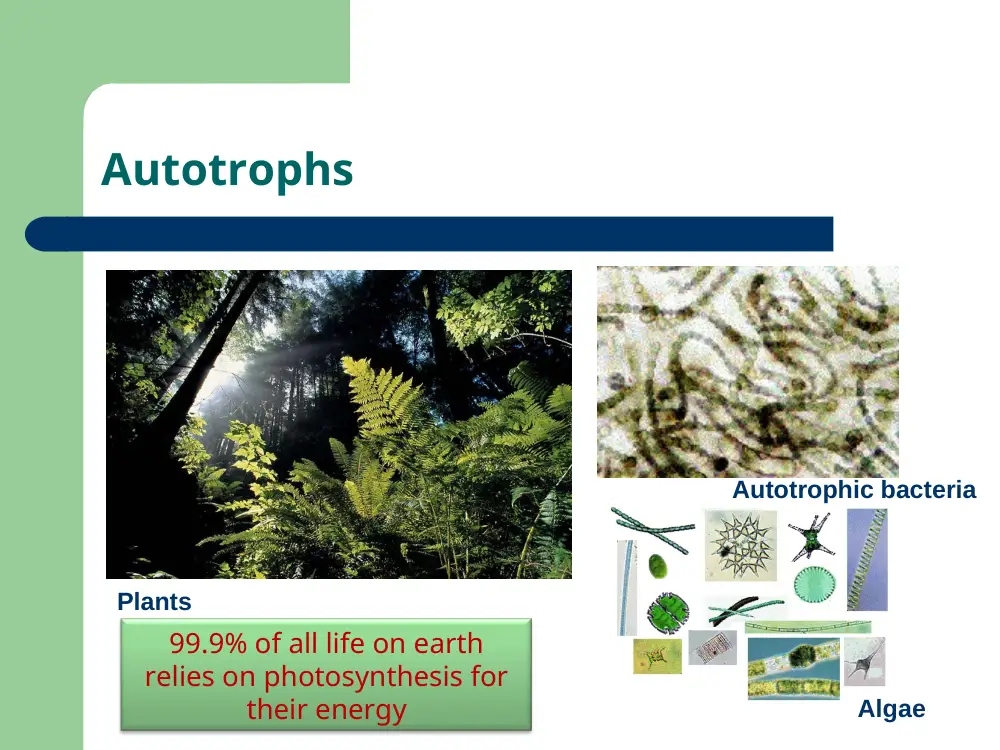
Autotrophs
Plants
Autotrophic bacteria
Algae
99.9% of all life on earth
relies on photosynthesis for
their energy
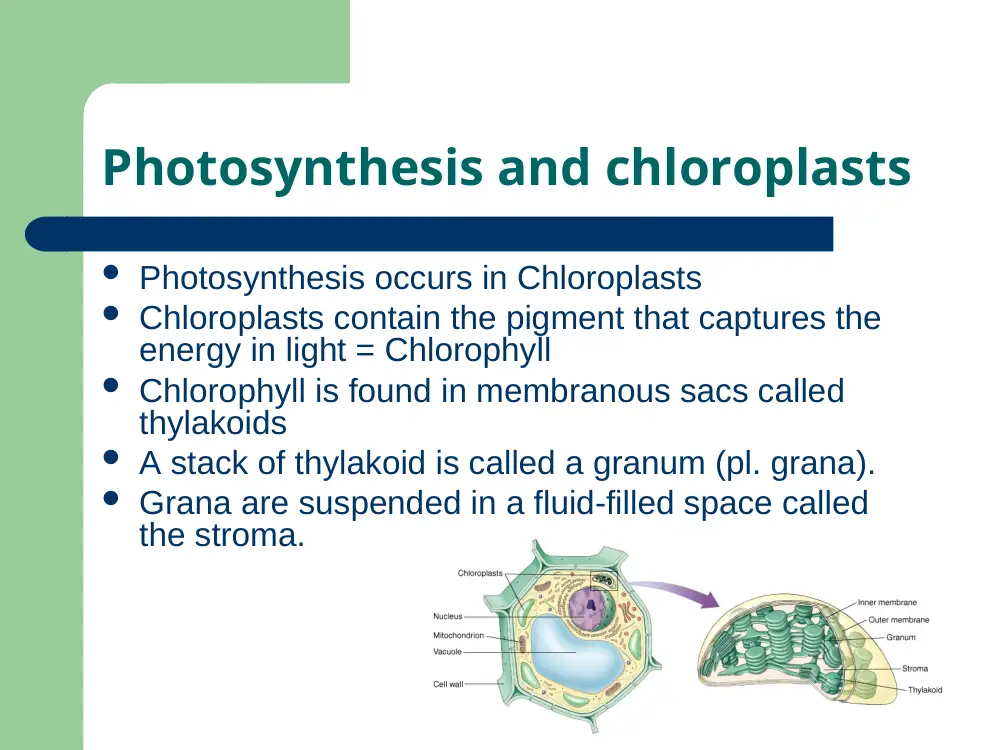
Photosynthesis and chloroplasts
Photosynthesis occurs in Chloroplasts
Chloroplasts contain the pigment that captures the
energy in light = Chlorophyll
Chlorophyll is found in membranous sacs called
thylakoids
A stack of thylakoid is called a granum (pl. grana).
Grana are suspended in a fluid-filled space called
the stroma.
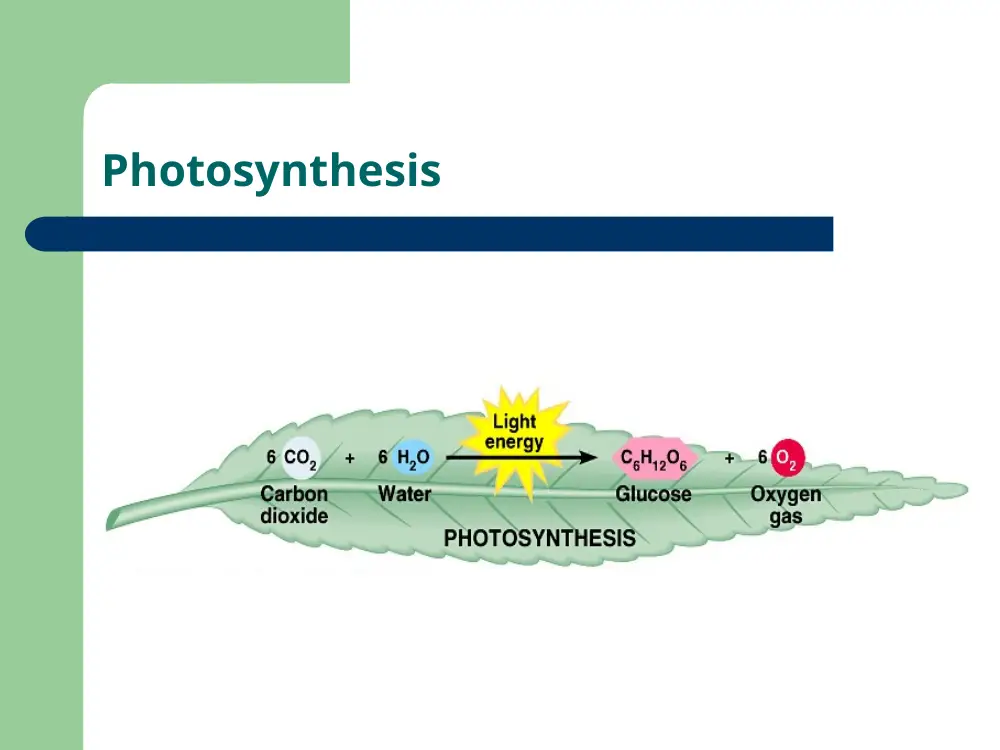
Photosynthesis
An overview of photosynthesis
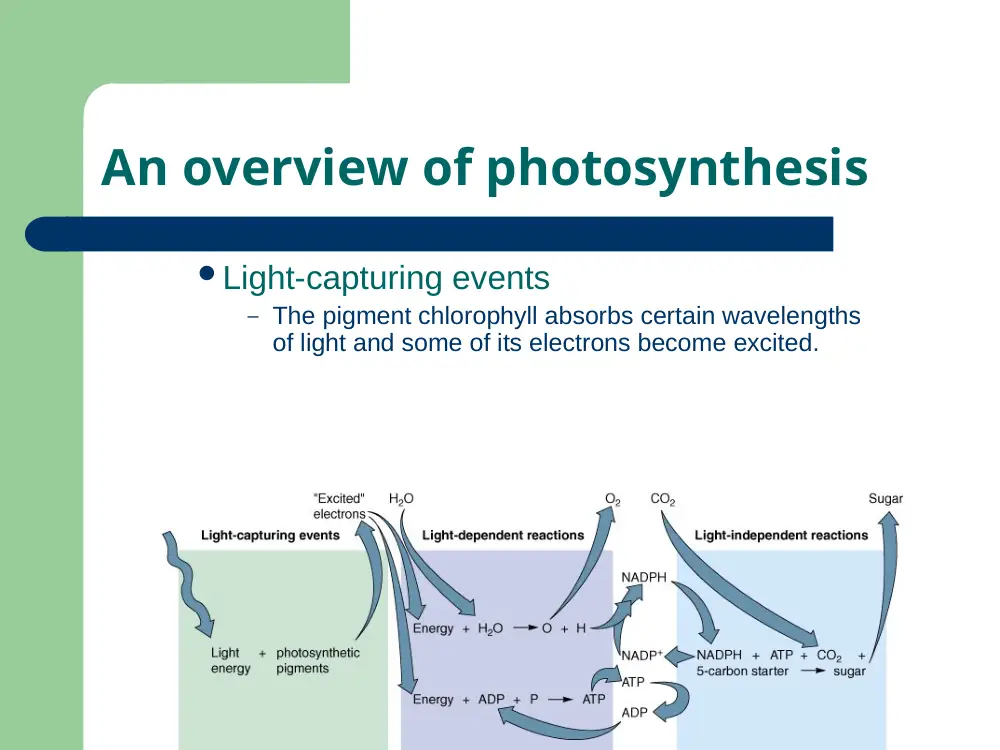
Light-capturing events
– The pigment chlorophyll absorbs certain wavelengths
of light and some of its electrons become excited.
An overview of photosynthesis
Light-capturing events
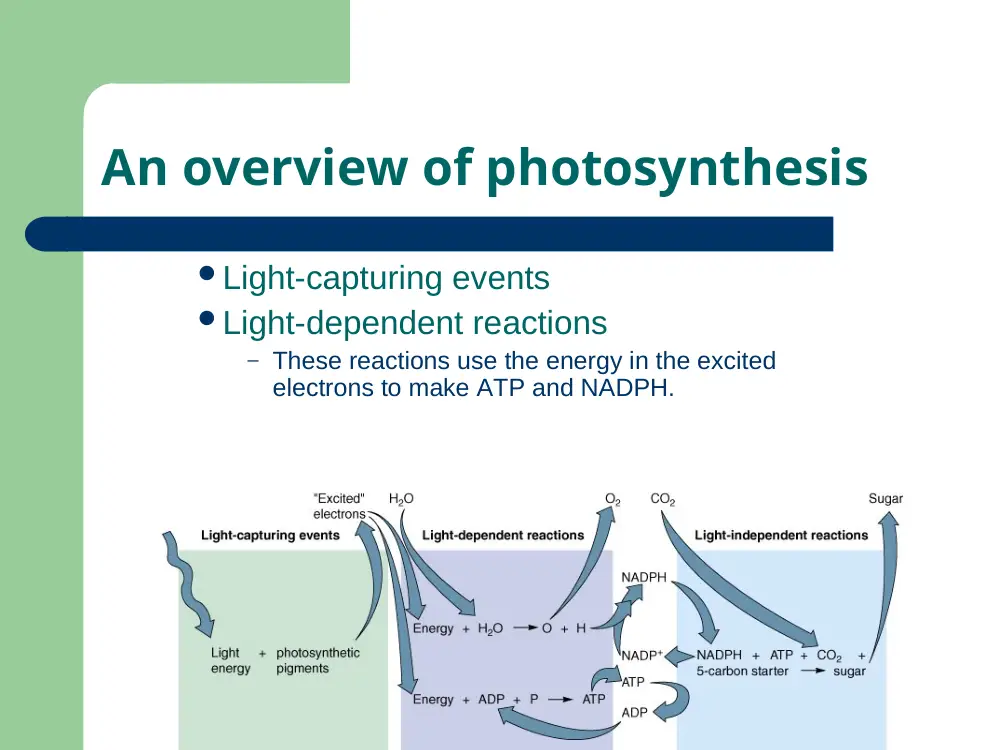
Light-dependent reactions
– These reactions use the energy in the excited
electrons to make ATP and NADPH.
An overview of photosynthesis
Light-capturing events
Light-dependent reactions
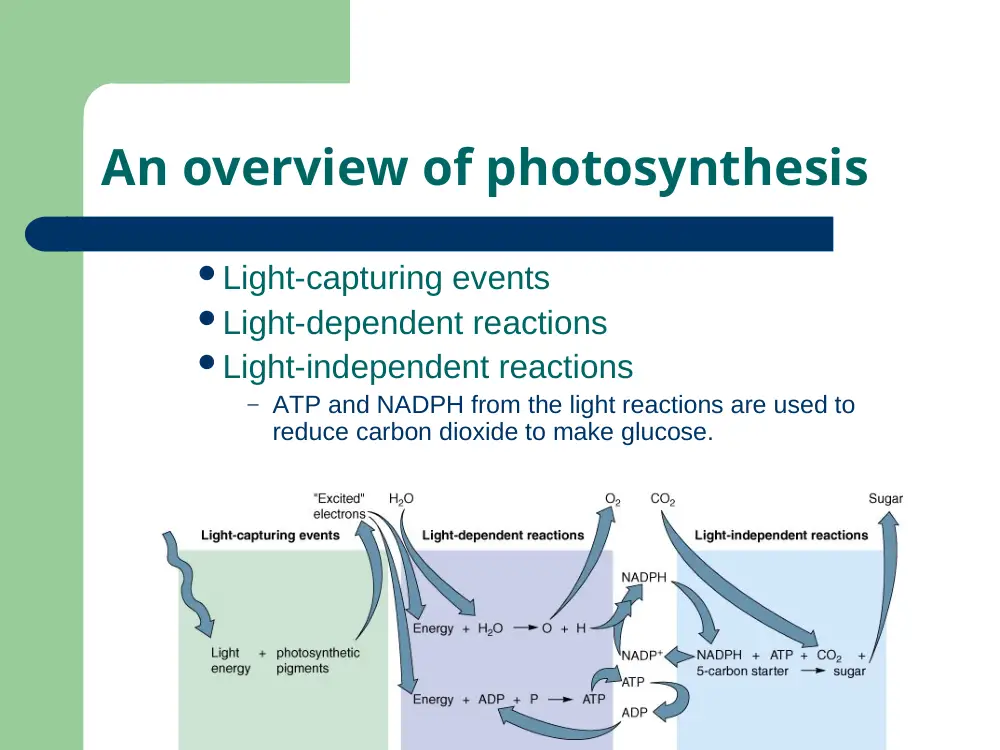
Light-independent reactions
– ATP and NADPH from the light reactions are used to
reduce carbon dioxide to make glucose.
Visible light spectrum
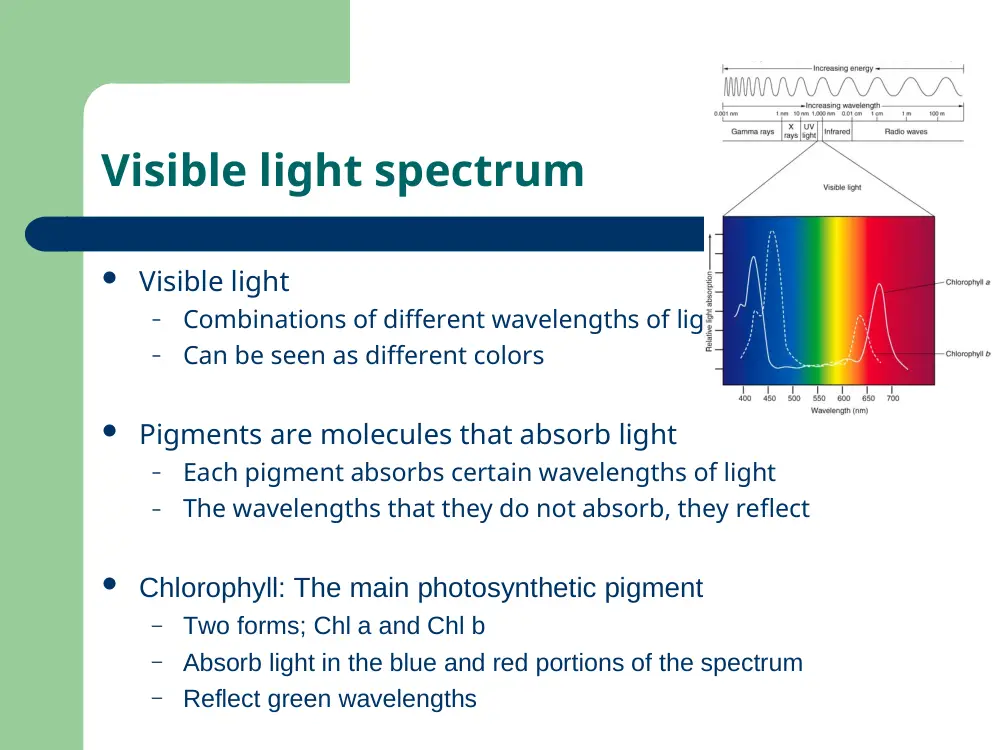
Visible light
–
Combinations of different wavelengths of light
–
Can be seen as different colors
Pigments are molecules that absorb light
–
Each pigment absorbs certain wavelengths of light
–
The wavelengths that they do not absorb, they reflect
Chlorophyll: The main photosynthetic pigment
–
Two forms; Chl a and Chl b
–
Absorb light in the blue and red portions of the spectrum
–
Reflect green wavelengths
Other types of pigments
Accessory pigments = Carotenoids
Absorb blue and green wavelengths
Reflect orange and yellow
Chlorophyll + accessory pigments
– Organized into photosystems that harvest the energy from
many wavelengths of light
When pigments absorb light
– Some of their electrons become “excited”
Photosynthesis
Photosynthesis
Photosynthesis
Glyceraldehyde-3-phosphate: The
product of photosynthesis
Used to recycle ribulose
needed in the Calvin cycle
Used to make glucose
Used to make the sugars
needed to build ATP, DNA
and RNA
Can be converted into lipids
Can be broken down in
glycolysis
Can be converted into amino
acids to make proteins
Other aspects of plant metabolism
Plant cells can use the organic molecules
produced in photosynthesis to make
– Fats, proteins and other carbohydrates
– Toxins for their protection
Many of these are useful medicines.
Some can be used as natural insecticides.
– Vitamins
Molecules that we cannot make, but that we need