
EECE 380 Lecture Math Intro, Fall 2011
American University of Beirut · Engineering Electromagnetics · 8 pages

More EECE 380 files
Show the text of this lab
EECE 480
Introduction
1.
Vectors:
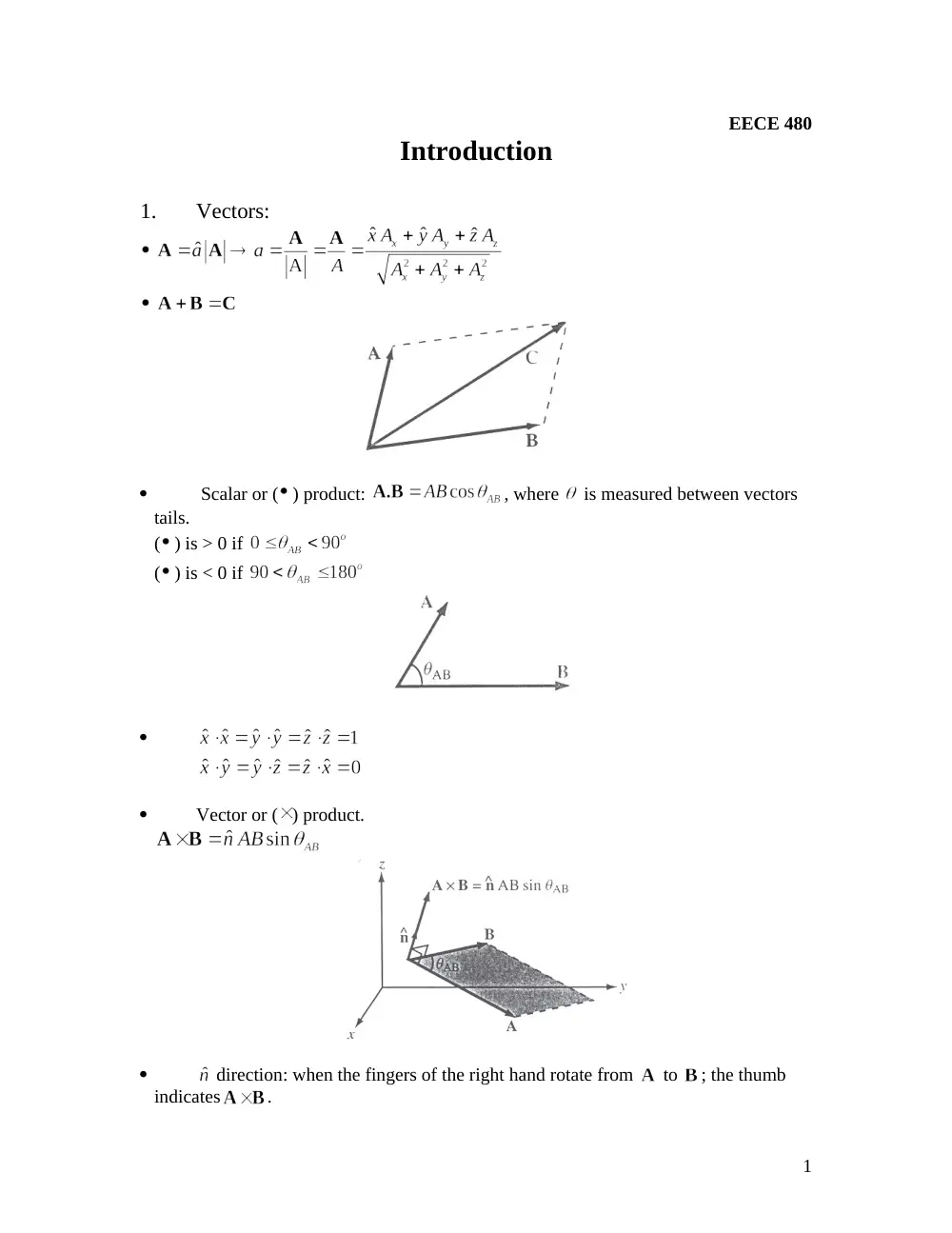
Scalar or ( ) product:
, where
is measured between vectors
tails.
( ) is > 0 if
( ) is < 0 if
Vector or ( ) product.
direction: when the fingers of the right hand rotate from
to
; the thumb
indicates
.
1
2.
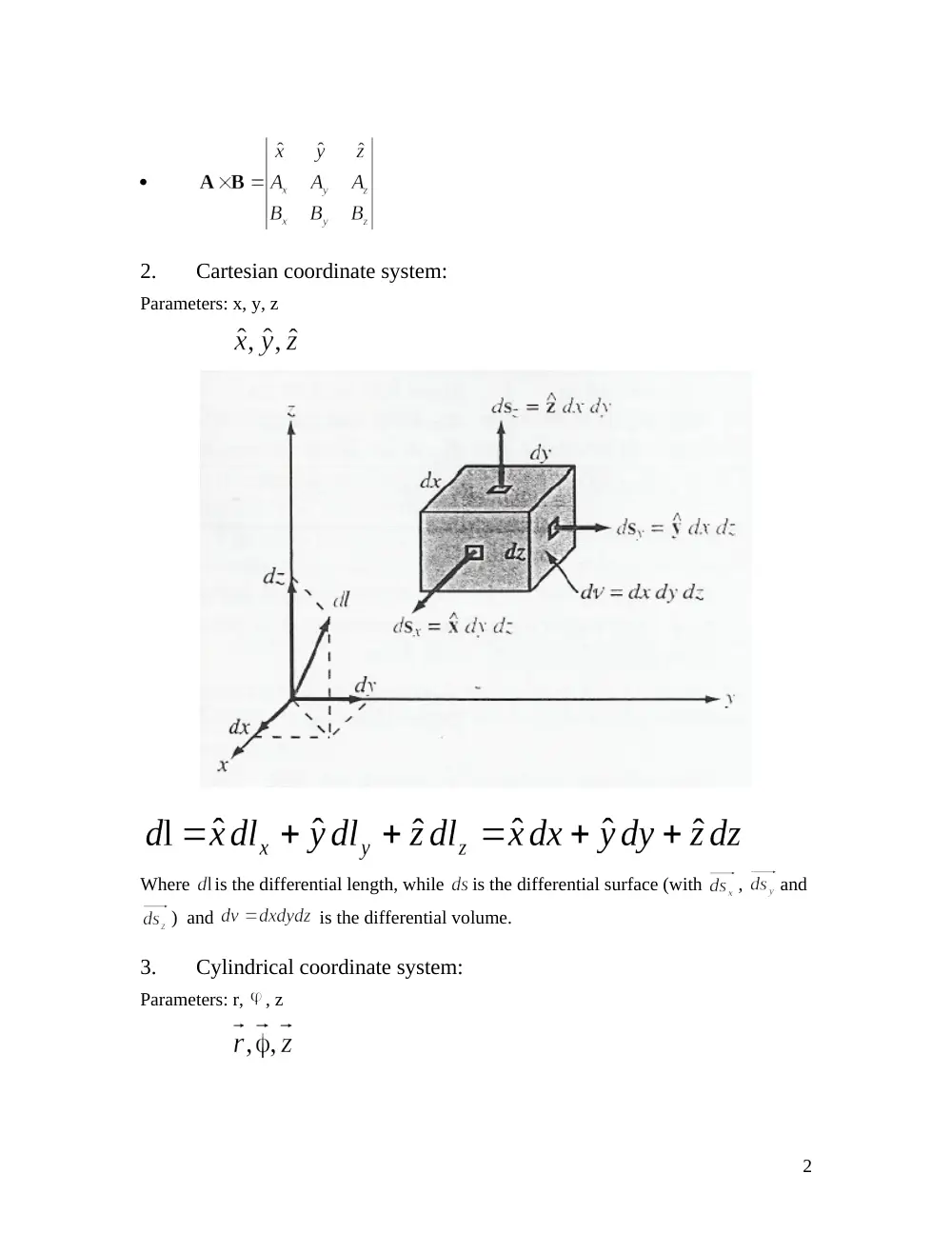
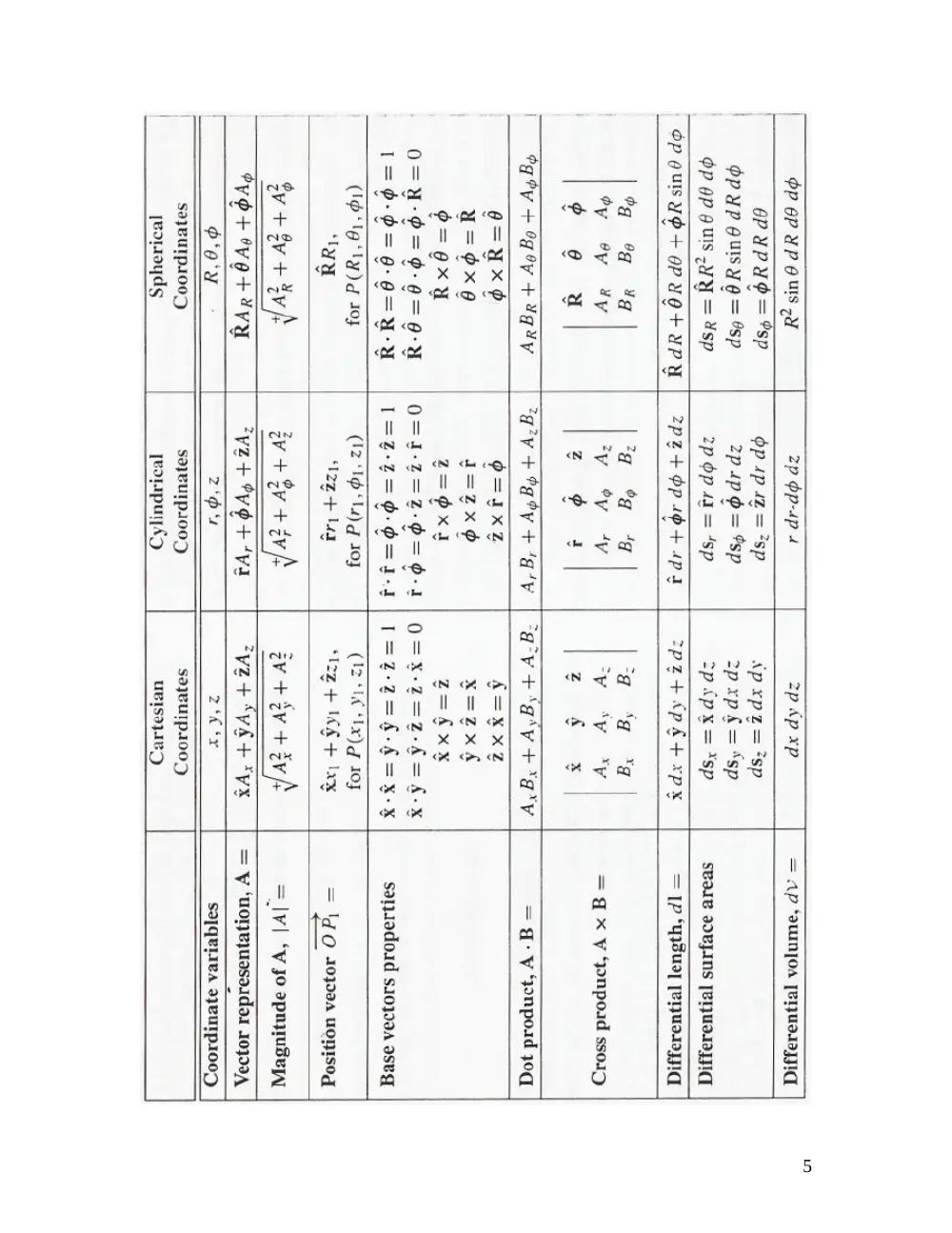
Cartesian coordinate system:
Parameters: x, y, z
Where
is the differential length, while
is the differential surface (with
,
and
) and
is the differential volume.
3.
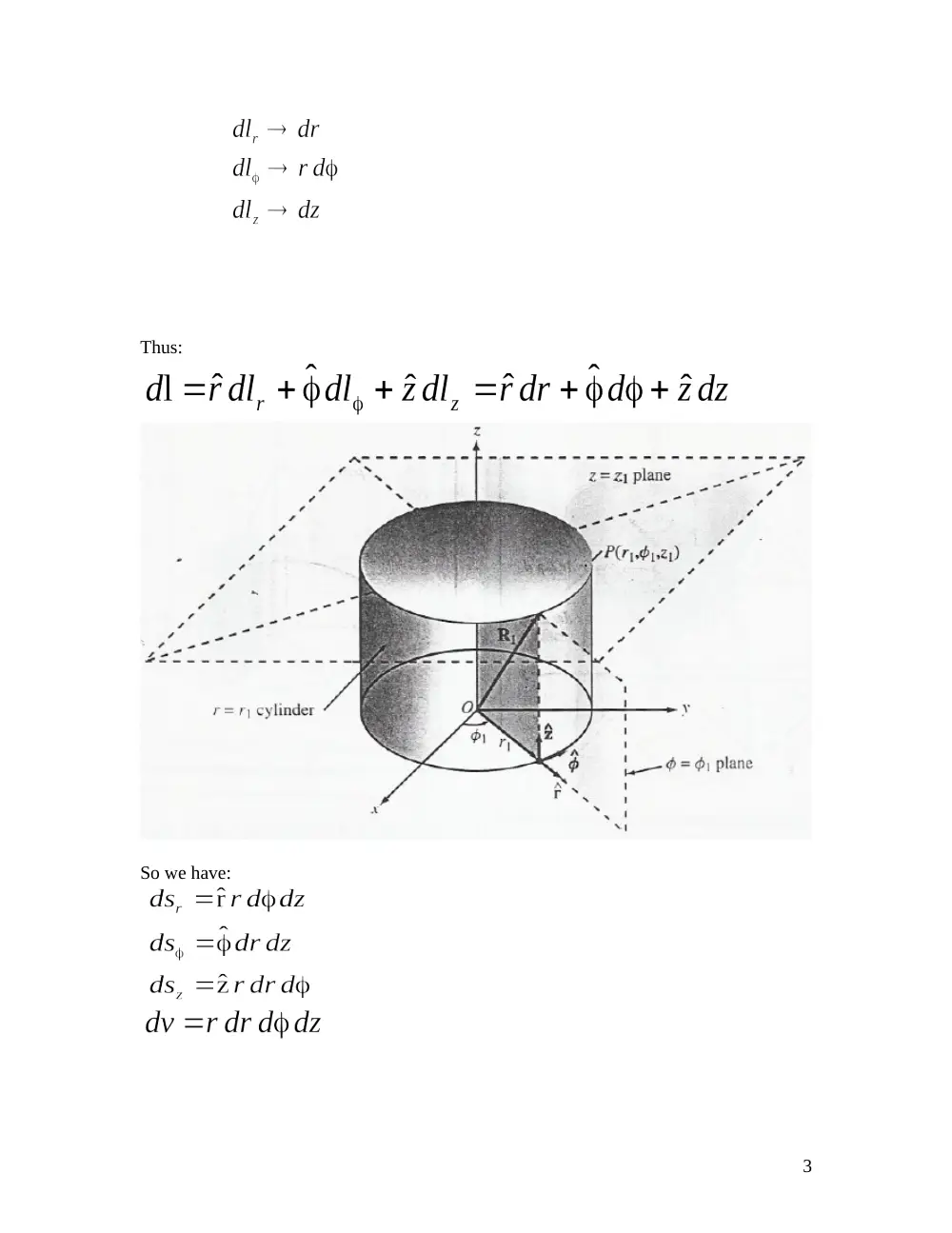
Cylindrical coordinate system:
Parameters: r,
, z
2
Thus:
So we have:
3
4.
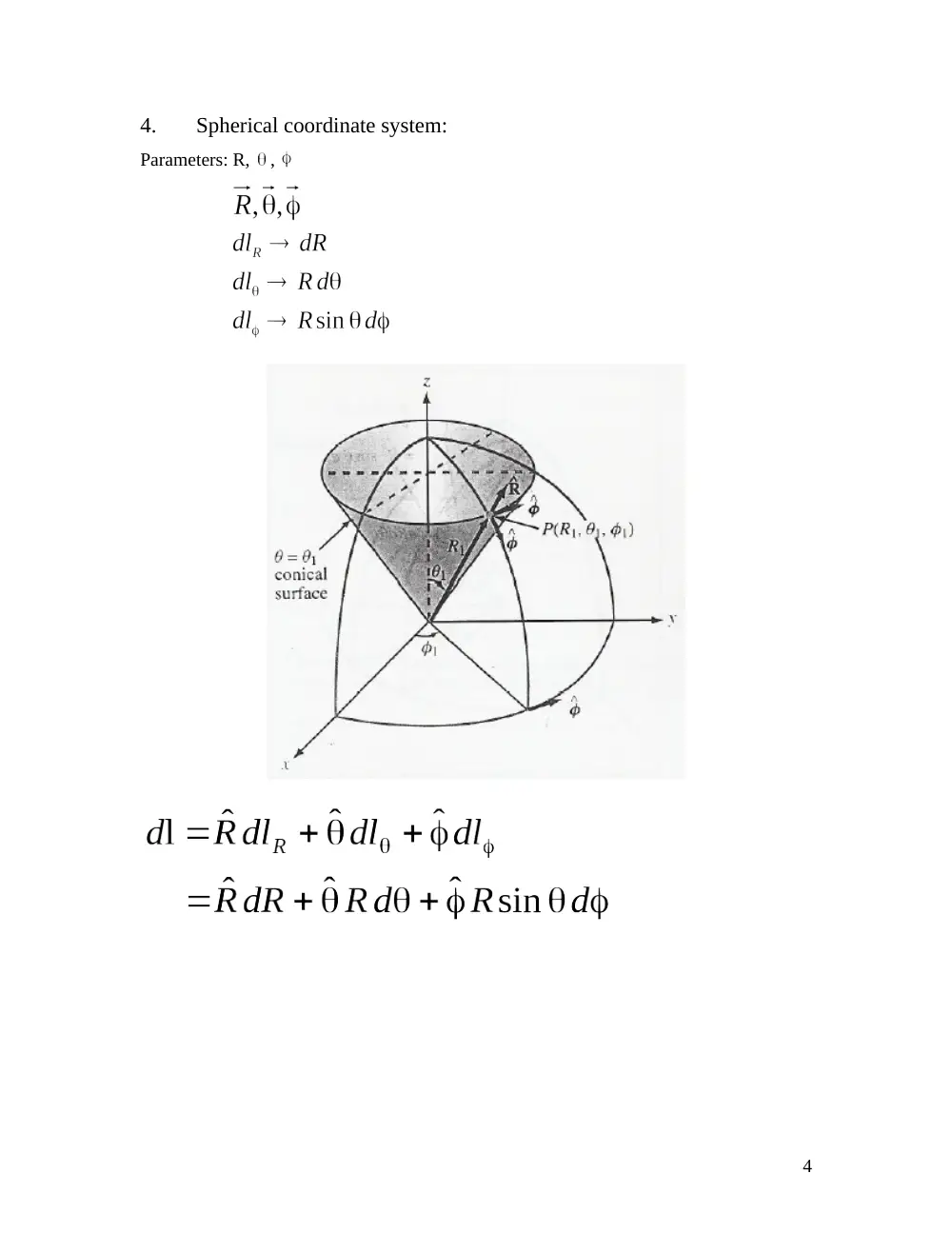
Spherical coordinate system:
Parameters: R,
,
4
5
6
5.
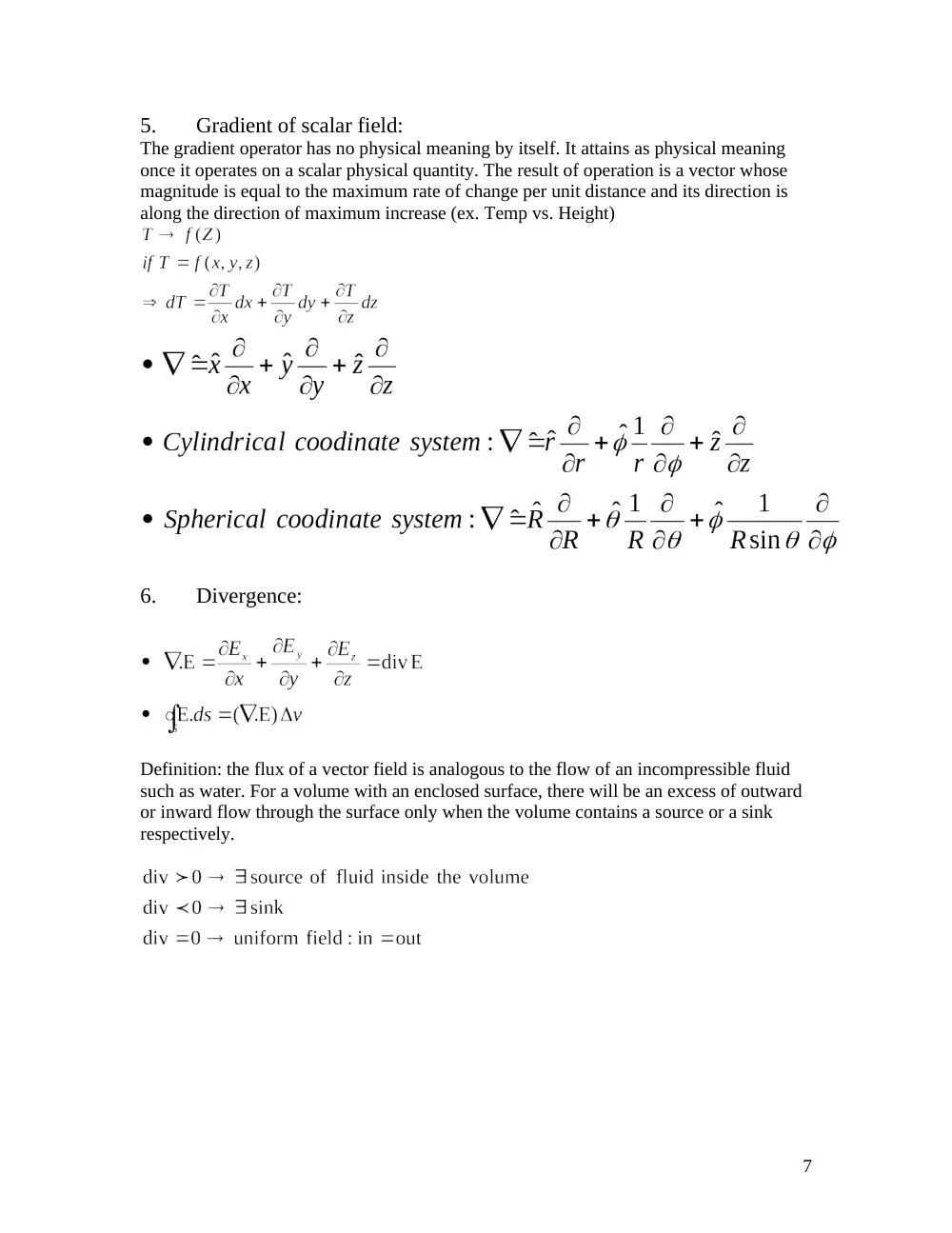
Gradient of scalar field:
The gradient operator has no physical meaning by itself. It attains as physical meaning
once it operates on a scalar physical quantity. The result of operation is a vector whose
magnitude is equal to the maximum rate of change per unit distance and its direction is
along the direction of maximum increase (ex. Temp vs. Height)
6.
Divergence:
Definition: the flux of a vector field is analogous to the flow of an incompressible fluid
such as water. For a volume with an enclosed surface, there will be an excess of outward
or inward flow through the surface only when the volume contains a source or a sink
respectively.
7
7.
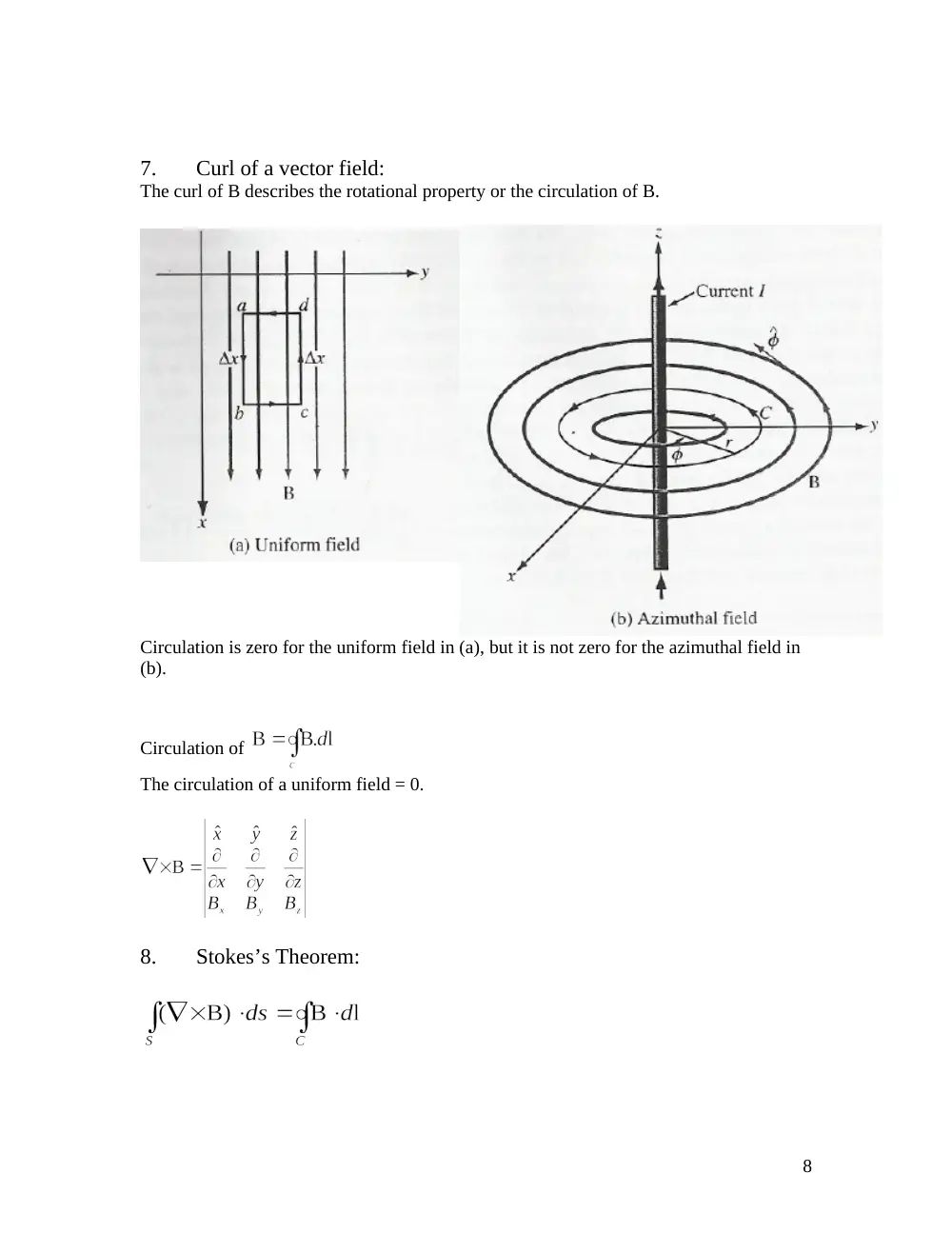
Curl of a vector field:
The curl of B describes the rotational property or the circulation of B.
Circulation is zero for the uniform field in (a), but it is not zero for the azimuthal field in
(b).
Circulation of
The circulation of a uniform field = 0.
8.
Stokes’s Theorem:
8