
MCOM 201 Questions For Midterm (Samples), Spring 2014
American University of Beirut · Introduction to Media Studies · 1 page · Ms. Muneira Hoballah
Stuck on a question? A tutor can walk you through it.
More MCOM 201 files
Show the text of this exam
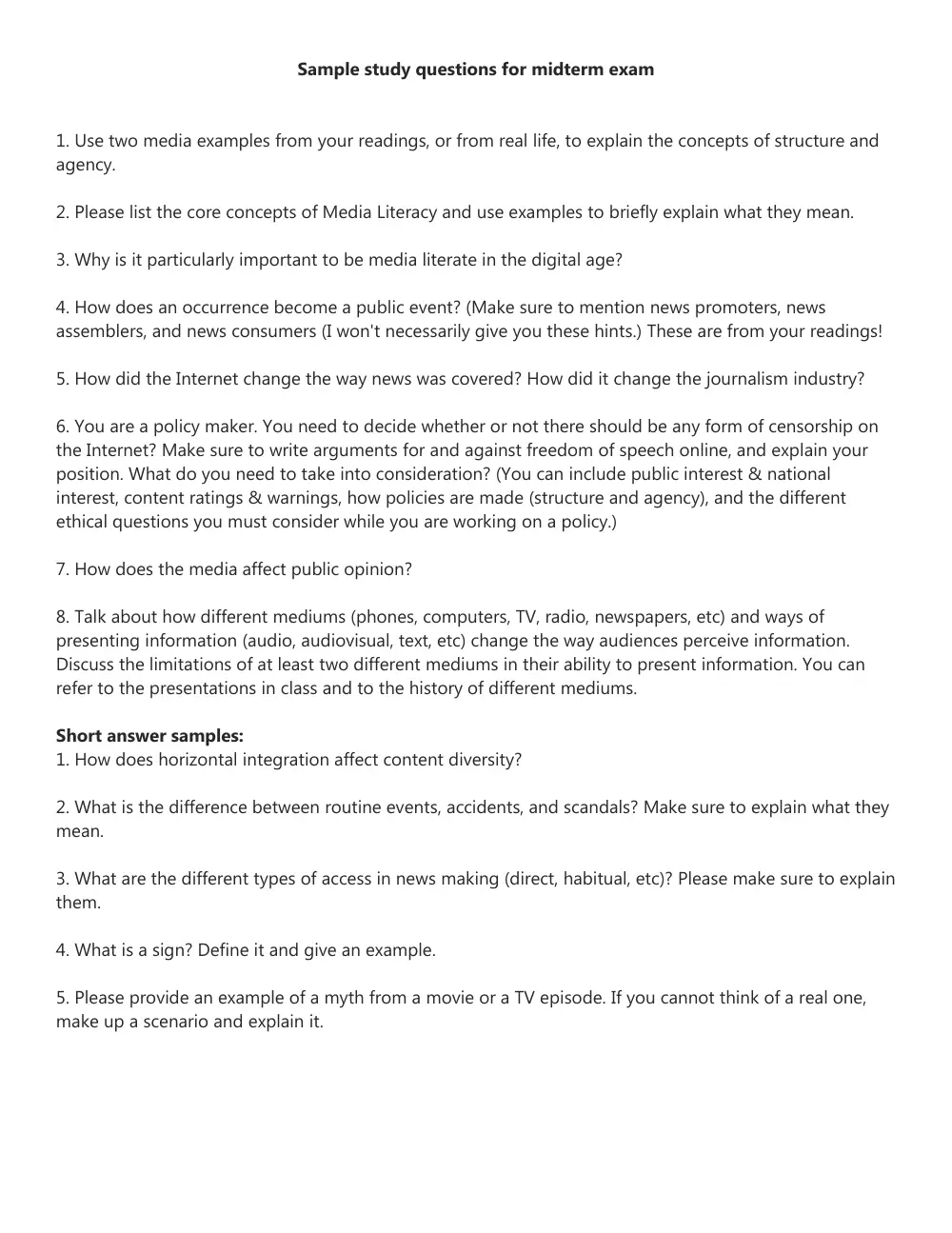
Sample study questions for midterm exam
1. Use two media examples from your readings, or from real life, to explain the concepts of structure and
agency.
2. Please list the core concepts of Media Literacy and use examples to briefly explain what they mean.
3. Why is it particularly important to be media literate in the digital age?
4. How does an occurrence become a public event? (Make sure to mention news promoters, news
assemblers, and news consumers (I won't necessarily give you these hints.) These are from your readings!
5. How did the Internet change the way news was covered? How did it change the journalism industry?
6. You are a policy maker. You need to decide whether or not there should be any form of censorship on
the Internet? Make sure to write arguments for and against freedom of speech online, and explain your
position. What do you need to take into consideration? (You can include public interest & national
interest, content ratings & warnings, how policies are made (structure and agency), and the different
ethical questions you must consider while you are working on a policy.)
7. How does the media affect public opinion?
8. Talk about how different mediums (phones, computers, TV, radio, newspapers, etc) and ways of
presenting information (audio, audiovisual, text, etc) change the way audiences perceive information.
Discuss the limitations of at least two different mediums in their ability to present information. You can
refer to the presentations in class and to the history of different mediums.
Short answer samples:
1. How does horizontal integration affect content diversity?
2. What is the difference between routine events, accidents, and scandals? Make sure to explain what they
mean.
3. What are the different types of access in news making (direct, habitual, etc)? Please make sure to explain
them.
4. What is a sign? Define it and give an example.
5. Please provide an example of a myth from a movie or a TV episode. If you cannot think of a real one,
make up a scenario and explain it.