
AROL 214 Final, Spring 2000
American University of Beirut · Human History II The New Stone Age or Noethilic · 2 pages
More AROL 214 files
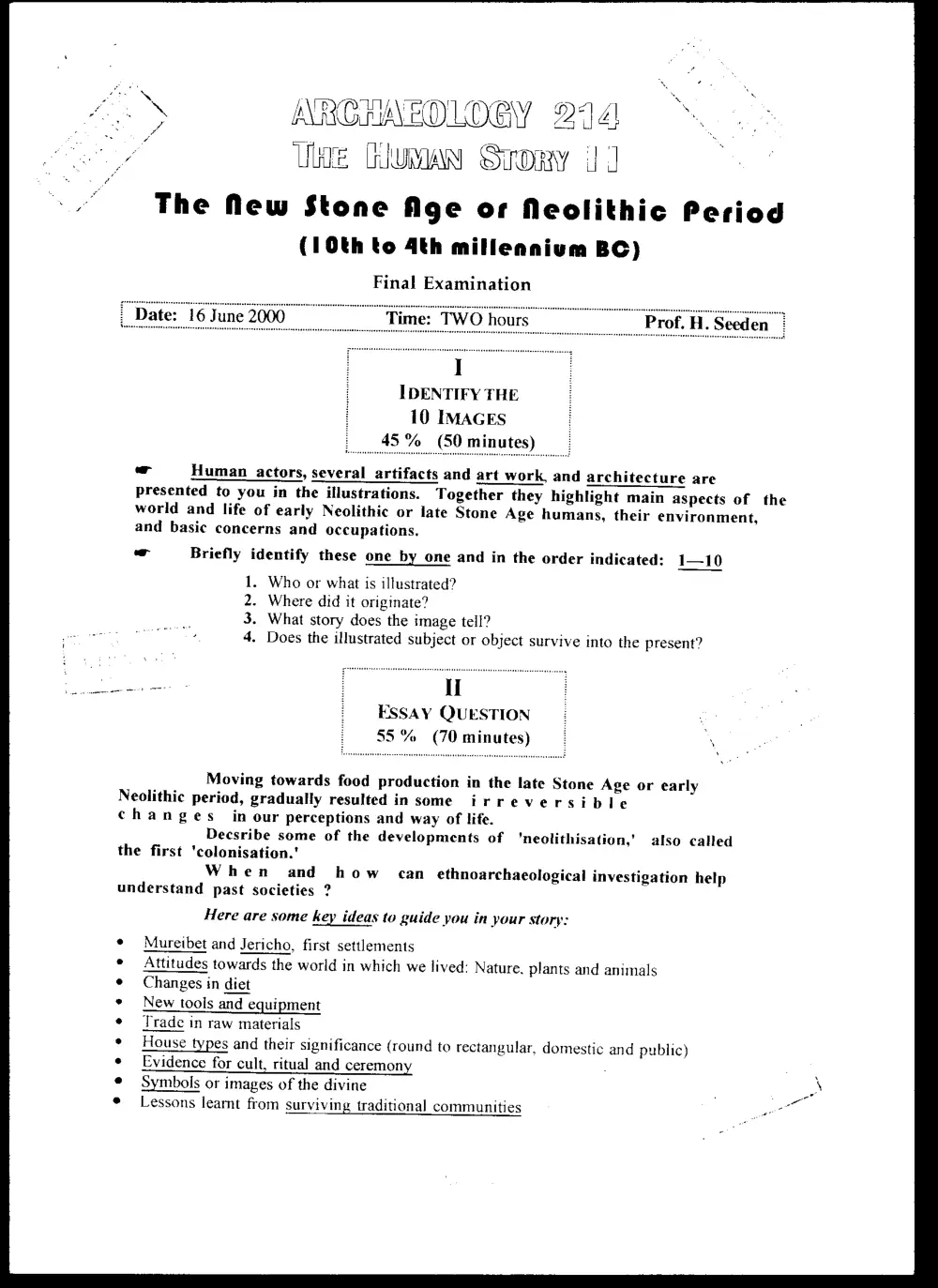
Show the text of this final exam
NRC MANEDLOGY 27) 2)
Ute TUMAN Srory |]
The New Stone fige or Neolithic Period
(10th to 4th millennium BC)
Final Examination
' Date: 16 June 2000
]
IDENTIFY THE
10 IMAGES :
45% (50 minutes)
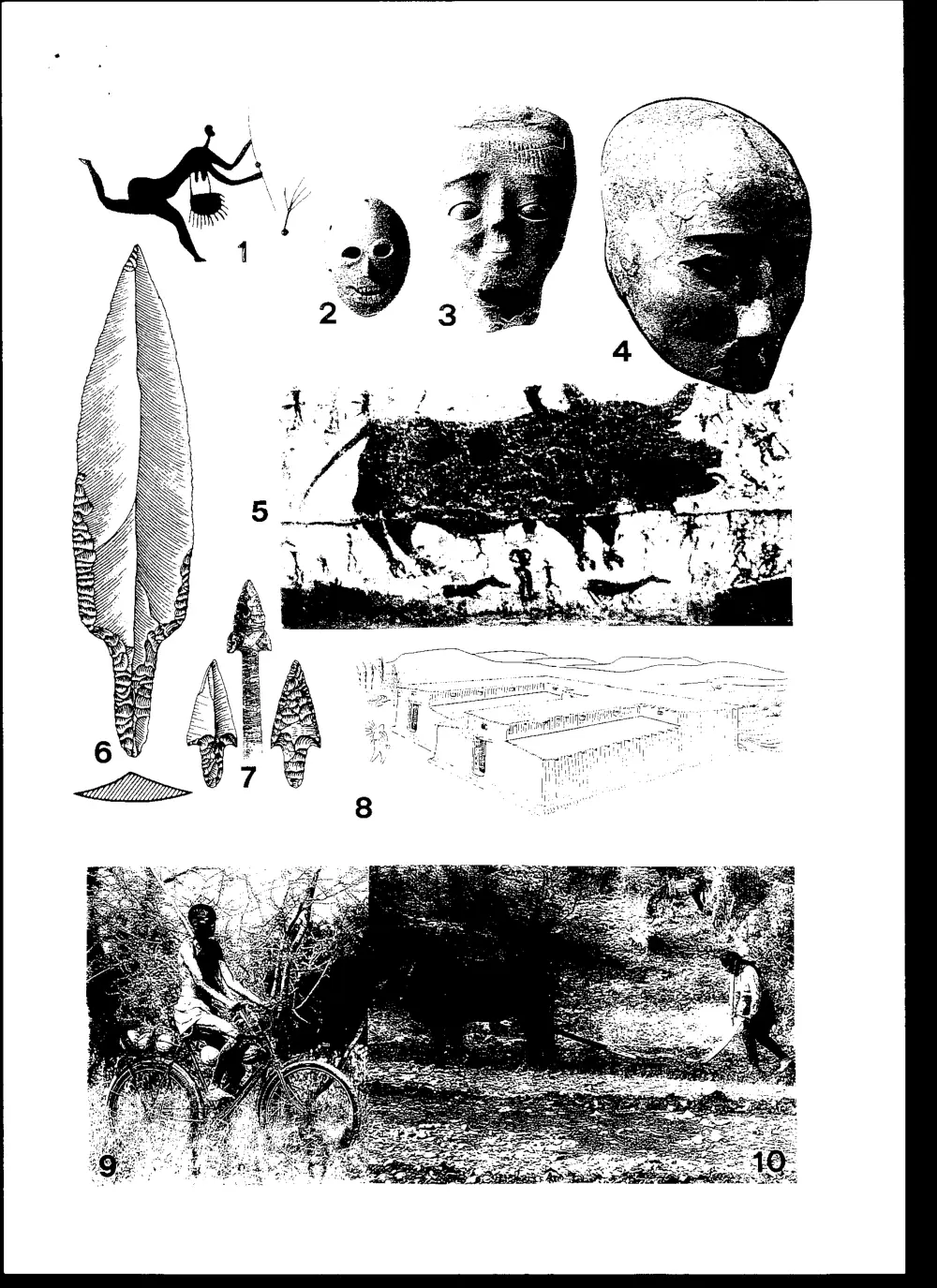
- Human actors, several artifacts and art work, and architecture are
presented to you in the illustrations. Together they highlight main aspects of the
world and life of early Neolithic or late Stone Age humans, their environment,
and basic concerns and occupations.
- Briefly identify these one by one and in the order indicated: 1—10
- Who or what is illustrated?
. Where did it originate?
. What story does the image tell?
» Does the illustrated subject or object survive into the present?
II
ESSAY QUESTION
55% (70 minutes)
Moving towards food production in the late Stone Age or early
Neolithic period, gradually resulted in some irreversible
¢hanges_ in our perceptions and way of life.
Decsribe some of the developments of ‘neolithisation,’ also called
the first ‘colonisation.’
When and how can ethnoarchaeological investigation help
understand past societies ?
Here are some key ideas to guide you in your story:
Mureibet and Jericho, first settlements
Attitudes towards the world in which we lived: Nature. plants and animals
Changes in diet
New tools and equipment
Trade in raw materials
House types and their significance (round to rectangular, domestic and public)
Evidence for cult, ritual and ceremony -
Symbols or images of the divine
Lessons learnt from surviving traditional communities