
EECE 231 Exam 1 Solution, Fall 2014
American University of Beirut · Introduction to Programming Using C++ and MATLAB · 4 pages · Prof. Fadi Zaraket · with solution
More EECE 231 files
- Exam 1 2017 · Fall 2017ExamView
- Exam 1 With Solution · Fall 2015Exam · with solutionView
- Exam 2 · Fall 2015ExamView
- Exam 1 · Fall 2014ExamView
- Exam 2 Difficult Quiz 2 Previous · Fall 2014ExamView
- Exam 2 Questions · Fall 2017ProblemsView
- Lab 1024 · Fall 2017LabView
- Useful File Recursive Versions of Secant + Bisection Methods in C++ · Fall 2015FileView
Show the text of this exam
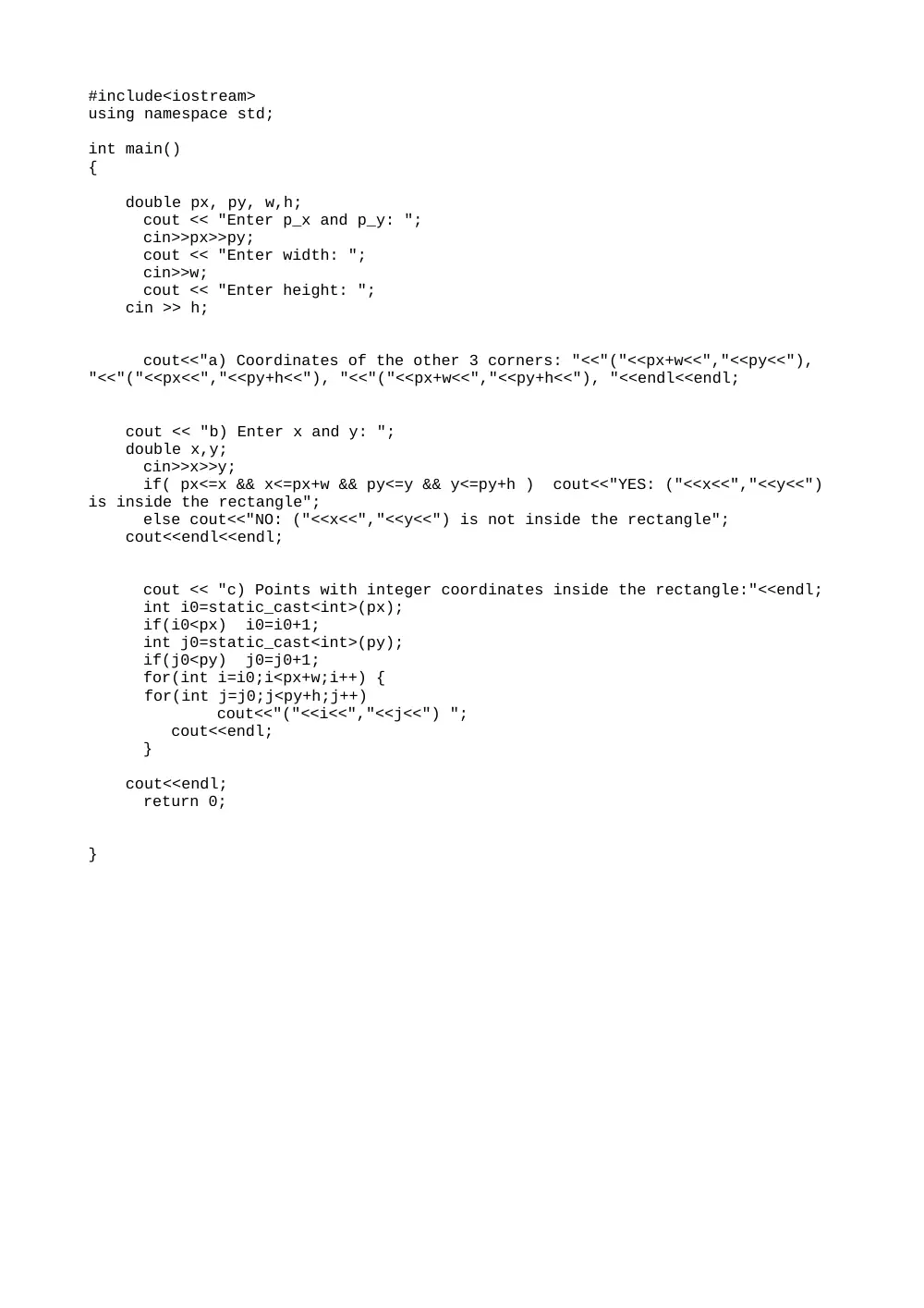
#include<iostream>
using namespace std;
int main()
{
double px, py, w,h;
cout << "Enter p_x and p_y: ";
cin>>px>>py;
cout << "Enter width: ";
cin>>w;
cout << "Enter height: ";
cin >> h;
cout<<"a) Coordinates of the other 3 corners: "<<"("<<px+w<<","<<py<<"),
"<<"("<<px<<","<<py+h<<"), "<<"("<<px+w<<","<<py+h<<"), "<<endl<<endl;
cout << "b) Enter x and y: ";
double x,y;
cin>>x>>y;
if( px<=x && x<=px+w && py<=y && y<=py+h ) cout<<"YES: ("<<x<<","<<y<<")
is inside the rectangle";
else cout<<"NO: ("<<x<<","<<y<<") is not inside the rectangle";
cout<<endl<<endl;
cout << "c) Points with integer coordinates inside the rectangle:"<<endl;
int i0=static_cast<int>(px);
if(i0<px) i0=i0+1;
int j0=static_cast<int>(py);
if(j0<py) j0=j0+1;
for(int i=i0;i<px+w;i++) {
for(int j=j0;j<py+h;j++)
cout<<"("<<i<<","<<j<<") ";
cout<<endl;
}
cout<<endl;
return 0;
}
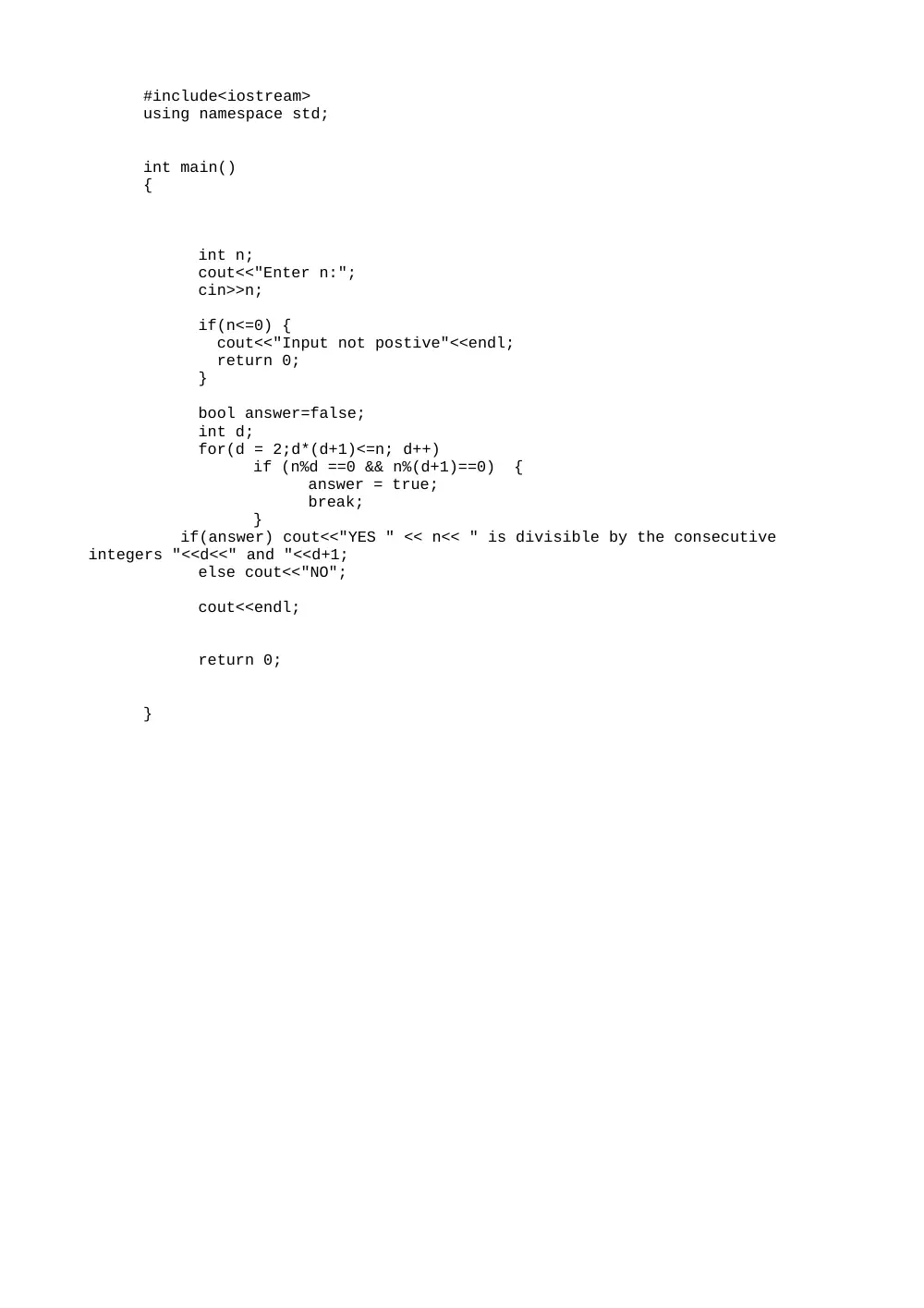
#include<iostream>
using namespace std;
int main()
{
int n;
cout<<"Enter n:";
cin>>n;
if(n<=0) {
cout<<"Input not postive"<<endl;
return 0;
}
bool answer=false;
int d;
for(d = 2;d*(d+1)<=n; d++)
if (n%d ==0 && n%(d+1)==0) {
answer = true;
break;
}
if(answer) cout<<"YES " << n<< " is divisible by the consecutive
integers "<<d<<" and "<<d+1;
else cout<<"NO";
cout<<endl;
return 0;
}
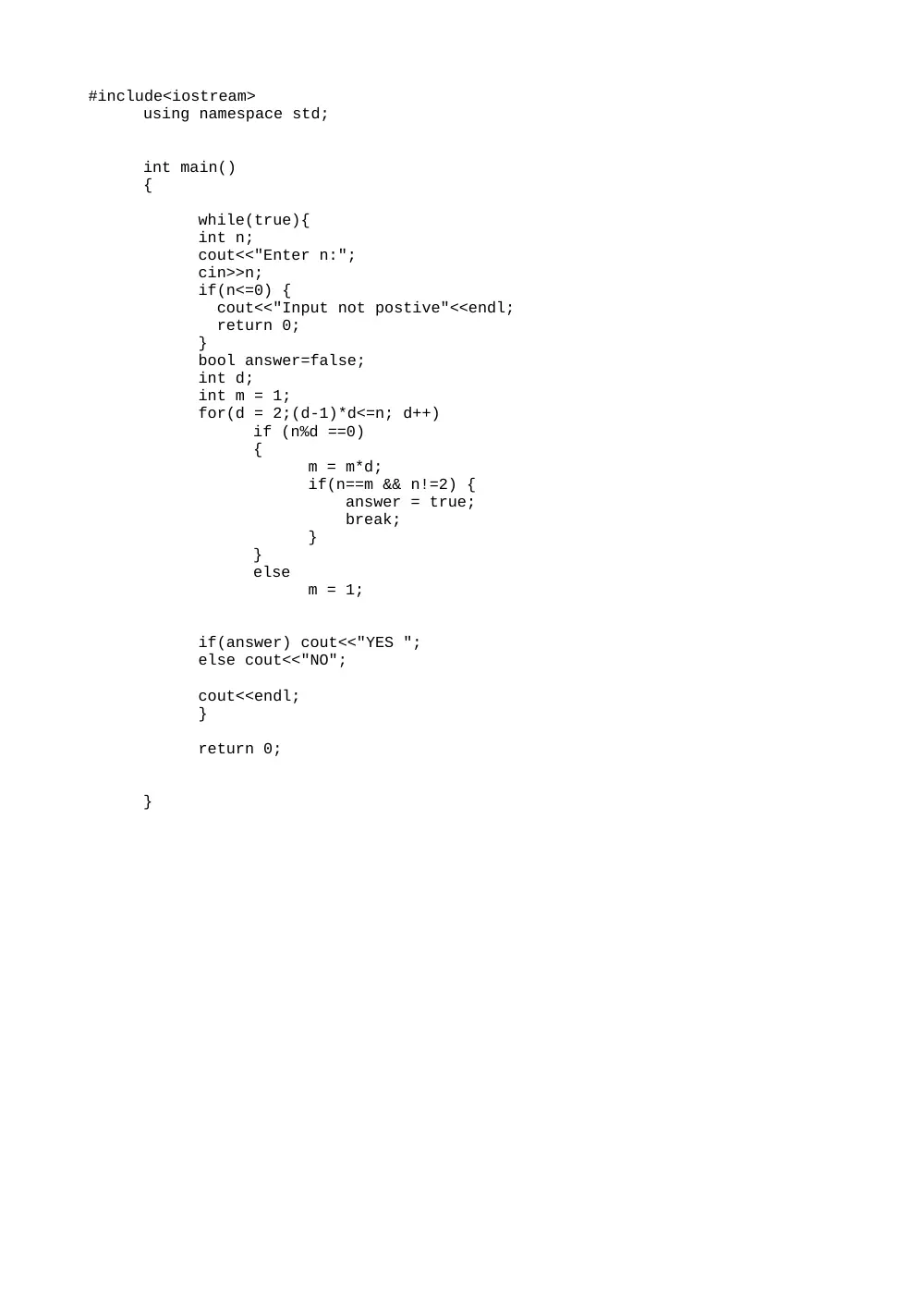
#include<iostream>
using namespace std;
int main()
{
while(true){
int n;
cout<<"Enter n:";
cin>>n;
if(n<=0) {
cout<<"Input not postive"<<endl;
return 0;
}
bool answer=false;
int d;
int m = 1;
for(d = 2;(d-1)*d<=n; d++)
if (n%d ==0)
{
m = m*d;
if(n==m && n!=2) {
answer = true;
break;
}
}
else
m = 1;
if(answer) cout<<"YES ";
else cout<<"NO";
cout<<endl;
}
return 0;
}
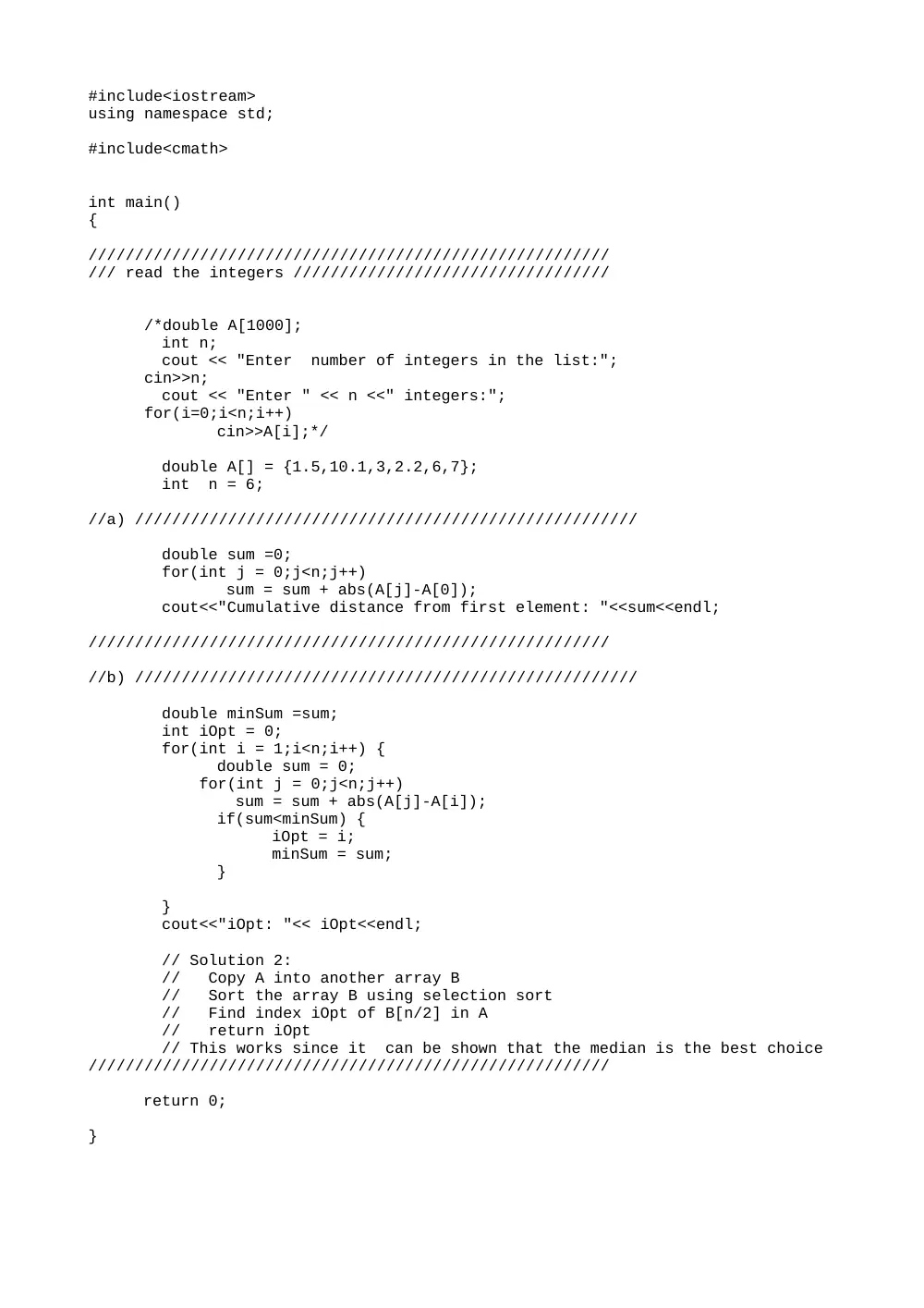
#include<iostream>
using namespace std;
#include<cmath>
int main()
{
////////////////////////////////////////////////////////
/// read the integers //////////////////////////////////
/*double A[1000];
int n;
cout << "Enter number of integers in the list:";
cin>>n;
cout << "Enter " << n <<" integers:";
for(i=0;i<n;i++)
cin>>A[i];*/
double A[] = {1.5,10.1,3,2.2,6,7};
int n = 6;
//a) //////////////////////////////////////////////////////
double sum =0;
for(int j = 0;j<n;j++)
sum = sum + abs(A[j]-A[0]);
cout<<"Cumulative distance from first element: "<<sum<<endl;
////////////////////////////////////////////////////////
//b) //////////////////////////////////////////////////////
double minSum =sum;
int iOpt = 0;
for(int i = 1;i<n;i++) {
double sum = 0;
for(int j = 0;j<n;j++)
sum = sum + abs(A[j]-A[i]);
if(sum<minSum) {
iOpt = i;
minSum = sum;
}
}
cout<<"iOpt: "<< iOpt<<endl;
// Solution 2:
// Copy A into another array B
// Sort the array B using selection sort
// Find index iOpt of B[n/2] in A
// return iOpt
// This works since it can be shown that the median is the best choice
////////////////////////////////////////////////////////
return 0;
}