
ENG 207 Final, Spring 1999
American University of Beirut · Introduction to English Literature II · 3 pages

More ENG 207 files
Show the text of this final exam
FINAL EXAM
ENGLISH 207: INTRODUCTION TO ENGLISH LITERTURE H
SPRING 1999
DR. SYRINE C. HOUT
PART I: 30%
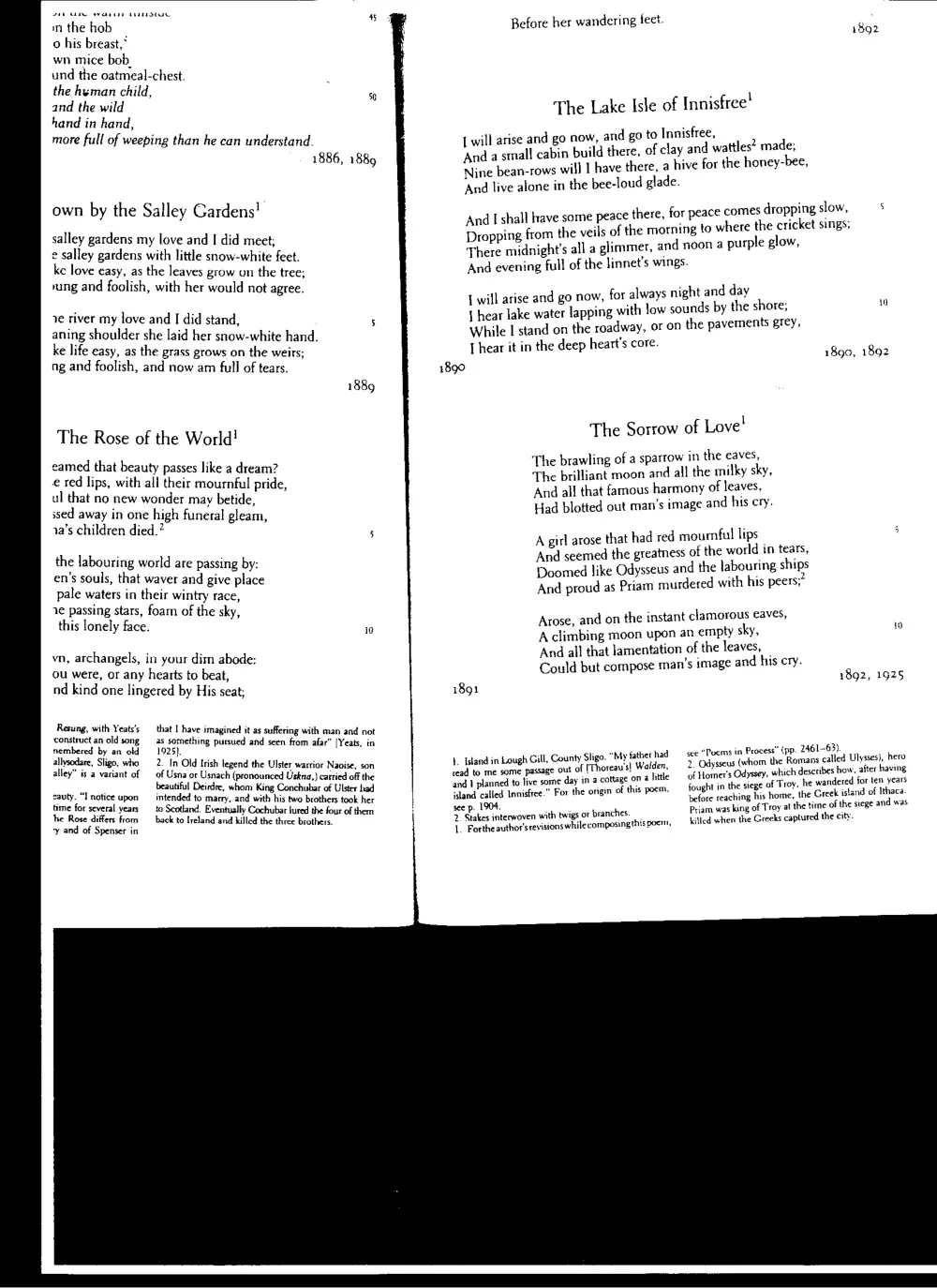
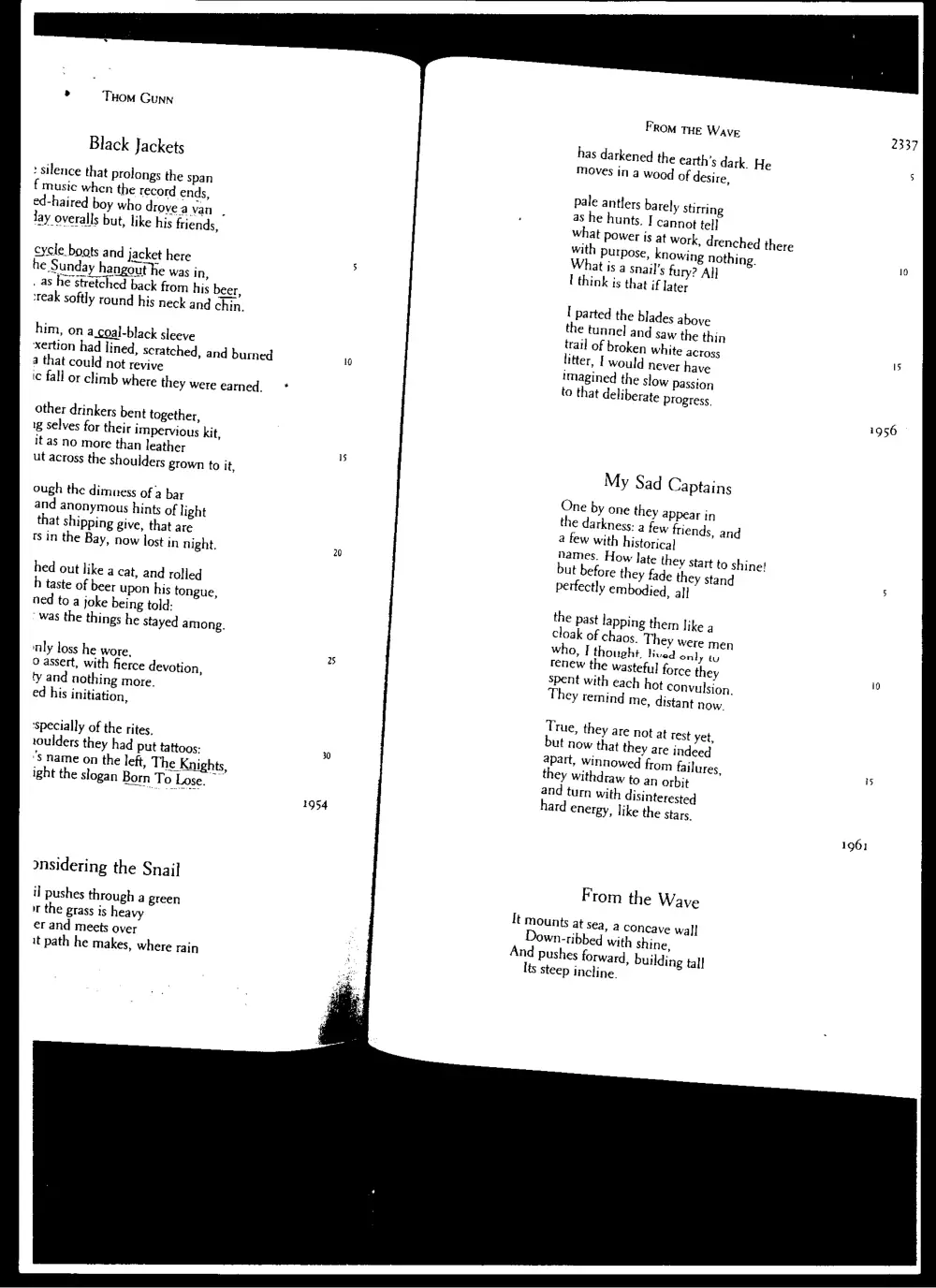
Choose one of the following two poems — “The Sorrow of Love” (1891) by William Butler Yeats
and “My Sad Captains” (1961) by Thom Gunn - and analyze your selection in terms of technique
and ideas while offering your interpretation.
PART II: 30%
Analyze the following excerpt from “The Horse-Dealer’s Daughter” (1922) by D.H. Lawrence.
Pay special attention to imagery, mood, diction, sentence structure, etc., and how these relate to
the story/text as a whole.
“The cold water rose over his thighs, over his loins, upon his abdomen. The lower part of his
body was all sunk in the hidcous cold clement. And the bottom was so deeply soft and uncertain,
he was afraid of pitching with his mouth underneath. He could not swim, and was afraid. He
crouched a little, spreading his hands under the water and moving them round, trying to feel for
her. The dead cold pond swayed upon his chest. He moved again, a little deeper, and again, with
his hands underneath, he felt all around the water. And he touched her clothing. But it evaded his
fingers. He made a desperate effort to grasp it.”
PART III: 40%
Write a short but informed essay in response to one of the following three comparative essay
questions:
1. In what ways may the protagonist — the nameless British colonial police officer — in George
Orwell’s “Shooting an Elephant” (1936) be considered an ideologically advanced version of
Marlow in Joseph Conrad’s Heart of Darkness (1902)?
2. Compare and contrast the social gatherings in Katherine Mansfield’s “The Garden Party”
(1921) and James Joyce’s The Dead (1914). Consider the following: menu, entertainment,
setting, host-guest relationship, conversation, etc.
3. How are the men in Gunn’s poem “Black Jackets” (1954) similar in lifestyle and attitude
to Ben and Gus in Harold Pinter’s play The Dumb Waiter (1960)?
STCe OS TSITERTTTTC CTS
45
m the hob
o his breast,*
wn tice bob.
und the oatmeal-chest.
the heman child,
and the wild
hand in hand,
more full of weeping than he can understand.
1886, 1889
50
own by the Salley Gardens!
salley gardens my love and I did meet;
e salley gardens with little snow-white feet
ke love easy, as the leaves grow on the tree:
vung and foolish, with her would not agree.
ye river my love and I did stand,
aning shoulder she laid her snow-white hand
ke life easy, as the grass grows on the weirs; ;
ag and foolish, and now am full of tears. ,
1889
The Rose of the World!
eamed that beauty passes like a d
| , ream?
¢ red lips, with all their mournful pride.
ul that no new wonder may betide, ,
ssed away in one high funeral
1a’s children died? eral gleam,
5
the labouring world are passing by:
en’s souls, that waver and give place
pale waters in their wintry race,
ve passing stars, foam of the sky,
this lonely face. ’
io
vn, archangels, in your dim abode:
ou were, or any hearts to beat,
nd kind one lingered by His seat;
Ret vate
Be ning, with Yeats : that | have imagined it as suffering with man and not
rent gaa ing pursued and seen from afar” [Yeats, in
" y .
‘tsa a, Sligo. who, 2: In Old lsh legend the Ute warn Naoise
‘ant of of Usna or Usnach (pronounced Uskna,) caried of the
coup, “nie u beautiful Deirdre, whom King Conchubar of Ulster had
zu, “Tatice poo inended to mary and with his two rater took
Slag ea yon fo Scot ot and. Eventually Cochubar lured the four of them
> and of Spenser in reland and killed the three brothers.
Before her wandering feet. .
1892
1890
The Lake Isle of Innisfree!
[ will arise and go now, and go to Innisfree,
And a small cabin build there, of clay and wattles’ made;
Nine bean-rows will I have there, a hive for the honey-bee,
And live alone in the bee-loud glade.
And I shall have some peace there, for peace comes dropping slow, 5
Dropping from the veils of the morning to where the cricket sings;
There midnight’s all a glimmer, and noon a purple glow,
And evening full of the linnet’s wings.
{ will arise and go now, for always night and day
| hear lake water lapping with low sounds by the shore; 10
While I stand on the roadway, or on the pavements grey,
I hear it in the deep heart’s core.
1890, 1892
The Sorrow of Love!
The brawling of a sparrow in the eaves,
‘The brilliant moon and all the milky sky,
And all that famous harmony of leaves,
Had blotted out man’s image and his cry.
A girl arose that had red mournful lips 5
And seemed the greatness of the world in tears,
Doomed like Odysseus and the labouring ships
And proud as Priam murdered with his peers;”
Arose, and on the instant clamorous eaves,
A climbing moon upon an empty sky, 10
‘And all that lamentation of the leaves,
Could but compose man’s image and his cry.
1891 1892, 1925
y father had see “Poems in Process” (pp. 2461-63).
| Walden, 2. Odysseus (whom the Romans called Ulysses), hero
alittle of Homer's Odyssey, which describes how. after having
fought in the siege of Troy, he wandered for ten years
before reaching his home, the Greek island of Ithaca
Priam was king of Troy at the time ‘of the siege and was
killed when the Greeks captured the city.
1. Island in Lough Gill, County Sligo. “M:
read to me some passage out of {Thoreau’s|
and I planned to live some day in a cottage 0
jsland called Innisfree.” For the origin of this poem,
see p. 1904.
2. Stakes interwoven with twigs or branches.
1. Forthe author's revisions while composing! this poem,
THom Gunn
Black Jackets
? silence that Prolongs the span
f music when the tecord ends,
ed-haired boy who drovea van .
Jay overalls but, like his friends,
cycle boots and jacket here
he Sunday hangout he was in,
. as he'stretched back from his beer,
cteak softly round his neck and chin.
him, on acoal-black sleeve
‘xertion had lined, scratched, and burned
a that could not revive
ic fall or climb where they were earned,
other drinkers bent together,
wg selves for their impervious kit,
it as no more than leather
ut across the shoulders grown to it,
ough the dimness of a bar
and anonymous hints of light
that shipping give, that are
ts in the Bay, now lost in night.
hed out like a cat, and rolled
h taste of beer upon his tongue,
ned to a joke being told:
‘was the things he stayed among.
nly loss he wore,
9 assert, with fierce devotion,
ty and nothing more.
ed his initiation,
‘specially of the rites,
toulders they had put tattoos:
5 name on the left, The Knights,
ight the slogan Born To Lose.
onsidering the Snail
il pushes through a green
w the grass is heavy
er and meets over
it path he makes, where rain
FROM THE Wave
has darkened the earth’s dark. He
moves in a wood of desire,
pale antlers barely stirring
as he hunts. J cannot tell
what power is at work, drenched there
with purpose, knowing nothing.
What is a snail's fury? All
U think is that if later
| parted the blades above
the tunnel and saw the thin
trail of broken white actoss
litter, | would never have
imagined the slow Passion
to that deliberate Progress,
My Sad Captains
One by one they appear in
the darkness: 3 few friends, and
a few with historical
the past lapping them like a
cloak of chaos. They were men
who, I thought, lived
renew the wasteful fo;
Spent with each hot ¢
They remind me, dis
only ty
Tce they
onvulsion,
tant now.
True, they are not at Test yet,
but now that they are indeed
apart, winnowed from failures,
they withdraw to an orbit
and turn with disinterested
hard energy, like the stars.
From the Wave
It mounts at S€a, @ concave wall
Down-tibbed with shine,
And pushes forward, building tall
Its steep incline.