
ENG 210 Final, Spring 2000
American University of Beirut · Literature of the Middle Ages · 2 pages
More ENG 210 files
Show the text of this final exam
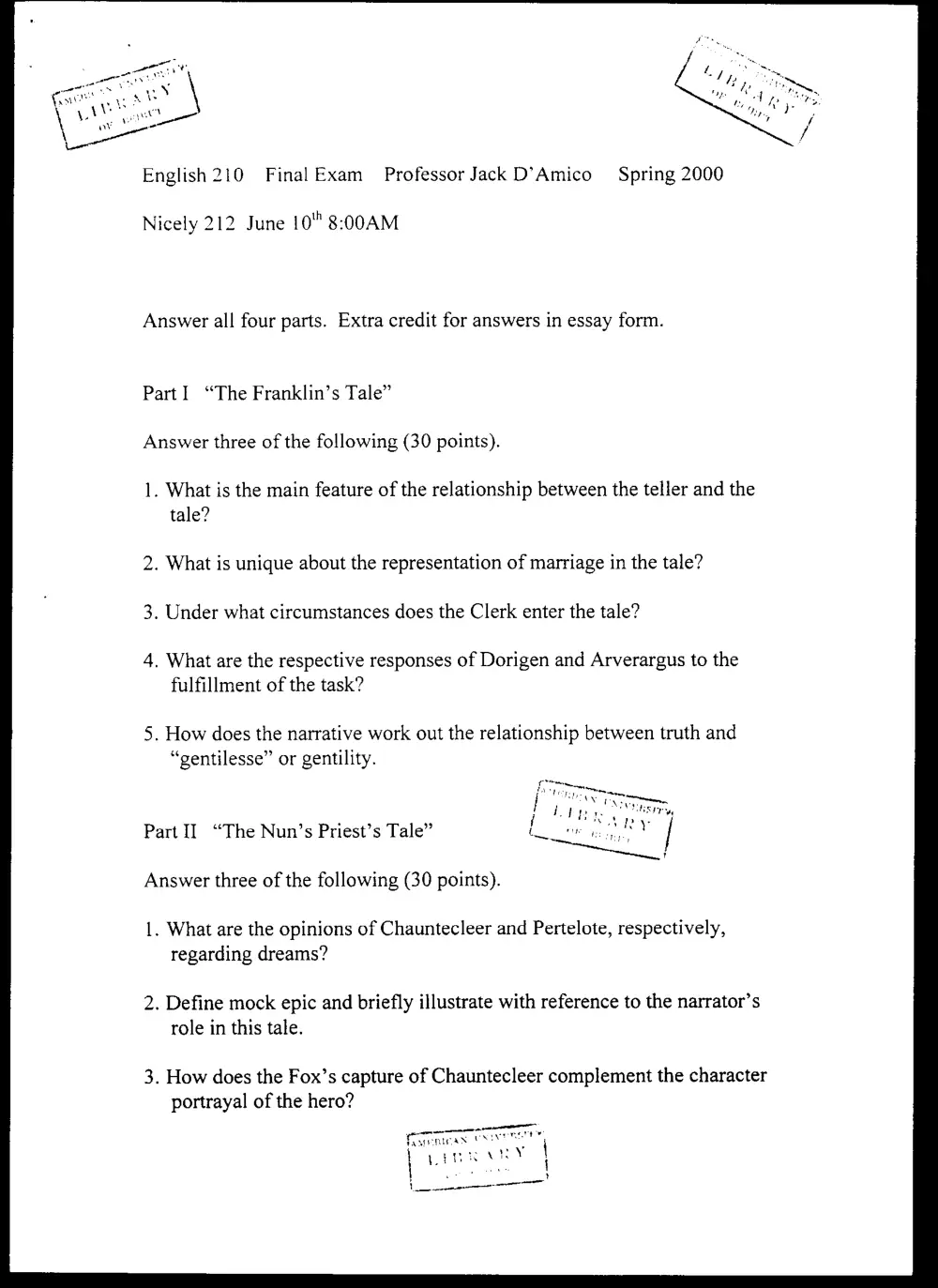
English 210 Final Exam Professor Jack D’Amico Spring 2000
Nicely 212 June 10" 8:00AM
Answer all four parts. Extra credit for answers in essay form.
PartI “The Franklin’s Tale”
Answer three of the following (30 points).
1. What is the main feature of the relationship between the teller and the
tale?
2. What is unique about the representation of marriage in the tale?
3. Under what circumstances does the Clerk enter the tale?
4, What are the respective responses of Dorigen and Arverargus to the
fulfillment of the task?
5. How does the narrative work out the relationship between truth and
“gentilesse” or gentility.
Part I] “The Nun’s Priest’s Tale”
Answer three of the following (30 points).
1, What are the opinions of Chauntecleer and Pertelote, respectively,
regarding dreams?
2. Define mock epic and briefly illustrate with reference to the narrator’s
role in this tale.
3. How does the Fox’s capture of Chauntecleer complement the character
portrayal of the hero?
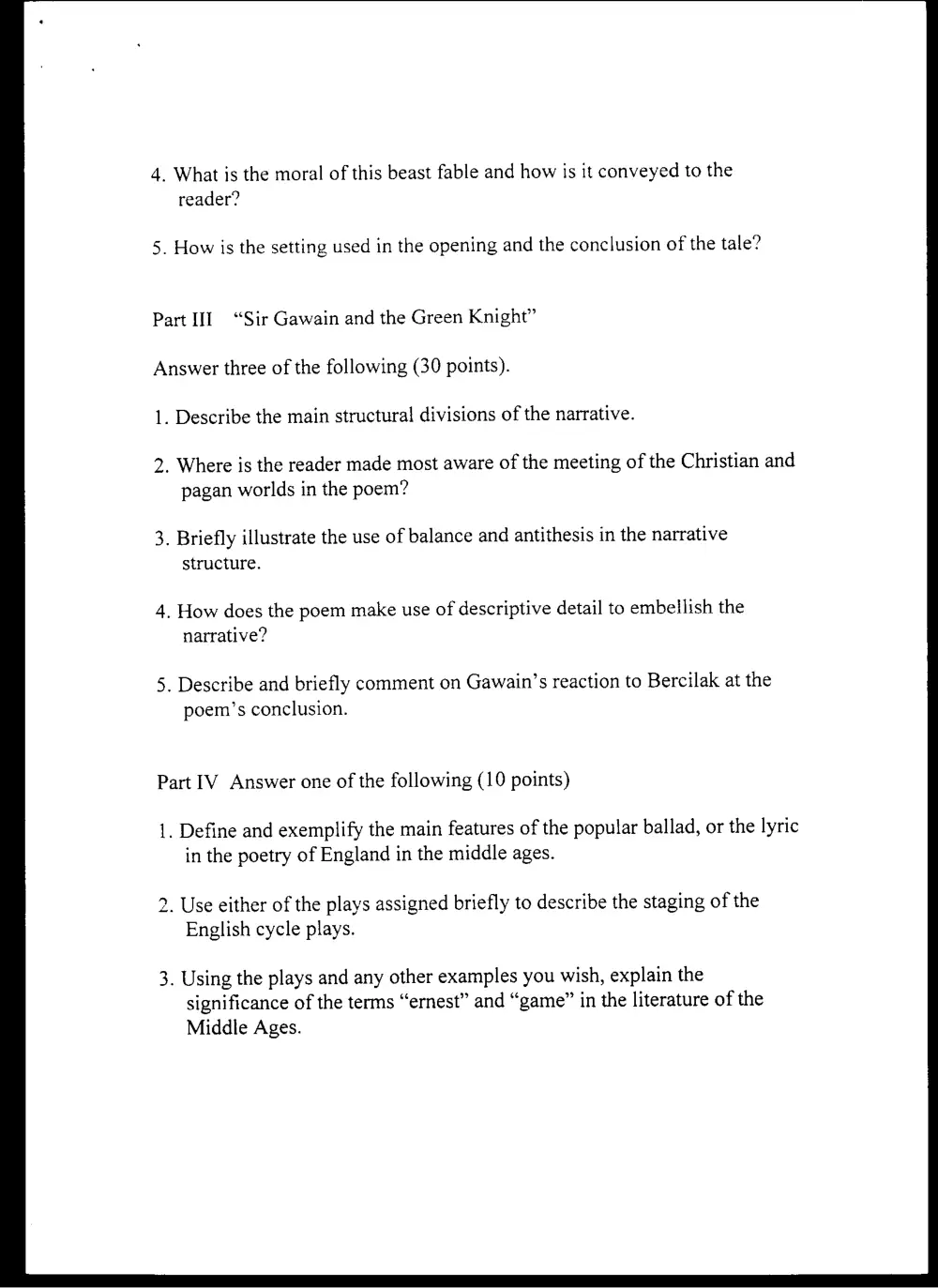
4. What is the moral of this beast fable and how is it conveyed to the
reader?
5. How is the setting used in the opening and the conclusion of the tale?
Part III “Sir Gawain and the Green Knight”
Answer three of the following (30 points).
1. Describe the main structural divisions of the narrative.
2. Where is the reader made most aware of the meeting of the Christian and
pagan worlds in the poem?
3. Briefly illustrate the use of balance and antithesis in the narrative
structure.
4. How does the poem make use of descriptive detail to embellish the
narrative?
5. Describe and briefly comment on Gawain’s reaction to Bercilak at the
poem’s conclusion.
Part IV Answer one of the following (10 points)
1. Define and exemplify the main features of the popular ballad, or the lyric
in the poetry of England in the middle ages.
2. Use either of the plays assigned briefly to describe the staging of the
English cycle plays.
3. Using the plays and any other examples you wish, explain the
significance of the terms “ernest” and “game” in the literature of the
Middle Ages.