
MATH 202 Final SAMPLE, Spring 2019
American University of Beirut · Differential Equations · 5 pages
More MATH 202 files
- Final Student Copy · Spring 2017Final examView
- Final · Summer 2016Final examView
- Notes Final Summary · Fall 2015Final examView
- Final · Spring 2015Final examView
- Final Common Final · Spring 2014Final examView
- Final · Fall 2013Final examView
- Final · Fall 2012Final examView
- Final · Spring 2011Final examView
Show the text of this final exam
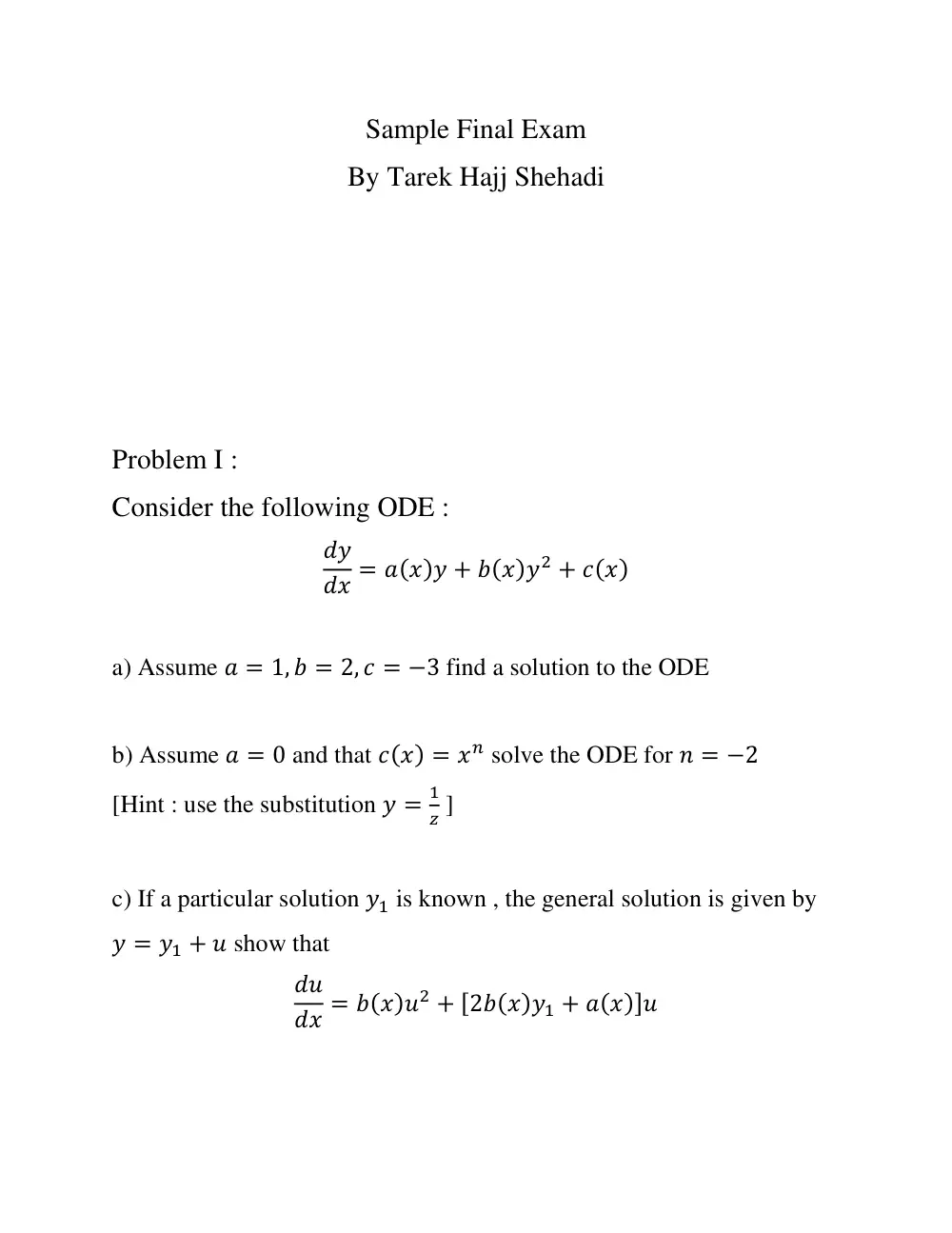
Sample Final Exam
By Tarek Hajj Shehadi
Problem I :
Consider the following ODE :
𝑑𝑦
𝑑𝑥 = 𝑎(𝑥)𝑦 + 𝑏(𝑥)𝑦2 + 𝑐(𝑥)
a) Assume 𝑎 = 1, 𝑏 = 2, 𝑐 = −3 find a solution to the ODE
b) Assume 𝑎 = 0 and that 𝑐(𝑥) = 𝑥𝑛 solve the ODE for 𝑛 = −2
[Hint : use the substitution 𝑦 =
1
𝑧 ]
c) If a particular solution 𝑦1 is known , the general solution is given by
𝑦 = 𝑦1 + 𝑢 show that
𝑑𝑢
𝑑𝑥 = 𝑏(𝑥)𝑢2 + [2𝑏(𝑥)𝑦1 + 𝑎(𝑥)]𝑢
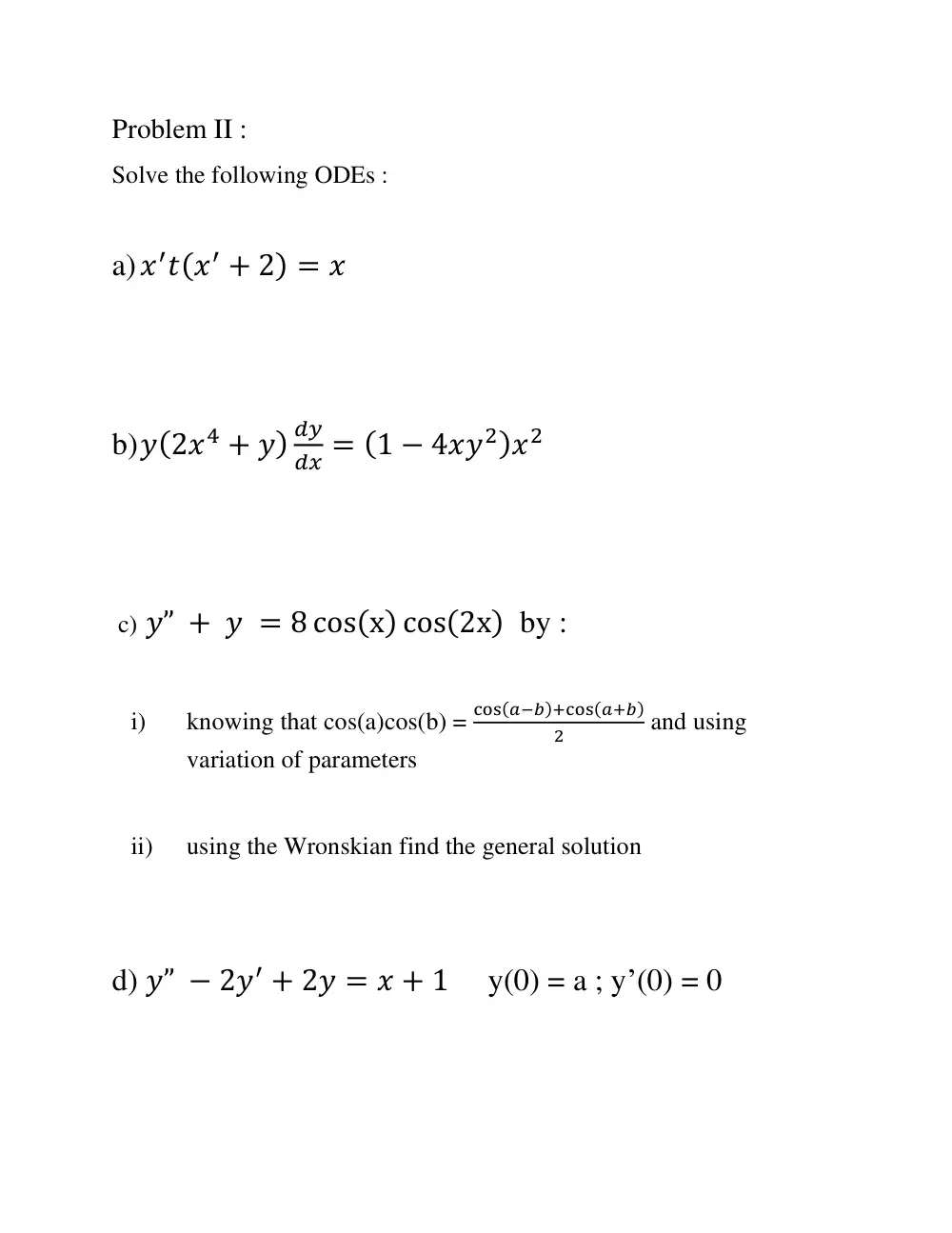
Problem II :
Solve the following ODEs :
a) 𝑥′𝑡(𝑥′ + 2) = 𝑥
b) 𝑦(2𝑥4 + 𝑦) 𝑑𝑦
𝑑𝑥 = (1 − 4𝑥𝑦2)𝑥2
c) 𝑦” + 𝑦 = 8 cos(x) cos(2x) by :
i)
knowing that cos(a)cos(b) =
cos(𝑎−𝑏)+cos(𝑎+𝑏)
2
and using
variation of parameters
ii)
using the Wronskian find the general solution
d) 𝑦” − 2𝑦′ + 2𝑦 = 𝑥 + 1 y(0) = a ; y’(0) = 0
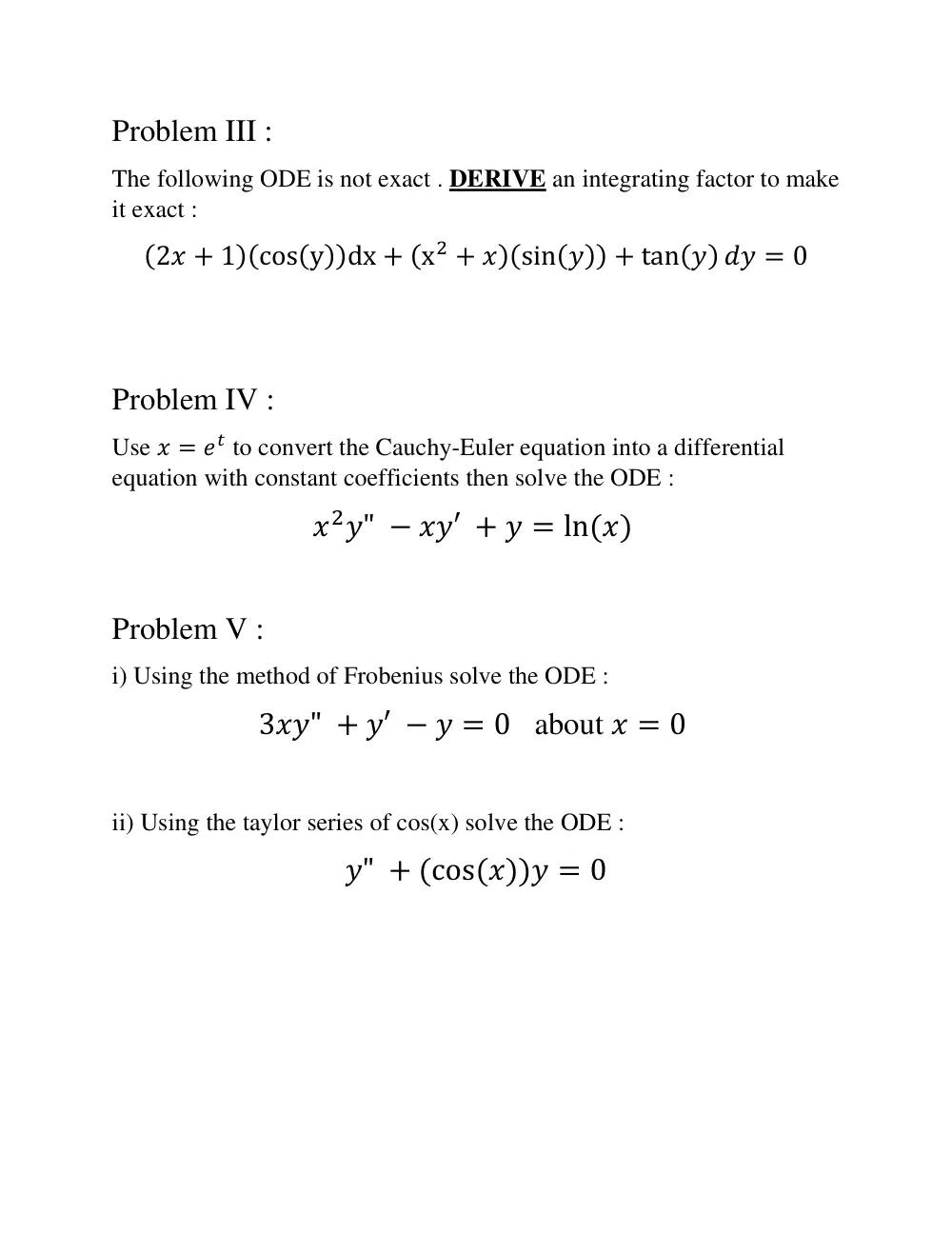
Problem III :
The following ODE is not exact . DERIVE an integrating factor to make
it exact :
(2𝑥 + 1)(cos(y))dx + (x2 + 𝑥)(sin(𝑦)) + tan(𝑦) 𝑑𝑦 = 0
Problem IV :
Use 𝑥 = 𝑒𝑡 to convert the Cauchy-Euler equation into a differential
equation with constant coefficients then solve the ODE :
𝑥2𝑦" − 𝑥𝑦′ + 𝑦 = ln(𝑥)
Problem V :
i) Using the method of Frobenius solve the ODE :
3𝑥𝑦" + 𝑦′ − 𝑦 = 0 about 𝑥 = 0
ii) Using the taylor series of cos(x) solve the ODE :
𝑦" + (cos (𝑥))𝑦 = 0
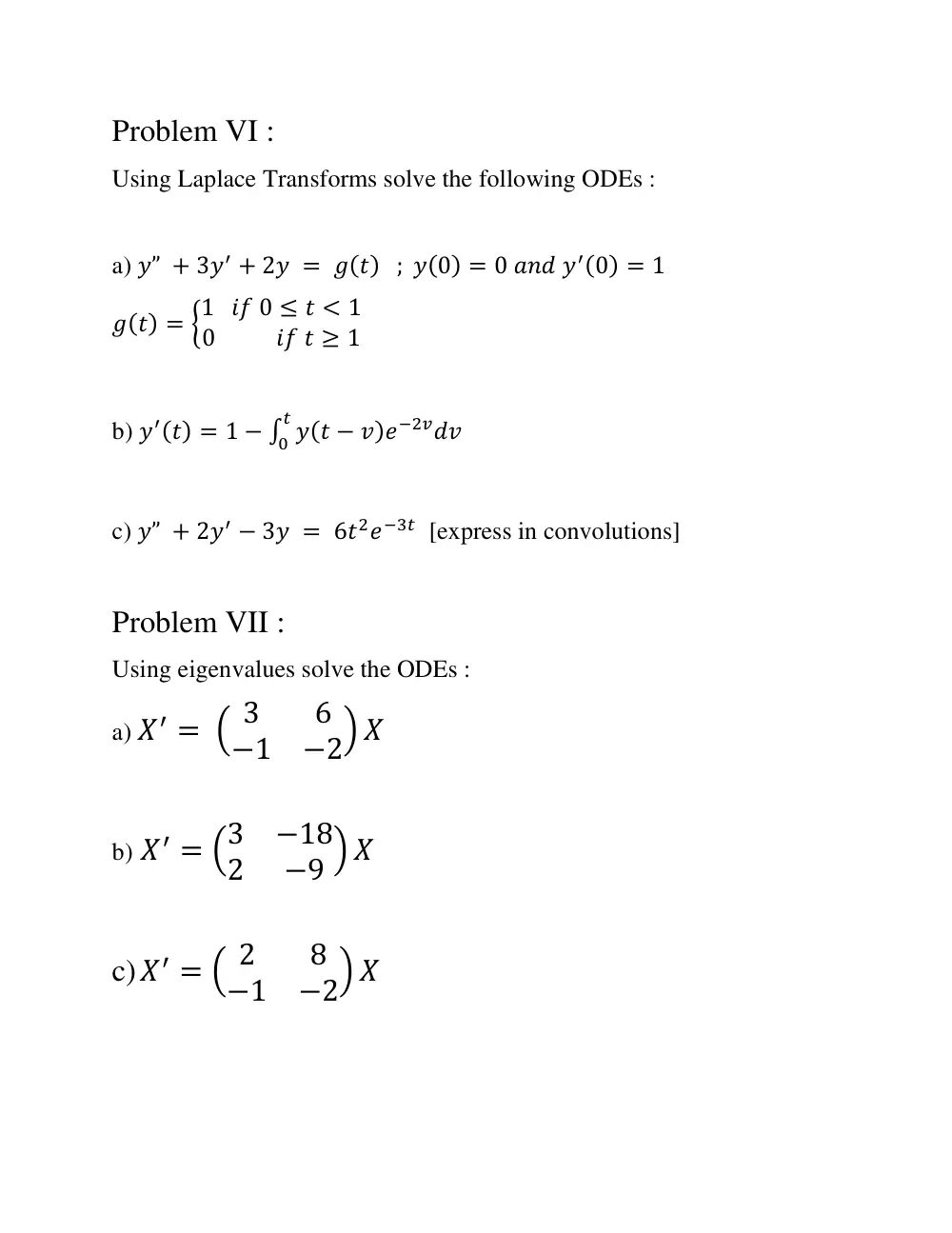
Problem VI :
Using Laplace Transforms solve the following ODEs :
a) 𝑦” + 3𝑦′ + 2𝑦 = 𝑔(𝑡) ; 𝑦(0) = 0 𝑎𝑛𝑑 𝑦′(0) = 1
𝑔(𝑡) = {1 𝑖𝑓 0 ≤ 𝑡 < 1
0 𝑖𝑓 𝑡 ≥ 1
b) 𝑦′(𝑡) = 1 − ∫ 𝑦(𝑡 − 𝑣)𝑒−2𝑣𝑑𝑣
𝑡
0
c) 𝑦” + 2𝑦′ − 3𝑦 = 6𝑡2𝑒−3𝑡 [express in convolutions]
Problem VII :
Using eigenvalues solve the ODEs :
a) 𝑋′ = ( 3
6
−1
−2) 𝑋
b) 𝑋′ = (3
−18
2
−9 ) 𝑋
c) 𝑋′ = ( 2
8
−1
−2) 𝑋
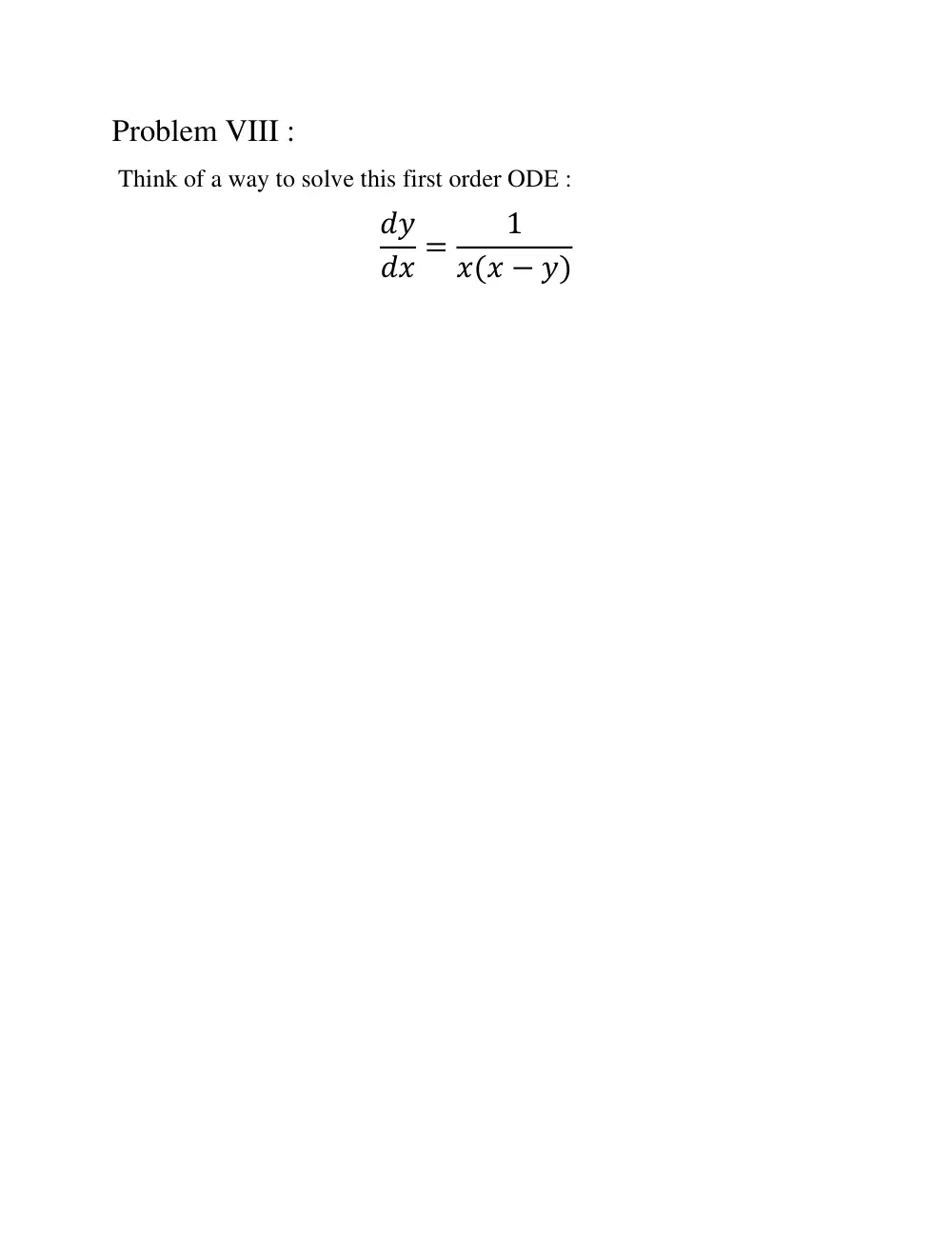
Problem VIII :
Think of a way to solve this first order ODE :
𝑑𝑦
𝑑𝑥 =
1
𝑥(𝑥 − 𝑦)