
CVSP 201 Final, Fall 1995
American University of Beirut · Ancient, Medieval and Renaissance Culture · 1 page
Stuck on a question? A tutor can walk you through it.
More CVSP 201 files
Show the text of this final exam
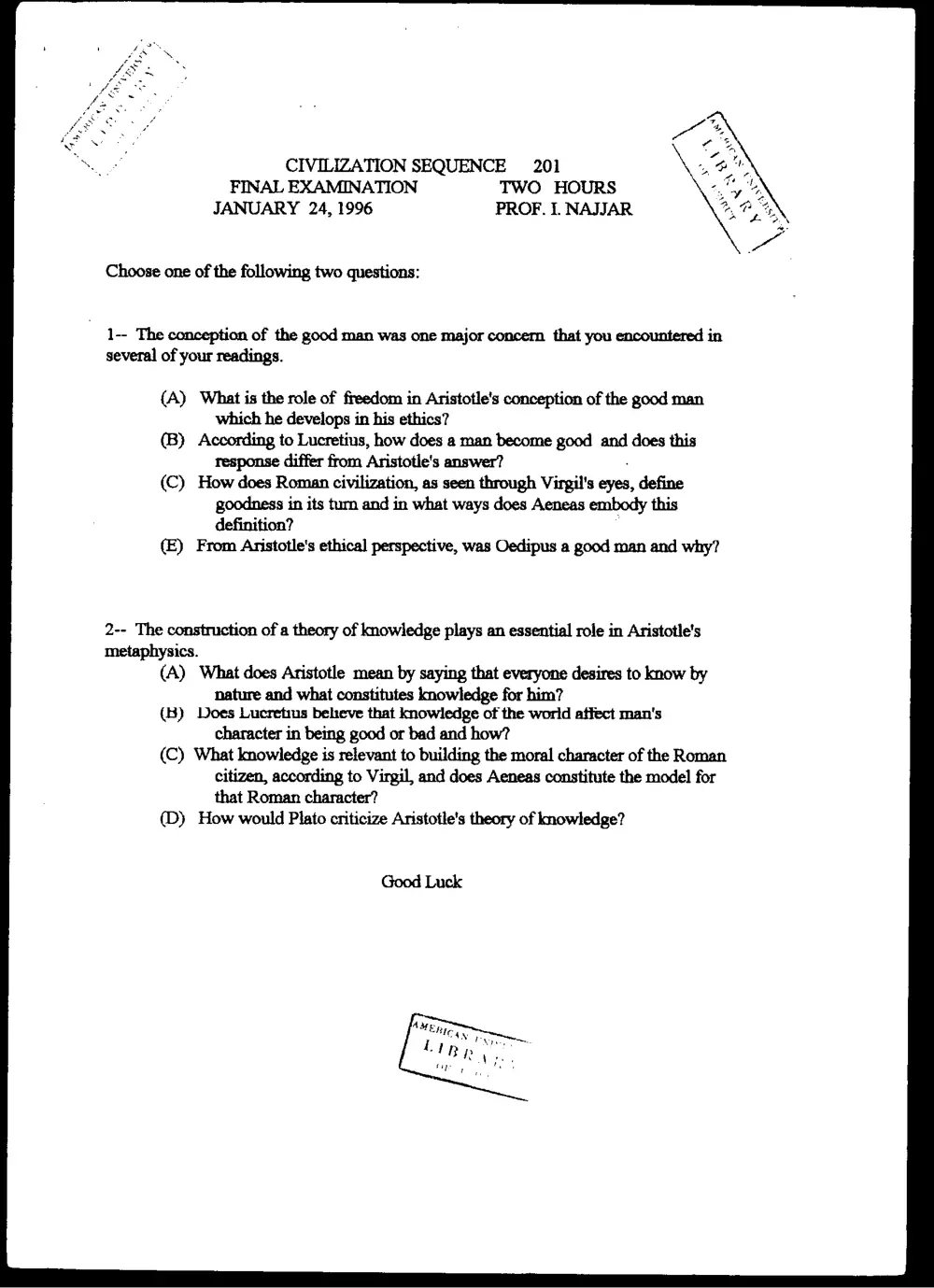
CIVILIZATION SEQUENCE 201
FINAL EXAMINATION TWO HOURS
JANUARY 24, 1996 PROF. I. NAJJAR
Choose one of the following two questions:
1-- The conception of the good man was one major concem that you encountered in
several of your readings.
(A) What is the role of freedom in Aristotle's conception of the good man
which he develops in his ethics?
(B) According to Lucretius, how does a man become good and does this
response differ from Aristotle's answer?
(C) How does Roman civilization, as seen through Virgil's eyes, s, define
goodness in its tum and in what ways does Aeneas embody this
definition?
(E) From Aristotle's ethical perspective, was Oedipus a good man and why?
2-- The construction of a theory of knowledge plays an essential role in Aristotle's
metaphysics.
(A) What does Aristotle mean by saying that everyone desires to know by
nature and what constitutes knowledge for him?
(8) Does Lucretius believe that knowledge of the world affect man's
character in being good or bad and how?
(C) What knowledge is relevant to building the moral character of the Roman
citizen, according to Virgil, and does Aeneas constitute the model for
that Roman character?
(D) How would Plato criticize Aristotle's theory of knowledge?
Good Luck