
CVSP 201 Final, Fall 1996
American University of Beirut · Ancient, Medieval and Renaissance Culture · 7 pages


More CVSP 201 files
Show the text of this final exam
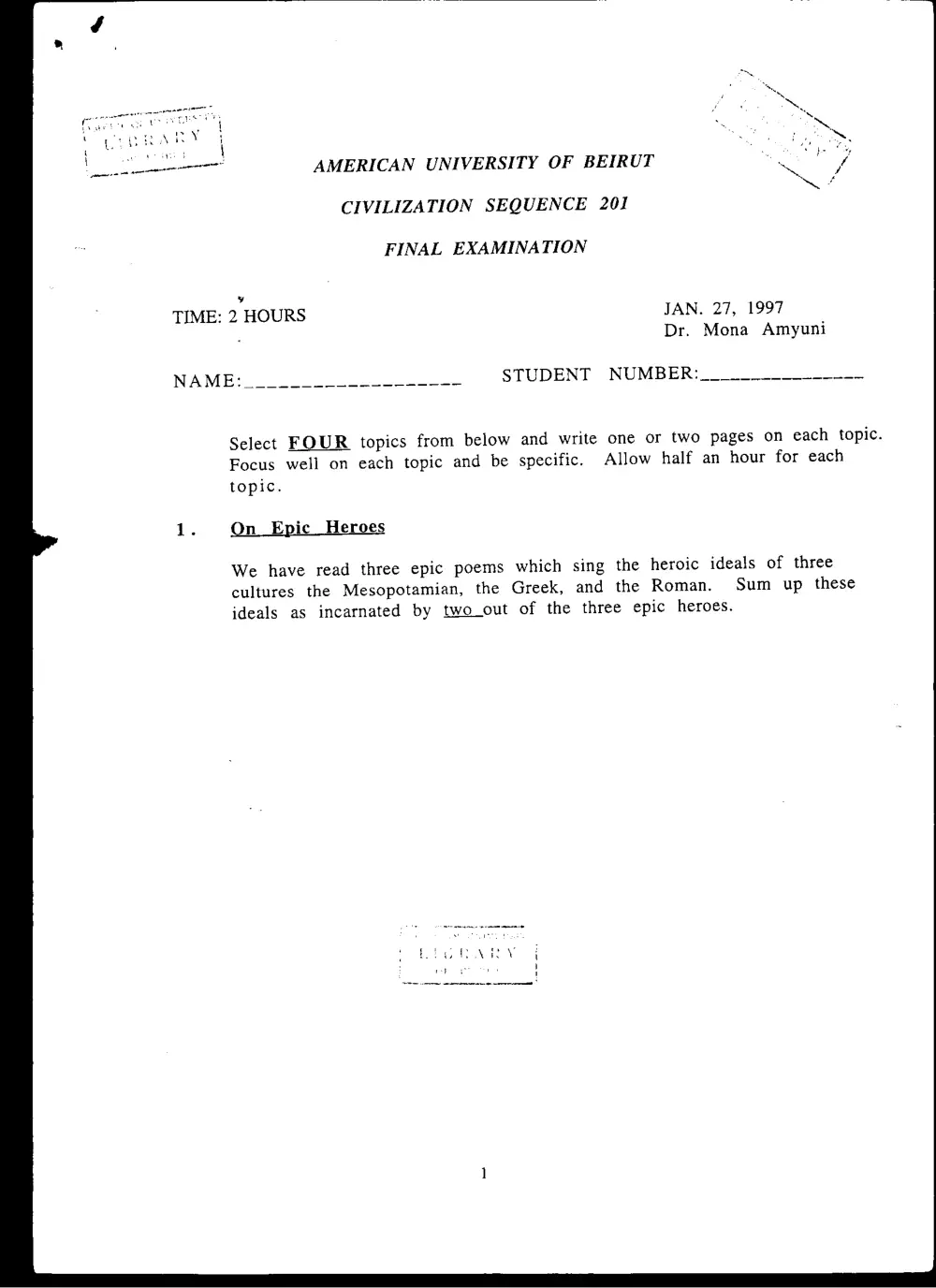
AMERICAN UNIVERSITY OF BEIRUT
CIVILIZATION SEQUENCE 201
FINAL EXAMINATION
¥
TIME: 2 HOURS JAN. 27, 1997
Dr. Mona Amyuni
STUDENT NUMBER:
Select FOUR topics from below and write one or two pages on each topic.
Focus well on each topic and be specific. Allow half an hour for each
topic.
On _Epic Heroes
We have read three epic poems which sing the heroic ideals of three
cultures the Mesopotamian, the Greek, and the Roman. Sum up these
ideals as incarnated by two out of the three epic heroes.
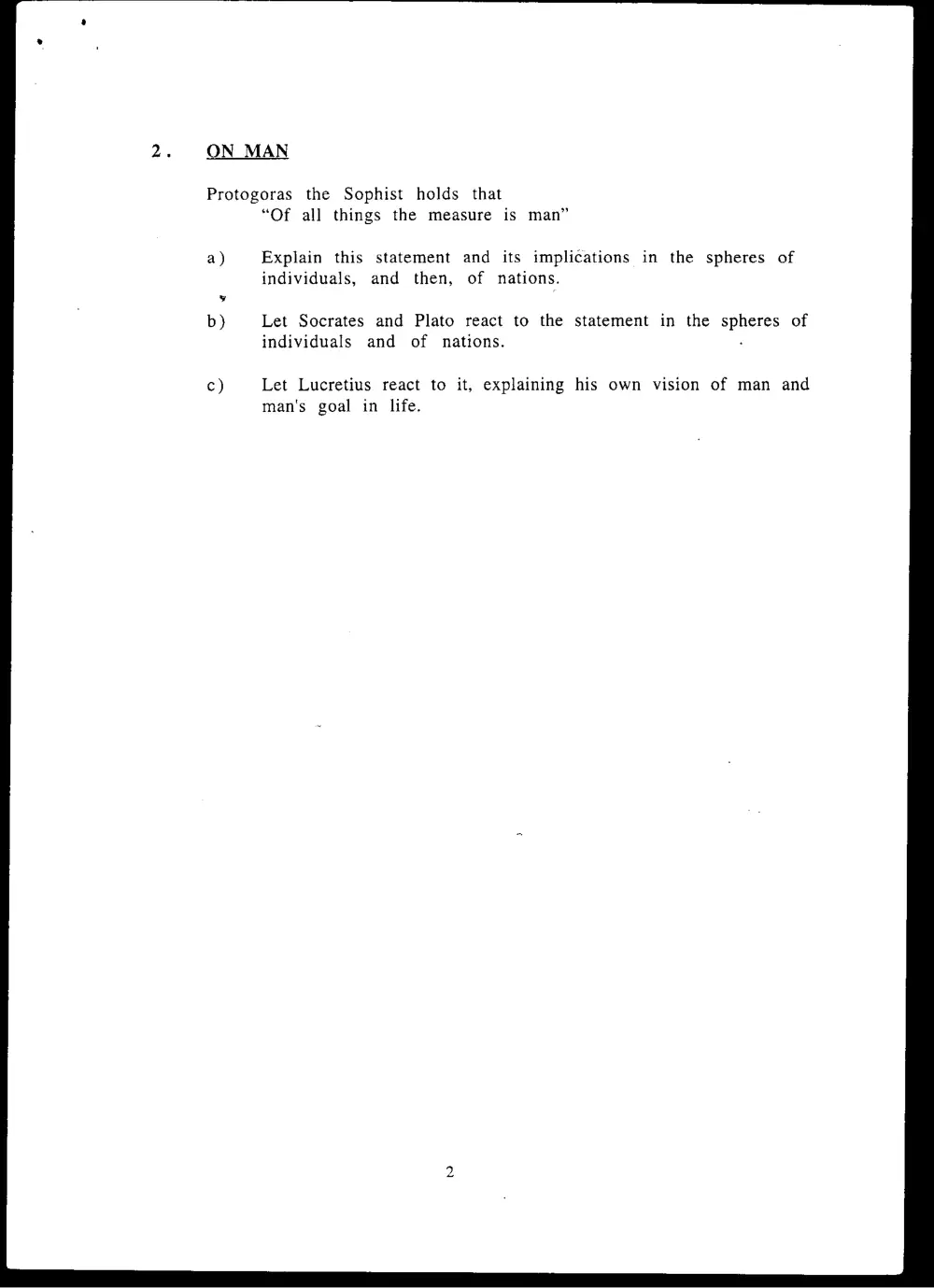
2. ON MAN
Protogoras the Sophist holds that
“Of all things the measure is man”
Explain this statement and its implications in the spheres of
individuals, and then, of nations.
Let Socrates and Plato react to the statement in the spheres of
individuals and of nations.
Let Lucretius react to it, explaining his own vision of man and
man's goal in life.
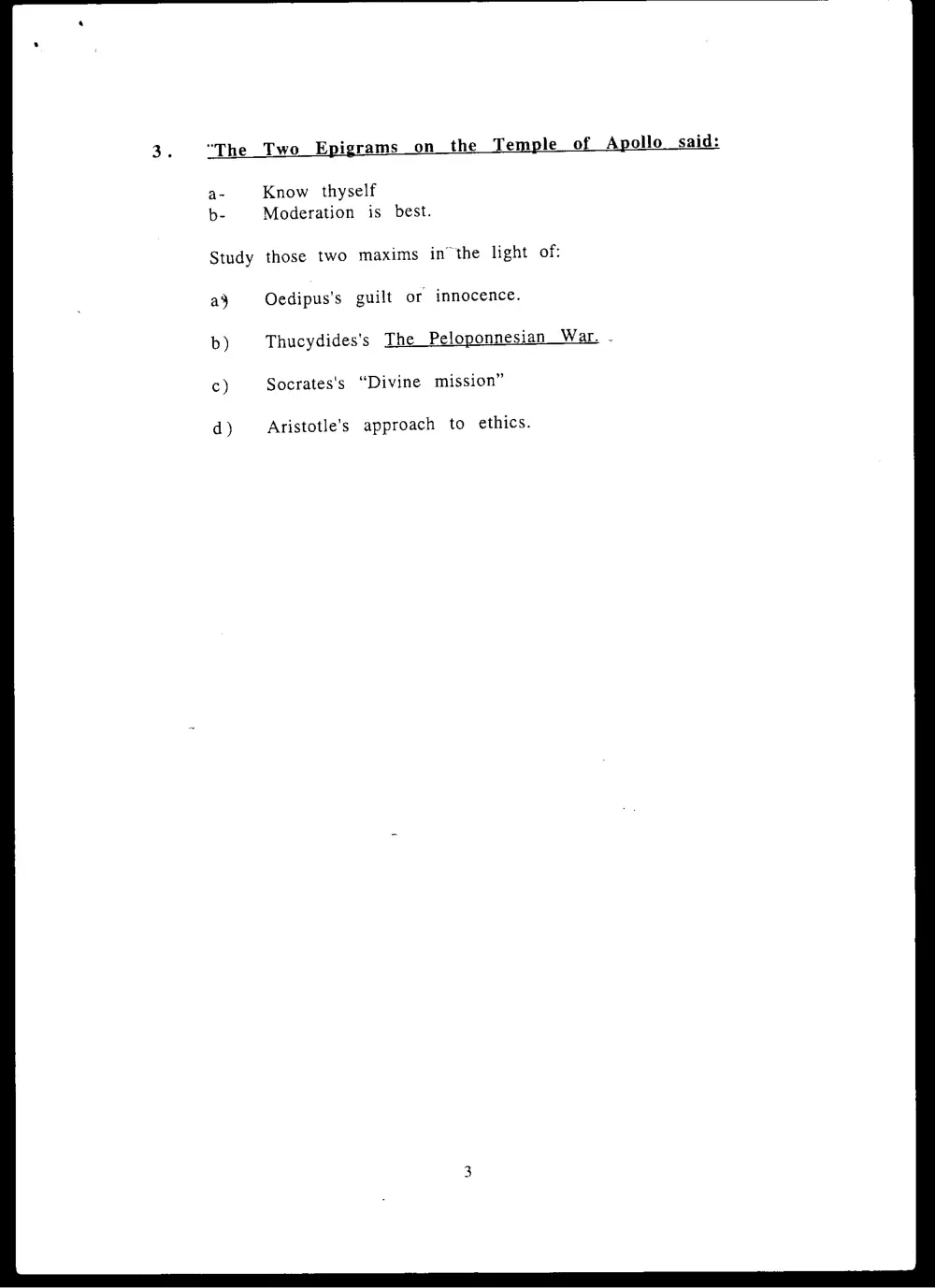
“The Two Epigrams on the Temple of Apollo said:
a- Know thyself
b- Moderation is best.
Study those two maxims in” the light of:
aj Oedipus's guilt or innocence.
b) Thucydides's The Peloponnesian War. .
c) Socrates's “Divine mission”
d) Aristotle's approach to ethics.
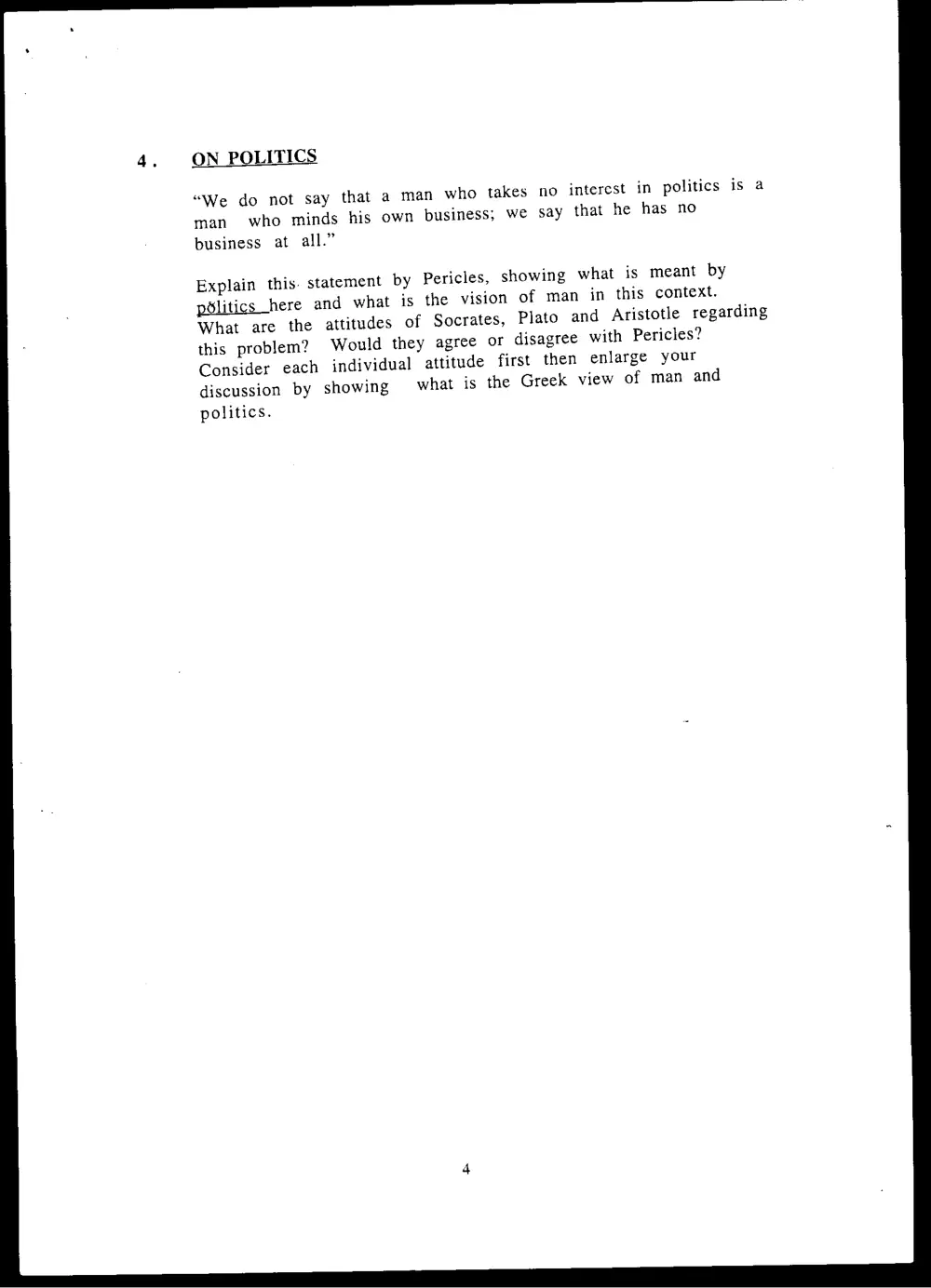
“We do not say that a man who takes no interest in politics is a
man who minds his own business; we say that he has no
business at all.”
Explain this. statement by Pericles, showing what is meant by
politics here and what is the vision of man in this context.
What are the attitudes of Socrates, Plato and Aristotle regarding
this problem? Would they agree or disagree with Pericles?
Consider each individual attitude first then enlarge your
discussion by showing what is the Greek view of man and
politics.
Compare and contrast the charaters (attitudes or characteristics of
personality etc..) of:
a) Odysseus & Aeneas
b) Penelope & Dido
ON LOVE
Compare and contrast the love - scenes between:
1. Odysseus and Kalypso
2. Odysseus and Penelope
y
3. Aeneas and Dido
Don't forget to situate each love-scene in its proper context and
to draw out of it important conclusions that relate to the
theme of each epic poem.
ON MORALITY: According to the Greek Unit we have read,
ld he improve in life, could he
has man a moral sense, cou
become a better man and how would he achieve this?
Take examples from our Greek readings to support your
discussion.
own stand in relation to
Give, in your conclusion, your
the problem under discussion.