
CVSP 201 Final, Spring 2001
American University of Beirut · Ancient, Medieval and Renaissance Culture · 4 pages

More CVSP 201 files
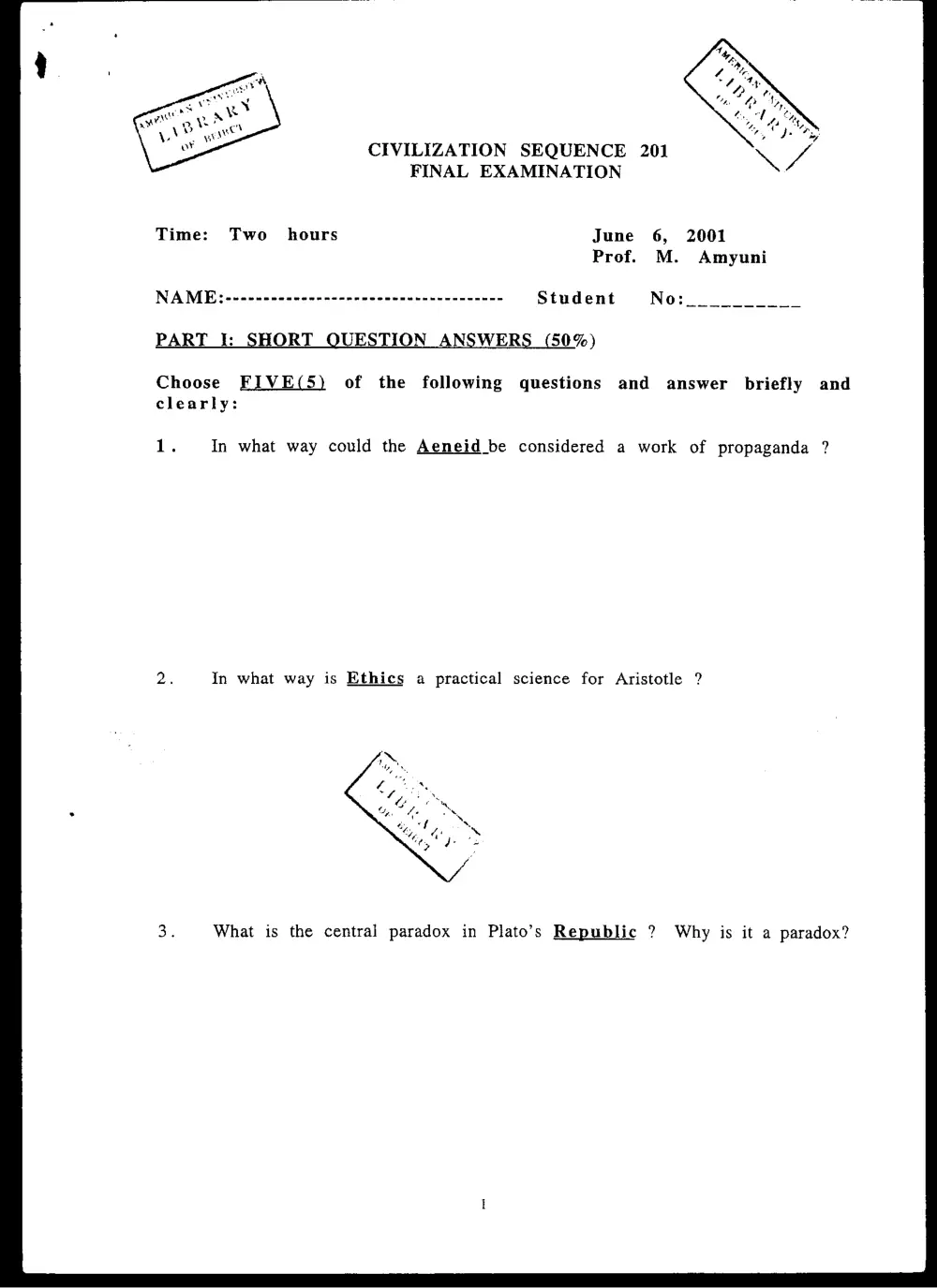
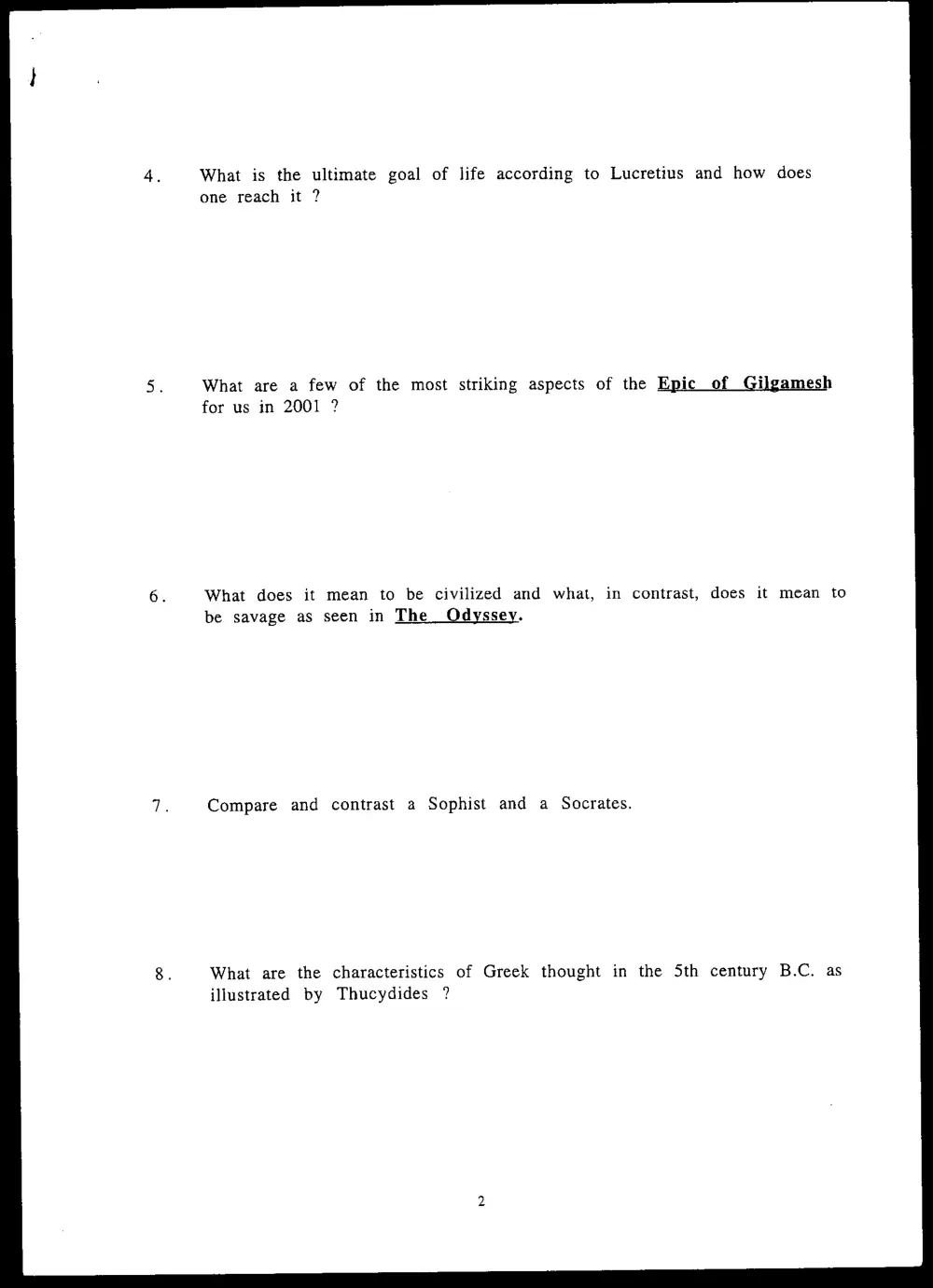
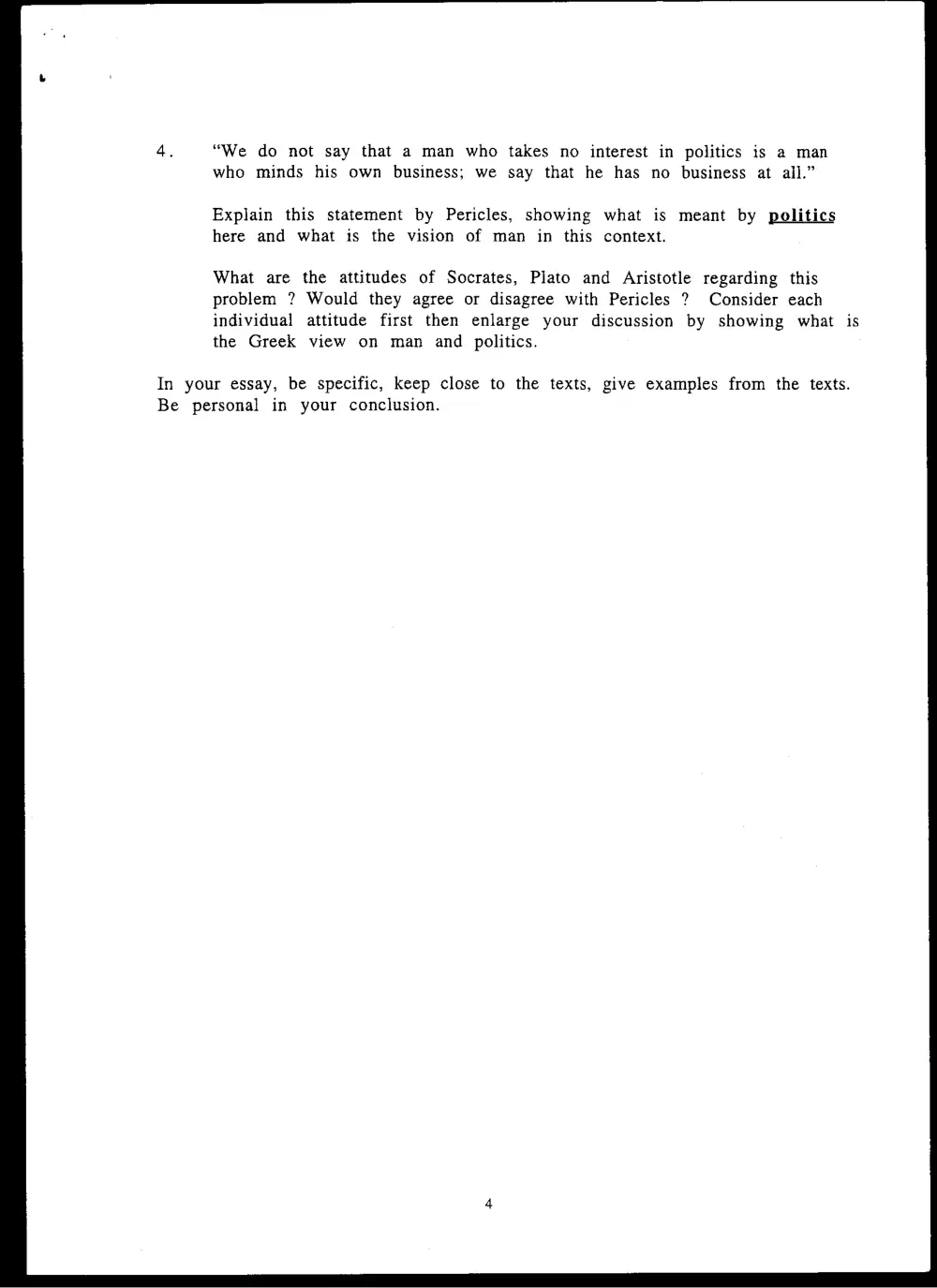
Show the text of this final exam
CIVILIZATION SEQUENCE 201
FINAL EXAMINATION
Time: Two hours June 6, 2001
Prof. M. Amyuni
NA MEF onan nn nn ene en nner nee nen e nen e enn nnn ne Student No:
PART 1: SHORT QUESTION ANSWERS (50%)
Choose FIVE(S) of the following questions and answer briefly and
clearly:
1. In what way could the Aeneid be considered a work of propaganda ?
2. In what way is Ethics a practical science for Aristotle ?
3. What is the central paradox in Plato’s Republic ? Why is it a paradox?
What is the ultimate goal of life according to Lucretius and how does
one reach it ?
What are a few of the most striking aspects of the Epic of Gilgamesh
for us in 2001 ?
What does it mean to be civilized and what, in contrast, does it mean to
be savage as seen in The dyssey.
Compare and contrast a Sophist and a Socrates.
What are the characteristics of Greek thought in the 5th century B.C. as
illustrated by Thucydides ?
PART II: Write a coherent _and_ well-organized essay on ONE of the
following topics:
On _ Leadership:
We have witnessed various attitudes towards leadership in our readings.
Such leaders were: Gilgamesh, Odysseus, Aeneas, Oedipus,
Pericles, the philosopher-King, the King of Sparta...
(a) Sum-up THREE or FOUR of these attitudes.
(b) Show in what way such attitudes are relevant or are not today.
(c) In your conclusion, say under whose leadership you would choose
to live.
OR
On Morality:
According to the Greek Unit we have read, has man a moral sense, could
he improve in life, could he become a better man and how would he
achieve this ?
- Take examples from our Greek readings to support your
discussion.
Give, in your conclusion, your own stand in relation to the
problem under discussion.
OR
On the human condition:
Sophocles, Oedipus the King.
Alas! you generations of men!
Even while you live you are next to nothing!
Has any man won for himself
More than the shadow of happiness,
A shadow that swiftlly fades away ?
..now as I look on you,
See your ruin, how can I say that
Mortal man can be happy ?
Explain it in the context of the play.
Let two or three other authors we have studied this semester
react to this vision of the human condition.
OR
“We do not say that a man who takes no interest in politics is a man
who minds his own business; we say that he has no business at all.”
Explain this statement by Pericles, showing what is meant by politics
here and what is the vision of man in this context.
What are the attitudes of Socrates, Plato and Aristotle regarding this
problem ? Would they agree or disagree with Pericles ? Consider each
individual attitude first then enlarge your discussion by showing what is
the Greek view on man and politics.
In your essay, be specific, keep close to the texts, give examples from the texts.
Be personal in your conclusion.