
CVSP 203 Final, Spring 2003
American University of Beirut · Modern and Contemporary Culture · 1 page
Stuck on a question? A tutor can walk you through it.
More CVSP 203 files
Show the text of this final exam
BNIVERSIT
Civilization Sequence Program LIBRARY
CVSP 203 Ov SEIRUT
Final Examination ~
Spring 2003-2004
Inanna Hamati-Ataya
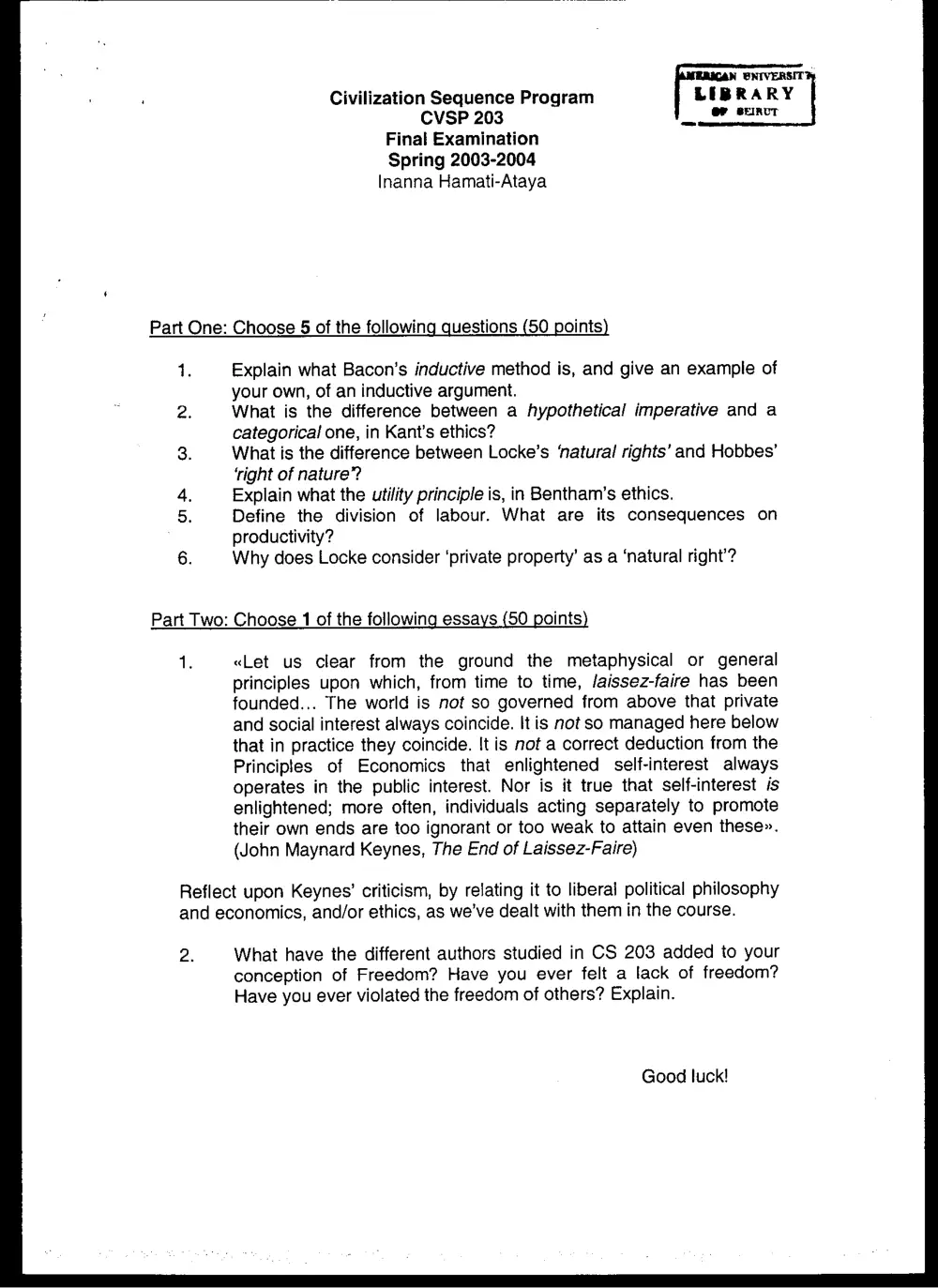
Part One: Choose 5 of the following questions (50 points)
1. Explain what Bacon’s inductive method is, and give an example of
your own, of an inductive argument.
2. What is the difference between a hypothetical imperative and a
categorical one, in Kant’s ethics?
3. What is the difference between Locke’s ‘natural rights’ and Hobbes’
‘right of nature”?
4, Explain what the utility principle is, in Bentham’s ethics.
5. Define the division of labour. What are its consequences on
; productivity?
6. Why does Locke consider ‘private property’ as a ‘natural right’?
Part Two: Choose 1 of the following essays (50 points)
1. «Let us clear from the ground the metaphysical or general
principles upon which, from time to time, laissez-faire has been
founded... The world is not so governed from above that private
and social interest always coincide. It is not so managed here below
that in practice they coincide. It is not a correct deduction from the
Principles of Economics that enlightened self-interest always
operates in the public interest. Nor is it true that self-interest is
enlightened; more often, individuals acting separately to promote
their own ends are too ignorant or too weak to attain even these».
(John Maynard Keynes, The End of Laissez-Faire)
Reflect upon Keynes’ criticism, by relating it to liberal political philosophy
and economics, and/or ethics, as we've dealt with them in the course.
2. What have the different authors studied in CS 203 added to your
conception of Freedom? Have you ever felt a lack of freedom?
Have you ever violated the freedom of others? Explain.
Good luck!