
AROL 213 Final, Fall 1995
American University of Beirut · The Human Story I The Old Stone Age · 2 pages

More AROL 213 files
Show the text of this final exam
Date: February 7, 1996 ____ Time: | hour 30 minutes (Prof. H. Seeden)
I
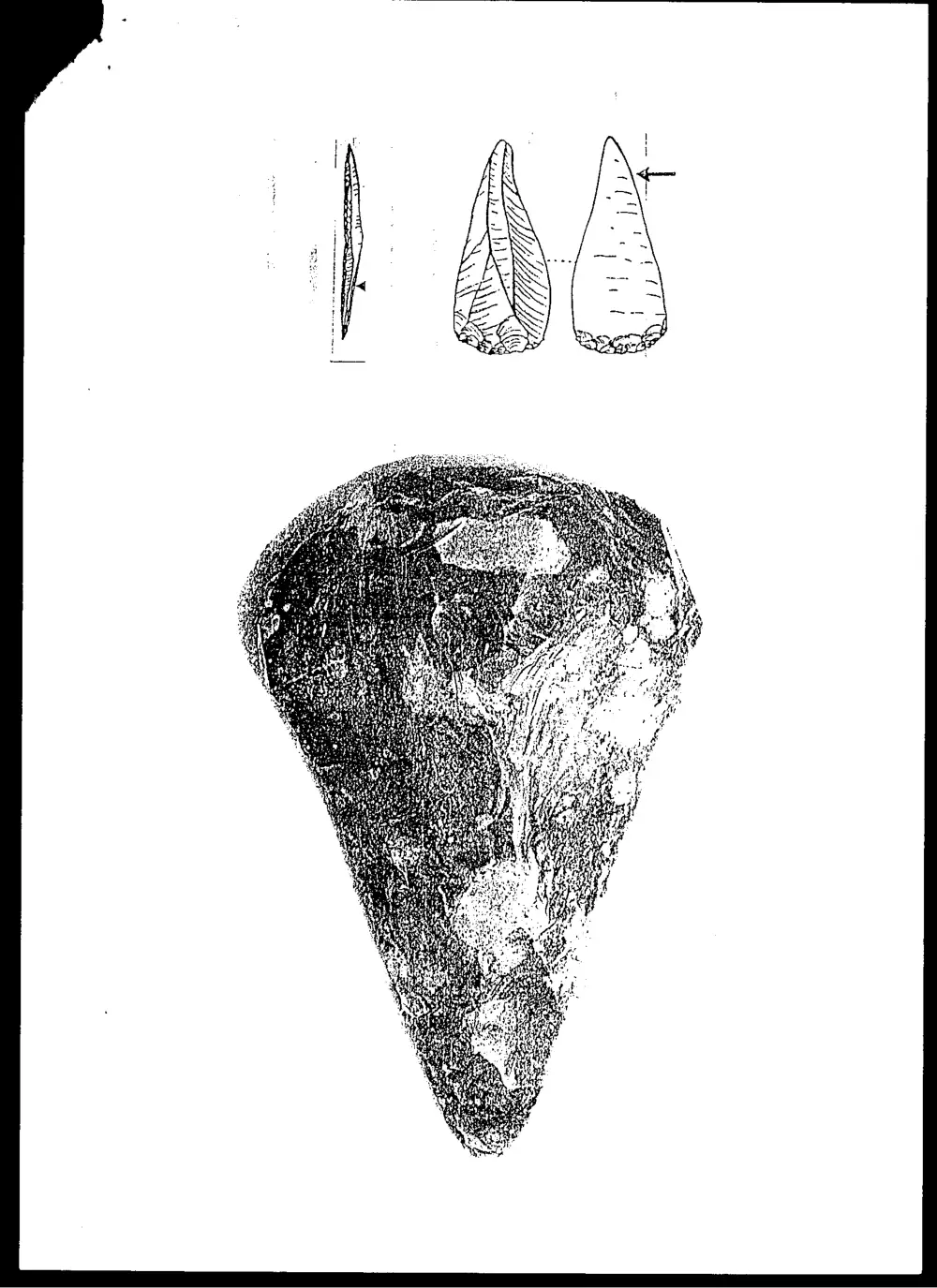
Please, identify the three palaeolithic worked flints on the attached
ilustration sheet by NAME
WORKING METHOD
PERIOD & AGE
POSSIBLE USE
il
Please, briefly discuss the framed question below first, and then answer
THREE of the subsequent questions concerned with particular aspects of
the human Story.
Begin each answer by repeating the title of the question.
List your major points under each part first!
“To all intents and purposes the physical evolution of humans all over
‘he world was complete by about 20,000 years ago. We do not see any further changes in the
skulls of skeletons of human beings. But what now begins to evolve very rapidly are ideas,
skills and ways of living, The retreat of the ice encouraged considerable local adaptations of
the hunting and gathering lifestyle, and of course, isolated the inhabitants of Australia and
the Americas.”
* List the main features of the evolution of the skeleton, skull, brain size and
capacity of early hominids and compare them with those of modern humans of
about 20,000 years ago.
* Describe a day in the life of a hunting-gathering group of people.
* There is increasingly rapid progress in tool-making technologies from the
Lower Palaeolithic to the Upper Palaeolithic period. List the major steps of this
progress.
* What do you know about the ART of Stone Age hunter-gatherers?
* What, if anything, can the study of Early Humans and Native Peoples with
hunter-gatherer economies of the world today teach us about ourselves ?