
AROL 213 Final, Fall 2003
American University of Beirut · The Human Story I The Old Stone Age · 2 pages
More AROL 213 files
Show the text of this final exam
THe Human Story I!
THE OLD STONE AGE | (up to ca, 10,000 BC)
Final Examination
_ IDENTIFY THE IMAGES
j 50% (ONE hour)
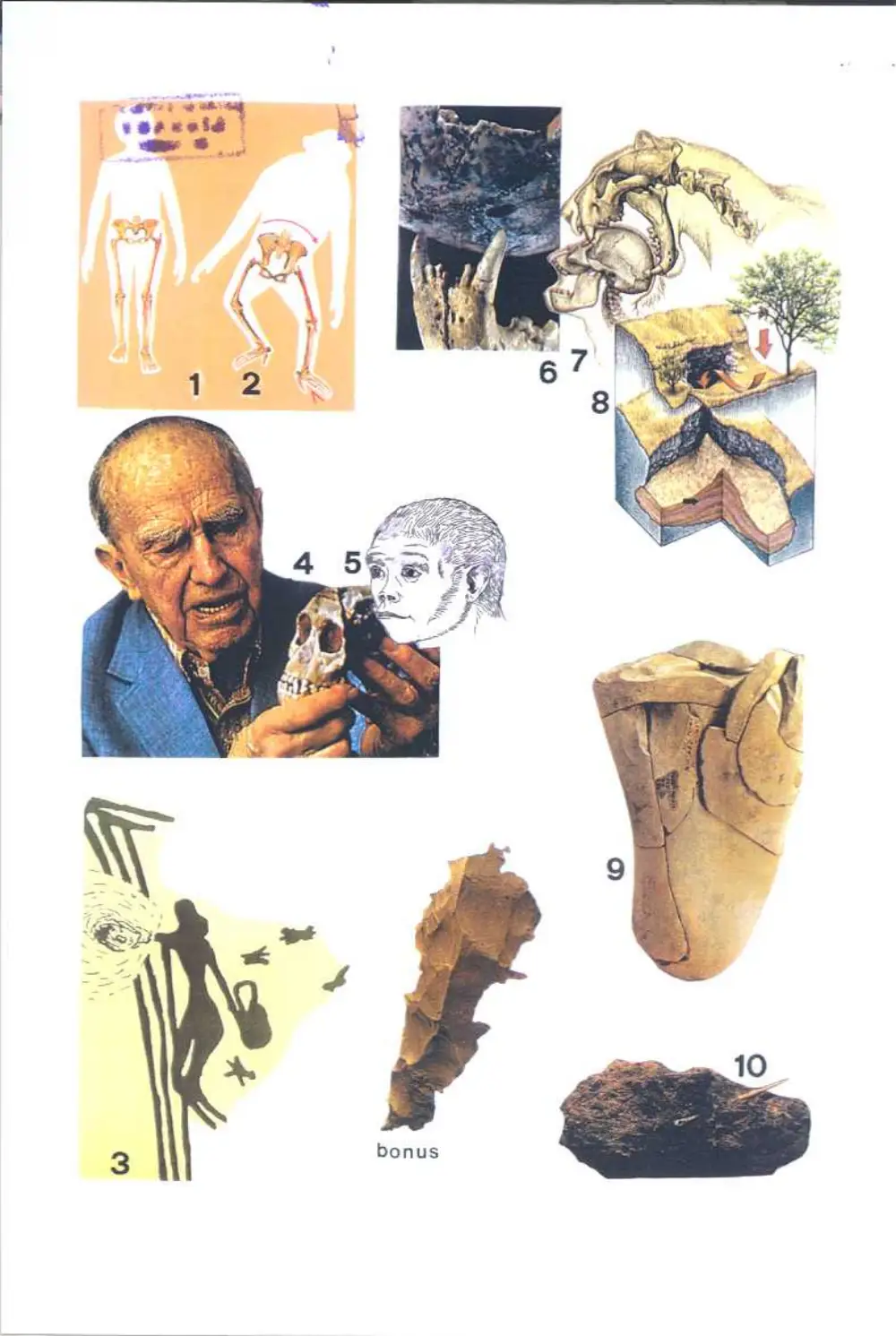
- The photographs of discoveries and reconstructions explaining events, on
the back of this page represent both prehistoric finds and present-day
observations
- Please, briefly identify the finds and tell the stories
Firststory: illustrations 1 & 2;
Second story: illustration 3:
Thirdstory: illustrations 4 & 5,
Fourth stery: illustrations 6 - 8:
Fifth story: illustrations 9 & 10.
The discovery in Africa of Austrafopithecines, and the study of their skeletal remains and teeth
have revealed that they were bipedal, did not eat meat as a regular part of their diet, and were unable ro hunt
large animals. They were mainly peaceful vegetarians, rather ike chimps and gorillas today. The first—
early twentiethth century—popular image of the ‘murderous ape* is now as extinct as the Australopithecines
themselves.
- New (late 19th and later 20th century) research methodologies and
ethnographic observations enabled prehistoric archaeologists and
palaeoanthropologists 7o more correctly piece together the story of our fossil
ancestors. Describe how and give examples.
There are important other sources of information to indicate that early humans of both sexes were
food-sharing, creative, and rather more cooperative than assumed by many at the beginning of prehistoric
research.
- If you wanted to make a firm about the environmental context or ‘world’,
and the life style of some of our ‘Stone Age’ ancestors, where would you look for
your Information, where would you go to shoot the film, and what story or stories
would you Tell?
- Did the visit to fhe Museum of Lebanese Prehistory help you in better
understanding the prehistoric human story?