
AROL 213 Final, Fall 1997
American University of Beirut · The Human Story I The Old Stone Age · 2 pages
More AROL 213 files
Show the text of this final exam
JW A !
| AMVNUIT | VEXPLUAVET)| TYAW Qe]
.AISLAIN TT TAY JAN PMA EAA u A, LAVAL] f y J o5
y= TA y= Pr \ ;
HS UGOR sasT 19 THUG vT@ De Wee |
<P
Se yey q] ima Real ees TF
Jus LUNs OOM J
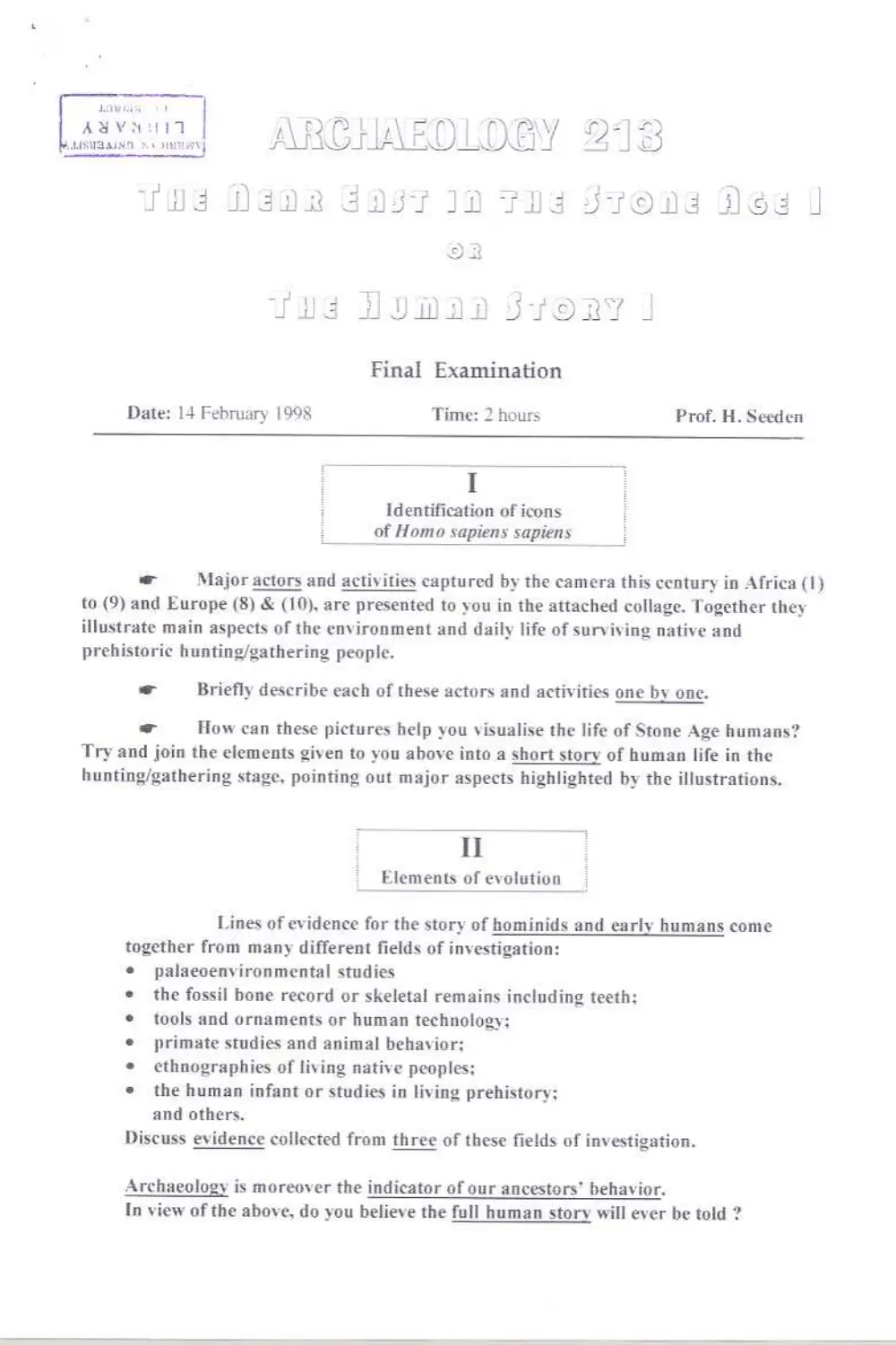
Final Examination
Date: 14 February 1998 Time: 2 hours Prof. H. Seeden
I
Identification of icons
of Homo sapiens sapiens
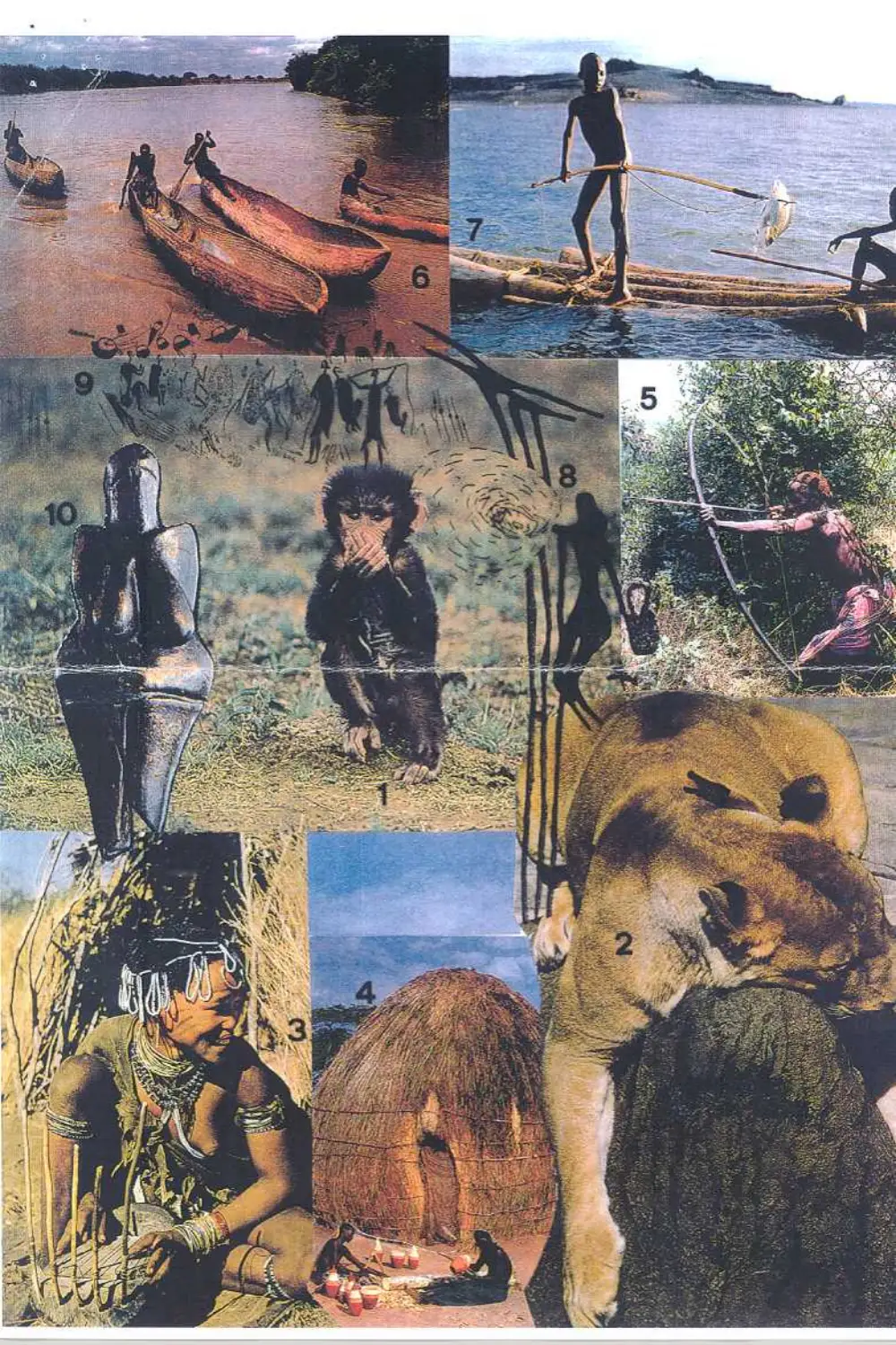
- Major actors and activities captured by the camera this century in Africa (1)
to (9) and Europe (8) & (10), are presented to vou in the attached collage. Together they
illustrate main aspects of the environment and daily life of surviving native and
prehistoric hunting/gathering people.
= Briefly describe each of these actors and activities one by onc.
- How can these pictures help you visualise the life of Stone Age humans?
Try and join the elements given to you above into a short story of human life in the
hunting/gathering stage, pointing out major aspects highlighted by the illustrations.
Il
Elements of evolution
Lines of evidence for the story of hominids and early humans come
together from many different fields of investigation:
* palaeoenvironmental studies
* the fossil bone record or skeletal remains including teeth;
* tools and ornaments or human technology;
* primate studies and animal behavior;
® ethnographies of living native peoples:
e
the human infant or studies in living prehistory:
and others.
Discuss evidence collected from three of these fields of investigation.
Archaeology is moreover the indicator of our ancestors’ behavior.
In view of the above, do you believe the full human story will ever be told ?