
ECN 212 Chapter 17, Spring 2007
Notre Dame University–Louaize · Principles of Macroeconomics · 96 pages · Mr. Hrair Hovivian

Showing the first 10 of 96 pages. Download the PDF to see all of it.
More ECN 212 files
- Problems Quest.&Answ. Chapter 5 Introduction to Macroeconomics · Spring 2012ChapterView
- Chapter 19 · Spring 2007ChapterView
- Chapter 20 · Spring 2007ChapterView
- Chapter 21 · Spring 2007ChapterView
- Chapter 22 · Spring 2007ChapterView
- Chapter 25 · Spring 2007ChapterView
- Chapter 1 · Spring 2007ChapterView
- Problems with Some Answers · Fall 2008Problems · with solutionView
Show the text of this chapter
1
Introduction to
Macroeconomics
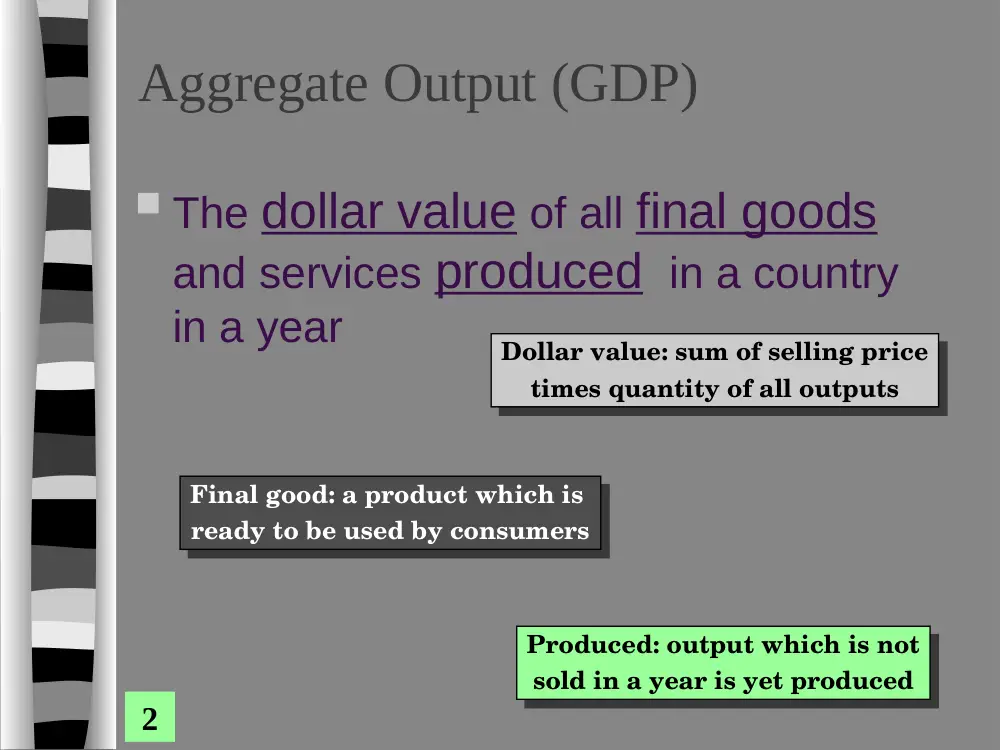
Aggregate Output (GDP)
The dollar value of all final goods
and services produced in a country
in a year
Produced: output which is not
sold in a year is yet produced
Produced: output which is not
sold in a year is yet produced
Final good: a product which is
ready to be used by consumers
Final good: a product which is
ready to be used by consumers
Dollar value: sum of selling price
times quantity of all outputs
Dollar value: sum of selling price
times quantity of all outputs
2
3
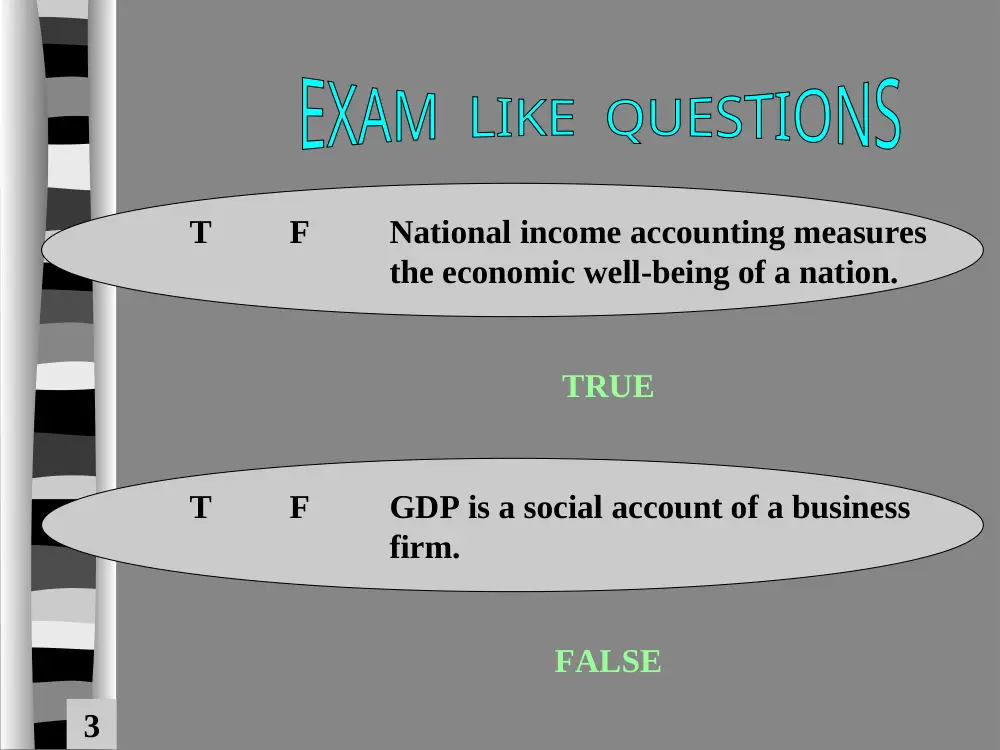
T
F
National income accounting measures
the economic well-being of a nation.
TRUE
T
F
GDP is a social account of a business
firm.
FALSE
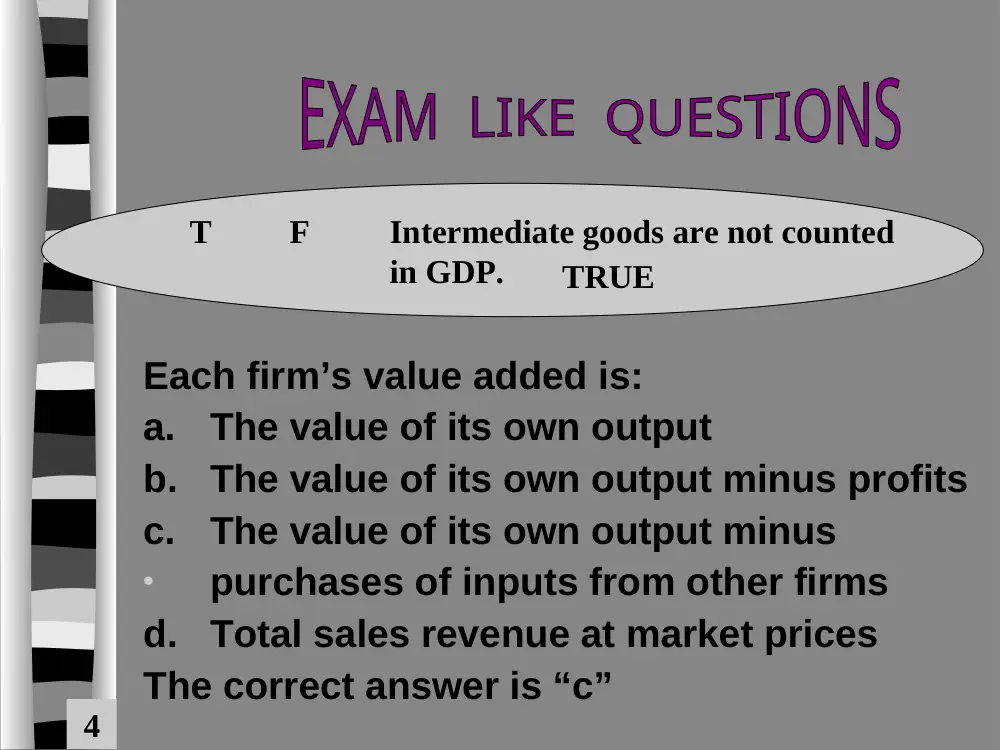
Each firm’s value added is:
a.
The value of its own output
b.
The value of its own output minus profits
c.
The value of its own output minus
•
purchases of inputs from other firms
d.
Total sales revenue at market prices
The correct answer is “c”
4
T
F
Intermediate goods are not counted
in GDP.
TRUE
Measuring Welfare
1.
Level of GDP
1.
Gross level
2.
Per capita level
2.
Growth rate of GDP
Percentage change in GDP over time
5
Fluctuations in GDP
GDP rises and falls over short spans
of time
At any point in time, it may be above
or below its long run trend
These fluctuations define the
business cycle
66
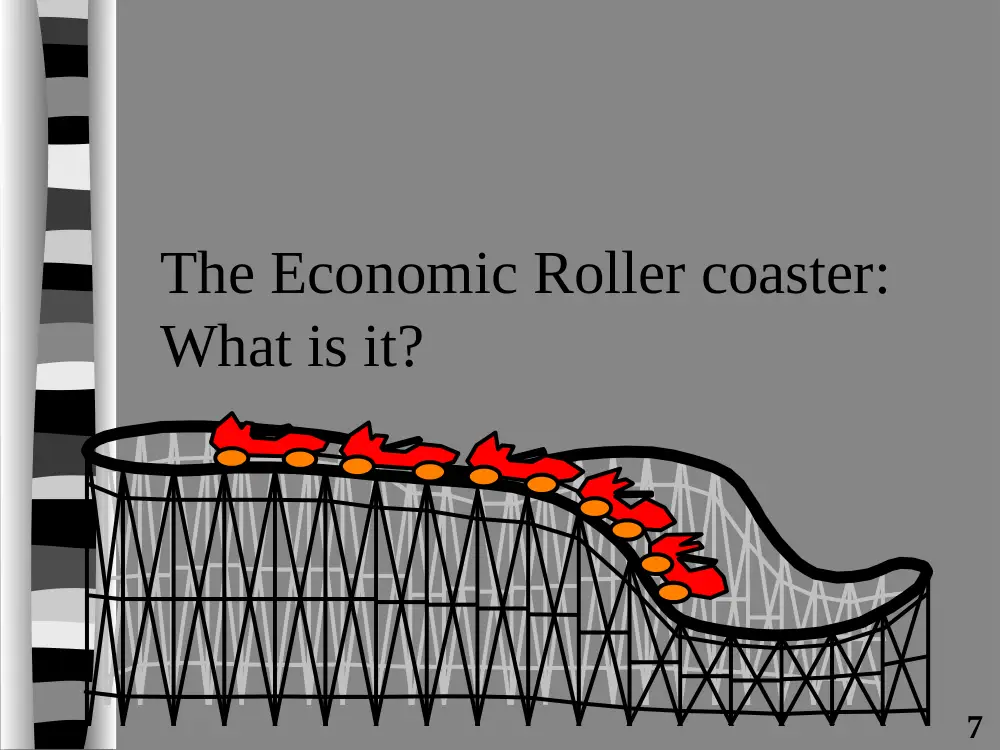
The Economic Roller coaster:
What is it?
7
Peak
Trough
Recession
(slump)
Expansion
(boom)
Parts of the
Business Cycle
Aggregate
Output
time
8
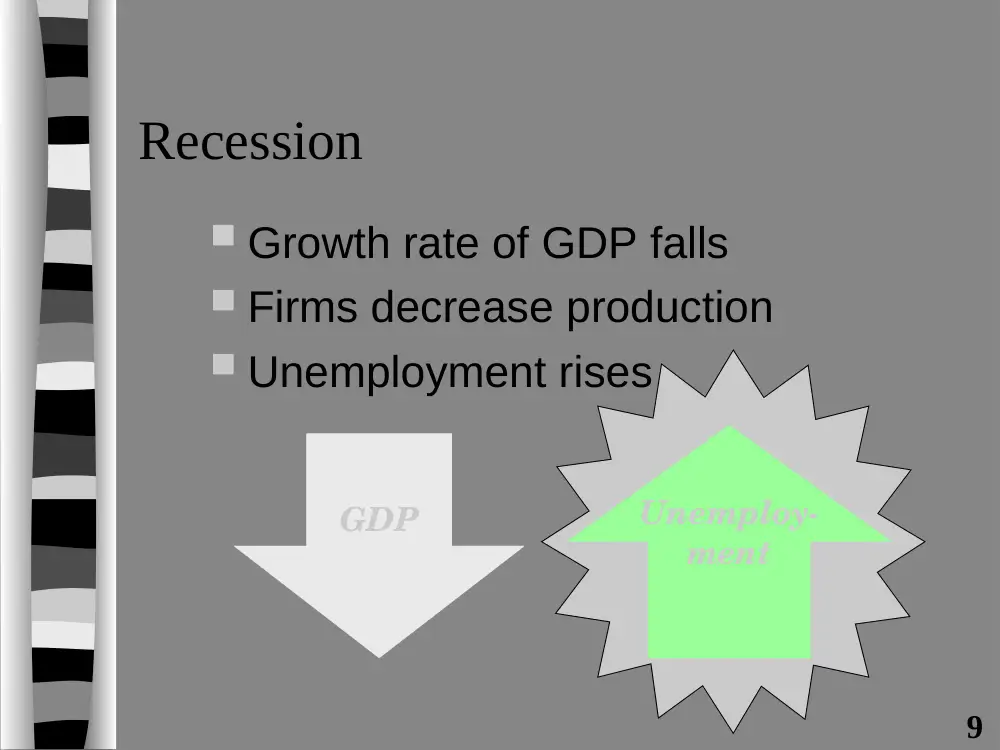
Recession
Growth rate of GDP falls
Firms decrease production
Unemployment rises
GDP
Unemploy-
ment
9
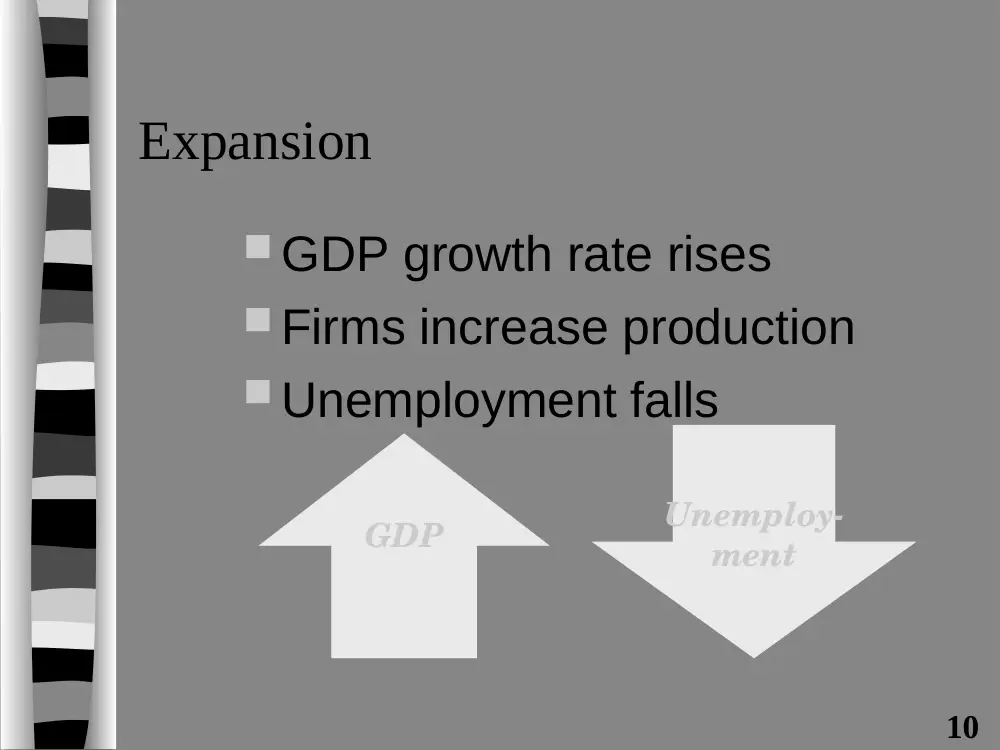
Expansion
GDP growth rate rises
Firms increase production
Unemployment falls
GDP
Unemploy-
ment
10
Unemployment
Unemployment rate: the percentage
of people in the labor force who
can’t find a job
Labor Force: people
Labor Force: people
who are actively seeking
who are actively seeking
or are currently holding
or are currently holding
a job
a job
Labor Force: people
Labor Force: people
who are actively seeking
who are actively seeking
or are currently holding
or are currently holding
a job
a job
11
Global Issues
Net Exports = Exports - Imports
– Exports: goods produced in
Lebanon and sold overseas
– Imports: goods produced overseas
and sold in Lebanon
Exchange rate: price of one
currency in terms of another
12
Introduction to
Macroeconomics
The Circular Flow
13
Consume
(C)
Save
(S)
Work
(N)
Pay
taxes
(T)
Households
14
Produce
(GDP)
Invest
(I)
Buy inputs
(N)
Pay taxes
(T)
Firms
15
Financial
Institutions
Intermediates between savers
and investors
16
Government
17
Rest of the World
Exports
(X)
Imports
(IM)
18
19
Firms
Households
20
Purchases of Goods and Services
21
Purchases of Goods and Services
Wages, Interest, Dividends, and rent
22
Government
23
Purchases of
Goods and Services
Taxes
24
Purchases of
Goods and Services
Wages, Interest,
Transfer Payments
Taxes
Taxes
25
Rest of the World
26
Exports
Imports
27
The Circular
Flow Lesson
28
The Circular Flow Lesson
Expenditures
=
Receipts!
Expenditures
=
Receipts!
29
30
30
Three Market Arenas
Goods and services market
Labor market
Money (financial) market
31
Goods and Services Market
Household, Firms and Government
purchase goods and services
Firms supply goods and services
32
Labor Market
Firms and Government
demand labor
Households supply labor
33
Financial Markets
Households, Firms and Government
demand funds
Households supply funds
34
GDP
vs.
GNP
35
Measuring National
Output and National
Income
Calculating GDP
36
EXCLUSIONS FROM THE
GDP
NON-PRODUCTIVE TRANSACTIONS
SECOND HAND SALES
37
NON-PRODUCTIVE
TRANSACTIONS
SECURITY TRANSACTIONS
TRANSFER PAYMENTS
38
Which of the following is not part of national
income?
a.
Unemployment benefits
b.
Rental income
c.
Salaries
d.
Net interest
The correct answer is
“a”, since it is a non-productive public
transfer payment.
39
T
F
Business transfer
payments
are excluded
from GNP.
“FALSE”
40
Expenditure Approach
41
GDP = C + I + G + (EX - IM)
42
Consumption
Durable goods: goods that last a
relatively long time
Nondurable goods: goods which are
perishable
Services: goods which do not involve
the production of physical things
43
Investment
Nonresidential: expenditures by firms
on machines, factories, tools, etc.
Residential: expenditures by
households on new houses and
apartment buildings
Business inventories: goods that firms
produce now with the intent to sell later
44
All of the following expenditures are
included in investment
expenditures except:
a.
Business purchase of a fleet of
cars
b.
Household purchase of a new
house
c.
Business purchase of the stock
of another company
d.
A retail store’s purchase of
shoes to add to inventory
The correct answer is
“c”
45
Which of the following are
counted as personal
consumption expenditures in
the national product
accounts?
a.
Housing rents
b.
Housing purchase
c.
Both a and b
d.
Neither a nor b
The correct answer is
“a”
46
NET INVESTMENT
GROSS INVESTMENT
- DEPRECIATION
EXPANDING ECONOMY
DECLINING ECONOMY
STATIC ECONOMY
47
What does a negative net
investment mean in terms of
depreciation?
Depreciation exceeds gross
investment.
48
Knowing that gross
investment is known as
birth of capital, what is
birth of capital less death
of capital?
NET INVESTMENT
49
Which of the following statements concerning
investment and investment goods is false?
a.
An accumulation of inventories counts as
current investment.
b.
Total amount of capital goods in a country is
called the capital stock.
c.
Net investment is equal to gross investment
minus depreciation.
d.
The capital consumption allowance refers to
funds for investment to increase the
economy’s total stock of capital.
The correct answer is
“d”
50
What types of economies there might be in
terms of gross investment, net investment,
and growth? Explain each.
If Ig > CCA In = +ve
Expanding economy
If Ig < CCA In = -ve
Declining economy
If Ig = CCA In = 0
Static economy
51
Government Purchases
Expenditures by the governments on
final goods
Does not include transfer payments
(social security, unemployment benefits,
etc.)
52
What does the “G” represent in the
gross national product?
Wrong answer:
Gross
Correct answer:
Government expenditures
53
Net Exports
Exports: sales to foreigners of goods
produced in Lebanon
Imports: purchases by Lebanese
citizens of foreign produced goods
Net Exports = Exports - Imports
54
Income Approach
55
National Income
Compensation of employees: wages, salaries,
etc., paid to households
Proprietors’ income: income of
unincorporated businesses
Corporate profits: income of corporations
Net interest: interest paid by businesses
Rental income: income received by property
owners
56
Depreciation
The decline in value of capital assets as
they wear out or become obsolete
57
Indirect Taxes: sales taxes, custom
duties, license fees, etc.
58
Indirect Taxes
Business Grants
Business Grants: donations made by
business firms.
59
NATIONAL INCOME
ACCOUNTS
GNP
NNP
NI
PI
DI
60