
EECE 340 Homework, Spring 2008
American University of Beirut · Signals and Systems · 15 pages

Showing the first 10 of 15 pages. Download the PDF to see all of it.
More EECE 340 files
- Homework 3 · Spring 2016HomeworkView
- Homework 1 Solution · Spring 2016Homework · with solutionView
- Homework 4 · Spring 2016HomeworkView
- Homework 3 Solution · Spring 2016Homework · with solutionView
- Homework 4 Solution · Spring 2016Homework · with solutionView
- Homework 1 · Spring 2016HomeworkView
- Homework 2 Solution · Spring 2016Homework · with solutionView
- Homework 2 · Spring 2016HomeworkView
Show the text of this homework
EECE 340-Signals and Systems
Homework #8
Problem #1
The system shown below is LTI. Let the system input and impulse response be
respectively given by:
x(n) = u(n) -u(n-N)
h(n) = a" u(n)
x(n) hin) y(n)
Determine the system output, y(#), using the inverse Z-transform.
Problem #2
A causal, linear and shift-invariant discrete-time system is described by the following
difference equation:
y(n) = y(n-1) + yp —-2)+x(n-D.
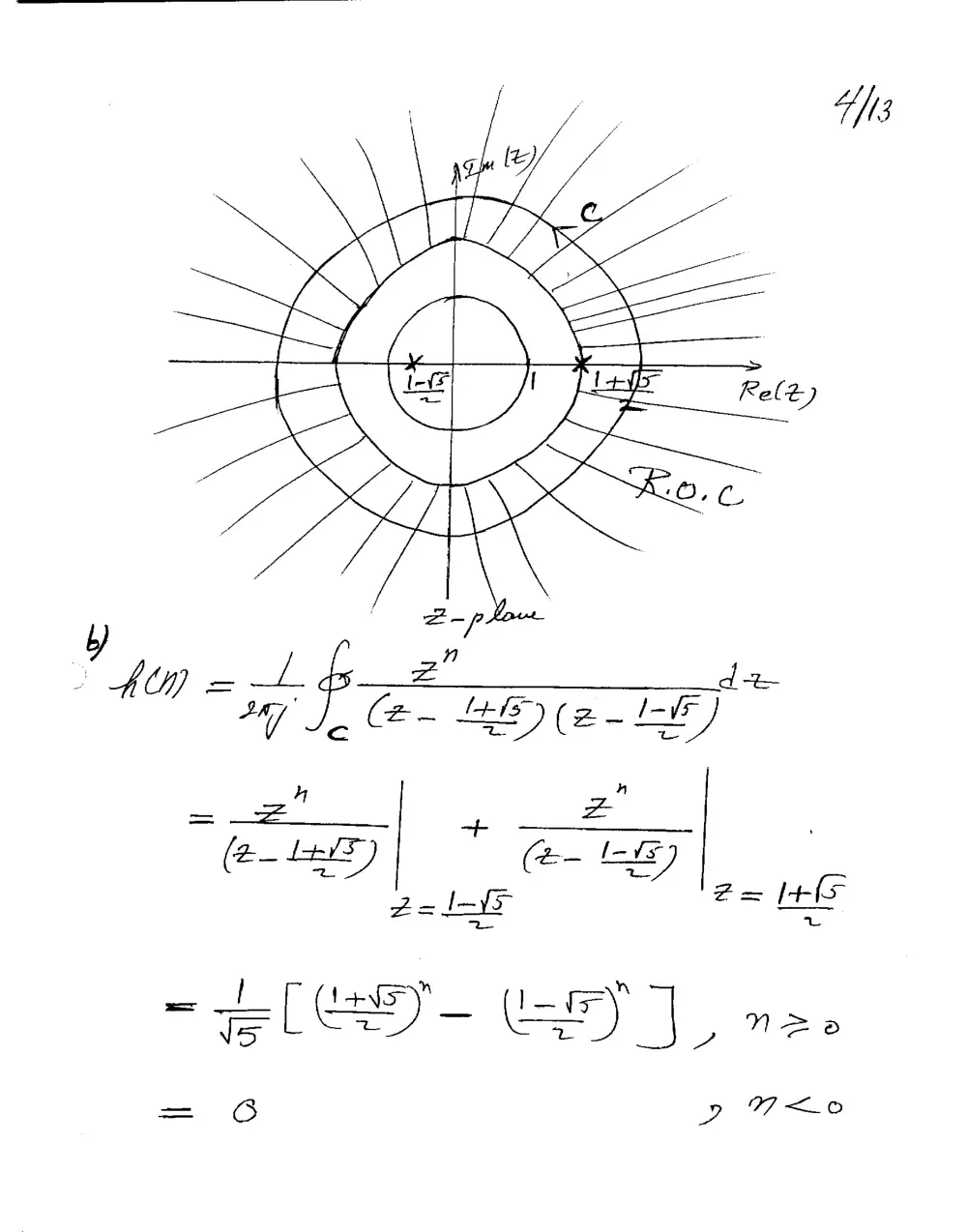
a) Find H (2), plot the poles and zeros of H (z) and indicate the ROC.
b) Find the unit sample (impulse) response of the system.
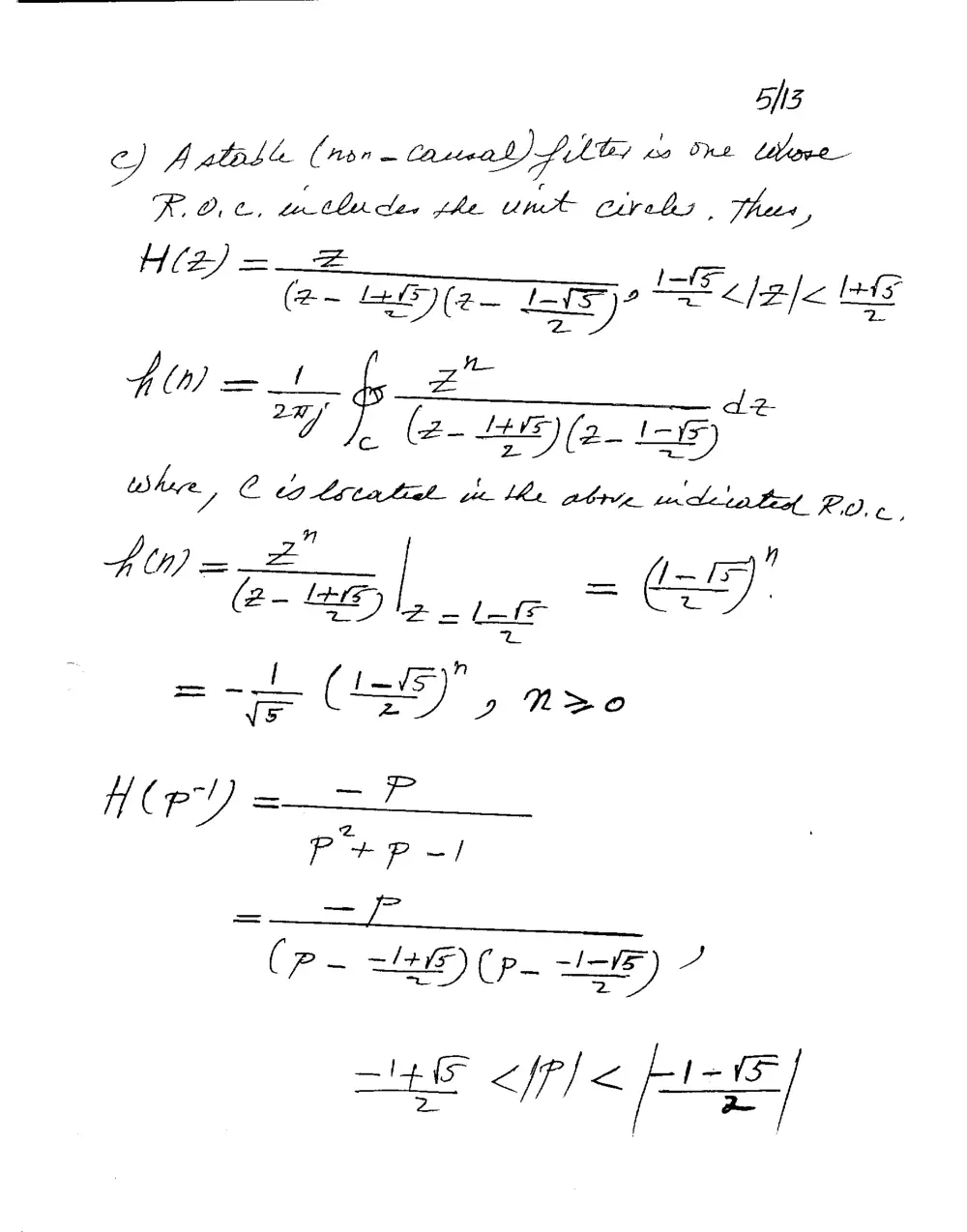
c) Find a stable and non-causal unit sample response that satisfies the given
difference equation.
Problem #3
Consider a causal, linear and shift-invariant discrete-time system with transfer function,
H(z), given by
“1-1
A(z)= ira where ais real.
I-az"'
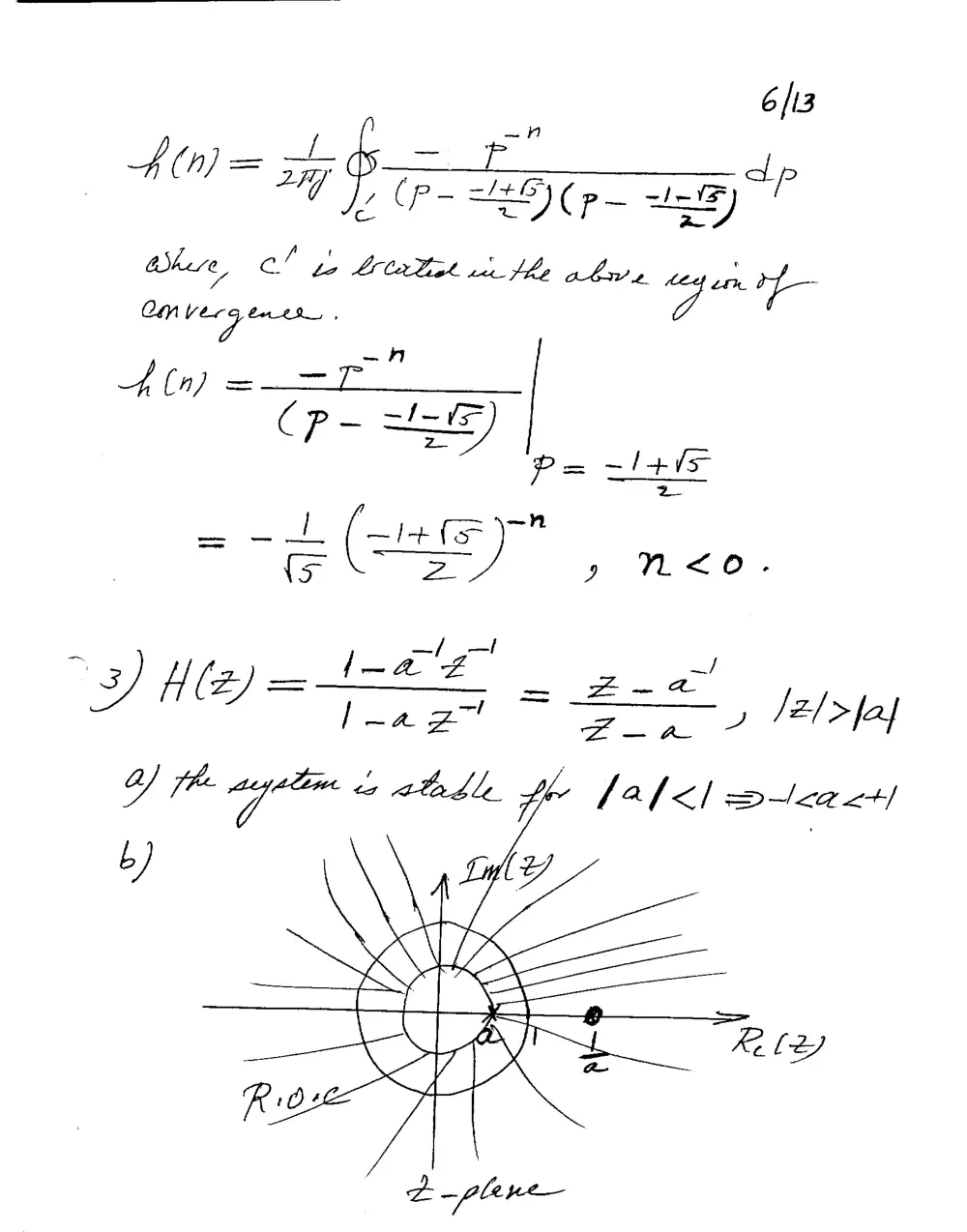
a) For what range of values of a the system is stable.
b) For 0<a<1 plot the pole-zero diagram and specify the ROC.
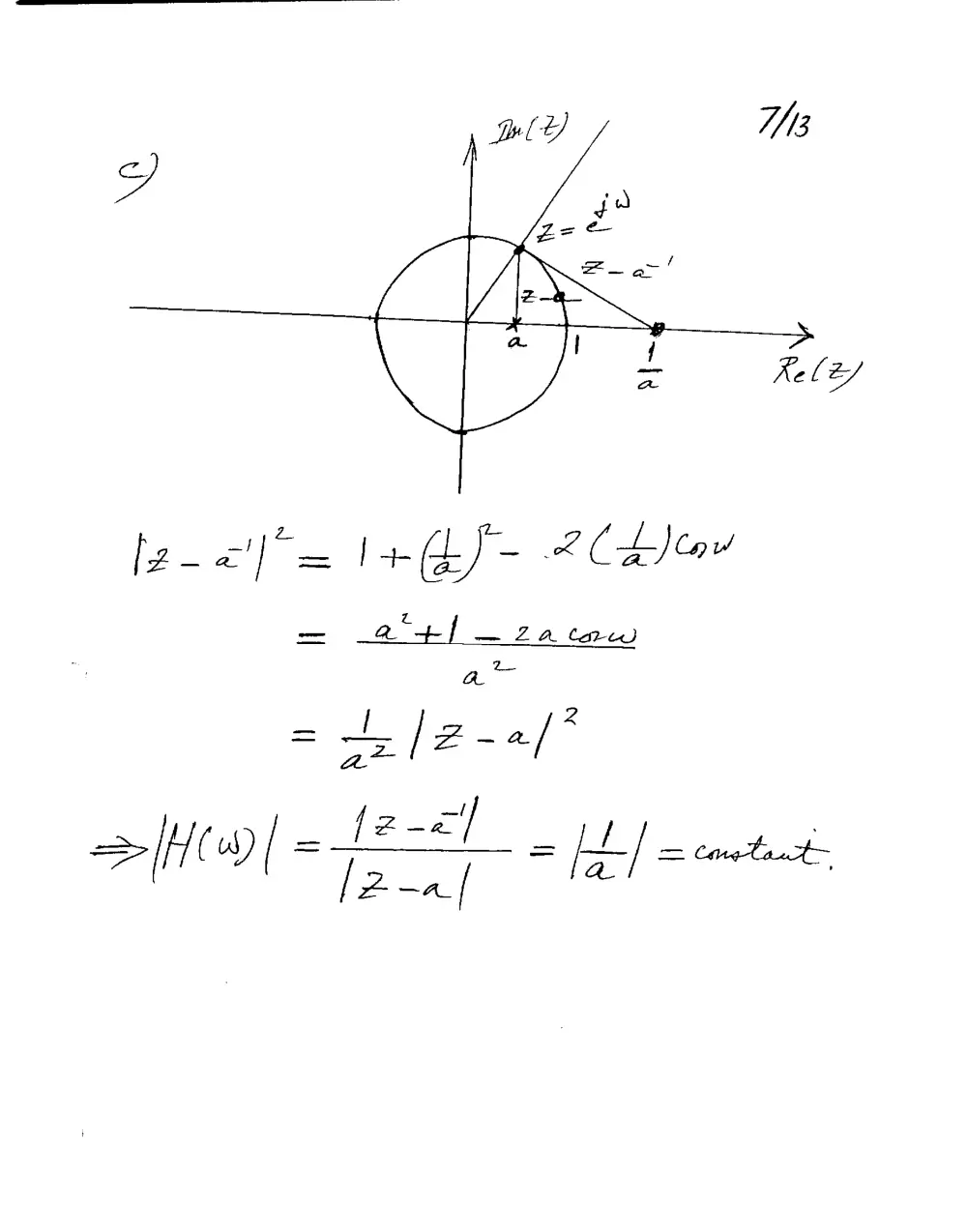
c) Show graphically in the z-plane that this system is an all pass; i.e.,|H(@)|=
constant for all a.
Page 1 of 2
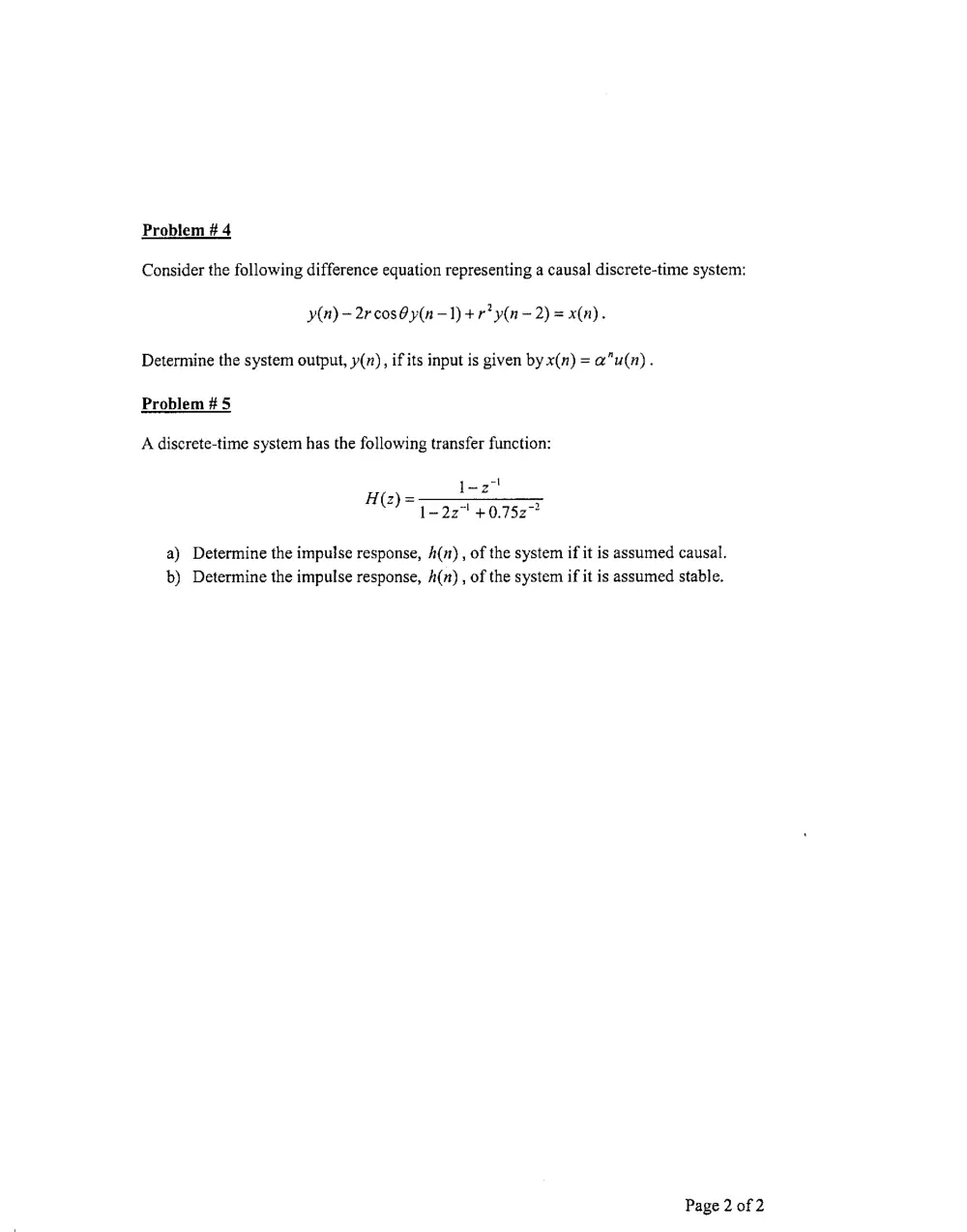
Problem #4
Consider the following difference equation representing a causal discrete-time system:
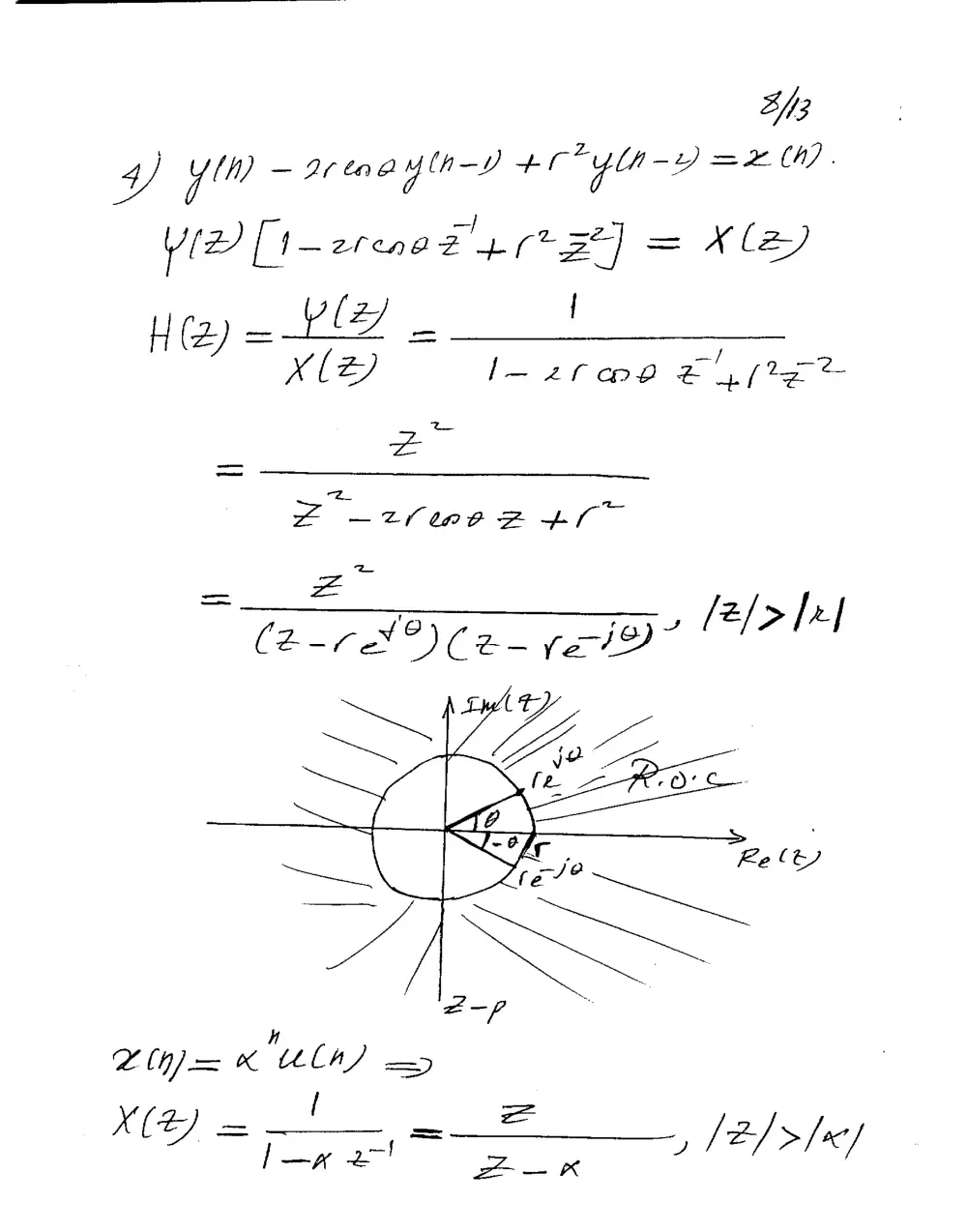
y(n) — 2r cosOy(n—-1) 4+ r? y(n — 2) = x(n).
Determine the system output, p(7), if its input is given by x(”) = @"u(n).
Problem #5
A discrete-time system has the following transfer function:
1-2"
A(z) = ——__—__——
@) 1-221 +0.752°
a) Determine the impulse response, /(n), of the system if it is assumed causal.
b) Determine the impulse response, h(n) , of the system if it is assumed stable.
Page 2 of 2
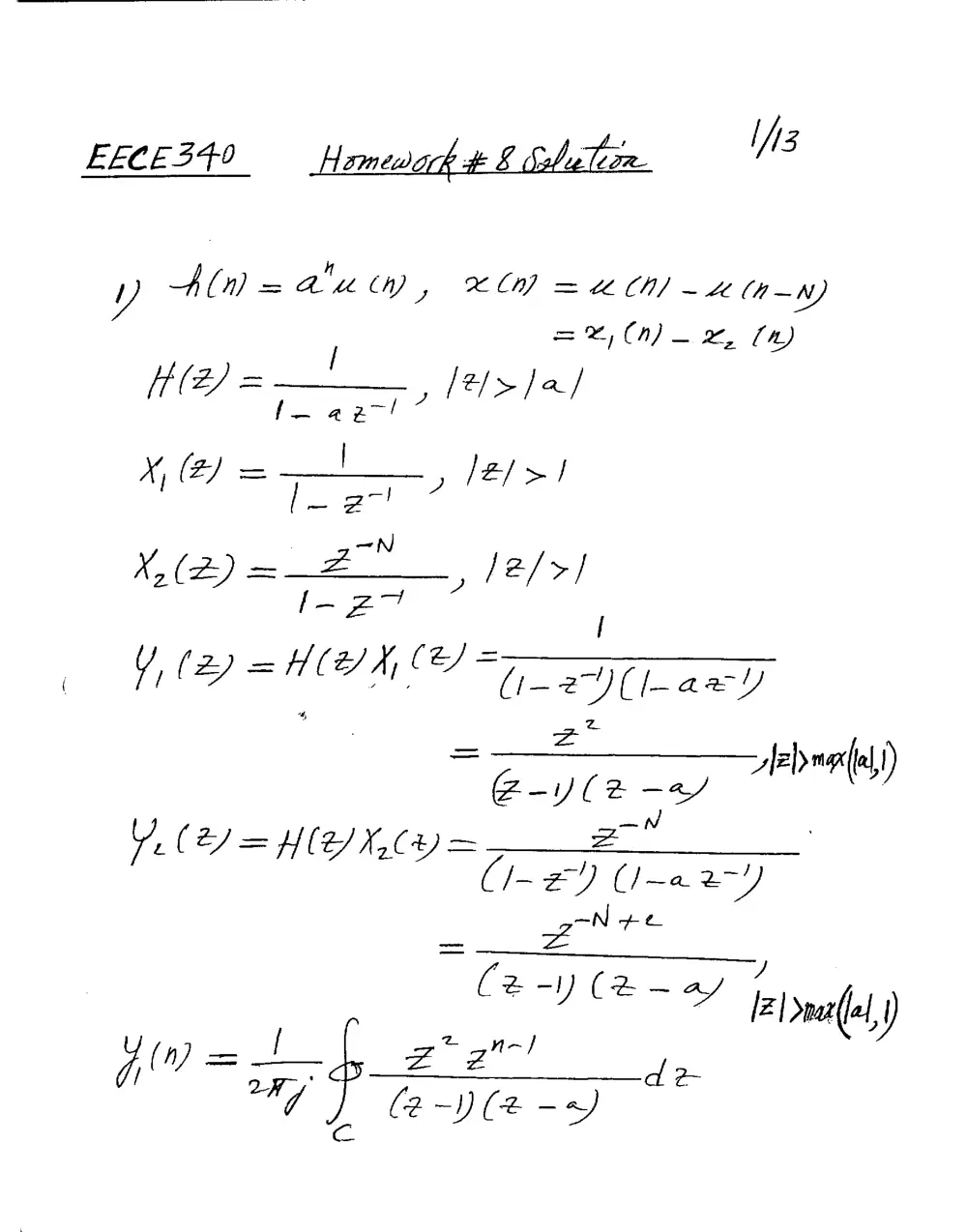
EECE 240 smework # & oR 3
y) A ln) = Bie (Wy, «on = &€C1/ ~ 4 (h—N)
= %, Ch) — XL, [A)
[t(2) = , [el>/a/
fu az27
x, (2) = i » 18/>!
Y (2) =H h (CE =
(i- eC aay
Z*
Boyle e my -felymax(al)
YY =H = Z
C-#) (-a 27)
ate
any (2 -~
/
~ le | >raz(e, 1)
ji) = Zz gn!
d2
a) (2-1) (@ -+) ~
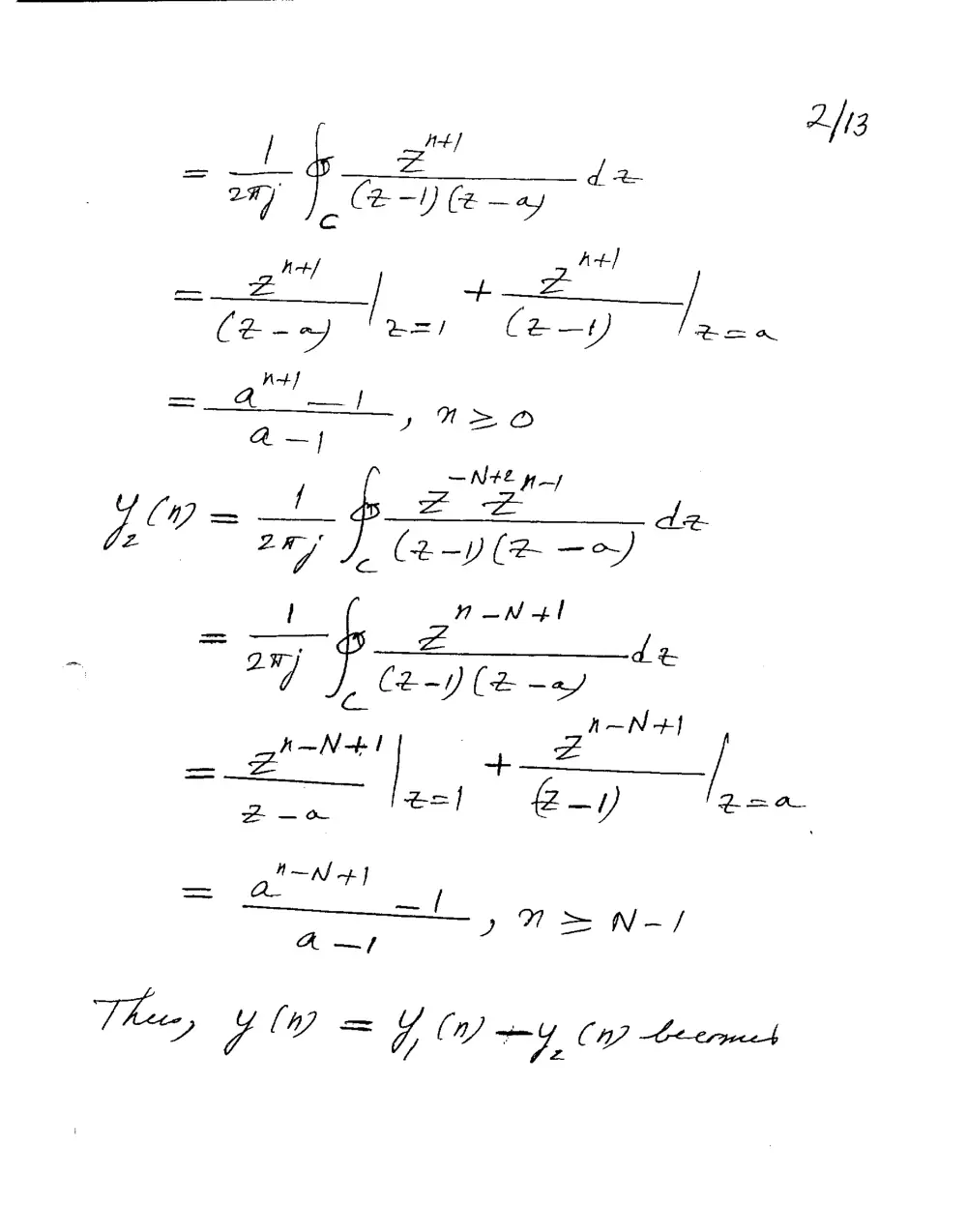
y(n) =_4 =! a |
Q—} Q—|
A-éf a —M of-/
=a — A-t/ _
at ~ Q-/ fo=
y(n) _ alts
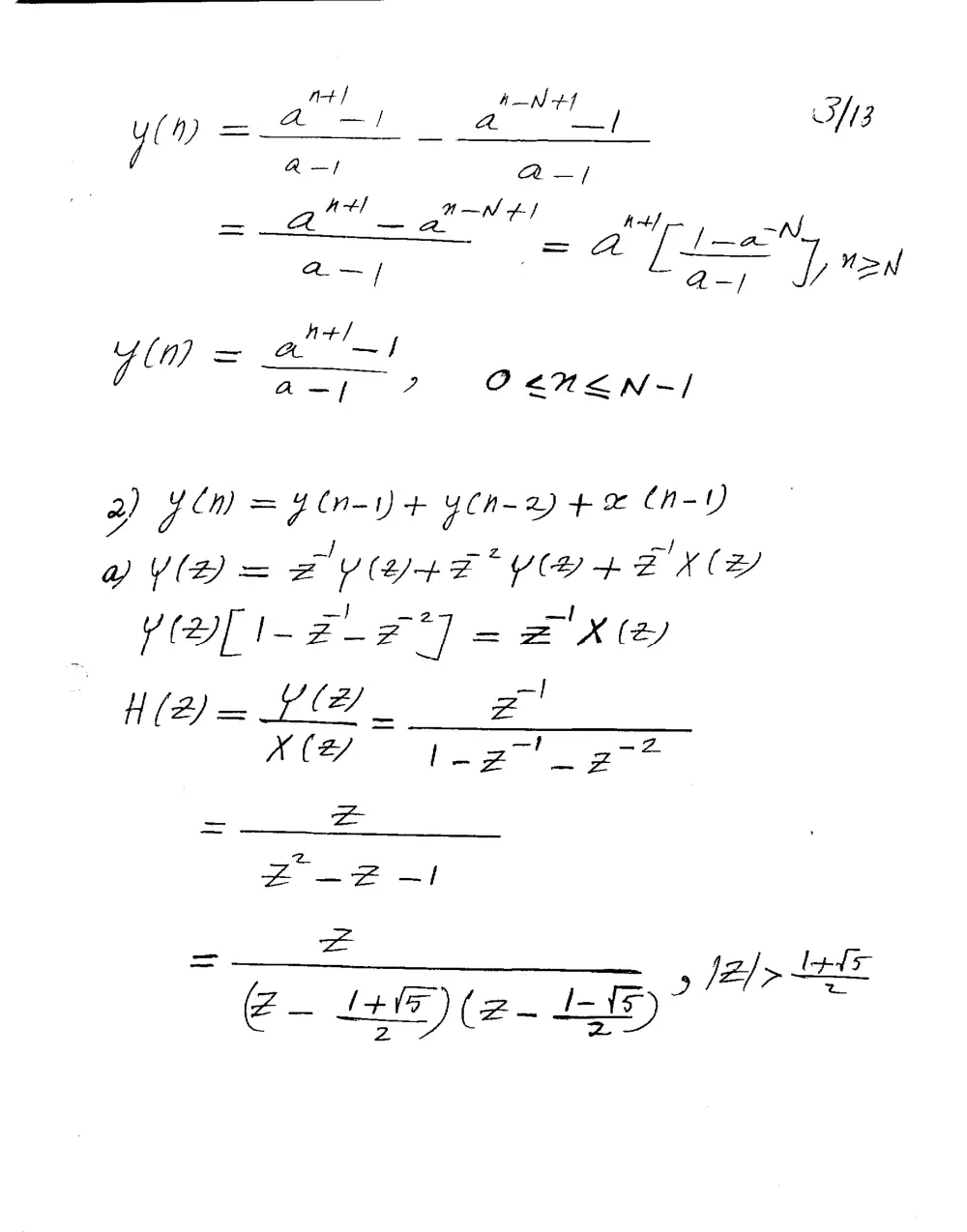
2 fill = gln—-1) + YCn~2) + oo
a) Via = FV 4E VYOLEMY
(@ll-# 27] = 2X
H(2 = LO _ Zz!
X(@ ogee
= z
Z 2-1
Z
~ /2/> ee
l Zz” d
49 J, @~ BE) (2-EE)
4 A
=F, z=
(2 12/5) (#- 124)
Za Ieys B= [+s
Ns
<) 4A stihl. (n00 = Casa ALO? one Lowe
FR O.0, ca thcde phe unt civals , Ther,
H(z) =
fe De ie SE </alc tHe
zm
At) =z. i pen
@-405), oe = <7,
ay a
| n
=-= (55), m0
Hf pY) sf
P+ PH!
-—h
A (n) ==
Cp- EE
= —/4/s
— ae (si om 7"
{> ZZ 2g YL <O
B3
y yi — I ena4ln-P 40° Gh - 2 =z (h).
Wie [1—zrene Z'4 (+37) = Xlz)
Ha) = LE |
X(® - l—- zfo@mo Ey eget
Zz
i
2
- —2tfwme Fe pf