
ENV 200 Chapter 1, Fall 2013
Lebanese American University · Introduction To Enviromental Sciences · 63 pages






Showing the first 10 of 63 pages. Download the PDF to see all of it.
More ENV 200 files
Show the text of this chapter
Earthrise –Taken by Apollo 8 Astronaut William A. Anders
on December 24, 1968
Most influential environmental photograph ever taken!!
“Spaceship Earth” – Kenneth E. Boulding, Economist
The Environment
• Everything around us, living and non-living
things with which we interact
• Despite scientific and technological advances,
we depend on the environment!!
• We are part of, not apart from, the rest of
nature.
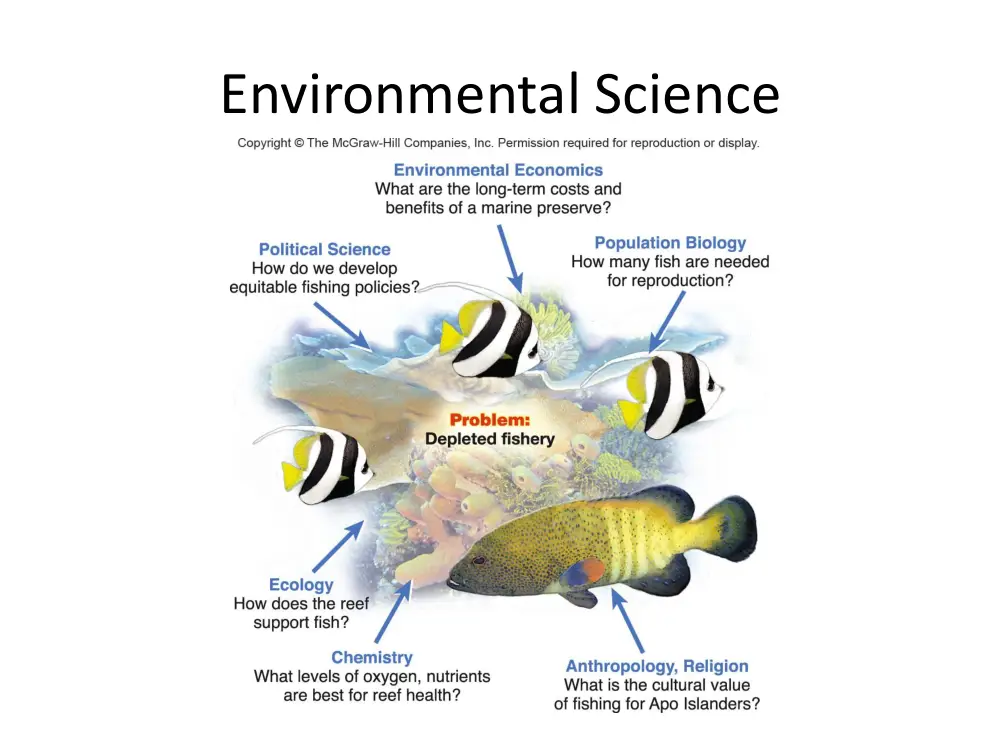
Environmental Science
• Systematic study of
the environment, our
place in it and how
we interact with it
• Draws on many fields
of knowledge as
environmental
problems are very
complex!
Environmental Science
Goals of Environmental Science
• To learn how nature works
• To learn how the environment affects us and
how we affect the environment
• To learn how to deal with environmental
problems and live more sustainably
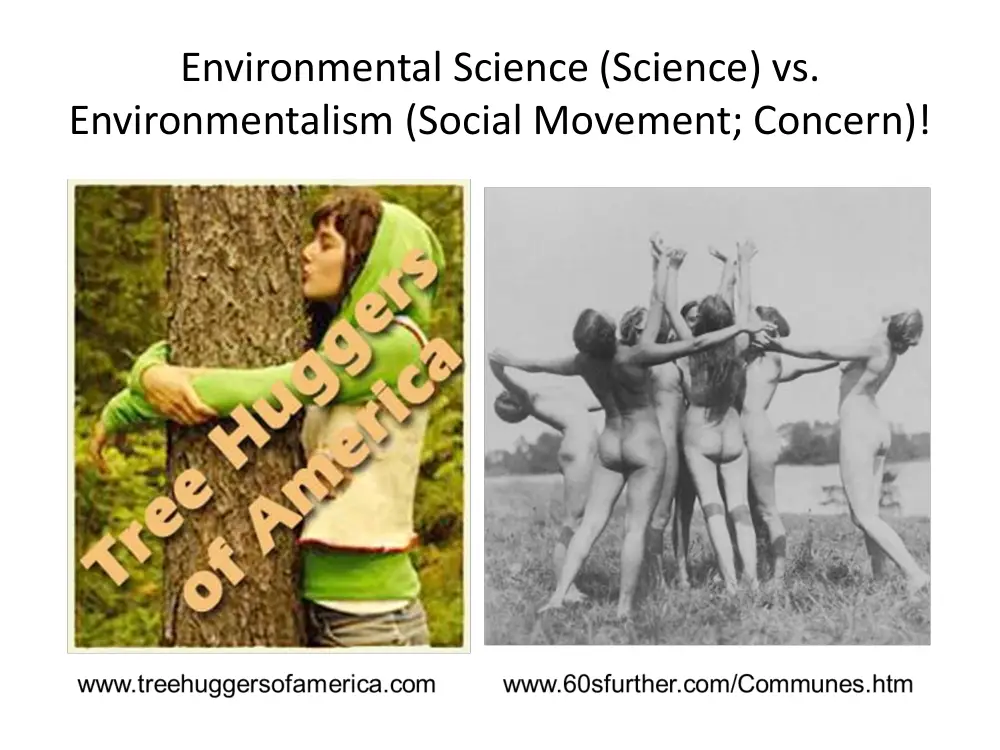
Environmental Science (Science) vs.
Environmentalism (Social Movement; Concern)!
Earth Day
April 22, 1970
“Rising concern about the environmental
crisis is sweeping [America’s] campuses
with an intensity that may be on its way to
eclipsing student discontent over the war in
Vietnam.”
New York Times
• A belief in the need to
redefine our relationship
with nature
• Ecology = the field of
study called upon to
provide a road map for
this new course of action
Ecology
• From the Greek word oikos meaning house or
place to live, and logos meaning study
• The branch of biology that deals with
organisms and how they interact with each
other (biotic interactions) and with their
environment (abiotic interactions)
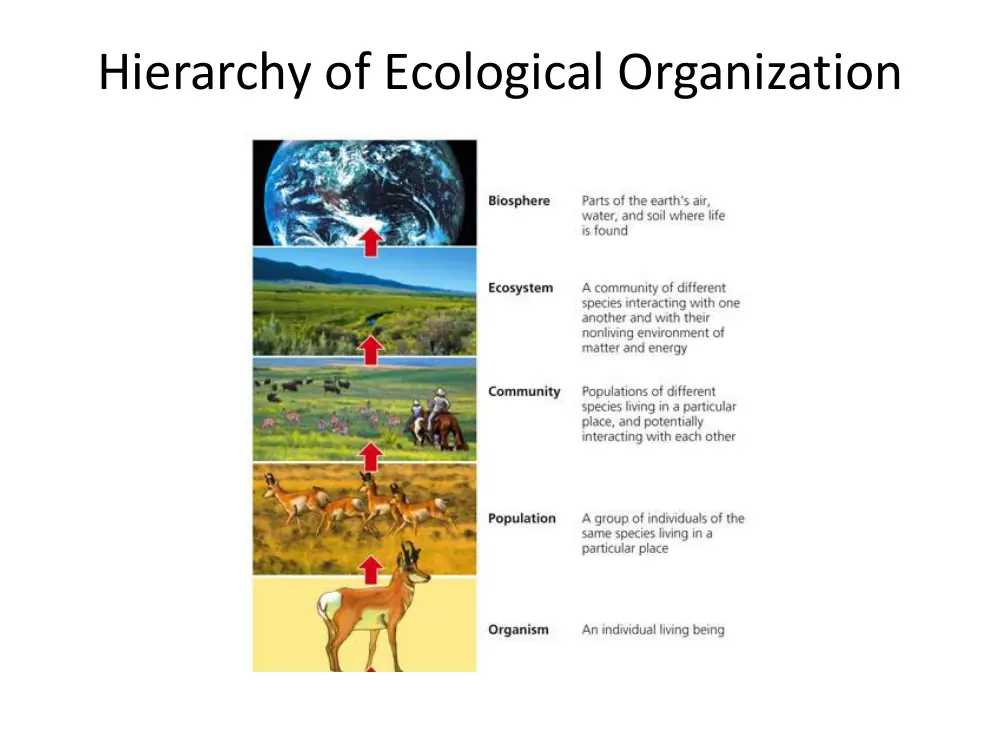
Hierarchy of Ecological Organization
Organisms
Each a member of a species
• Species: group of
organisms with
distinctive traits, and for
sexually reproducing
organisms, can mate and
produce fertile offspring.
• Homo sapiens sapiens
Organisms – Species Diversity
• We do not know the number of species on
Earth!!
• About 4 million to 100 million
• Best guess is 10 – 14 million species.
• 1.8 million species identified so far
Organisms – Species Diversity
Insects make up the most of the world’s known species!!
Populations
• A population of
glassfish in a cave in the
Red Sea
Genetic Diversity
Habitat
• Natural address; place where a population or
an individual organism normally lives
• As large as the ocean or as small as the
intestine of a termite
• Provide its inhabitants with resources as well
as the appropriate environmental conditions
needed by organisms to survive
Communities
• Organisms in a community
interact with one another in
feeding and other relationships.
Ecosystems
• As small as a puddle of water
to as big as the ocean
• Natural or artificial
Ecosystems
Taanayel Lake
Ecosystems
Chouf Cedars Forest
Biosphere
• The global ecosystem in which
all organisms exist and can
interact with one another
Earth’s Life Support Systems
Four main spherical systems
The Atmosphere
• Thin envelope of gasses
surrounding the earth
• Divided into several
spherical layers, each
characterized by abrupt
changes in temperature
caused by differences in
the absorption of
incoming solar radiation
The Atmosphere
• Density and atmospheric
pressure both influenced by
gravity, which pulls the gas
molecules in the atmosphere
towards the earth’s surface
• Density (molecules per liter)
higher at sea level than on
top of the world’s highest
mountain
• Atmospheric pressure (force
or mass per unit area of a
column of air) also higher at
sea level
The Atmosphere
Troposphere
– Layer of the atmosphere
closest to the surface of earth
– 17 km above sea level at the
equator; 8 km at the poles
– Around 75–80% of the earth’s
air mass
– Contains the air we breathe:
Nitrogen gas 78%; Oxygen gas
21%; Water vapor at poles
0.01%; Water vapor in tropics
4%
– Rising and falling air currents
in the troposphere largely
responsible for weather and
climate
– Involved in chemical cycling of
the earth’s nutrients
The Atmosphere
•
Stratosphere
– Second layer of the atmosphere
(starting from the Earth’s
surface)
– From 17 to 48 km above the
earth’s surface
– Although much thinner (less
matter), similar in composition
to the troposphere, with two
exceptions
• Much less water (1/1000
that of troposphere)
• Higher concentration of O3
(Ozone; filters UV!!)
The Blue Planet
Over 71% of the earth’s surface covered by water
The Hydrosphere
• All the water on or near Earth’s surface
• Includes liquid water (surface and
underground), ice (polar ice, icebergs, glaciers
and ice in frozen soil layers “permafrost”) and
water vapor in the atmosphere
The Hydrosphere
• Most of the water in the biosphere is
seawater.
• Thus Samuel Taylor Coleridge’s “Water, water,
everywhere, nor any drop to drink.”
The Geosphere
• Includes Earth’s intensely hot
core, a thick mantle mostly
composed of rock and a thin
outer crust
• Lithosphere: crust + portion
of outer mantle; contains
non-renewable fossil fuels
and minerals as well as
renewable soil chemicals that
organisms need
The Biosphere
• To the earth like the skin to the apple
• Lower atmosphere, most of the hydrosphere
and the uppermost part of the geosphere
(where life exists)
• From the bottom of the ocean to ca. 9 km
above Earth’s surface
Factors Sustaining Life on Earth
1. Energy:
– One-way flow of high quality energy from the sun through
living things in their feeding interactions into the
environment mostly as heat dispersed into the water and
air at low temperature (low quality energy) and eventually
back into space as heat
Factors Sustaining Life on Earth
2. Matter or Nutrient Cycling
Factors Sustaining Life on Earth
• Matter or nutrient cycling:
– Essential since Earth is closed to significant input
of matter from outer space
– In compliance with the law of conservation of
matter, the fixed supply of nutrients must be
continually recycled to support life.
– Cycles take seconds to centuries to complete.
Factors Sustaining Life on Earth
3. Gravity:
– Allows the planet to hold onto its atmosphere
– Allows the cycling of chemicals the air, water, soil
and organisms
Expanding Human Population
Major Cause of Environmental Problems
The Cause Behind All Causes!!
• Exponential
Growth
• Deceptive as it
starts off slowly,
but after a few
doublings, it grows
to enormous
numbers
• Analogy of the two
kings playing
chess!!
• Analogy of paper
folding!!
Poverty
• Occurs when people
are unable to meet
their basic needs for
adequate food,
water, shelter, health
and education
• 48% of the people
worldwide are living
on less than 2 USD a
day!!
Poverty
Poverty
• People living on less than 2 USD a day are
focused on getting enough food, water and
cooking and heating fuel to survive.
• Desperate for short-term survival, they do not
care about the environment: they deplete and
degrade forests, soil, grasslands, fisheries,
wildlife….
• They do not worry about long term
environmental quality and sustainability.
Poverty
• Poverty affects population growth.
• Children help gather fuel (wood and animal
dung), haul drinking water and tend crops and
livestock.
• Children also help take care of the parents in
their old age because they do not have social
security, health care and retirement funds.
Poverty
Many desperately poor people die prematurely from several
preventable health problems!!
Malnutrition
• Due to lack of
proteins and other
nutrients needed
for good health
• Increases the
chances of death
from normally non-
fatal illnesses like
diarrhea and
measles
Poverty
Many desperately poor people die prematurely from several
preventable health problems!!
Limited access to adequate sanitation facilities and clean
drinking water!!
Poverty
Many poor people suffer from severe respiratory diseases and
premature death due to inhaling indoor air pollutants produced
by burning wood or coal in open fires or in poorly vented stoves
for heat or cooking.
Children Working
in a Plastic
Factory in an
Urban Slum in
Bangladesh
Poverty
• Bad news: These factors cause premature
death for at least seven million people each
year!! Two thirds of those dying are children
younger than five years old.
• Good news: We can solve the problems
resulting from poverty in two to three decades
if we act!!
Affluence
• The addiction to over-consumption of
material goods
• Its effects much worse and more serious than
the effects of poverty
• Increases our environmental impact just as
population growth does
• Affluence mostly based on the assumption
that buying more and more things will bring
happiness (advertizing!!)
Affluence
Typical American family of four with all their
possessions, Texas, USA
Affluence
Family of five farmers with ALL their
possessions, Himalaya Mountains
Affluence
• In 1999, the richest one-fifth of the world’s
people possessed 82 times the income of the
poorest one-fifth.
• They also used 86% of the world’s resources.
• 80% of the world’s population lives on 14% of
the global resources – energy, food, water, ….
INCREASING TENSION BETWEEN THE HAVES
AND THE HAVE-NOTS
Affluence
• Solutions:
Admit the problem
Shop less
Avoid malls and shopping centers
• Toynbee’s law of progressive simplification:
transfer energy and attention to the
nonmaterial side of life!!
Affluence
• Can lead people to become more concerned
about environmental quality
• Provides money for developing technologies
to reduce pollution, environmental
degradation and resource waste
• Financed improvements in environmental
qualities based on increased scientific
research and technological advances
Affluence
In most affluent countries (compared to the 1970s):
• The air is cleaner.
• Drinking water is purer.
• Most rivers and lakes are cleaner.
• Food supply is more abundant and safer.
• The incidence of life-threatening infectious diseases
has been greatly reduced.
• Lifespan is longer.
• Some endangered species are being rescued from
premature extinction!!
Excluding Environmental Costs from
Market Prices
• When companies use resources to create goods and
services for consumers, they are usually not required
to pay the environmental costs of resource use.
• Fishing companies pay the cost of catching fish but
not the cost of depletion of fish stocks.
• Timber companies pay for clear-cutting forests but
not for the resulting environmental degradation and
loss of wildlife habitat.
Excluding Environmental Costs from
Market Prices
• The primary goal of companies is to maximize
their profits, so they do not pay the harmful
environmental costs (or even assess them)
except if they are required by the government
laws or regulations to do so.
• The prices of goods and services do not
include their harmful environmental costs;
consumers are generally not aware of them!!
Excluding Environmental Costs from
Market Prices
Some governments
give tax breaks and
payments called
subsidies to assist
companies in using
resources to run their
businesses.
Excluding Environmental Costs from
Market Prices
Excluding Environmental Costs from
Market Prices
• Subsidies help create jobs and stimulate
economies.
• They also result in degradation of the natural
environment because its value is not included
in market prices!!
Environmental Decision Making
• When dealing with an environmental
problem, one should start by carrying out
scientific research on the problem and
evaluating the possible solutions to the
problem.
Environmental Decision Making
Each proposed solution must be evaluated:
• Any human values involved?
• Projected short-term and long-term beneficial
and harmful environmental, economic and
health effects
• Costs?
• Is the solution ethical?
Environmental Decision Making
Environmental Decision Making
• Marine resources: Around the world,
people who depend on seafood for their
livelihood and sustenance are finding
that setting aside marine reserves can
restore fish populations as well as
promote human development.