
ENV 200 Chapter 4, Fall 2013
Lebanese American University · Introduction To Enviromental Sciences · 70 pages


Showing the first 10 of 70 pages. Download the PDF to see all of it.
More ENV 200 files
Show the text of this chapter
The Origin of Biodiversity
• Biological evolution: the process by
which life on Earth changes over time
through changes in the genes of
populations
The Origin of Biodiversity
• Natural selection: a credible explanation
for how biological evolution happens
• Proposed in 1858 independently by:
– Charles Darwin (1809 – 1882)
– Alfred Russel Wallace (1823 – 1913)
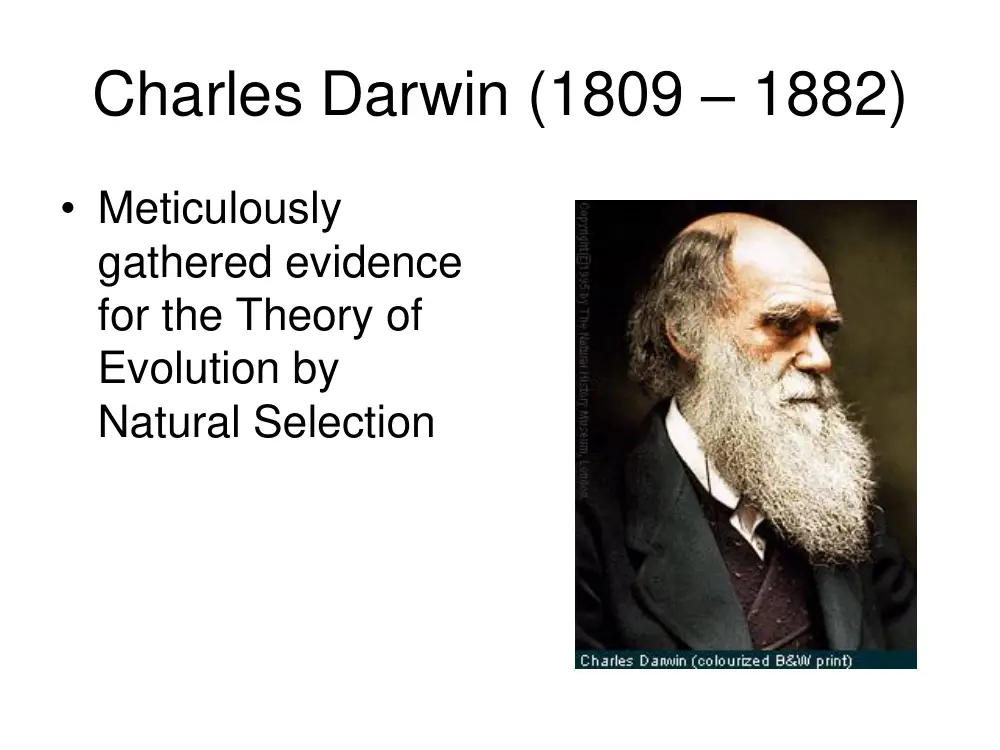
Charles Darwin (1809 – 1882)
• Meticulously
gathered evidence
for the Theory of
Evolution by
Natural Selection
Charles Darwin (1809 – 1882)
Alfred Russel Wallace
Charles Darwin (1809 – 1882)
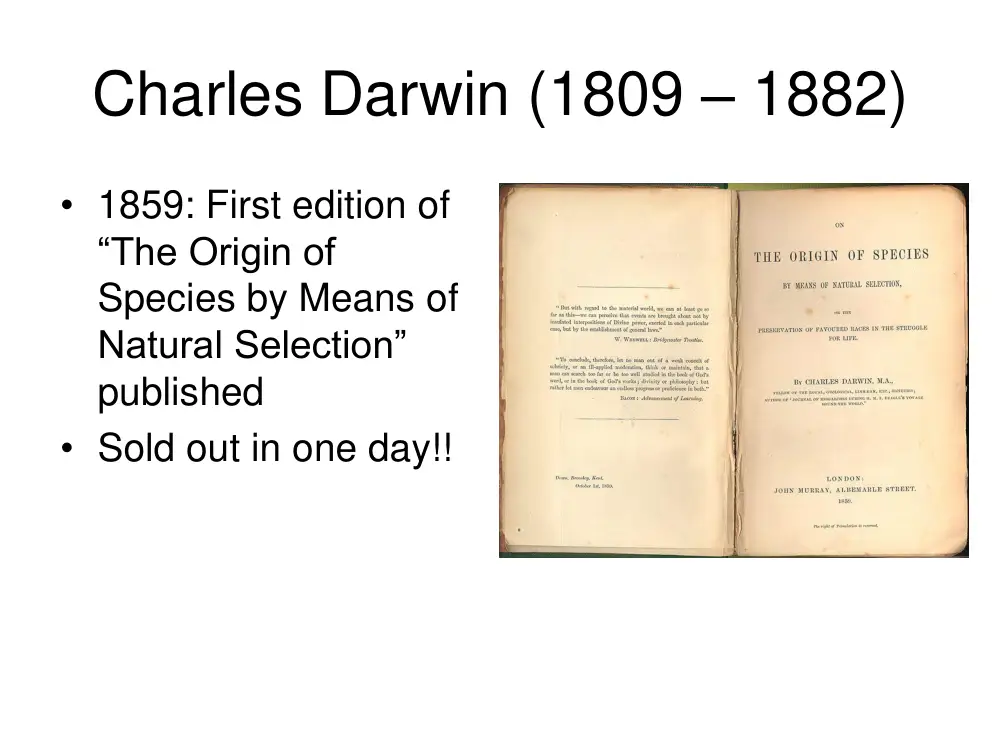
• 1859: First edition of
“The Origin of
Species by Means of
Natural Selection”
published
• Sold out in one day!!
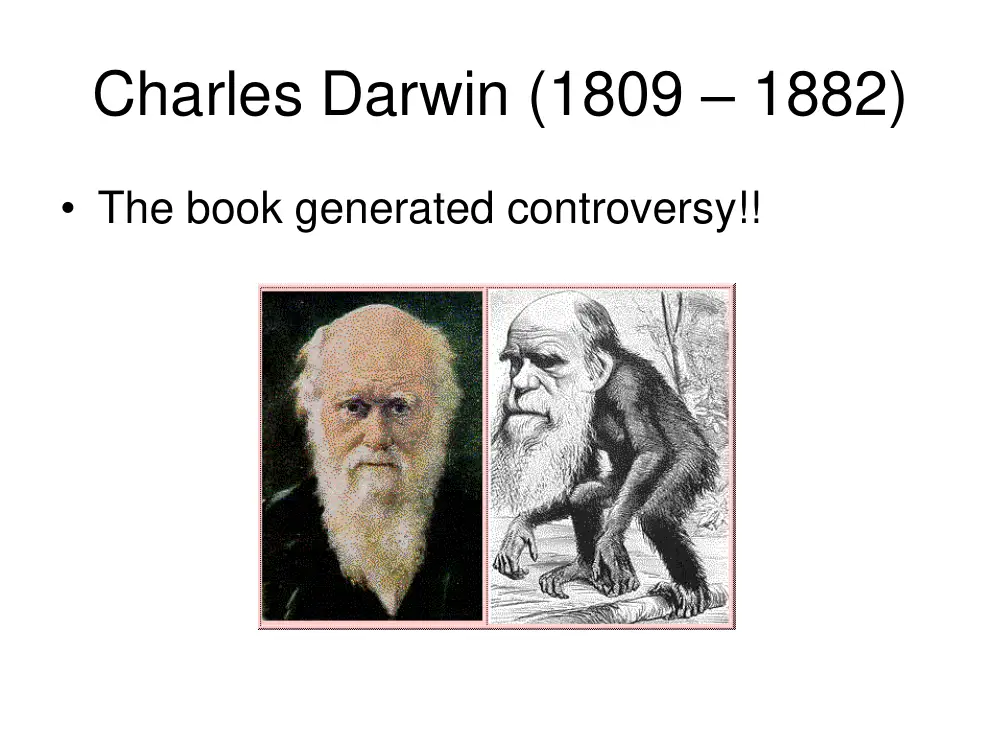
Charles Darwin (1809 – 1882)
• The book generated controversy!!
Genetic Variability
• First step in biological evolution
• Occurs through mutations
• Random changes in DNA molecules in a cell; can
be inherited by offspring
• Occur due to random changes in coded genetic
instructions when DNA molecules are copied each
time a cell divides OR due to exposure to
mutagens ( X-rays, radioactivity…)
Mutations
• Mutations may occur in any cell; only
mutations in reproductive cells are passed
to offspring.
• Mutations may result in a new genetic trait
that gives an individual and its offspring
better chances for survival and
reproduction under existing environmental
conditions or later on when the conditions
change.
Natural Selection
• Second step in biological evolution
• Occurs when some individuals of a
population have genetically based traits
that enhance their ability to survive and
reproduce; Natural selection therefore acts
on individuals in a population.
Adaptation
• Adaptation
– Adaptive trait: Any heritable trait that
enables an individual organism to survive and
reproduce more than other individuals under
prevailing environmental conditions
– The adaptive trait has to be heritable and
must lead to differential reproduction.
A group of bacteria,
including genetically
resistant ones, are
exposed to an
antibiotic
Most of the normal
bacteria die
The genetically
resistant bacteria
start multiplying
Eventually the
resistant strain
replaces the strain
affected by
the antibiotic
Normal
bacterium
Resistant
bacterium
Genetic Resistance: the ability of one or more organisms
in a population to tolerate a chemical designed to kill it!
Biological Evolution
• Populations (NOT INDIVIDUALS) evolve by becoming
genetically different
• Biological evolution by natural selection:
– Genes mutate.
– Individuals are selected.
– Populations evolve that are better adapted to survive
and reproduce under existing environmental
conditions.
• When environmental conditions change, populations
– adapt.
– migrate.
– become extinct.
Adaptation through Natural Selection
Has Limits
• Will we adapt to changes in the
environment in the near future?
– Only if genetic change precedes change in
the environmental conditions (Favorable
genetic trait already in gene pool or results
from mutation)
– Reproductive capacity – Weeds, bacteria,
mosquitoes, rats, cockroaches will most
probably adapt to changes in environmental
conditions quickly.
Common Myths about Evolution by
Natural Selection
• “Survival of the fittest” is not “survival of
the strongest”
• Organisms do not develop traits out of
need or want
• No grand plan of nature for perfect
adaptation
“Stool Pigeon”??
Passenger Pigeons
• Good to eat
• Feathers for making
pillows
• Bones used as
fertilizer
Passenger Pigeons
• 1813: A single huge flock took three days
to fly past Audubon, famous bird expert!!
• 1858: Passenger pigeon hunting a big
business
• 1878: One trapper killed 3 million birds at
their nesting grounds in Michigan!!
• March 24, 1900: Last wild passenger
pigeon shot by a young boy in Ohio!!
Passenger Pigeon
• Extinct!!
• Uncontrolled commercial hunting
• Habitat loss: Forests cleared to make
room for farms and cities
Extinction
• Complete disappearance of a species
from earth
• Occurs when a species cannot adapt and
successfully reproduce under new
environmental conditions
• Natural but sometimes increase sharply
Extinction
• All species on earth are destined to
become extinct!!
• Background extinction: continuous low
level extinction of species, occurring
throughout the history of life on earth
Extinction
• Mass extinction: extinction of many
species in a relatively short period of
geologic time
• Fossil record shows five mass extinctions!!
• Due to each mass extinction, 50 to 95% of
all species on earth became extinct!!
• Biodiversity returned to higher levels after
each mass extinction!!
Dinosaurs went
extinct!!
Extinction
• Causes of past mass extinctions poorly
understood
• Major climate change
• Large scale catastrophes (The earth being
hit by a comet or a large asteroid)
Extinction Rate
• Percentage (or number of species) that go
extinct within a certain time period
• Estimated background extinction rate: 1
per million species per year or 0.0001%
• Current annual rate of species extinction:
one hundred to one thousand times the
background rate!!
Extinction Rate
Extinction Rate
Extinction
• Extinction decreases biodiversity.
• Current rate may constitute mass
extinction!!
The
“Big 5”
Millions of years to recover
Anthropogenic Extinction
• We are destroying and degrading
biodiversity!!
• We have disturbed at least half the earth’s
land surface!!
• We are also degrading aquatic
biodiversity.
Anthropogenic Extinction
Anthropogenic Extinction
Animal species prematurely extinct due to
human activities, mainly habitat destruction and
overhunting!!
Percentage of Various Species
Threatened with Premature Extinction
Sixth Mass Extinction!!
Anthropogenic Extinction
Anthropogenic Extinction
Anthropogenic extinction is driven by
HIPPO:
Habitat Loss & Degradation
Introduced, Invasive Species
Population Growth
Pollution
Overexploitation
HIPPO and HIPPCO
• Habitat destruction, degradation, and
fragmentation
• Invasive (nonnative) species
• Population and resource use growth
• Pollution
• Climate change
• Overexploitation
Habitat Loss
Habitat is lost due to human use!!
• Urbanization
• Agriculture, grazing
• Desertification
• Global Climate Change
Habitat Destruction, Degradation,
and Fragmentation
Invasive (Nonnative) Species
Invasive species are introduced by
humans!!
50,000 species in U.S.
alone!!
Cost over $130 billion
annually!!
Invasive (Nonnative) Species
• Why are species introduced?
– Food
– Shelter
– Medicine
– Aesthetic enjoyment
Invasive (Nonnative) Species
• Why do they become invasive?
Nonnative species may have no natural
predators, competitors, parasites and
pathogens.
Invasive (Nonnative) Species
Invasive (Nonnative) Species
Invasive (Nonnative) Species
Invasive (Nonnative) Species
• Colerpa taxifolia, a
tropical green alga,
introduced to the
Mediterranean in 1984
• Crowds out most plants
• Inedible to most animals
• Tangles boat propellers
What is Happening to the
Honeybees?
• Honeybees responsible for 80% of insect-
pollinated plants
• Dying due to
– Pesticides
– Parasites
• Bee colony collapse syndrome
Pollution takes many forms!!
Pollution
Acid Mine
Drainage
(coal mines)
Trash
Light
Nutrients
Overexploitation means using resources
unsustainably (spending capital)!!
Overexploitation
Forests
Overexploitation
Plant & Animal Populations
Overexploitation means using resources
unsustainably (spending capital)!!
What Else?
• Illegal killing, capturing, and selling of wild
species threatens biodiversity.
• Poaching and smuggling of animals and
plants
– Animal parts
– Pets
– Plants for landscaping and enjoyment
A Rhino, Poached!!
Elephants and Ivory
Protest Against Poaching – Kenya
Endangered Species
• So few individual survivors the species
could soon become extinct over all or most
of its natural range
Threatened Species
• Vulnerable species
• Still abundant in its natural range
• Likely to become endangered in the near
future because of declining numbers
Some Endangered and Threatened
Species!!
Why are they
threatened or
endangered??
Confiscated Products Made of
Endangered Species