
HLT 201 Chapter 4, Spring 2016
Lebanese American University · Basic Health · 38 pages
Showing the first 10 of 38 pages. Download the PDF to see all of it.
More HLT 201 files
Show the text of this chapter
HLT201
Chapter 4: Stress
Omar Bou Hamdan, MD
Introduction
Some stress may help your body to prepare for certain
challenges, so it's probably impossible to live without any
stress.
But too much stress, especially if it's day in, day out, can
cause physical and emotional problems.
It’s the human reaction to events in our environment
Definition of Stress
A Nonspecific Response of the
Body to any Demand made
upon it.
WHAT IS STRESS?
American Medical Association Definition:
"Any interference that disturbs a person's mental or physical
well-being.“
Health definition: Well being of the physical, mental and
social status of an individual.
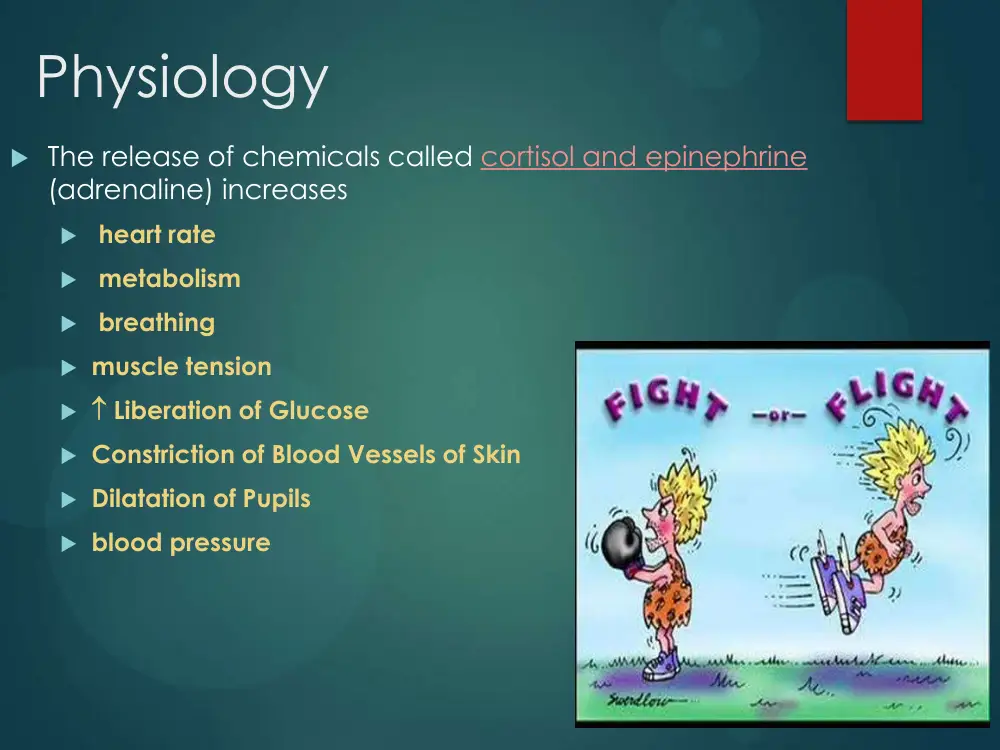
Physiology
The release of chemicals called cortisol and epinephrine
(adrenaline) increases
heart rate
metabolism
breathing
muscle tension
Liberation of Glucose
Constriction of Blood Vessels of Skin
Dilatation of Pupils
blood pressure
Stress and health
The exact role of stress in causing illnesses isn't known.
However, it's clear that stress can temporarily weaken the
immune system.
Too much stress inhibits digestion, growth, tissue repair, and
response of your immune system and inflammatory systems.
People with high stress are twice as likely to develop colds as
those with low-stress.
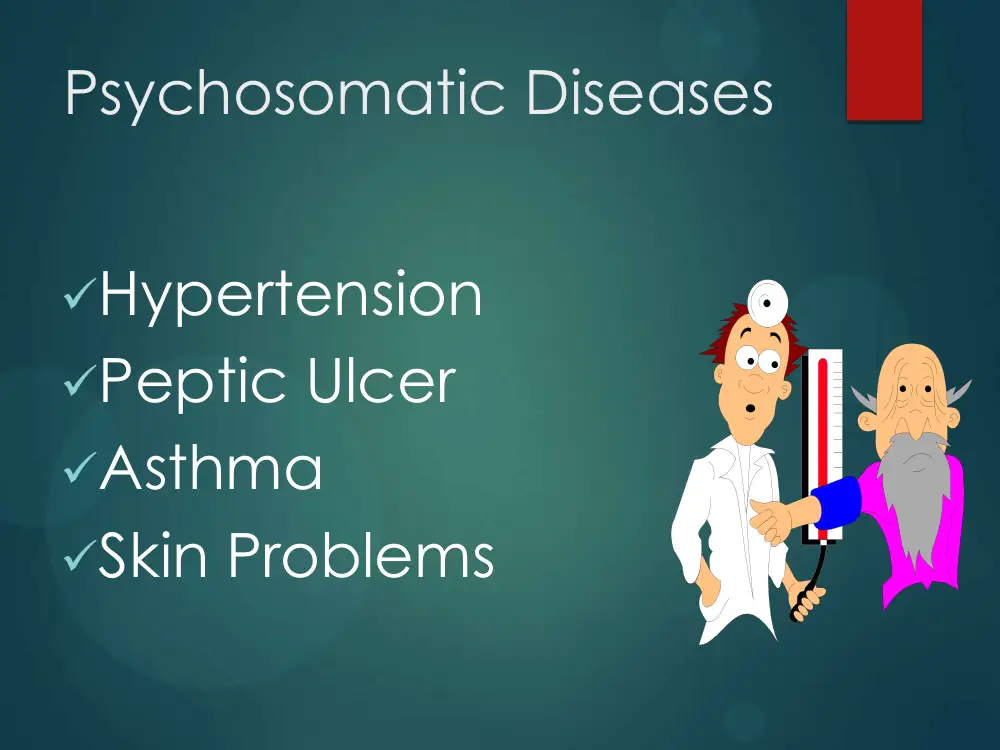
Psychosomatic Diseases
Hypertension
Peptic Ulcer
Asthma
Skin Problems
DID you Know ?
25% of youth ages 8-17 complain that they don't have enough
free time.
Approximately 90% of all visits to primary care physicians are
due to an illness related to stress.
The United States spends about $1billion annually on stress-
related illness.
Job burnout experienced by 25% to 40% of U.S. workers is
blamed on stress.
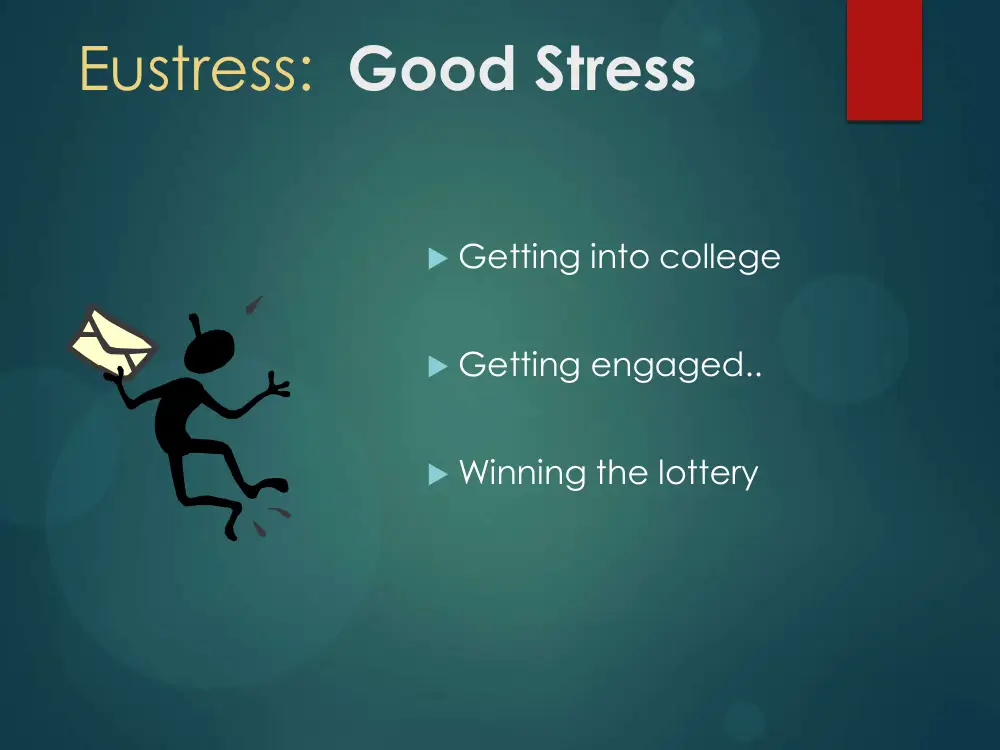
Getting into college
Getting engaged..
Winning the lottery
Eustress: Good Stress
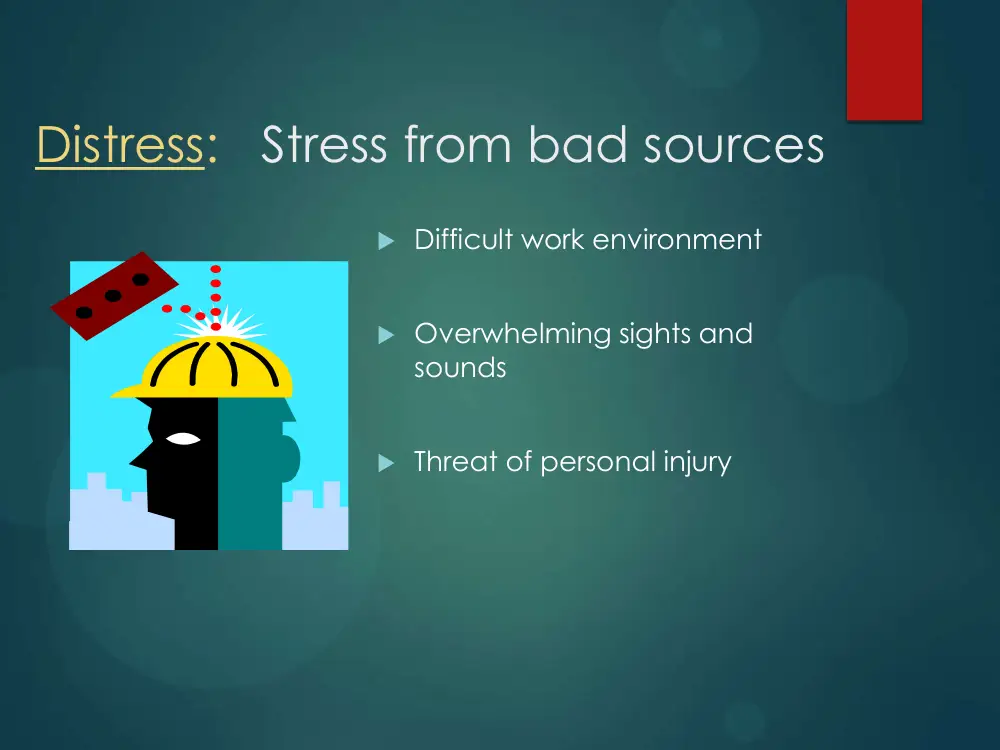
Distress: Stress from bad sources
Difficult work environment
Overwhelming sights and
sounds
Threat of personal injury
Top Ten Stressful Life Events
Spouse’s death
Divorce
Marriage separation
Jail term
Death of a close relative
Injury or illness
Marriage
Fired from job
Marriage reconciliation
Retirement
Daily hassles and demands
Environmental stressors
Family and relationship stressors
Work stressors
Social stressors
Four Types OF Stress
1. General Stress:
Everyone has this
kind of stress
It resolves itself
within a day or two
No intervention is
necessarily required
Four Types OF Stress
2. Cumulative Stress:
Stress builds up in the body
It becomes more difficult
to alleviate the symptoms
more serious physical and
mental symptoms
Four Types OF Stress
3.
Acute Traumatic Stress:
Critical Incident Stress
(Sudden death of
spouse, etc).
Produces considerable
psychological distress
A normal reaction to abnormal
events
Four Types OF Stress
4. post-traumatic stress disorder
(PTSD).
For some people, the stress symptoms
don't go away, the body doesn’t
regain its equilibrium, and life
doesn’t return to normal. This
severe and persisting reaction to
trauma is known as
Needs professional Treatment.
Common symptoms of PTSD:
Flashbacks, intrusive thoughts, or nightmares about the
trauma
Avoidance of places and things associated with the
trauma
Exaggerated response for signs of danger
Chronic irritability and tension
Depression.
Women and stress
Women are particularly susceptible to stress caused by
hormonal changes.
Puberty
Menstrual cycle
Pregnancy and Menopause
Hormone levels fluctuate consistently and cause stress.
General Adaptation
Syndrome
(G.A.S)
1. Stage of Alarm
2. Stage of Resistance
3. Stage of Exhaustion
Body’s response to stress
General Adaptation Syndrome
Stage I - Alarm Reaction
The “fight or flight” response which causes you
to be ready for physical activity
However, it decreases the effectiveness of the
immune system which makes you more
susceptible to illness.
General Adaptation Syndrome
Stage II – Stage of adaptation
If stress continues, the body adapts to the stressors it is
being exposed to
If the stressor is starvation, the person experiences a
reduced desire for physical activity to conserve energy,
and the absorption of nutrients from any food intake is
maximized
General Adaptation Syndrome
Stage III – Stage of Exhaustion
Stress persists for a long time
The body’s resistance may be reduced or collapse
quickly
People who experience long-term stress may have
heart attacks, severe infections, or stomach ulcers
Short Term Stress Symptoms
Dry mouth
Cold hands and feet
Increased sweating
Rapid breathing
Faster heart rate
Tense muscles
Feelings of nausea
Diarrhea
A desire to urinate
Long Term Stress Symptoms
Insomnia
Change in Appetite
Sexual disorders
Aches and pains
Frequent colds
Feelings of intense and long-
term tiredness
Prone to illness
BEHAVIORAL STRESS SYMPTOMS
Yawning
Talking too fast
Talking too loud
Twitching
Nail biting
Grinding teeth
Drumming fingers
Aggressive
Over reacting
Emotional
Defensive
Irritable
Irrational
Defensive
Hostile
Critical
BEHAVIOR STRESS SYMPTOMS
These symptoms will have a negative affect on
performance:
By reducing effectiveness
Making the person accident prone
People tend to be forgetful
People have very negative attitude
Body neglect
poor judgments
Increasing absenteeism
MYTHs in Stress
1: Stress is the same for everybody
2: Stress is always bad for you
3: Stress is everywhere, so you can't do anything about it.
4: No symptoms, no stress
5: Only major symptoms of stress require attention
HEALTHY LIVING TO CONQUER STRESS
Examine your diet
Lower your salt
intake
Lower your intake of
refined sugars and
carbohydrates
Lower your caffeine
intake
Drink water
Rest:
Get a minimum of
six hours of
continuous rest
Exercise:
At least twenty minutes, five
times a week
Break a sweat, to release
endorphins
HEALTHY LIVING
Talk things out with someone
you trust - a family member
or a good friend
HEALTHY LIVING
Relaxing needs to
be part of your
daily routine.
HEALTHY LIVING
Make an increased effort to
organize your life
Ask for help
Delegate things when you
need to
HEALTHY LIVING
Learn to manage your
anger
Anger affects your
health
Anger causes you to
over react to many
situations
Rethink the situation
and learn to be more
flexible
HEALTHY LIVING
Take charge of your
life.
Act appropriately -
don’t simply react to
stressful situations
Find balance in all that
you do.
Too many people look for
an easy answer to stress
management by misusing :
Alcohol
Drugs
Marijuana
Medicines & Pills
Etc…….
Factors Reducing STRESS
1.
Interpretation of Aims
2.
Use Power of Mind
(Relaxation, Hypnosis,
Meditation)
3.
Change some Aspects
of Life leading to Stress
4.
Ask for Help when
needed ( Teacher,
Counselor,….)
References
www.stress.org.uk
www.mayoclinic.com/health/stress-management
www.merck.com- the Merck’s manual