
NUT 468 Chapter 1, Spring 2017
Lebanese American University · Management System and Dietetics · 46 pages
Showing the first 10 of 46 pages. Download the PDF to see all of it.
More NUT 468 files
Show the text of this chapter
Introduction to
Management
NUT 468
Cosette El Khoury
Spring 2017
Definition of Management
Definition of Management
The process of working with people &
resources to accomplish organizational
goals
How do we Manage?
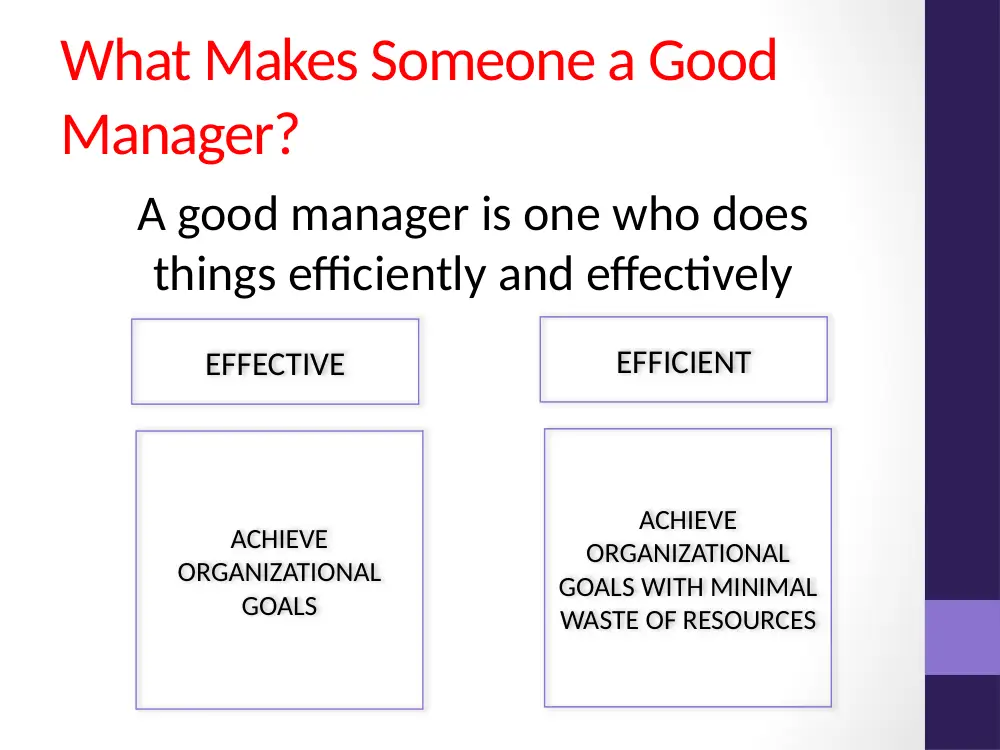
What Makes Someone a Good
manager?
What Makes Someone a Good
Manager?
A good manager is one who does
things efficiently and effectively
EFFECTIVE
EFFICIENT
ACHIEVE
ORGANIZATIONAL
GOALS
ACHIEVE
ORGANIZATIONAL
GOALS WITH MINIMAL
WASTE OF RESOURCES
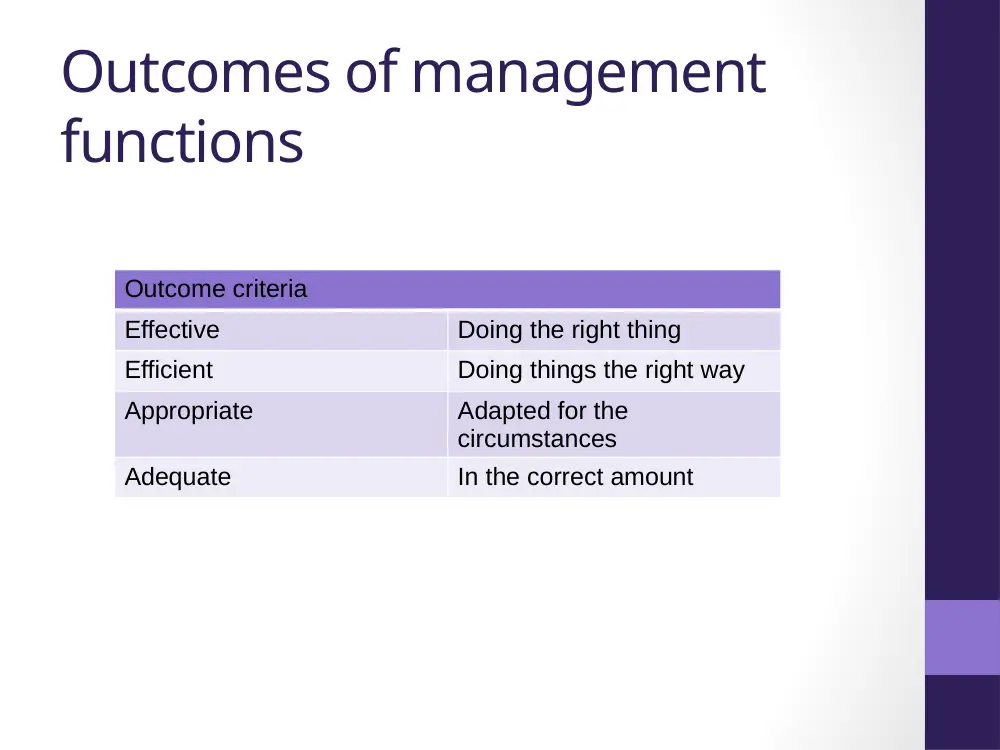
Outcome criteria
Effective
Doing the right thing
Efficient
Doing things the right way
Appropriate
Adapted for the
circumstances
Adequate
In the correct amount
Outcomes of management
functions
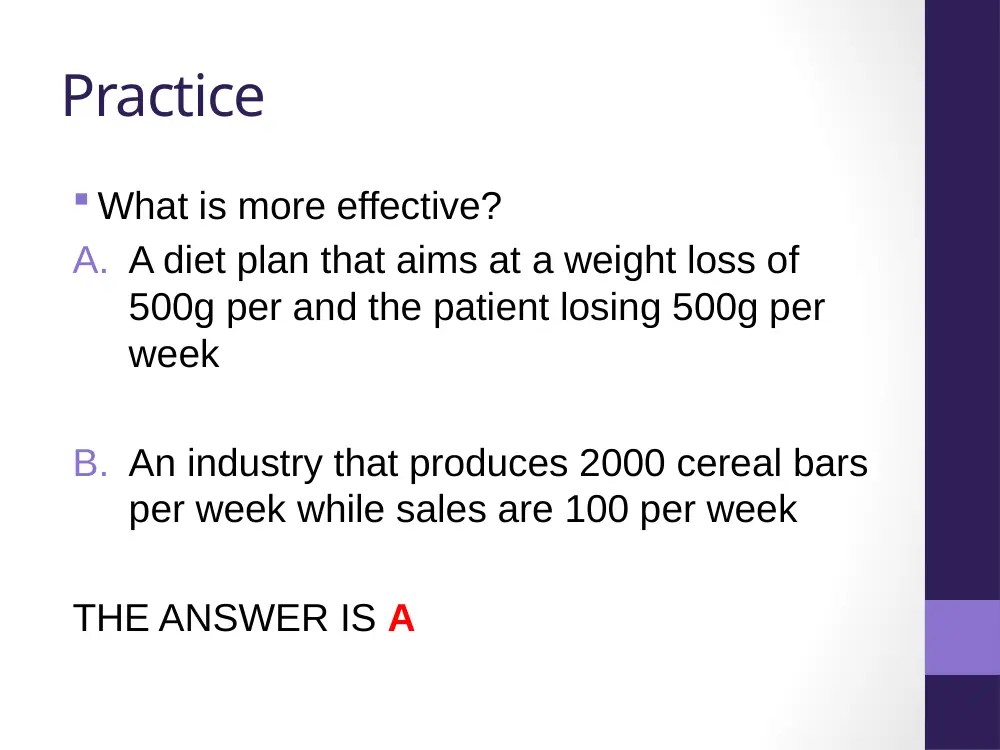
Practice
What is more effective?
A. A diet plan that aims at a weight loss of
500g per and the patient losing 500g per
week
B. An industry that produces 2000 cereal bars
per week while sales are 100 per week
THE ANSWER IS A
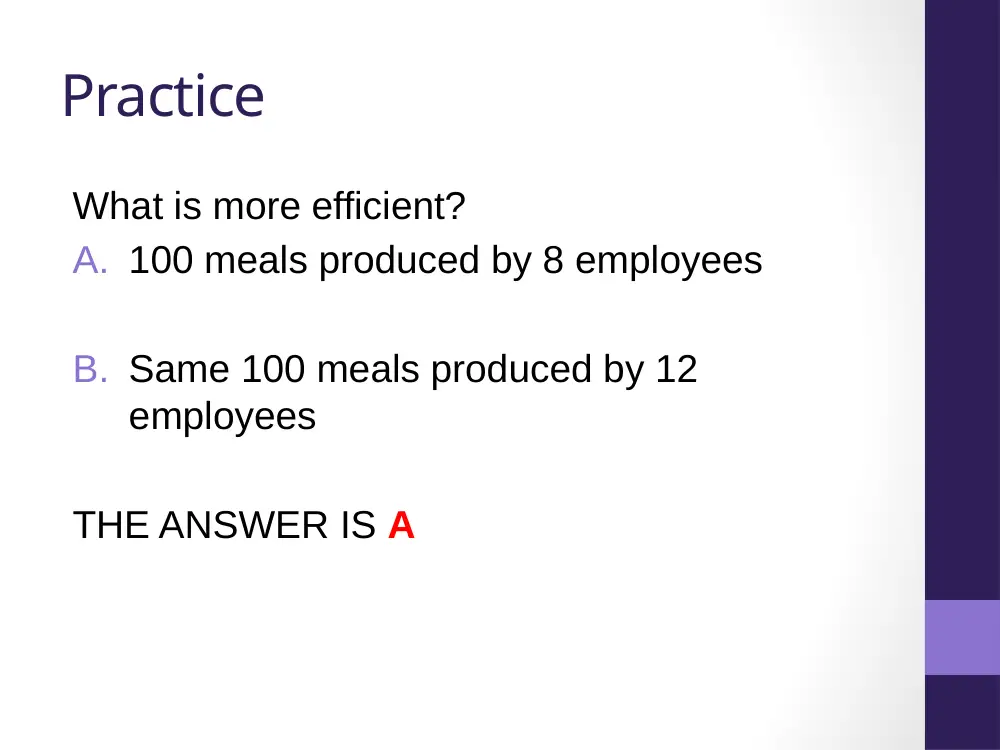
Practice
What is more efficient?
A. 100 meals produced by 8 employees
B. Same 100 meals produced by 12
employees
THE ANSWER IS A
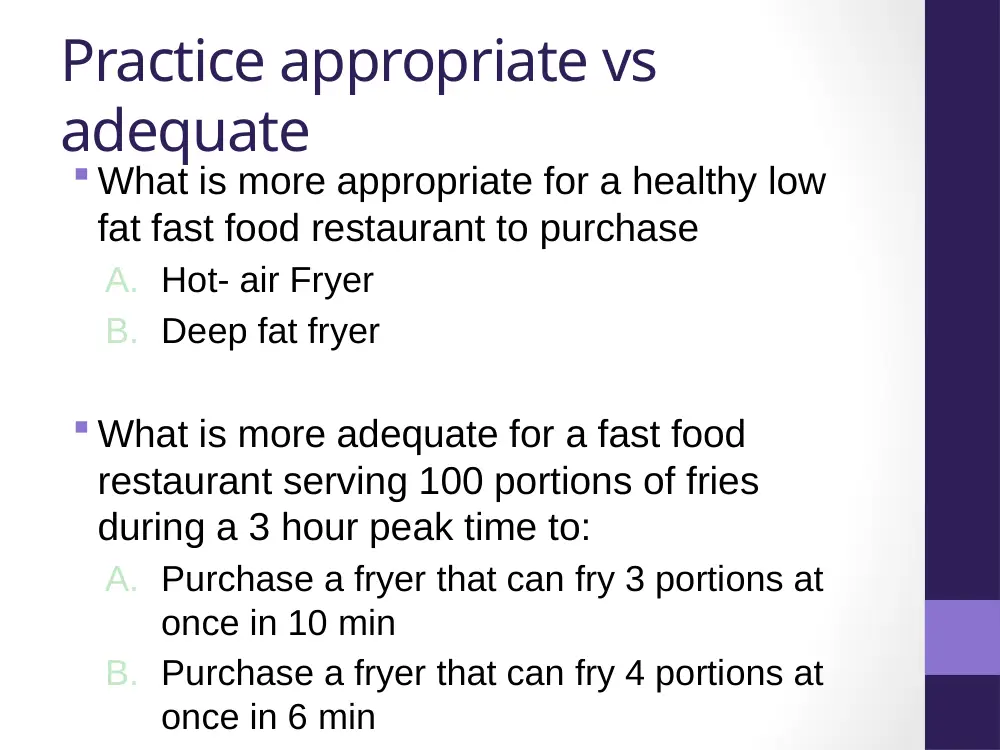
Practice appropriate vs
adequate
What is more appropriate for a healthy low
fat fast food restaurant to purchase
A. Hot- air Fryer
B. Deep fat fryer
What is more adequate for a fast food
restaurant serving 100 portions of fries
during a 3 hour peak time to:
A. Purchase a fryer that can fry 3 portions at
once in 10 min
B. Purchase a fryer that can fry 4 portions at
once in 6 min
How do Managers Work
Efficiently & Effectively?
Skills Needed by Managers
Abilities that result in managerial skills
Managerial skills are specific abilities that result
from:
• Knowledge/Information
• Practice
• Aptitude (talent)
Three essential skill categories needed by
managers:
• Technical
• Human (Interpersonal & communication)
• Conceptual and decision
Skills Needed by Managers
Technical Skills
These are the skills that require a specialized
knowledge of techniques, methods, procedures,
and processes that accomplish the work of an
organization
Related to the production work of the
organization
Acquired through experience and/or education
Examples of technical skills
• A clinical dietitian performing a nutritional
assessment
• Clinical Nutrition Manager who supervises the
Dietitian should be capable of performing a
nutrition assessment but there would no need for
the same level of proficiency
Human Skills
“Knowledge of a particular field gets you in
the door, but social intelligence gets you to
the top.”
Michael Morris
Human Skills
Human skills are a combination of personal attributes,
knowledge, and learned behavior
Human skills are vital for any organization and they are
a requirement for managers at all levels
Requires knowing the rules and regulations relative to
working with employees
Requires the ability to communicate with subordinates
and those in authority
Mainly needed by middle managers
Human Skills
Some common human skills include:
• Communication
• Coaching
• Mentoring
• Managing conflict
• Networking
Conceptual Skills
Conceptual skills urges the manager or the leader to
perform a certain number of activities based on thinking
about the bigger picture beyond the technical aspects of
the position
More abstract ideas and concepts are involved
They are the skills required to:
• Visualize the future
• Plan and set goals
• Provide direction in an organization
• Model professional behavior
Conceptual Skills
Some common conceptual skills include:
• Strategic planning (what will the company develop
into?)
• Goal setting (what objectives are expected)
• Ethical conduct
• Managing change
Skills Needed by Managers
HIGH MANAGEMENT RANK
Conceptual skills
Technical skills
Human skills
Skills needed to do actual production of work
Skills needed to communicate with
subordinates and those in authority
Skills needed to assess and look beyond the
actual. Focus on the global picture.
Skills Needed by Managers
Top Managers
Middle
Managers
Supervisors
Employees
Technical skills
Human
Relations
skills
Conceptual
skills
Management Functions
Management Functions
There are four fundamental functions of
management
• Planning
• Organizing
• Leading
• Controlling
All managers participate in these functions as
routine parts of their jobs
Planning
Planning is the management function of
determining the mission of the organization or
work group, setting goals, and outlining a
blueprint for action that will enable goals to be
met
Planning involves:
• Developing a mission statement that provides an
overall direction for the organization
Mission Statement
•The mission should be the driving force
behind the establishment and revision of
plans. The best mission statements are clear,
memorable, and concise.
Mission statements
TED: Spreading Ideas. (2 words)
Academy of Nutrition and Dietetics:
Empowering members to be food and nutrition
leaders (8)
UMH-RH: UMC-RH is committed to excellence
in patient care, clinical outcomes, academics
and research (13)
Planning
3 types of plans are made & executed by managers
1.Short term plans: Goals & objectives of an organization
that intend to be achieved in a 12 month frame
2.Long term plans: Goals & objectives that cover a period
of 3-5 years
3.Strategic plans: These are closely aligned with the
organization’s mission and set the direction for the
organization within its internal and external
environment. (Daily, weekly and monthly steps to take
to reach the S & LTG)
Tell you
“where”
you want
to end up
Tells you
“how” to
proceed
Examples
Short term plans: The yearly budget
Long term plans : a new clinic has a long
term plan of having 75 physicians referring
patients to the practice within a 3 year time
frame
Strategic plan: the combination of short &
long term plans and where they drive the
institution
Organizing
Management function that deals with establishing an orderly
systematic method of dealing with issues
Common organizing tasks include:
• Specifying job responsibilities
• Grouping jobs into work units
• Allocating resources
• Employee schedules
• Establish policies and procedures
• Attracting people to the organization
• Creating conditions so that people and resources work together
Organizing involves building a dynamic organization
Leading
Leading is stimulating people to be high
performers
Common leadership tasks include
• Motivating & communicating with employees
individually and in teams
• Helping to guide and inspire employees to achieve
their team and organizational goals
Leading takes place in teams, departments, and
divisions, as well as the tops of large
organizations
Controlling
Controlling is the management function that
monitors performance and implements
necessary change
Controlling function ensures that goals are met
Large or small organization pay attention to the
controlling function
“Inspect what you expect”
Examples of controlling?
Audit forms
Checklists
Competency checklists (onsite audits while a
person is performing a task)
Management: Functions
Functions
Planning
Organizing
Controlling
Leading
In the Day of a Typical Manager …
The day of a typical manager will not be neatly divided into four
functions but he/ she will be doing many more things simultaneously
Roles of Managers
WHAT MANAGERS DO!!
Roles of Managers
During the course of a day managers move from
from one activity to the other performing a
variety of roles
These roles according to Henry Mintzberg can be
grouped into three categories as below:
• Interpersonal
• Informational
• Decisional
Source: "Mintzberg on Management: Inside our Strange World of Organizations"
Roles in this
category
provide
information and
ideas
Roles in this
category
process
information
Roles in this
category
involve using
information
Management Roles of Dietetic
Practitioners
Dietetic Practitioner in Foodservice Management
Dietetic Practitioner in Clinical Nutrition
Dietetic Practitioner in Public Health
The Field of Dietetics…
In the field of dietetics you will most likely
encounter people as:
• Registered Dietitian (RD)
• Dietetic Technician, Registered (DTR)
WHAT ROLES/
POSITIONS DO THESE
RDs AND DTRs HAVE???
Dietetic practitioners in clinical nutrition can
acquire one of the following (managerial)
positions:
• Clinical Nutrition Manager
• Chief Clinical Dietitian
• Clinical Dietitian
• Clinical Dietetic Technician
Dietetic Practitioner in Clinical Nutrition
In community nutrition, dietitians can acquire
one of the two following roles:
• Public Health Nutritionist
• Community Dietitian (Community Nutritionist)
Dietetic Practitioner in Public Health
Example
Achrafieh
Verdun
Zahle
Jounieh
Hamra
Bekaa
Public health nutritionist
Community dietitian
Common Managing Bodies in Dietetics
Accreditation Council for Education in Nutrition
& Dietetics (ACEND)
Commission on Dietetic Registration (CDR)
Academy of Nutrition & Dietetics (AND) –
EatRight
Academy of Nutrition & Dietetics Political Action
Committee (ANDPAC)
Thank you