
NUT 468 Chapter 4, Spring 2017
Lebanese American University · Management System and Dietetics · 38 pages


Showing the first 10 of 38 pages. Download the PDF to see all of it.
More NUT 468 files
Show the text of this chapter
1
MARKETING
Cosette Fakih El Khoury
NUT 468
Spring 2017
2
Why are we studying marketing
in this course?
Why is it important for
managers ?
Why is it important for
dietitians & food service
managers?
3
Overview & Definition
Marketing is an essential tool for managers
just like decision making and communication
In this chapter we will focus on
understanding why a dietitian must
understand the power and value of
marketing as a tool and use marketing
concepts to inform and educate the public
as part of effective food and nutrition
services
4
Overview & Definition
Until recently, dietitians neglected
marketing themselves, their profession,
and their products
Food practitioners were not familiar with
marketing concepts
Well… times have changed and 42% of RDs
in the US claim that they promote food and
nutrition programs, products, and services
through interactions with others
5
Overview & Definition
Dietitian, as a member of the health care
team, must understand the power of
marketing as a tool and use it to inform
and educate the public as part of effective
nutrition services
Marketing also needed to be used by
dietetic practitioners to send counter
messages to the public concerning health
(Ex: Obesity crisis)
6
Overview & Definition
So how do we define marketing, keeping in
mind the need to promote good health?
7
Overview & Definition
Marketing is a management tool that
focuses on identifying the needs, wants,
and demands of customers and developing
products to meet those needs
Source: Hudson, N; Management Practice in
Dietetics
8
Overview & Definition
•Continuum of efforts & activities
ranging from simple marketing to
media advocacy
•Each form involves a relationship and
two way interaction between the
marketer and those to whom the
marketing is being directed
9
Overview & Definition
• Simple marketing involves targeted
communication of information based on
audience research
• Social marketing aims to create attitudinal
and/or behavioral change in a target audience by
emphasizing relevant benefits to that audience
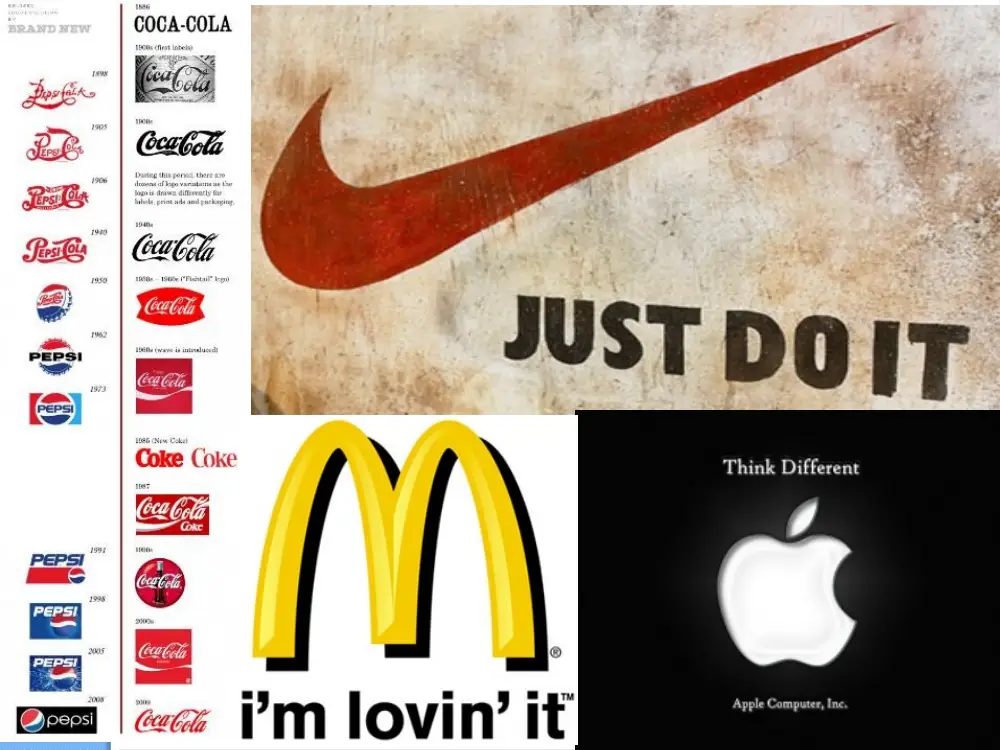
• “Branding” strives to define and establish a
positive image or impression for a product via
linked association with a visual or auditory cue
that will, when re-experienced, stimulate a quick,
almost hard-wired short-cut reminder of the
positive value of the product
• Media advocacy is a strategy designed to bring
about a political action and/or policy change
through the reframing of issues in mass media
10
11
The Marketplace
The way an organization describes,
understands, and sees its market has a
major impact on how the organization is
perceived by staff and outsiders
There are 5 ways an organization sees its
marketplace
1. Production perspective
2. Product perspective
3. Selling perspective
4. Marketing perspective
5. Social marketing perspective
12
Productio
n
Perspecti
ve
Product
Perspecti
ve
Selling
Perspecti
ve
Marketin
g
Perspecti
ve
Social
Marketin
g
Perspecti
ve
13
1-Production Perspective
Original view of the market
Developed prior to the industrial
revolution
Demand exceeded production (goods
were manufactured by hand)
14
2-Product Perspective
Make large quantities of a product through
mass production & assembly line
techniques
Goods are made in an effective and
efficient way, time and effort can be put
into the development and refinement of
the product
This allows organizations to look at their
products in terms of value, features, and
performance
15
3-Selling Perspective (1/2)
A good product with excess production
capacity
Company can adopt a selling perspective
accompanied by active promotion to
draw attention of consumers toward it
This promotion urges consumers to buy
something they do not really want or
need
This promotion happens with very well
adept, trained, and qualified sales people
16
3-Selling Perspective (2/2)
The focus is more on selling then on
marketing
Profits are based on the quantity of
goods sold
Focus is to increase sales volume
17
4-Marketing Perspective (1/2)
This looks at production, product, and
sales
Also takes into consideration distribution,
price, and how the product is introduced
and promoted to the consumer
The focus is not on any one of the factors
in particular but how each one of these
factors contribute to the marketing mix
18
4-Marketing Perspective (2/2)
The marketing perspective also
differentiates between customer needs,
wants, and demands
NEEDS
WANTS
DEMANDS
Things required
for well being
Socially
acceptable ways
to meet needs
Wants that are
supported by
resources, like
money that allow
them to be
fulfilled
19
5-Social Marketing Perspective
(1/2)
Also known as societal marketing
Exceeds meeting consumer expectations
but in turn it also focuses on the good of
society
Takes into consideration consumer welfare
as well as consumer wants
The goal of social marketing is to improve
the common good by balancing the needs
of the organization and its customers with
the needs of society
20
5-Social Marketing Perspective
(2/2)
Example:
Quick service restaurants include messages
related to balanced nutrition in their
promotions
21
Target Markets
Mass
Marketing
Target
Marketing
•
Product made and
available to
population at large
•
Can be used to
promote a single
product or several
products with
different features
•
Designed to appeal to
wide segments of the
population
•
In recent years it has
been found that
marketing is more
effective if products
are developed for and
promoted to unique
subgroups within the
population
•
Ex: vitamins (liquid
vitamins, chewable,
vitamins with iron, ..)
•
Target marketing has
3 parts: market
segmentation, market
targeting, and market
positioning
22
Target Marketing
Target
Marketi
ng
Market
Segmentati
on
Market
Targeting
Market
Positioning
23
1-Market Segmentation (1/3)
Markets are segmented in several ways
◦Demographics: Age, race, gender, income,
education, etc..
◦Geographic: Country, state, climate, ..
◦Psychographic: Attitude, value, belief, ..
◦Behavioral: Usage, benefits, …
Grouping of potential consumers is called
market segmentation
24
1-Market Segmentation (2/3)
The trick is to determine which
characteristics are useful to create a
useful subgroup that could benefit from a
particular product
Example:
Manufacturer of cookie
created a new product
for brunettes
Vitamin supplements
targeted to senior
citizens with silver hair
25
1-Market Segmentation (3/3)
Characteristics that form the basis for
segmenting the market are specific to
product
In nutrition, dietetic practitioners have
segmented their clients based on medical
diagnosis (CVD, renal, …)
26
2-Market Targeting (1/2)
Once market segments are identified, they
need to be evaluated to see if it is feasible to
develop a product for that market
Factors to evaluate include:
◦Size of the segment
◦Anticipated growth of segment
◦Attractiveness of segment (vs. competition)
◦Brand loyalty
◦Resources required to get a product to market
(product development, promotion, ..)
◦Return on investment (revenue generation)
27
2-Market Targeting (2/2)
The goal in target marketing is selection
of the market that will need, want, and
demand the product
28
3-Market Positioning
After target market is identified, product
must be positioned
Position is how product is perceived by
customers relative to other similar
products
Products are positioned on the basis of:
◦Attribute (physical, sensory, price)
◦Use
29
Market Research
Necessary to find out about potential
markets
Market research begins with defining the
goal or problem and gathering data to
understand all aspects
Market research provides information on:
◦Knowledge
◦Belief
◦Attitude
30
Market Research
Market research is conducted to identify
a target market or to determine actual
needs, wants, and demands of a specific
group
Market research:
1. Needs identification
2. Information gathering
a. Primary Data
b. Secondary Data
3. Data Analysis
31
Market Research
Choice whether to use primary or
secondary data or a combination of them
depends on:
◦Information already available
◦Money available for market research
32
Marketing Mix
Marketing mix has four components, four
P’s of marketing:
1. Product
2. Place
3. Price
4. Promotion
33
Marketing Mix
Targe
t
Mark
et
Produ
ct
Pric
e
Plac
e
Promotio
n
34
Product
Anything offered to consumers to satisfy
their needs, wants, and demands
Products can be:
1. Goods
a.
Durable goods: Ovens, computers, furniture, …
b.
Non-durable goods: Dishes, uniforms, ..
c.
Perishable goods: Meat, fresh food products, ..
2. Services: intangible products, …
3. Places
4. Activities
5. Ideas/advice
35
Place
Location where tangible goods are
offered and also includes the product’s
distribution system (storage, delivery
system, transport, ..)
For intangible products place denotes the
location where a service is offered
(daycare center, shopping mall, …)
36
Price
Most critical component of the marketing
mix
Price is the component most evident to
the consumer
Price is often regarded as a competitive
tool
They should take into account:
◦Competition
◦Profit margins
◦Discounts
37
Promotion
The means to introduce the product to
the targeted audience
It is communicating a message through a
variety of mediums to create awareness
and promote action
Advertising for instance is an important
part of a promotional campaign
38
Summary Table of Marketing Mix
Decisions
Product
Functionality
Appearance
Quality
Packaging
Brand
Price
List Price
Discounts
Allowances
Financing
Place
Channel
Members
Logistics
Coverage
Promotio
n
Advertising
Personal
selling
Public
relations
Media
Budget