
NUT 468 Chapter 2, Spring 2017
Lebanese American University · Management System and Dietetics · 72 pages

Showing the first 10 of 72 pages. Download the PDF to see all of it.
More NUT 468 files
Show the text of this chapter
INTRODUCTION TO
ORGANIZATIONS
NUT 468
Spring 2017
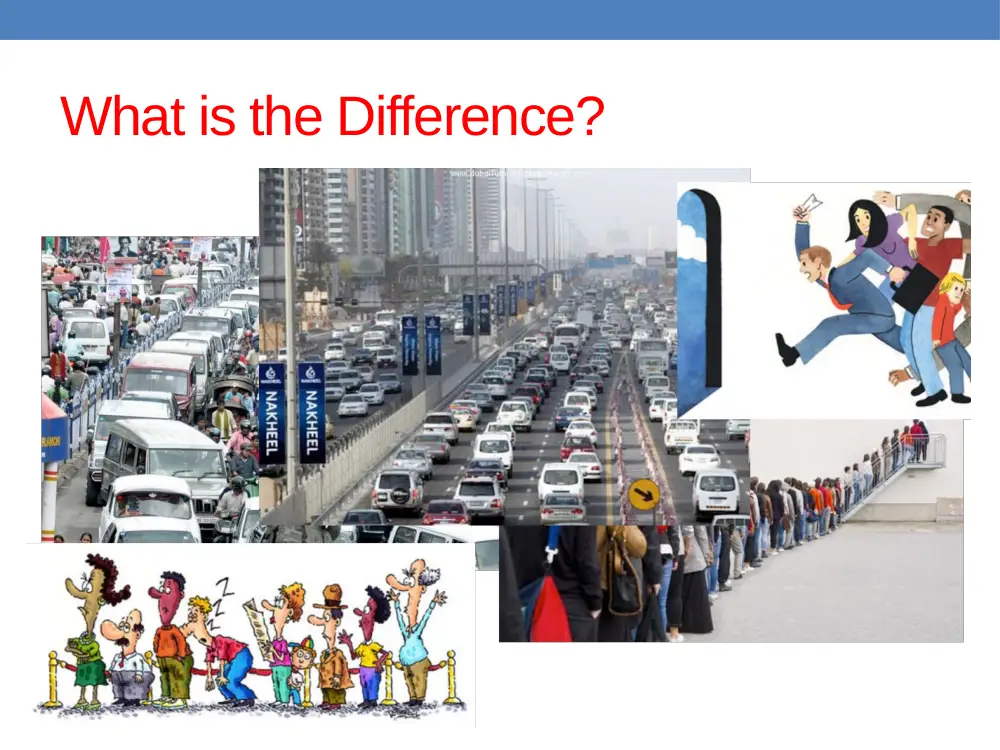
What is the Difference?
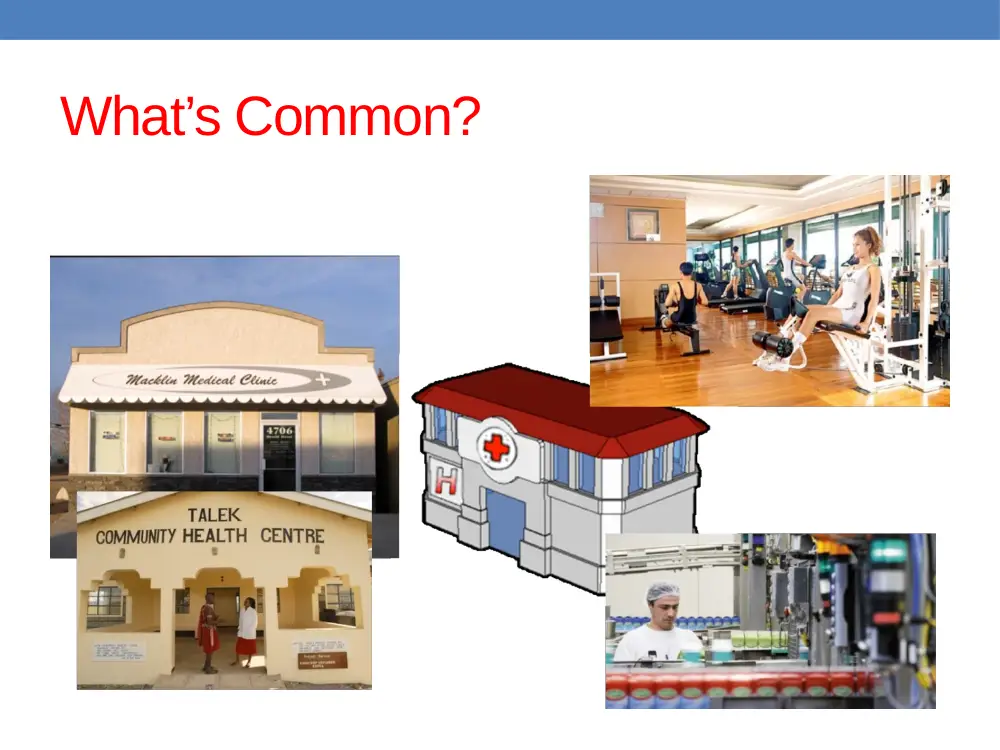
What’s Common?
SO WHAT IS AN ORGANIZATION??
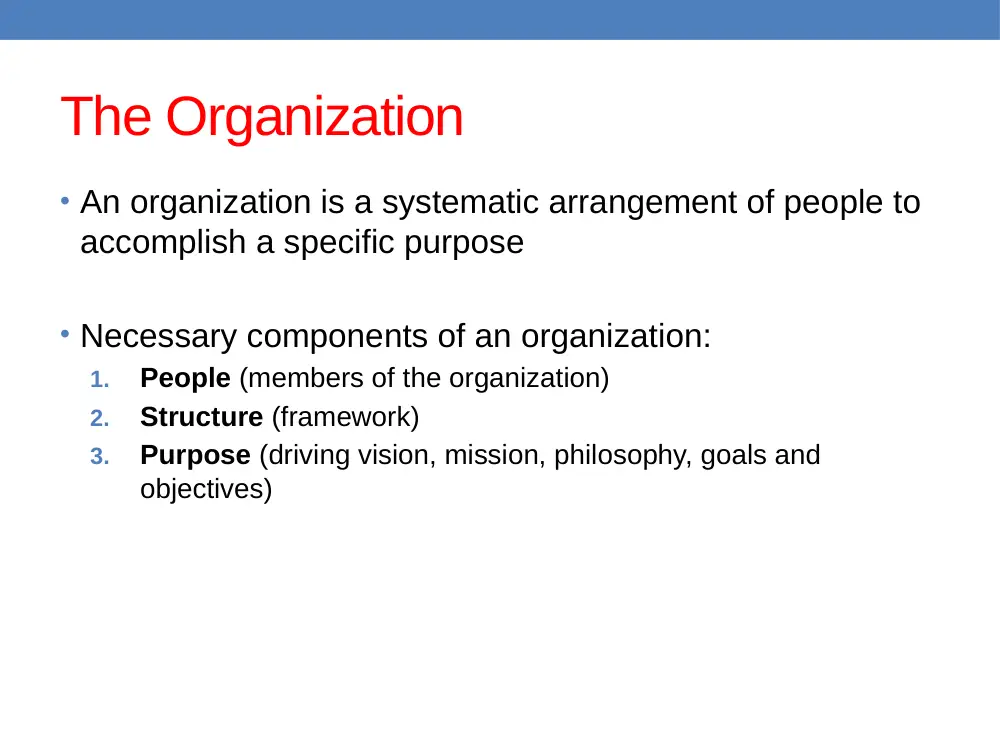
The Organization
• An organization is a systematic arrangement of people to
accomplish a specific purpose
• Necessary components of an organization:
1.
People (members of the organization)
2.
Structure (framework)
3.
Purpose (driving vision, mission, philosophy, goals and
objectives)
WHAT DO
ORGANIZATIONS DO??
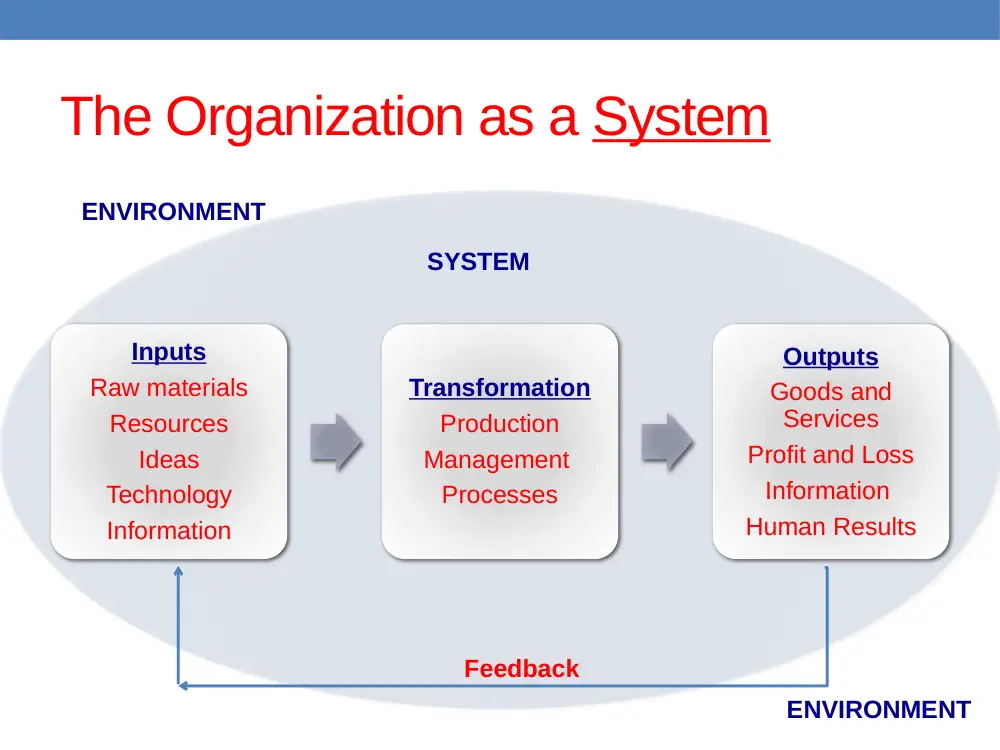
The Organization as a System
Inputs
Raw materials
Resources
Ideas
Technology
Information
Transformation
Production
Management
Processes
Outputs
Goods and
Services
Profit and Loss
Information
Human Results
Feedback
SYSTEM
ENVIRONMENT
ENVIRONMENT
Inputs
WHAT ARE THEY???!!??
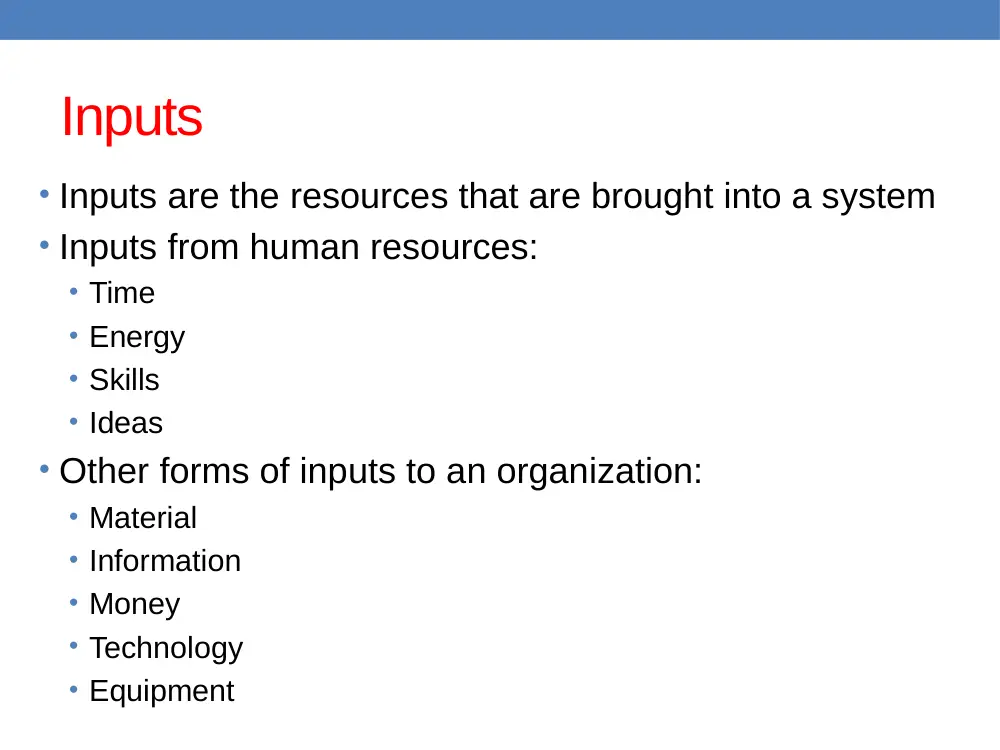
Inputs
• Inputs are the resources that are brought into a system
• Inputs from human resources:
• Time
• Energy
• Skills
• Ideas
• Other forms of inputs to an organization:
• Material
• Information
• Money
• Technology
• Equipment
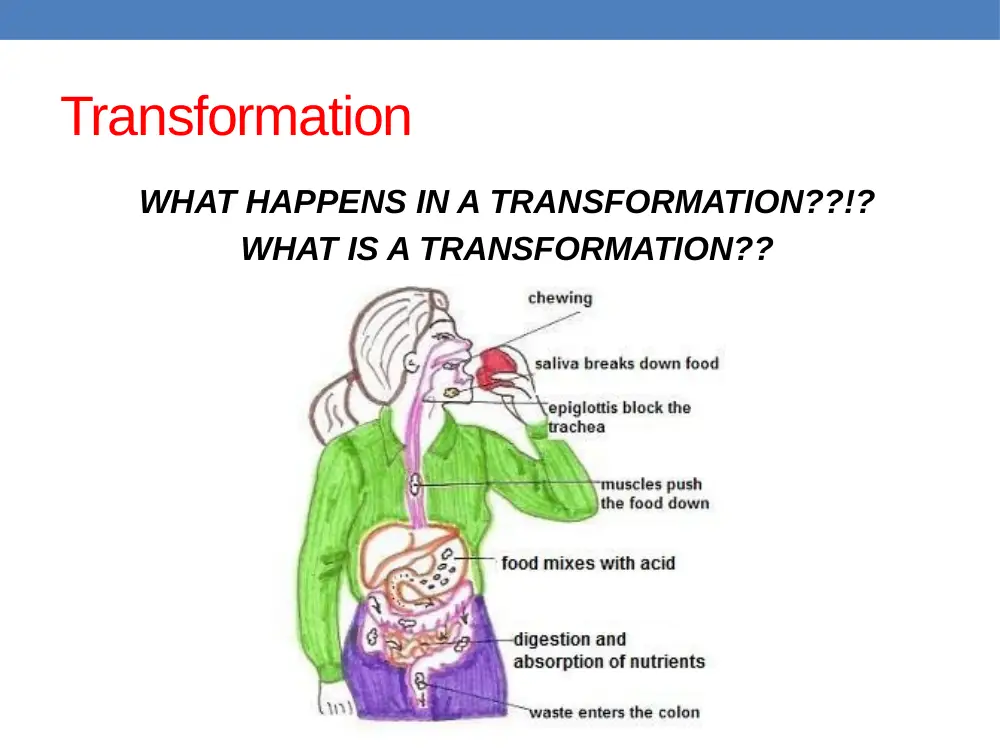
Transformation
WHAT HAPPENS IN A TRANSFORMATION??!?
WHAT IS A TRANSFORMATION??
Transformation
• The production or work of an organization that changes
inputs into outputs
• Work processes (simple and complex: writing a letter,
reporting, performing an open heart surgery, cooking,
assessing etc.)
• In large organizations, different types of transformations
take place in different settings (i.e. hospital: nursing,
pharmacy, environmental services, finances, human
resources etc.)
Outputs
WHAT ARE OUTPUTS???
Outputs
• The results that occur after the inputs have
undergone transformation
• Not all outputs are tangible goods
• Important to know the difference between
outputs and outcomes. In clinical or community
settings, the term “outcome” is more appropriate
and more frequently used
What is the difference between an
outcome and an output??
Outcomes or Outputs?
• From the list below, identify which ones are
considered outcomes:
• Improved blood glucose levels
• Behavior change in response to an intervention
• Improvement in health
• Knowledge gained by clients
• Decreased morbidity and mortality rates
• Lowering of serum cholesterol level
• Reduction in body weight
Outcomes or Outputs?
• Improved blood glucose levels (output)
• Behavior change in response to an intervention
(outcome)
• Improvement in health (outcome)
• Knowledge gained by clients (outcome)
• Decreased morbidity and mortality rates (outcome)
• Lowering of serum cholesterol level (output)
• Reduction in body weight (output)
Outputs
• Outputs are not always positive
• Scenario #1: an organization is making profit
and this is considered a good outcome
indicating that the operation is running
smoothly.
• Imagine that a large number of work-related injuries
are occurring this provides evidence that something
is not working well and that it needs to be fixed
FEEDBACK SYSTEM
Feedback
• Outputs from a system that are recycled as inputs to
prevent errors or to improve the system in the future
• Example:
• If a foodservice produced too many sandwiches which became
stale and had to be discarded the manager would have to
reassess the production of sandwiches: either decrease production
of sandwiches, or making sandwiches upon customers’ requests,
or packaging sandwiches so they do not get stale
• Feedback is integral to how a system works
• It is similar to the institutional memory: it helps the
organization avoid repeated errors and maximize what is
positive
Organization Systems in Dietetics
Inputs
Labor Skill Money
Food Equipment
Materials
Information
Transformation
Procurement
Production
Safety, Sanitation
& Maintenance
Distribution &
Service
Outputs
Meal Equivalents
Quality of Food
Revenues/Profit or
Loss
Customer
Satisfaction
Feedback
Food Service System
ENVIRONMENT
ENVIRONMENT
Organization Systems in Dietetics
Inputs
Labor Skill Money
Material
Equipment
Patient/Client
Wants & Needs
Health/Nutrition
Assessment Data
Transformation
Nutrition
Assessment
Nutrition
Diagnosis
Nutrition
Intervention
Outputs
Patient/Client
Outcomes
Direct Nutrition
Outcomes
Clinical/Health
Status Outcomes
Health Care
Utilization & Cost
Outcomes
Feedback
Clinical Nutrition System
ENVIRONMENT
ENVIRONMENT
Organization Systems in Dietetics
Inputs
Labor Skill Money
Material
Equipment
Wants & Needs of
Target Population
Community
Assessment Data
Transformation
Community
Assessment
Problem
Identification
Program Planning
Community
Intervention
Outputs
Behavioral
Changes in Target
Population
Health Status
Outcomes of the
Target Population
Morbidity and
Mortality
Cost/Benefit
Information
Feedback
Community Nutrition System
ENVIRONMENT
ENVIRONMENT
The Organization in an Environment
• The organization is part of a larger system
• The external environment has a major impact on how the system
behaves
• It should be mindful of the environment in which it exists
• Must comply with the regulations imposed on it from the
outside, as well as with its own internal policies and
procedures
GOALS OF THE
ORGANIZATION
Vision, Mission, Goals, Objectives, Culture…
REMINDER !!!
• Necessary components of an organization
1. People (members of the organization)
2. Structure (framework)
3. Purpose (driving vision, mission, philosophy,
goals and objectives)
Organizational Mission
• An organizational mission answers questions such as:
• Why are we here?
• Why do we exist?
• What function does the organization perform? For whom?
• Expressed as a mission statement:
• Broad statement of business scope, purpose and operation that
distinguishes the business from others. It is the purpose that drives
an organization
• Serve to inform employees, clients, and people about what’s
important to you and your business
• Should preferably be clear, memorable and concise
Mission Statements
• There is a difference in the way mission statements are
communicated in small vs. large organizations.
• In small businesses: mission may be known by the
manager and communicated to the employees in an
informal way: i.e.
• To produce a delicious and healthy cookie
• To provide congregate meals to the elderly population
• To educate the pubic about the benefits of increasing their physical
activity.
• Because small organizations tend to have few employees,
there is a slighter chance for the mission to be distorted
• The case is different in larger organizations
Mission Statements
• In large organizations:
• Managerial levels increase
• Departmentalization occurs (i.e. hospital: finance, accounting,
human resources, material management, food service etc.)
The mission may be less clear to the larger number of individuals in the
organization
• Therefore a written mission statement that embodies the
purpose of the organization is very important to remind
everyone what the focus really is
• Mission statements should be concise enough so that
they do not overwhelm employees
• A lot of times used in organizations’ advertising, on
business cards, desk and wall ornaments
Examples of Mission Statements
• TED: Spreading Ideas. (2 words)
• Lifestrong: To inspire and empower people affected by
cancer. (8)
• Best Friends Animal Society: A better world through
kindness to animals. (7)
• American Heart Association: To build healthier lives,
free of cardiovascular diseases and stroke. (10)
• American Diabetes Association: To prevent and cure
diabetes and to improve the lives of all people affected by
diabetes. (16)
• Make-A-Wish: We grant the wishes of children with life-
threatening medical conditions to enrich the human
experience with hope, strength and joy. (21)
Examples of Mission Statements
• Lebanese American University is committed to academic
excellence, student centeredness, civic engagement, the
advancement of scholarship, the education of the whole
person, and the formation of leaders in a diverse world.
• UMC-RH is committed to excellence in patient care, clinical
outcomes, academics and research.
• The primary mission of Faqra Catering is to provide
outstanding products and service. The business depends on
customer's satisfaction: Their clients are at the very heart of our
success. Faqra Catering earns their trust and respect every
day, meet their needs and exceed their expectations in order to
get positive feedback and ensure loyalty. Every customer will
benefit from individual diligence, personalized care and a
flexible, willing attitude.
Vision
• A vision is a statement of what or how you would like
things to be; a picture of the future you’re working to
create, what you want your business to become
• Must be in line with the mission & core values of the
organization
• Must be effectively communicated to and accepted by
everyone involved in the organization
Vision
Example
Mission:
• UMC-RH is committed to excellence in patient care,
clinical outcomes, academics and research.
Vision:
• UMC-RH will be the premiere academic medical center in
the Middle East by delivering outstanding, innovative,
patient-centered care in partnership with superior health
professionals
Core Values
• Core values are the principles & standards at the very
center of the organization
• They are stable and only change very slowly over long
periods of time
• Form attitudes and guide behavior
• Frequently useful to rank them from more to less
important
Core Values
• Quality service
• Excellence
• Trust
• Respect
• Responsibility
• …
Example: Values – UMC-RH
• RespectThe basic dignity of the individual is the guiding
principle in all our policies, procedures and interactions.
Human life at every step and in any condition is precious
and worthy of respect.
• IntegrityWe strive to be consistently truthful, observe
ethical standards, and promptly acknowledge errors.
• CompassionCompassion is the way we share deep
concern, love, and care toward each person.
• Excellence Excellence is the result of our willingness to
be creative, and to seek new approaches to improve the
quality of our work. We are committed in our search for
excellence so that we can continuously improve and find
new and innovative ways to better serve our patients and
community
Example: Values – Faqra Catering
• ISO - International Organization for Standardization (ISO) is a
set of international standards and requirements that focuses on
developing and managing an organization’s family of effective
business processes that meets the needs of the customer and
the business while fully complying with ISO 9001:2000
requirements
• HACCP - HACCP stands for Hazard Analysis Critical Control
Points. It is a comprehensive food-safety system that analyzes
monitors and eliminates dangers or hazards throughout the
production process. HACCP is considered the ultimate food-
safety system worldwide
Example: Values – Faqra Catering
• Hygiene - At Faqra Catering, hygiene is primordial, so keeping a
healthy and clean environment is a must. The company is very strict
when it comes to adhering to the most stringent health codes. One of
the ways they are ensuring this is by achieving well-known
accreditations of the ISO and HACCP
• Innovation - Faqra Catering refuses “me-too” formulas. Its success
is built by creative, productive employees who are encouraged to
make suggestions. The company's sales team is at the heart of
innovation process: They have the freedom to submit and execute
their ideas concerning presentation of dishes, original recipes, or
ways of placing and decorating buffets. The sales department
ensures that every event keeps its own character and singularity
Organizational Culture
• Is the “personality” of an organization
• It determines how employees view their jobs, and how they act,
both toward their colleagues & toward outsiders
• Leadership styles of managers, the size and complexity of an
organization, the products or services and the environmental
forces that come to bear on the organizations play a part in the
development of the organizational culture
• A list of 10 characteristics have been associated with
organizational culture. Evaluation of these characteristics
within any organization provides insight into that organization’s
culture
Organizational Culture
Characteristics of Organizational Culture
Member
Identity
The degree to which employees identify with the organization
rather than with their type of job or profession
Group
Emphasis
The degree to which work is organized around groups rather
than individuals
People Focus
The degree to which management decisions take into
consideration the effect of outcomes on people in the
organization
Unit Integration
The degree to which organizational units are encouraged to
operate in a coordinated or an independent manner
Control
The degree to which rules and direct supervision are used to
control employee behavior
Risk Tolerance
The degree to which employees are encouraged to be
innovative and to take risks
Organizational Culture
Characteristics of Organizational Culture
Reward Criteria
The degree to which salary increases and promotions are
based on performance criteria (rather than nonperformance
factors such as seniority)
Conflict
Tolerance
The degree to which conflicts and criticism can be discussed
openly
Means-End
Orientation
The degree to which management focuses on outcomes
rather than on processes
Open-Systems
Focus
The degree to which the organization monitors and responds
to changes in the external environment
Internal Congruity
• An important factor in the smooth operation of an
organization
• Consistency within the organization, related to managers,
employees, processes, communication, philosophy,
culture and so on. It is the thread that unifies the whole
• Things go more smoothly when the organization’s
structure and culture are integrated with each other and
supported by the people in the organization
• Individual managers must have managerial styles that are
consistent with the structure and culture, and employees
must know what roles they are expected to play in the
organization
Internal Congruity
A Note on Change
• Changing markets, technology or external factors (i.e.
economic crisis) make it necessary for an organization to
change its structure or its mission or both.
• Change takes time and cannot be accomplished overnight
– process is less traumatic if it evolves rather than happen
abruptly
• Major organizational change is not usually welcomed
ORGANIZATIONAL
STRUCTURE
Hierarchy, Span of Control, Line/Staff Relationships,
Centralization, Departmentalization and Organization
Charts
Organizational Structure
• Even the smallest organizations with just a few individuals have some sort of
structure, division of responsibility in order to function smoothly
• Lines of authority
• Vertical relationships within an organization/ chain of command
• Start to develop as more people join the organization
• The structural framework that is in place in an organization is based on 5
elements and the interrelationship among them:
• Hierarchy
• Span of Control
• Line/Staff Relationships
• Centralization/Decentralization
• Departmentalization
Hierarchy
• Refers to the vertical
relationships within an
organization – reporting
relationships between line
managers
• Traditionally: hierarchy
assumed that each individual
reported to only one superior
and that authority was
delegated downward through
the organization
Chief Executive
Officer
Assistant Director for
Patient Services
Chief Clinical Dietitian
Dietetic Technician
Food Service
Workers
Director of Food &
Nutrition Services
VP for Support
Services
Chief Operating
Officer
Hierarchy
• Different levels of staff are
evident
• Operatives/Frontline
workers/Workers: Individuals at
the bottom of the hierarchy usually
DO the work of the organization;
they do not have to monitor or
direct the work of others
• Managers: are people who
oversee or direct the work of
others at some level: frontline
managers, middle managers, top-
level managers
Chief Executive
Officer
Assistant Director for
Patient Services
Chief Clinical Dietitian
Dietetic Technician
Food Service
Workers
Director of Food &
Nutrition Services
VP for Support
Services
Chief Operating
Officer
Hierarchy
• When reporting relationships are vertical with several
individuals reporting to a manager and with that manager
reporting to another higher level manager, the relationship is
said to be linear
• Frontline managers: Usually work the closest to the customer;
oversee employees who make the product or deliver the service that
the organization produces
• Top-level managers: are on the other spectrum; are fewer in number
and oversee the work of others (middle managers) rather than the
production of goods and services; they do have responsibility for all
that goes on under them but with layers of managers between them
frees top-level management to attend to more global issues
• Middle-managers: their number depends on several factors: the size
of the organization, the work units that have been identified, the
geographic divisions, span of control for each manager etc.
Hierarchy
The trend today:
• Teams may function without a manager at all
• Managers may report to more than one superior: i.e. a
clinical nutrition manager reports to a physician
concerning medical nutrition therapy and to a foodservice
director for matters related to operations and finance
Span of Control
• A measure of the influence a manager has on an
organization
• Usually measured by the number of people who report to
the manager directly
Span of Control
• The frontline manager in a cafeteria supervises 8 employees
who work in the cafeteria on the AM shift on weekdays.
• What is the frontline manager’s span of control?
• The supervisor could report to a middle manager, who is
responsible for both the cafeteria and catering functions of a
foodservice. The AM cafeteria supervisor, the PM cafeteria
supervisor, the cafeteria’s relief supervisor (who covers days off
for the other supervisors), a catering supervisor who handles
special events, and a clerk all report to this person. Each
supervisor has about 8 workers reporting to him/her.
1.
What is the span of control for the cafeteria and catering manager?
2.
How many people does the authority of the cafeteria and catering
manager cover?
Span of Control
• Further up the management ladder is the foodservice
director (FSD). Suppose that the following managers report
to the FSD: the cafeteria and catering manager, the
executive chef/food production manager, the patient
services manager, and the clinical nutrition manager.
These managers have 37, 24, 25 and 18 reporting to
them.
1.
What is the FSD’s span of control?
2.
How many people does the FSD authority cover?
Span of Control
• Even though top managers manage through others, they
must keep in touch with what is happening at the various
levels below them
• Note: The chain of command prevents workers from
circumventing their immediate supervisor but it does not
prevent the top-level management from keeping in touch with
employees at any level through:
• Councils, advisory groups made up of workers and managers at all
levels
• Using the technique known as management by walking around
(MBWA): making unscheduled walking rounds through the facility can
provide substantial and considerable information to a manager.
Span of Control
Flattening of Organizations
• Traditionally
• Each manager had a limited span of control of 4-5 employees Great
number of layers between top-level managers & workers
• Current trend
• Training staff more intensely so individuals are more independent &
require less supervision
• The more skilled the workforce, the larger the span of control can be
• May range from as few as 4 to 20 direct subordinates!
Span of Control
• Eliminating middle managers and creating larger span of
controls leads to the flattening of organizations, also called
downsizing or rightsizing
Chief Executive
Officer
Assistant Director for
Patient Services
Chief Clinical Dietitian
Dietetic Technician
Food Service
Workers
Director of Food &
Nutrition Services
VP for Support
Services
Chief Operating
Officer
Chief Executive
Officer
Chief Clinical Dietitian
Dietetic Technician
Food Service
Workers
Director of Food &
Nutrition Services
VP for Support
Services
Flattening
Organizational
Hierarchy
Line/Staff Relationships
• Not all managers have linear reporting relationships
• Example: Public Relations or Human Resources
Departments in an organization
• Their services are essential to the entire organization
• They do not DO the actual work of producing goods or
services directly or indirectly
• They act in an advisory capacity, provide support to the
organization rather than to one segment of it
Line/Staff Relationships
• Usually small departments close to top of the organizational
structure and with no need to multiple managerial levels
• Managers in these departments are known as staff
managers because their function transcend departments;
they oversee supportive departments or groups and usually
report laterally, not vertically
Centralization
• Refers to the concentration of power at the upper levels of an
organization
• Substantive decisions are made at the upper levels and are
then transmitted down through the organization to be
implemented at the lower levels
• Disadvantages:
• Communication both upward and downward can lead to problems
because the information may be distorted as it moves through the
organization
• Information moves very slowly because of the number of layers it must
traverse
Decentralization
Current trend
• As organizations are flattened and staff is better trained, decisions
are being made at lower levels
• Decentralization allows the organization to be more responsive to
customer needs
• Note: not all decisions can or should be made by frontline
employees
• More and more organizations are decentralizing the decision-
making process to be made at the lowest appropriate
organizational level
Review of the Types of Managers
Position Type
Level
Responsibility/Skills Needed
Frontline
manager
Manager oversees production tasks; needs a
high level of technical skills, good human skills
and some conceptual skills
Middle
manager
Manager oversees several groups of workers
and their supervisors; needs some technical and
conceptual skills and good human skills
Top-level
manager
Manager directs the activities of large segments
of an organization; needs a high level of
conceptual skills, good human skills and some
technical skills
Line manager
Various
Manager whose reporting relationships are
vertical; skills needed are dependent on the
managerial level
Staff manager
Various
Manager directs supportive departments or
groups and reports laterally; skills needed are
dependent on the managerial level
Departmentalization
• Many organizations specialize their functions and group-
like activities together
• Might be based on:
• What the products are
• Customers: patient services or revenue-producing operations
(cafeteria and catering)
• Product line: patient services might be divided into meal service,
enteral and parenteral feeding, nutritional screening, assessment,
counseling and other services
• Geographic divisions: employee cafeteria, convenience store, on-
premise catering, off-premise catering