
ENG 201 Lecture, Spring 2012
Notre Dame University–Louaize · Introduction to Engineering · 19 pages
Showing the first 10 of 19 pages. Download the PDF to see all of it.
More ENG 201 files
Show the text of this lab
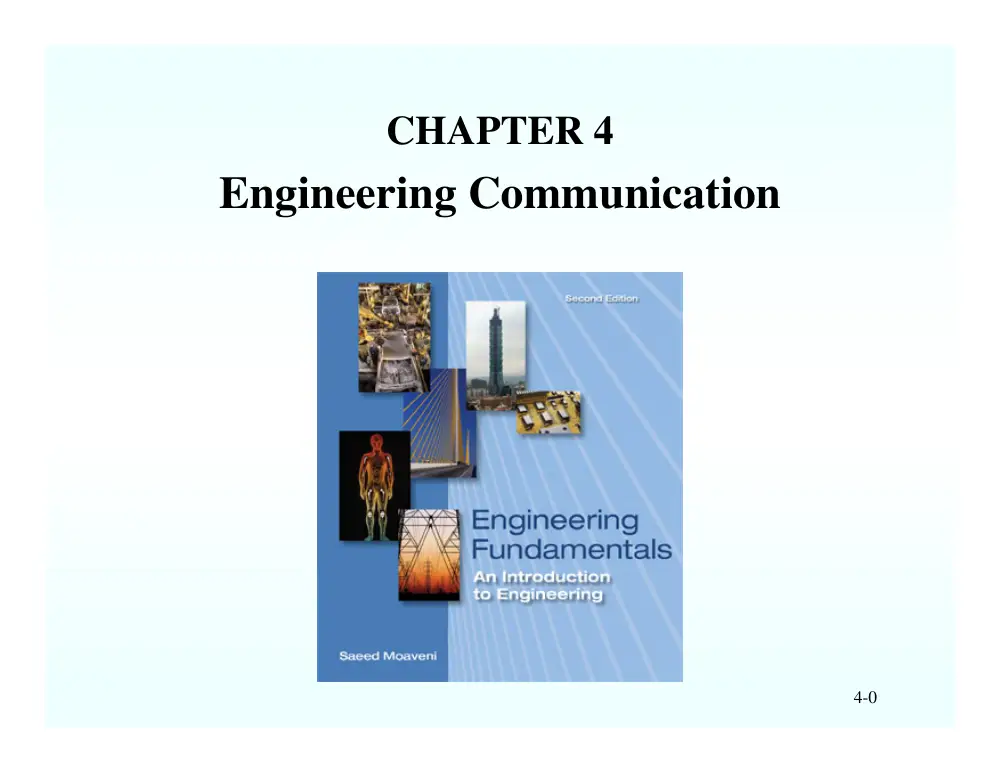
4-0
CHAPTER 4
Engineering Communication
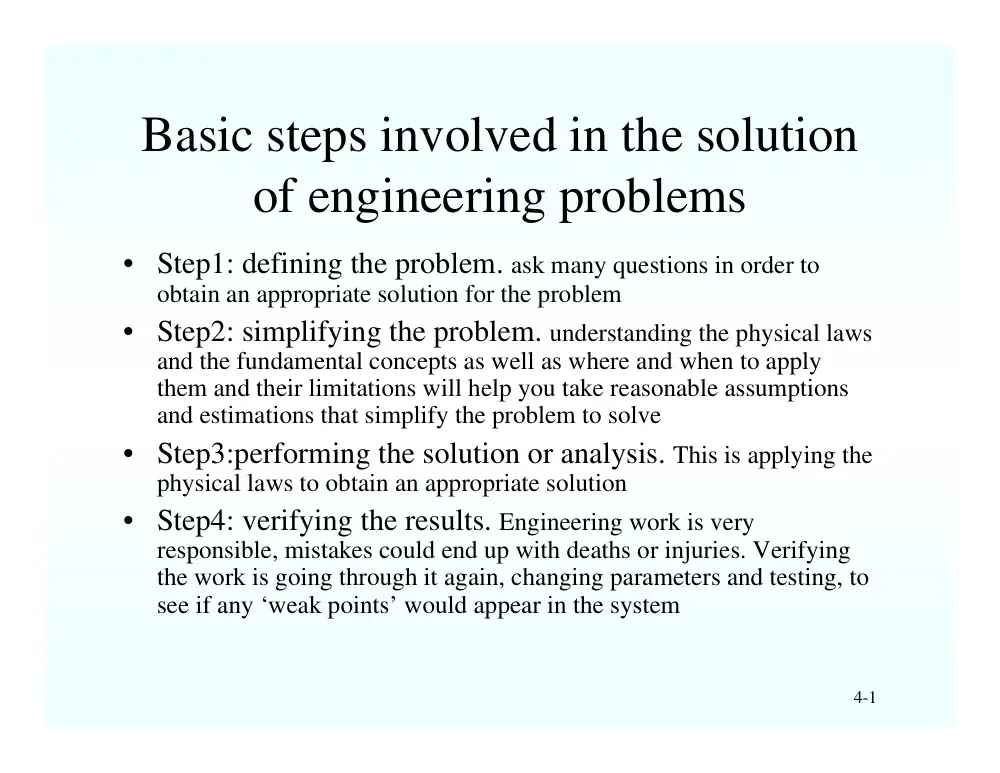
4-1
Basic steps involved in the solution
of engineering problems
• Step1: defining the problem. ask many questions in order to
obtain an appropriate solution for the problem
• Step2: simplifying the problem. understanding the physical laws
and the fundamental concepts as well as where and when to apply
them and their limitations will help you take reasonable assumptions
and estimations that simplify the problem to solve
• Step3:performing the solution or analysis. This is applying the
physical laws to obtain an appropriate solution
• Step4: verifying the results. Engineering work is very
responsible, mistakes could end up with deaths or injuries. Verifying
the work is going through it again, changing parameters and testing, to
see if any ‘weak points’ would appear in the system
4-2
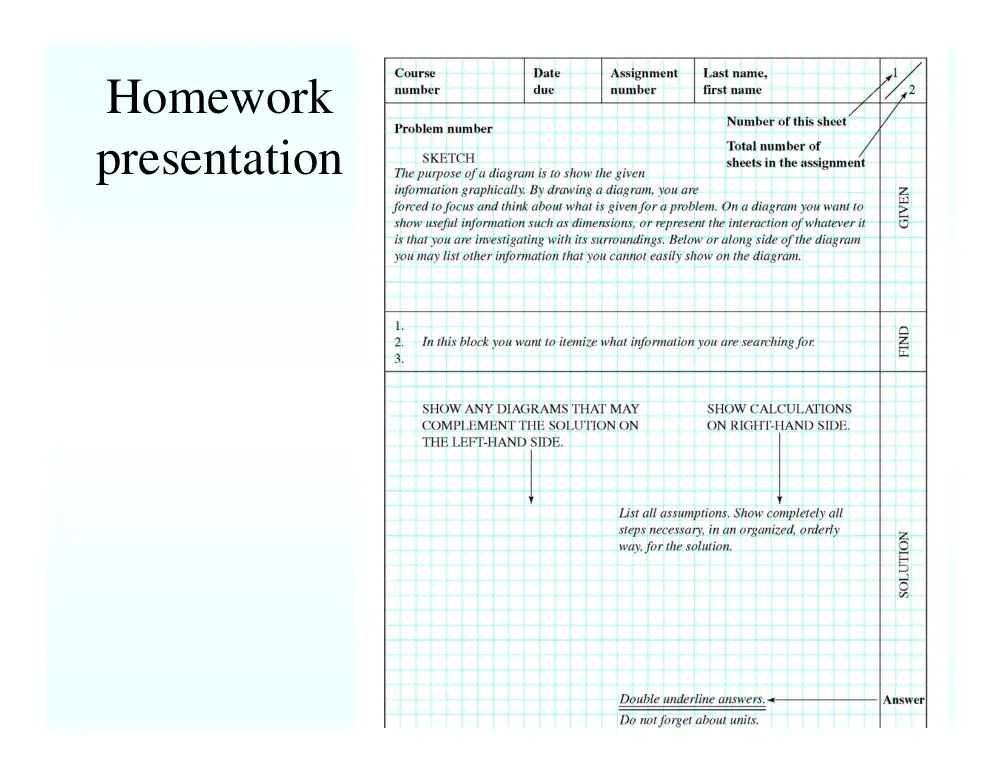
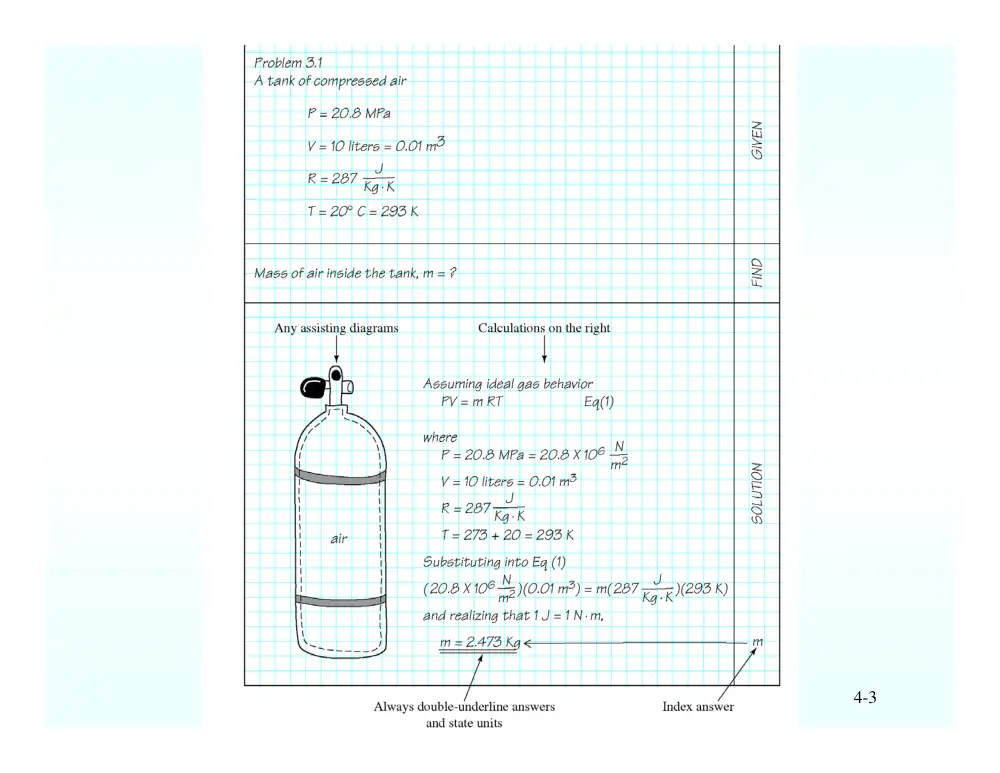
Homework
presentation
4-3
4-4
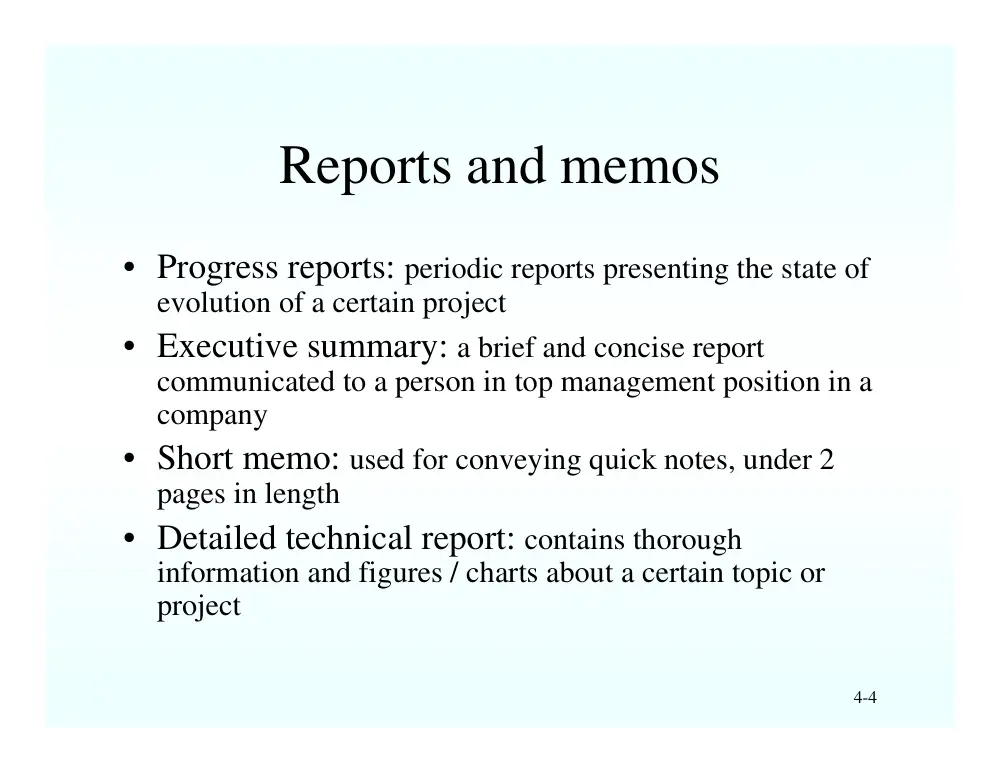
Reports and memos
• Progress reports: periodic reports presenting the state of
evolution of a certain project
• Executive summary: a brief and concise report
communicated to a person in top management position in a
company
• Short memo: used for conveying quick notes, under 2
pages in length
• Detailed technical report: contains thorough
information and figures / charts about a certain topic or
project
4-5
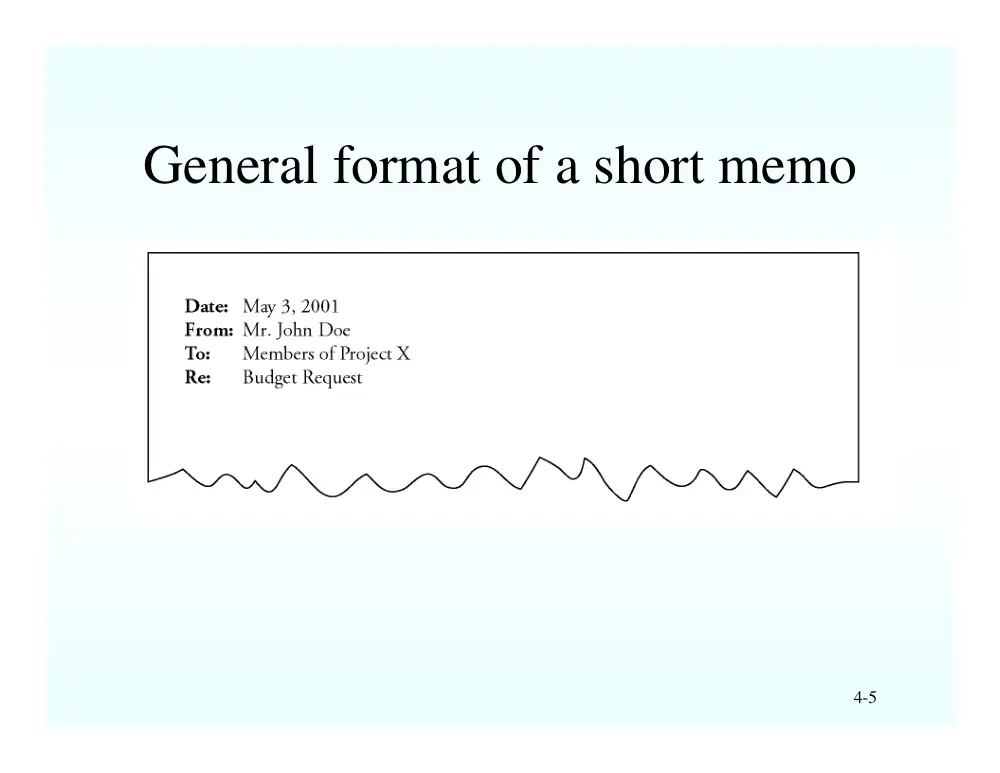
General format of a short memo
4-6
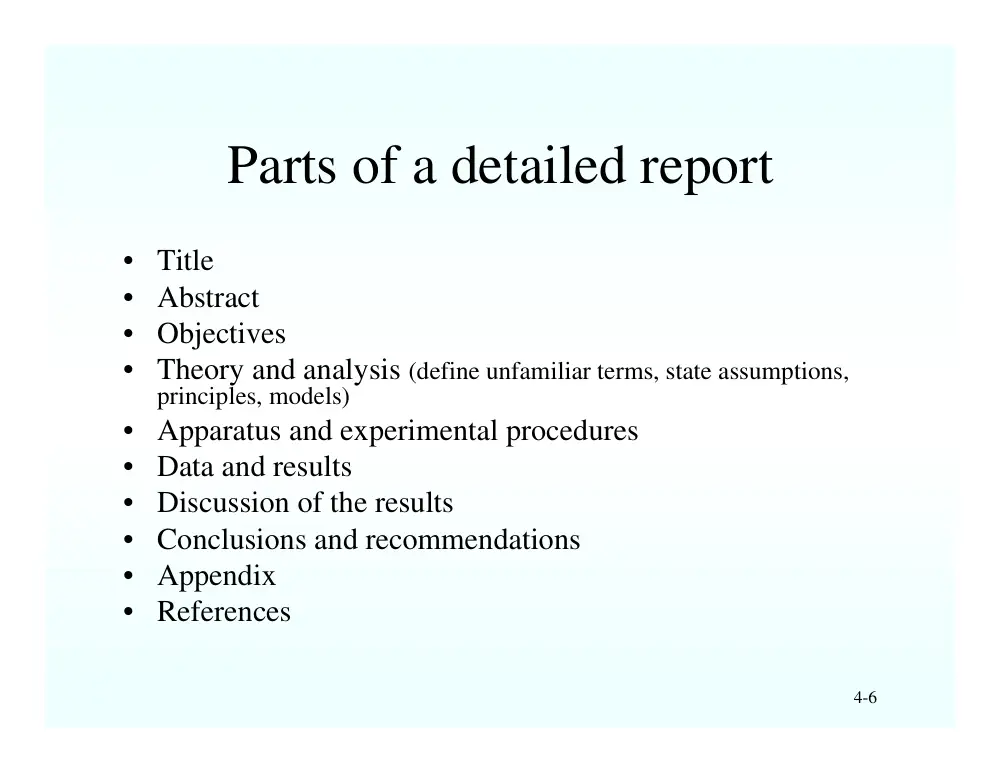
Parts of a detailed report
• Title
• Abstract
• Objectives
• Theory and analysis (define unfamiliar terms, state assumptions,
principles, models)
• Apparatus and experimental procedures
• Data and results
• Discussion of the results
• Conclusions and recommendations
• Appendix
• References
4-7
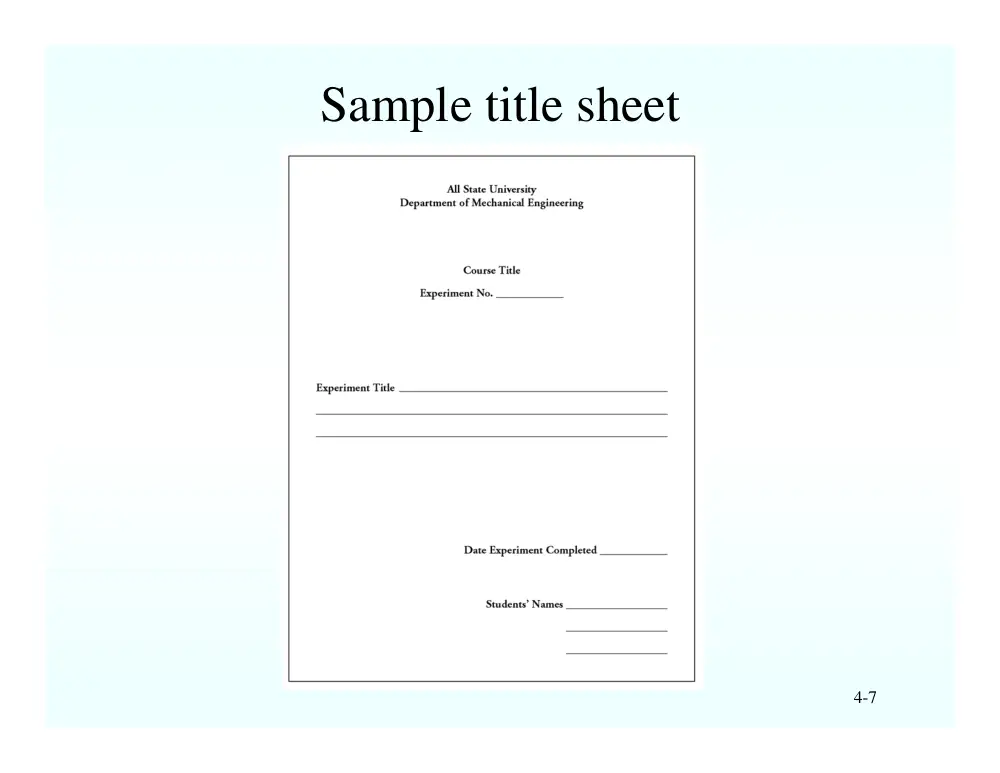
Sample title sheet
4-8
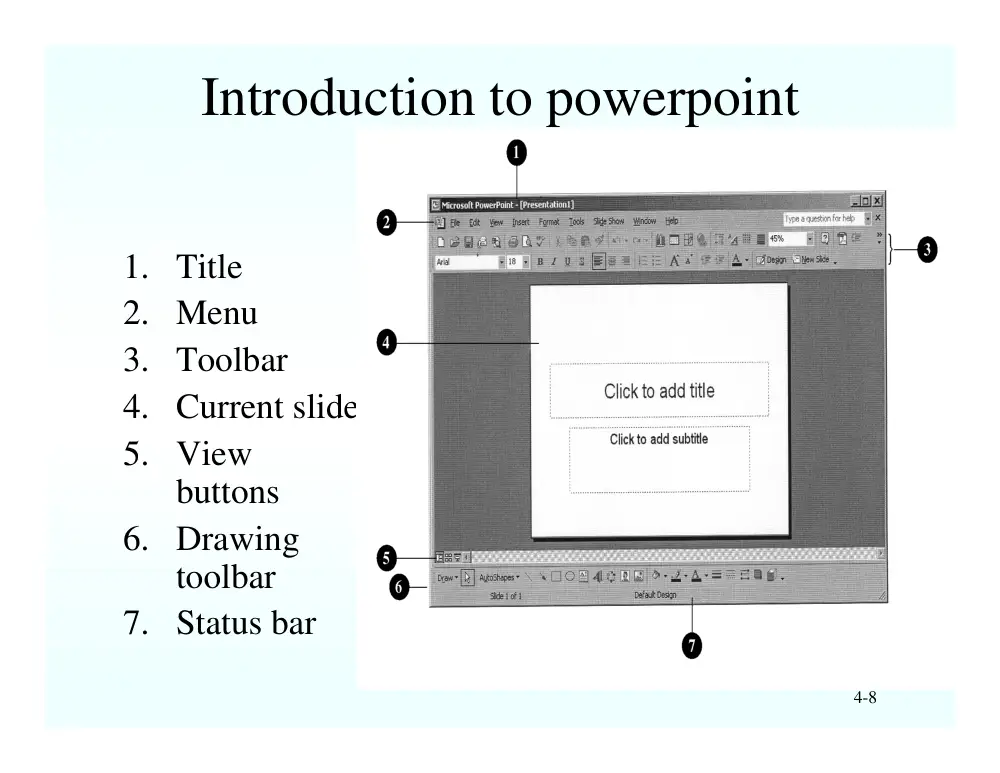
Introduction to powerpoint
1. Title
2. Menu
3. Toolbar
4. Current slide
5. View
buttons
6. Drawing
toolbar
7. Status bar
4-9
4-10
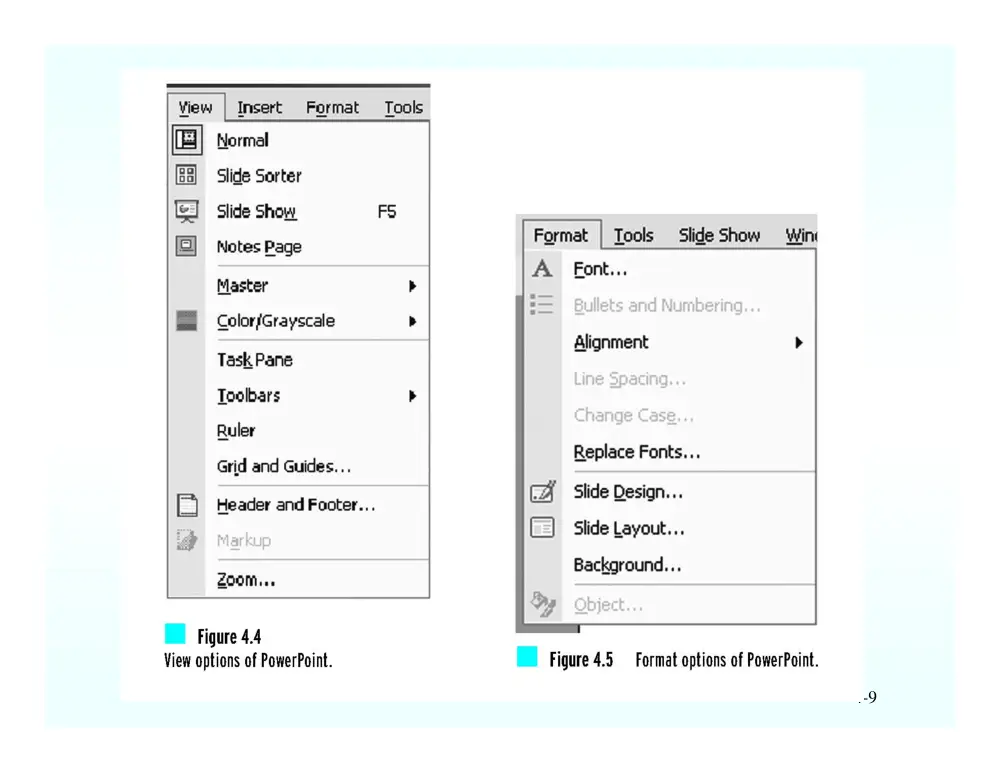
• Go to format then
slide layout or
slide design to
obtain these
windows
4-11
4-12
4-13
4-14
4-15
4-16
4-17
4-18