
ENG 201 Lecture, Spring 2012
Notre Dame University–Louaize · Introduction to Engineering · 15 pages
Showing the first 10 of 15 pages. Download the PDF to see all of it.
More ENG 201 files
Show the text of this lab
1-0
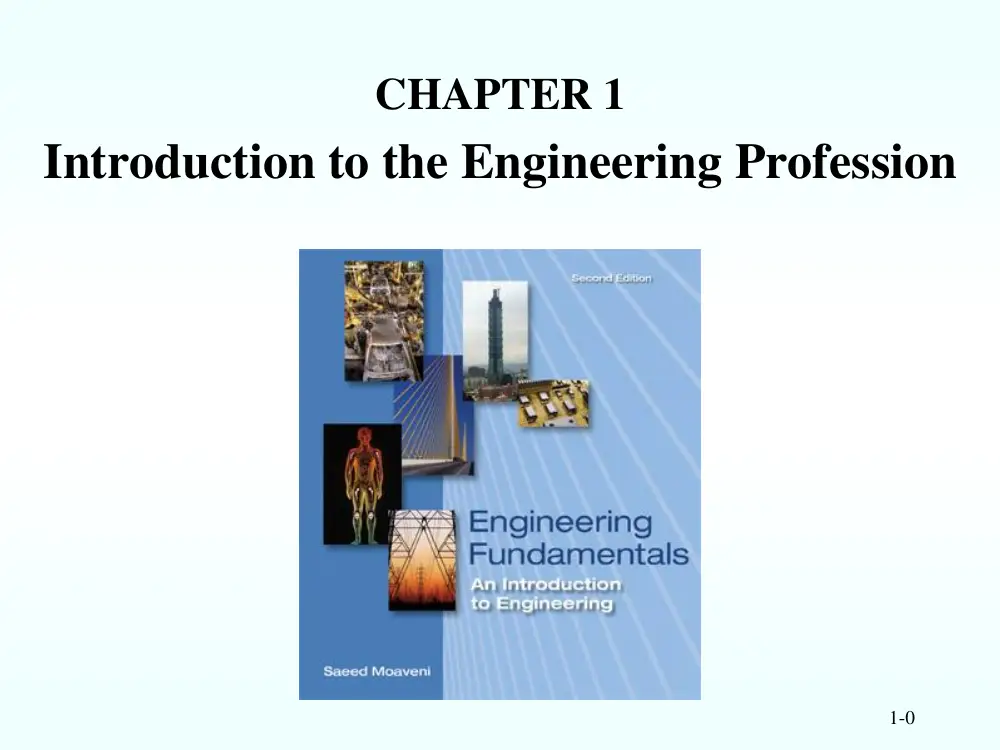
CHAPTER 1
Introduction to the Engineering Profession
1-1
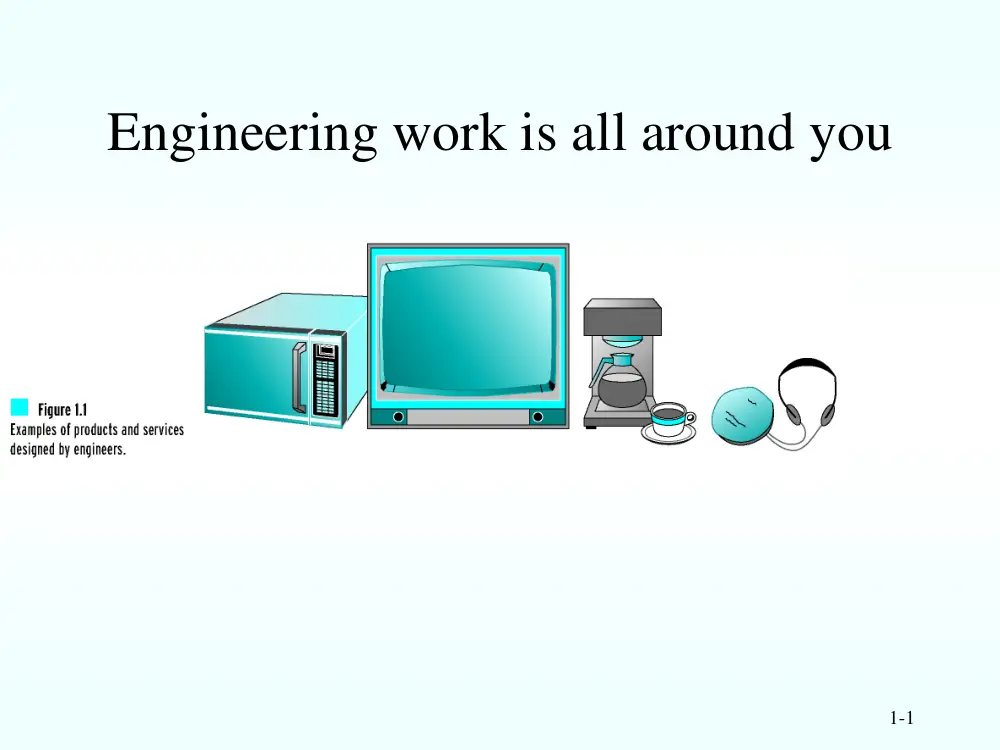
Engineering work is all around you
1-2
Engineers deal with an increasing
world population
• Just note that at the turn of the 19th century,
the world population was 1 billion, it
became 6 billion at the turn of the 20th
century. Just in term of essentials, we need
engineering (agricultural) to make enough
food for everyone!
• What about drinking water, heat,
shelter,…TV and cable?
1-4
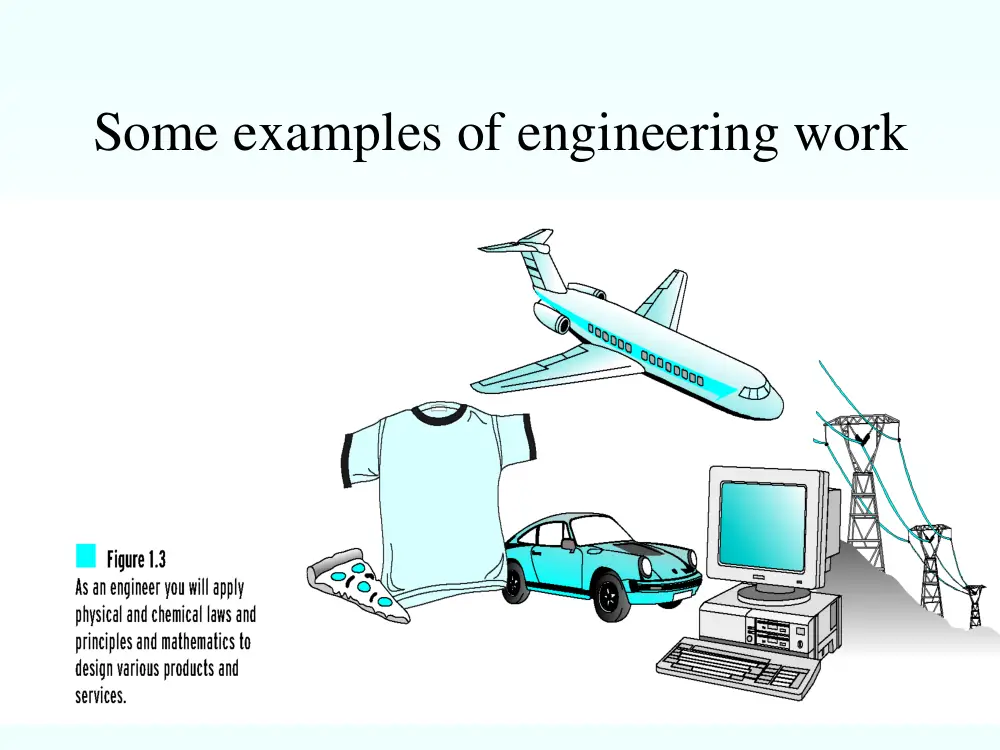
What do engineers do?
• Engineers apply
– physical/ chemical laws/principles
– + mathematics
• In order to design products or services that
we use daily
1-5
Some examples of engineering work
1-6
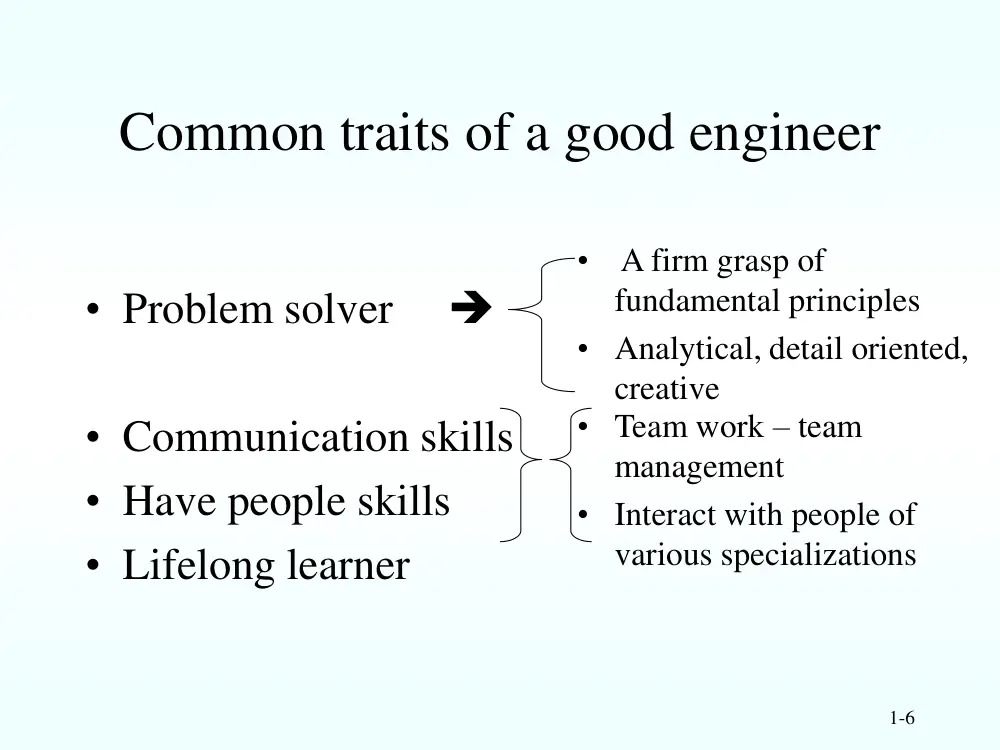
Common traits of a good engineer
• Problem solver
• Communication skills
• Have people skills
• Lifelong learner
•
A firm grasp of
fundamental principles
• Analytical, detail oriented,
creative
• Team work – team
management
• Interact with people of
various specializations
1-7
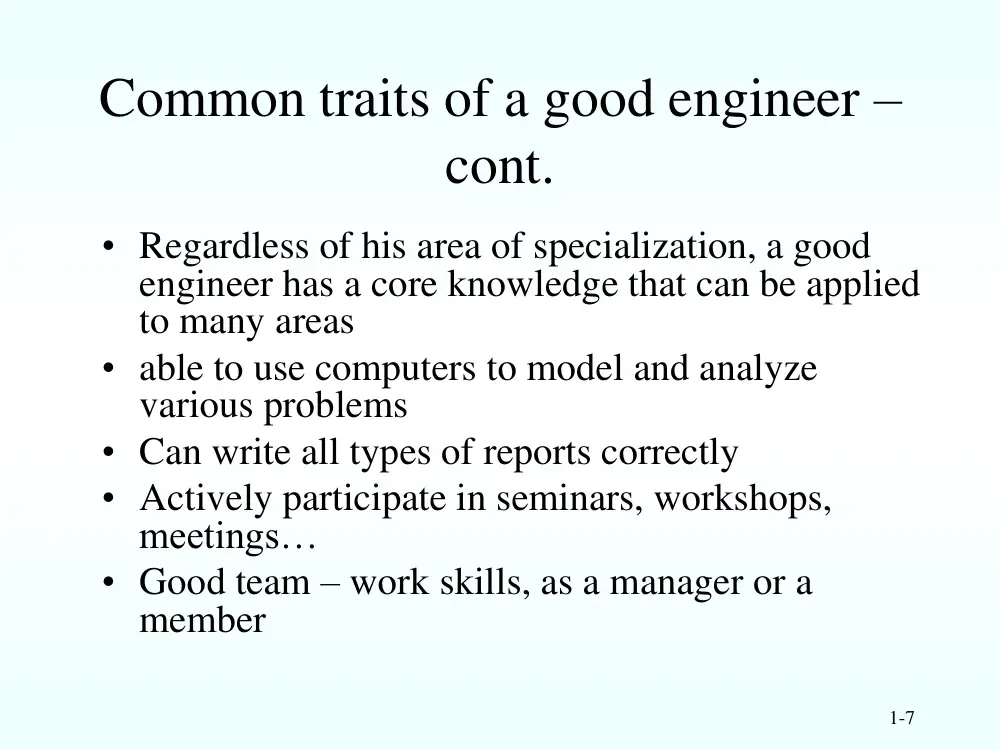
Common traits of a good engineer –
cont.
• Regardless of his area of specialization, a good
engineer has a core knowledge that can be applied
to many areas
• able to use computers to model and analyze
various problems
• Can write all types of reports correctly
• Actively participate in seminars, workshops,
meetings…
• Good team – work skills, as a manager or a
member
1-8
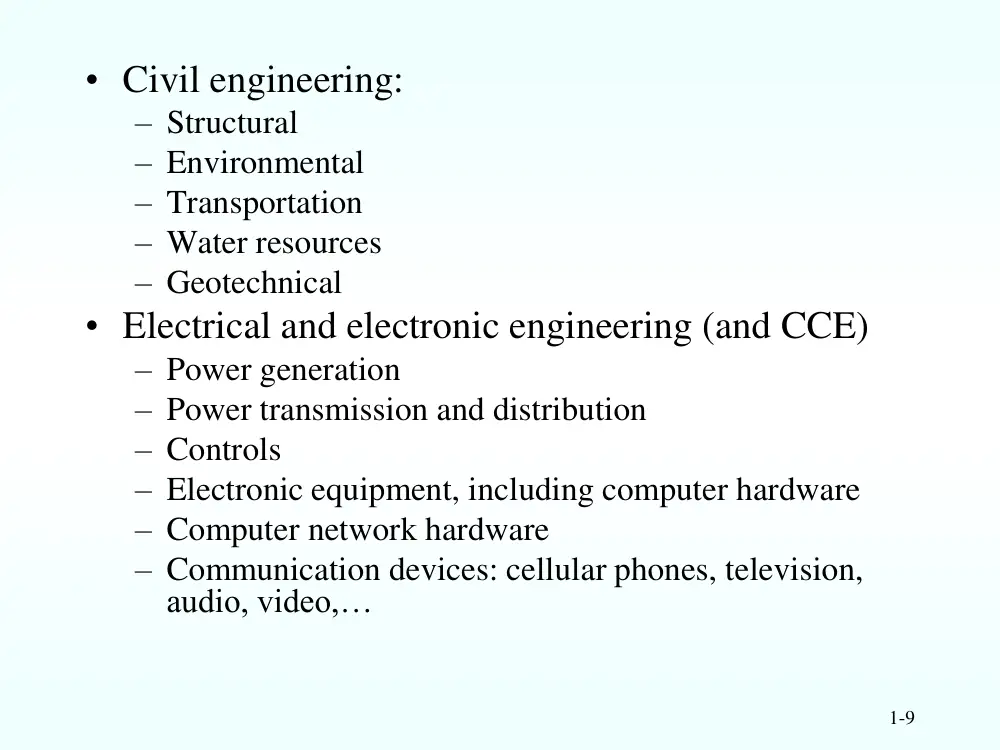
1-9
• Civil engineering:
– Structural
– Environmental
– Transportation
– Water resources
– Geotechnical
• Electrical and electronic engineering (and CCE)
– Power generation
– Power transmission and distribution
– Controls
– Electronic equipment, including computer hardware
– Computer network hardware
– Communication devices: cellular phones, television,
audio, video,…
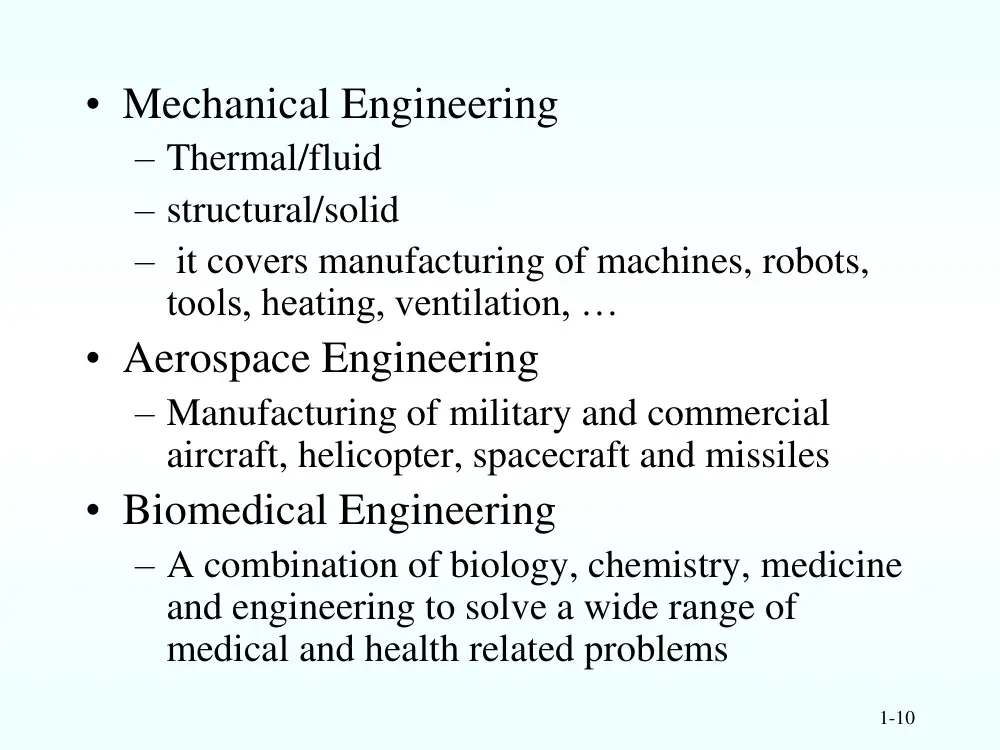
1-10
• Mechanical Engineering
– Thermal/fluid
– structural/solid
– it covers manufacturing of machines, robots,
tools, heating, ventilation, …
• Aerospace Engineering
– Manufacturing of military and commercial
aircraft, helicopter, spacecraft and missiles
• Biomedical Engineering
– A combination of biology, chemistry, medicine
and engineering to solve a wide range of
medical and health related problems
1-11
• Chemical Engineering
– Engineering the production of chemicals used in
various industries: pharmaceutical, electronic,
photographic, paint, petroleum,…
• Environmental Engineering
– Apply principles of chemistry, biology and engineering
to solve issues related to water and air pollution control
• Manufacturing Engineering
– Develop, coordinate and supervise the process of
manufacturing of all types of products, making
products efficiently at a minimum cost
• Petroleum Engineering
– Discovery and production of oil and natural gas
1-12
• Nuclear Engineering
– Design, develop, monitor and operate nuclear power
equipment that derive their power from nuclear energy.
• Mining Engineering
– In collaboration with geologists and metallurgists, they
extract coal, metals amd minerals from underground
• Materials Engineering
– Research, develop and test new materials for various
applications
1-13
Where can you read more on
engineering disciplines?
• American society for engineering education
– www.asee.org
• American Society of Civil Engineers
– www.asce.org
• American Society of Mechanical Engineers
– www.asme.org
• Institute of Electrical and Electronics Engineers
– www.ieee.org
And many others…
1-14
What is ABET?
• ABET = American Board for Engineering and
Technology
• It accredits colleges and universities (in US) to
give a bachelors degree in engineering,
considering that a graduating student must be able
to:
– Apply knowledge of mathematics science and
engineering
– Design and conduct experiments, analyses and
interprete data
– Design a system, component or process to meet desired
needs
– Function on multidisciplinary teams
– Identify, formulate, and solve engineering problems
1-15
What is ABET? – cont.
It accredits colleges and universities (in US) to give
a bachelors degree in engineering, considering
that a graduating student must be able to:
– Have an understanding of professional and ethical
responsibility
– Communicate effectively
– Recognize his need for lifelong learning
– Have a knowledge of contemporary issues
– Use technical skills and modern engineering tools
necessary for the practice
– Understand the impact of his engineering solutions in a
global and societal context