
ENS 201 Chapter 1, Spring 2008
Notre Dame University–Louaize · Introduction to Environmental Science · 32 pages · Ms. Leila Khalaf


Showing the first 10 of 32 pages. Download the PDF to see all of it.
More ENS 201 files
Show the text of this chapter
Notre Dame University
FN&AS
Department of Sciences
Introduction to Environmental Science
ENS 201
What is Environmental Science?
•
Interdisciplinary
science
that
uses
concepts
&
information from:
Natural sciences (chemistry, geology, biology, Physics…)
Social Sciences (economics, politics, ethics…)
•
In order to:
Understand how the earth works
How humans are affecting the earth’s natural system
Develop solutions to the environmental problems
Environmental Science: studies how nature & human
Environmental Science: studies how nature & human
societies operate & interact
societies operate & interact
Why to get environmentally involved?
Why to get environmentally involved?
Some reasons:
Some reasons:
•
Nature is being injured by human activities:
Nature is being injured by human activities:
Climate is changing
Water & air are being polluted
Wildlife is endangered Rivers are drying
Deserts are growing Forests are being cleared
Topsoil is being washed away …
•
Natural resources are being wastefully used:
Natural resources are being wastefully used:
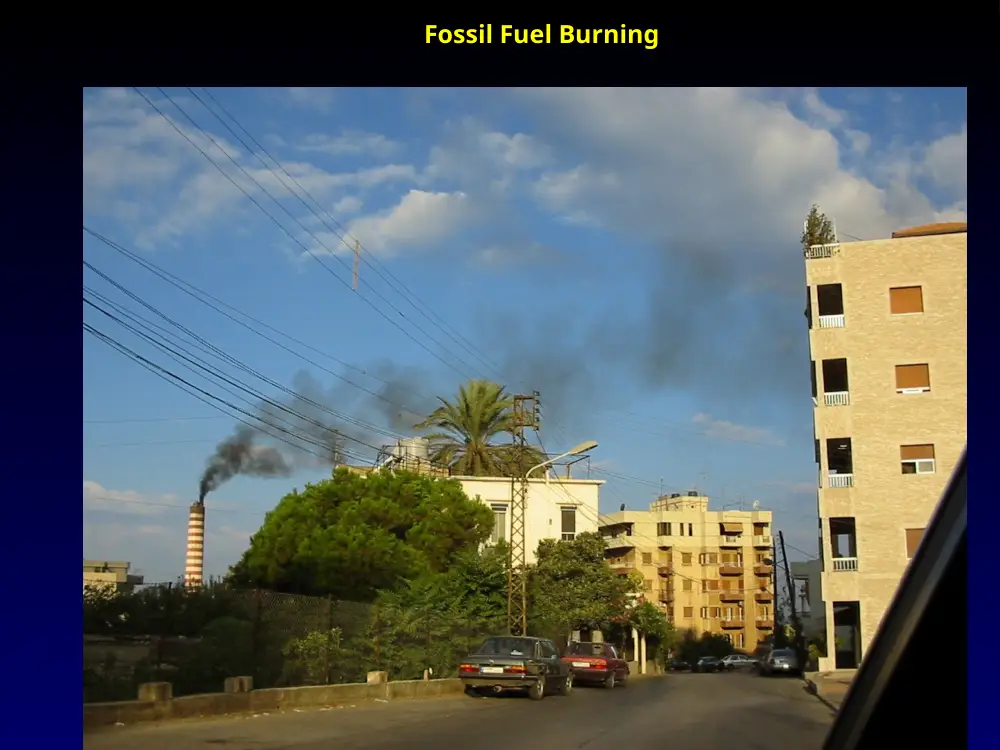
Fossil fuel is being exhausted
Earth capital is being unsustainably consumed …
•
Health is being threatened:
Health is being threatened:
Factories nearby residential areas
Toxic chemicals & radioactive wastes straying in nature
Pollutants brought more & more closer to people
Fossil Fuel Burning
Fossil Fuel Burning
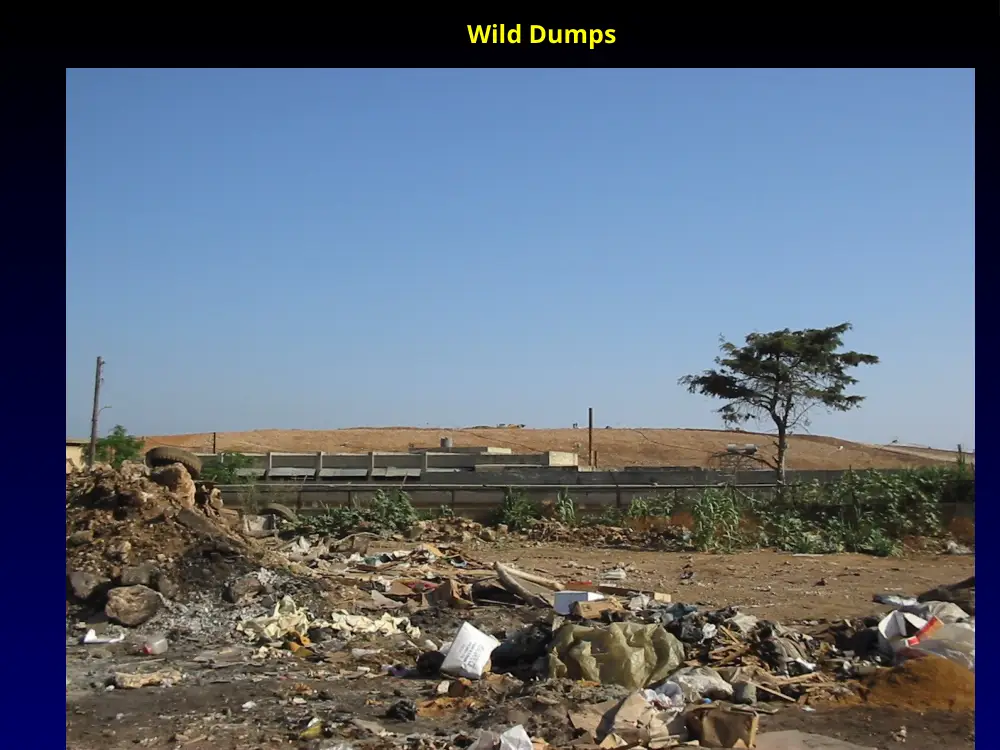
Wild Dumps
Wild Dumps
•
The human-environment Relationship: action-reaction
The human-environment Relationship: action-reaction
Humans
Humans
Environment
Environment
Degradation:
Air
Soil
Water
Wildlife
Social & health
problems
Disasters, poverty, diseases, stress …
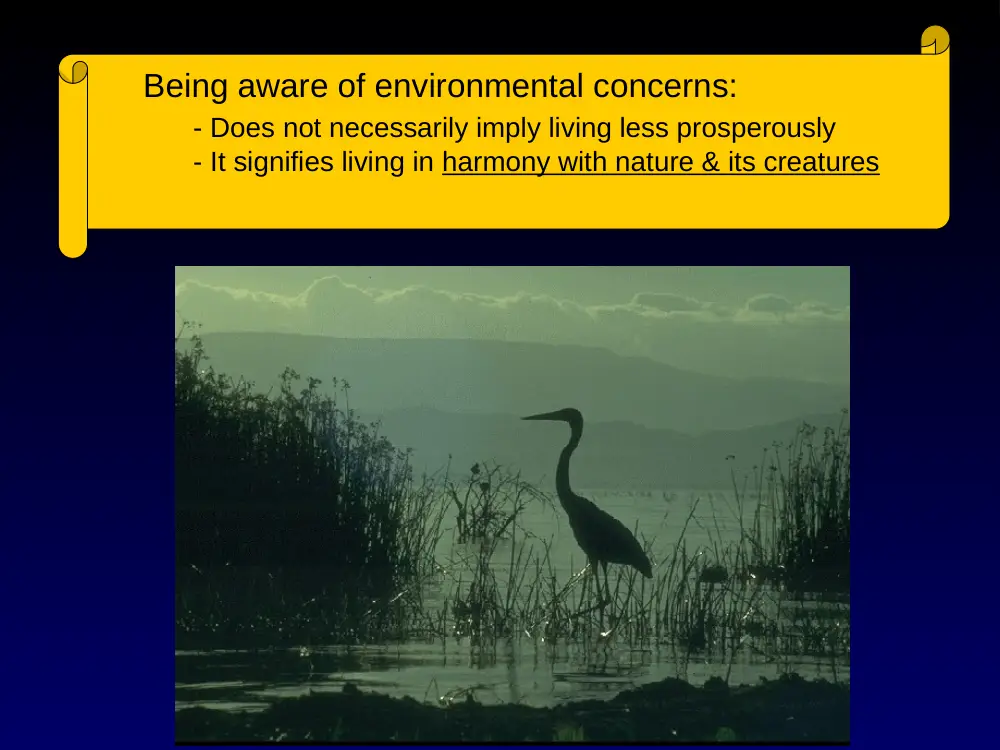
Being aware of environmental concerns:
- Does not necessarily imply living less prosperously
- It signifies living in harmony with nature & its creatures
Understanding Our Environment
Chapter 1
OUTLINE
•
Introduction
Environment
Environmental Science
•
Current Conditions
Environmental Dilemmas
Signs of Hope
•
North /South Divisions
Rich and Poor Countries
Division of resources
Political Economics
•
Human Development
Sustainable Development
INTRODUCTION
Environment
• Environment:
The conditions that surround an organism
or a group of organisms
Or
The complex of social or cultural
conditions that affect an individual or
community.
• Humans have always inhabited both the
natural world & the social and technological
world.
INTRODUCTION
Environmental Science
• Environmental Science: Systematic study of
our environment & our proper place in it.
Interdisciplinary
Integrative
- Natural Sciences
- Social Sciences
- Humanities
Mission Oriented
CURRENT CONDITIONS: Environmental Dilemmas
•
Human Population > 6.4 Billion.
Food shortages and famines exist in many densely
populated areas
Water deficits & contamination => critical environmental
issues for agricultural production as well as for domestic
and industrial uses
Natural resources and fossil fuel depletion
pollution
Landscape destruction => loss of biodiversity
CURRENT CONDITIONS: Signs of Hope
•
Progress had been made on many fronts
Population has stabilized in many industrialized countries
& some poor countries
Incidence of life-threatening diseases has been reduced
in some countries
Average life expectance nearly doubled during the past
century
Renewable energy technology has been developed
More efficient ways of using natural supplies have been
developed
Deforestation has slowed in Asia
NORTH / SOUTH DIVISION
NORTH / SOUTH DIVISION
Rich and Poor countries
•
Poor countries tend to be located in Southern Hemisphere
•
World Bank estimates more than 1.4 billion people (1/5 world
population) live in acute poverty of < $1 (U.S.) per day
70% are women and children
Cycle of poverty can become self-Sustaining:
Daily survival necessitates over-harvesting resources
thus degrading chances of long-term sustainability
The harsh conditions of life in some developing countries
In developing countries poor people:
- Face unsanitary living conditions & low quality of life
- Lack clean drinking water, fuelwood, and land suitable for farming
- Have little chance of improvement (trapped within a poverty cycle)
NORTH / SOUTH DIVISION
Rich and Poor Countries
• Wealthy countries tend to be located in the Northern
Hemisphere
• About 1/5 of world population live in countries with
per capita income > $25,000 $U.S.
Poor people exist here as well
• Gap between rich and poor continues to increase
Wealthiest 200 people in the world have combined
wealth of $1 trillion - more than total wealth of
poorest half (3 billion) of the world’s population.
NORTH / SOUTH DIVISION
Division of Resources
• Affluent lifestyles of richer countries consume
inordinate share of natural resources and produces
high proportion of pollutants
•
Open letter from 100 Nobel Prize winners:
“The most profound danger to world peace in the coming
years will stem not from the irrational acts of states or
individuals but from the legitimate anger oft the world’s
dispossessed and marginalized people”
HUMAN DEVELOPMENT
Developmental Discrepancies
•
Every year the United Nations releases the Human
Development Index (HDI)
Based on social factors (life expectance, child survival,
adult literacy, education, income, gender equity, access
to clean water and sanitation…)
Ranges from 0 to 1
Gives some insight into quality of life
- Top ranking HDI are found in Northern Europe and
North America
- Lowest HDI are found in sub-saharan Africa
HUMAN DEVELOPMENT
Sustainable Development
•
Sustainability:
Ability of a system to survive for some specified time and
to attain its full expected life span
•
Sustainable Development (living):
Meeting the needs of the present without compromising
the ability of future generations to meet their own needs
To be enduring, the benefits must be available to all
humans, not just sub-set of privileged group
SUSTAINABLE DEVELOPMENT
The Aral sea disaster: an example of unsustainable living
The Aral Sea used to be the fourth largest freshwater lake in the world,
It now holds a third less water than it did in 1960
It now holds a third less water than it did in 1960
•
Cause: Overuse of rivers that supplies the sea for irrigation in
Uzbekistan, Turkmenistan and Kazakhstan
•
Consequences:
Fishing communities severely affected
former fishing ports now lie over 40 km from the Sea
The crop-land in the area has become severely degraded due to over-
irrigation => more money being spent on artificial fertilizers
Sustainable use of common
properties
Unsustainable use
HUMAN DEVELOPMENT
Sustainable Development
Many economists see continual economic growth as
essential in providing more resources to more people
Most ecologists view continual growth as impossible in
the long-run due to non-renewable resources and limited
ecological waste-disposal capabilities
Unsustainable use of a forest => soil erosion
HUMAN DEVELOPMENT
Indigenous People
• Indigenous (native) people are often least powerful,
most neglected people in the world
At least half the world’s 6,000 distinct languages
are dying
Indigenous homelands may harbor vast
percentage of world’s biodiversity
Recognizing native land rights and political rights
may often be a solid ecological safeguard
Cultural diversity and biodiversity often go
hand by hand
Role of environmental,
nongovernmental organizations
•
E.g.: “Pueblo for people”
•
A nonprofit organization that
buys traditional textiles and
crafts directly from producers
in Latin America
•
Goods are sold in America at
much higher prices than the
local market
•
Profit go to sustainable
community development
projects in Guatemala, El
Salvador, and Peru
A Mayan woman from Guatemala
weaves on a back-strap loom
Indigenous & tribal cultures
often have environmental
wisdom that may help us
understand our proper
relationship with nature
We travel together on a little space ship, depending upon its
vulnerable reserves of air and soil, all committed for our safety
to its security and peace.
Adlai Stevenson