
ENS 201 Chapter 20, Spring 2008
Notre Dame University–Louaize · Introduction to Environmental Science · 24 pages · Ms. Leila Khalaf
Showing the first 10 of 24 pages. Download the PDF to see all of it.
More ENS 201 files
Show the text of this chapter
Chapter 20: Sustainable Energy
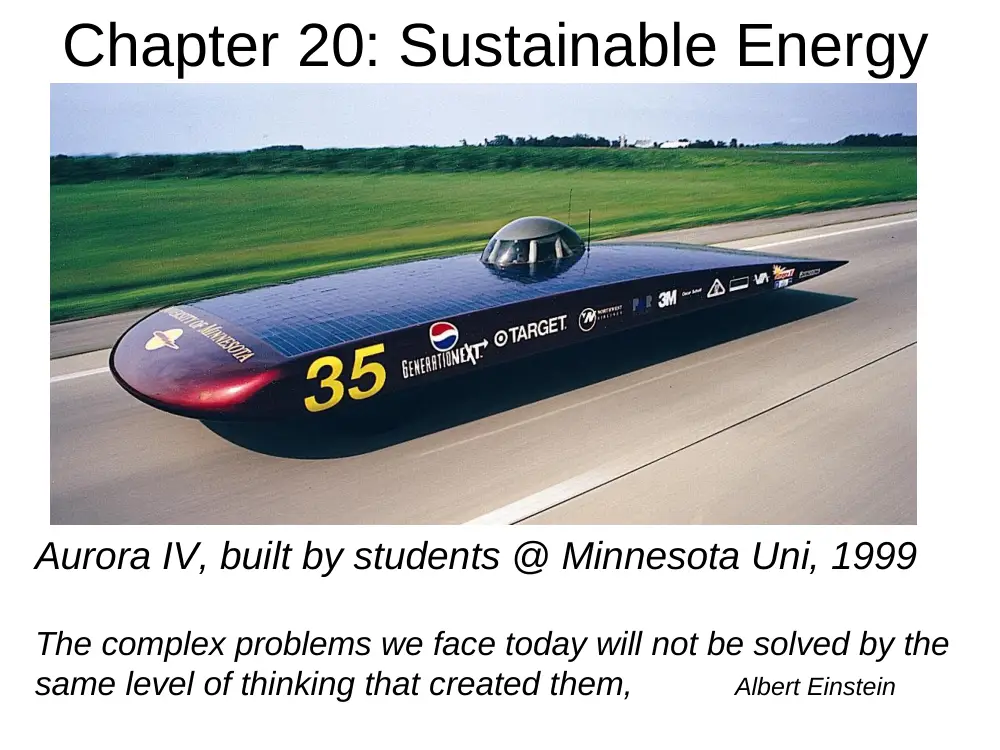
Aurora IV, built by students @ Minnesota Uni, 1999
The complex problems we face today will not be solved by the
same level of thinking that created them,
Albert Einstein
Outline:
• Energy History
• Current Energy production and use
• Conventional energy sources: fossil fuels and nuclear
power
• Introduction to renewable energy
• Tapping Solar Energy
– Passive Solar Heat vs. Active Solar Heat
• High Temperature Solar Energy: Parabolic Mirrors
• Photovoltaic Cells and storage of electrical energy
• Energy From Earth’s Forces
• Energy From Biomass
• Conservation
– Utilization Efficiencies
– Energy Conversion efficiency
Energy History
• Fire: The first human energy technology
• Muscle (domestic animals) Wind & water power: important
since dawn of agriculture 10,000 years ago.
• Coal (19th century): promoted by the invention of steam engine
and wood shortage
• Oil (20th century): liquid fuels are ease to ship, store and burn
Current Commercial Energy Sources
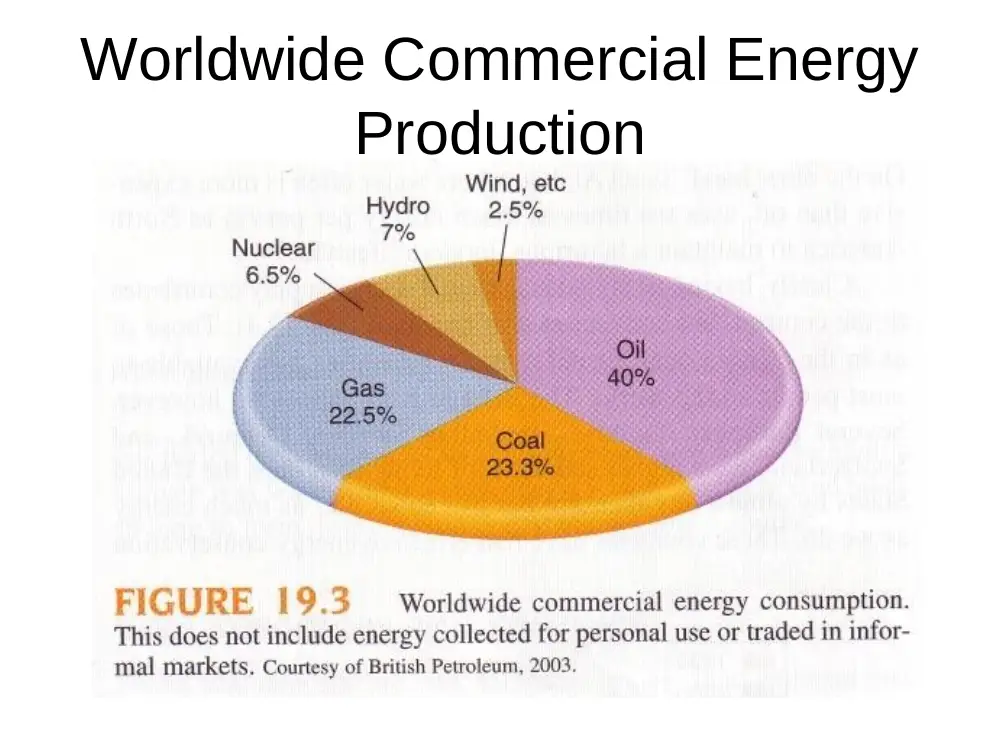
• Fossil Fuels (petroleum, natural gas, and coal): ~
86%
• Nuclear power: ~ 6%
• Renewable:
– Hydroelectric dams: ~ 7%
– Others (wind, solar, geothermal, biomass): <
3%
• In poorer countries: biomass provides more than
90% of the energy used for cooking and heating
Worldwide Commercial Energy
Production
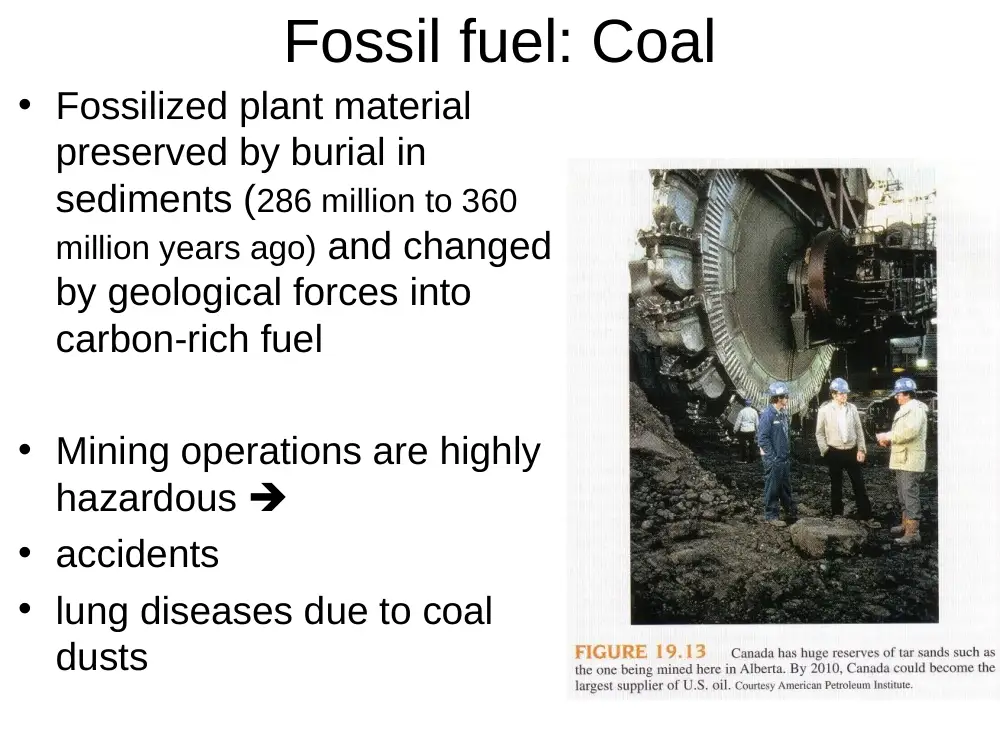
Fossil fuel: Coal
• Fossilized plant material
preserved by burial in
sediments (286 million to 360
million years ago) and changed
by geological forces into
carbon-rich fuel
• Mining operations are highly
hazardous
• accidents
• lung diseases due to coal
dusts
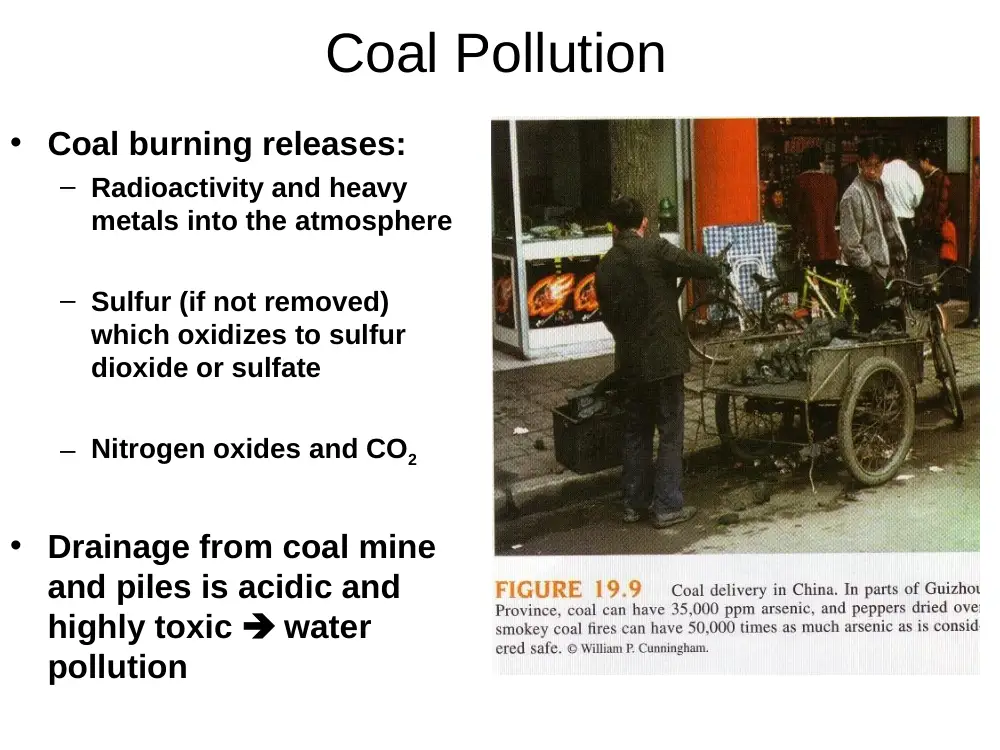
Coal Pollution
• Coal burning releases:
– Radioactivity and heavy
metals into the atmosphere
– Sulfur (if not removed)
which oxidizes to sulfur
dioxide or sulfate
– Nitrogen oxides and CO2
• Drainage from coal mine
and piles is acidic and
highly toxic water
pollution
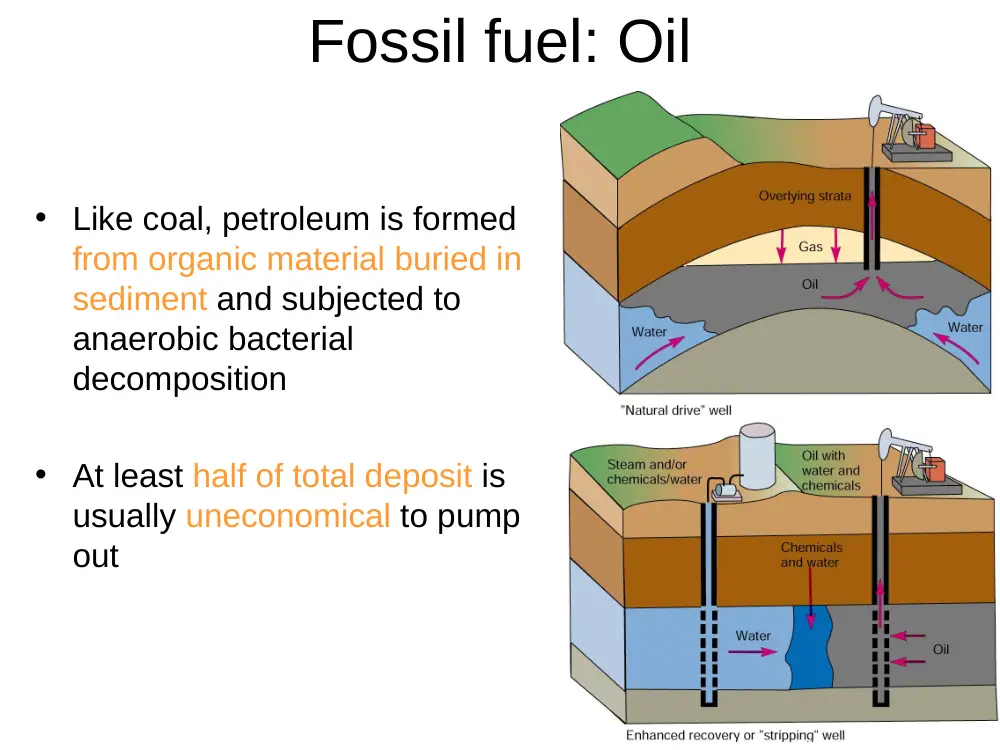
Fossil fuel: Oil
• Like coal, petroleum is formed
from organic material buried in
sediment and subjected to
anaerobic bacterial
decomposition
• At least half of total deposit is
usually uneconomical to pump
out
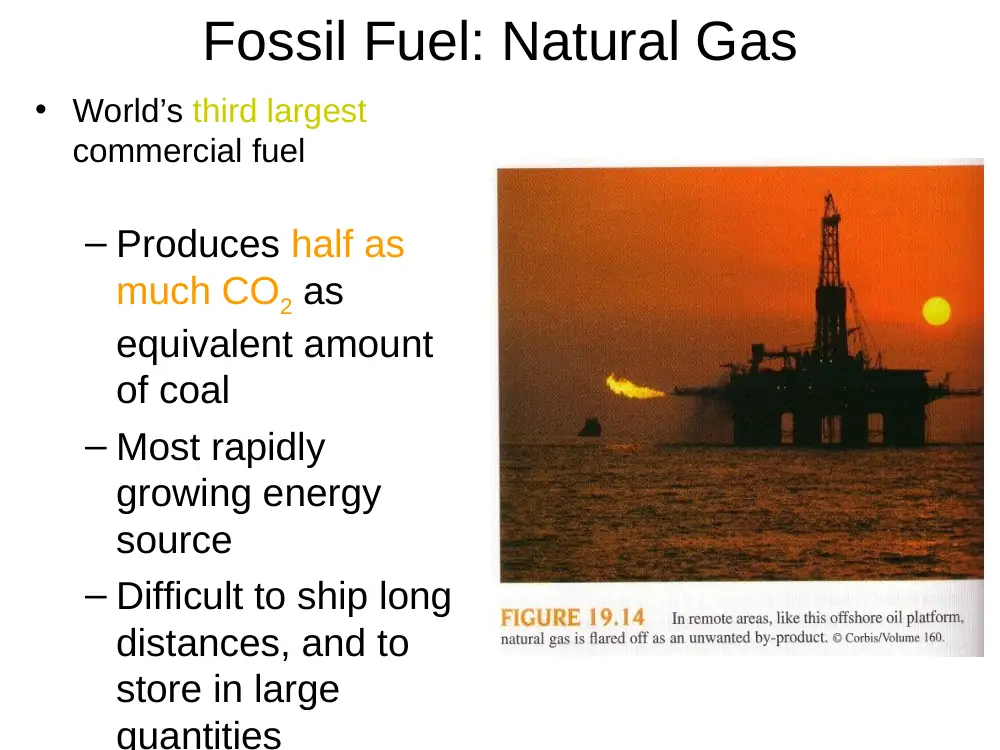
Fossil Fuel: Natural Gas
• World’s third largest
commercial fuel
– Produces half as
much CO2 as
equivalent amount
of coal
– Most rapidly
growing energy
source
– Difficult to ship long
distances, and to
store in large
quantities
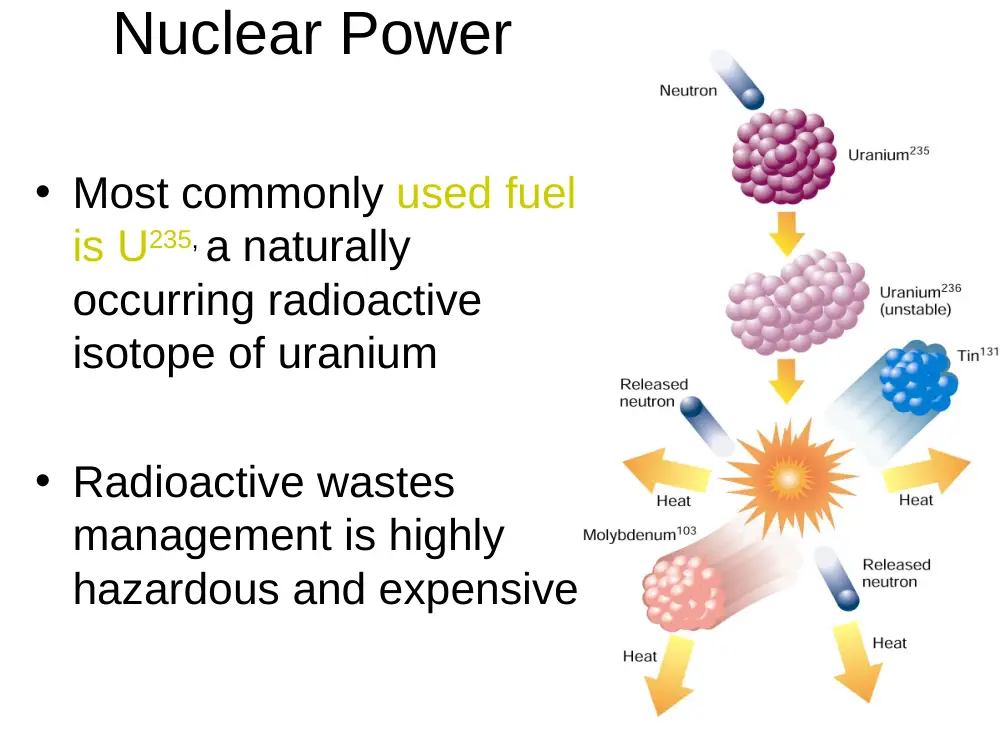
Nuclear Power
• Most commonly used fuel
is U235, a naturally
occurring radioactive
isotope of uranium
• Radioactive wastes
management is highly
hazardous and expensive
Nuclear waste Underground burial
– In developed countries: luxurious lifestyle is dependent on a limited,
unsustainable oil supply that cannot last forever
– In developing countries: major debt burdens that still hold back
– price shocks + Pollution lead to
awareness about energy conservation & renewable energy
sources
Oil Economical Implications
the sun serves as a giant nuclear furnace in space
Passive Solar gain: South-oriented, earth-sheltered homes
•
Orienting homes so that living spaces have passive solar gain on the
winter and are shaded by trees or roof overhang in the summer
•
Earth-sheltered homes built into a slope or protected by earth maintain
relatively stable subsurface temperature => exceptionally efficient
energy savers
Summer ventilation and
High double-glazed
windows giving light
to the back of the house
In the winter
Passive Solar Heat: Greenhouse
• glass-walled on
the south
incorporating
massive energy-
storing material
that slowly
release heat at
night
Superinsulated straw-bale constructed houses
•
High insulating qualities => high energy efficiency for heating and
cooling
•
Efficient sound insulators
•
Low cost and long duration
Passive Heat Absorption: Use of stationary absorptive
structures to gather & hold heat: Adobe Dwellings
• Slowly collect the heat during the day and slowly release it at
night
• After cooling at night, the massive buildings maintain a
comfortable day temperature, even as they absorb external
warmth
Solar Box Cookers
• An insulated
box with a black
interior and a
glass or plastic
lid serves as
passive solar
collector (~
120oC):
• fuel is free,
hours spent on
hunting fuel
wood are saved
Firewood/solar cooker (2 billion people around the
world now have no access to electricity)
Active solar heat: systems that pump heat-
Parabolic Mirrors
• Parabolic mirrors
are curved reflective
surfaces that track
the sun and collect
light and focus it
onto a concentrated
point
• The energy
absorbed drive a
steam-turbine
electric generator
Photovoltaic Cells
•
One of the new promising technology: collectors made of amorphous
silicon with boron impurities =>
•
Suitable as solar roof tiles: that are enough for a house & any surplus
can be sold back to the utility company =>more cost efficient