
ENS 201 Chapter 11, Spring 2008
Notre Dame University–Louaize · Introduction to Environmental Science · 28 pages · Ms. Leila Khalaf
Showing the first 10 of 28 pages. Download the PDF to see all of it.
More ENS 201 files
Show the text of this chapter
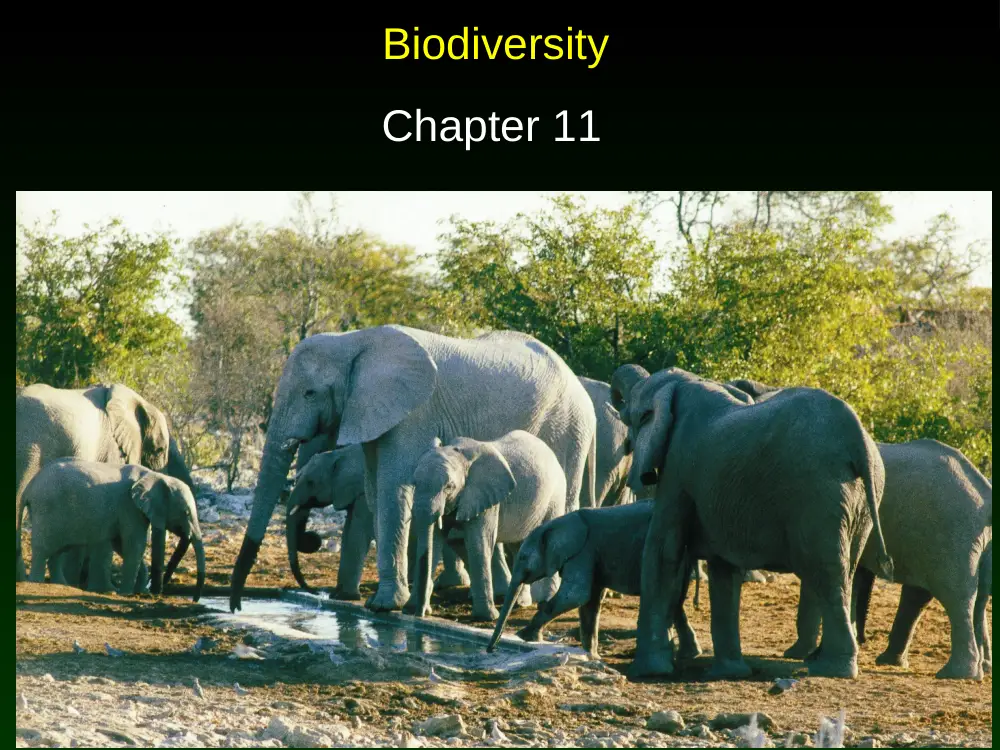
Biodiversity
Chapter 11
Outline:
• What is biodiversity? Types of biodiversity?
• What is a species? How many species currently
exist?
• What are the benefits of biodiversity?
• What are the various human-caused threats to
biodiversity?
• How can we protect biodiversity?
Enacting Hunting & Fishing Laws
Identifying all endangered species
Habitat Protection
International Wildlife Treaties (CITES)
Captive Breeding
Biodiversity and Species
•
Biodiversity: All forms of life that are currently found on
Earth
•
Biodiversity Types:
Genetic Diversity: variety of the genes among
members of the same species or kind
Species Diversity: variety of species found in
different habitats on Earth
Ecological Diversity: variety of ecosystems such as
forests, deserts, grasslands, streams, lakes, oceans,
wetlands, etc. found on Earth
What is a species?
• Species - Organisms of the same kind that are able
to breed in nature and produce fertile offspring
• Species identification
Based on morphological characteristics (size,
shape, color, skeletal structure), and chemical and
genetic traits
- DNA sequencing technology is increasingly
used to distinguish species
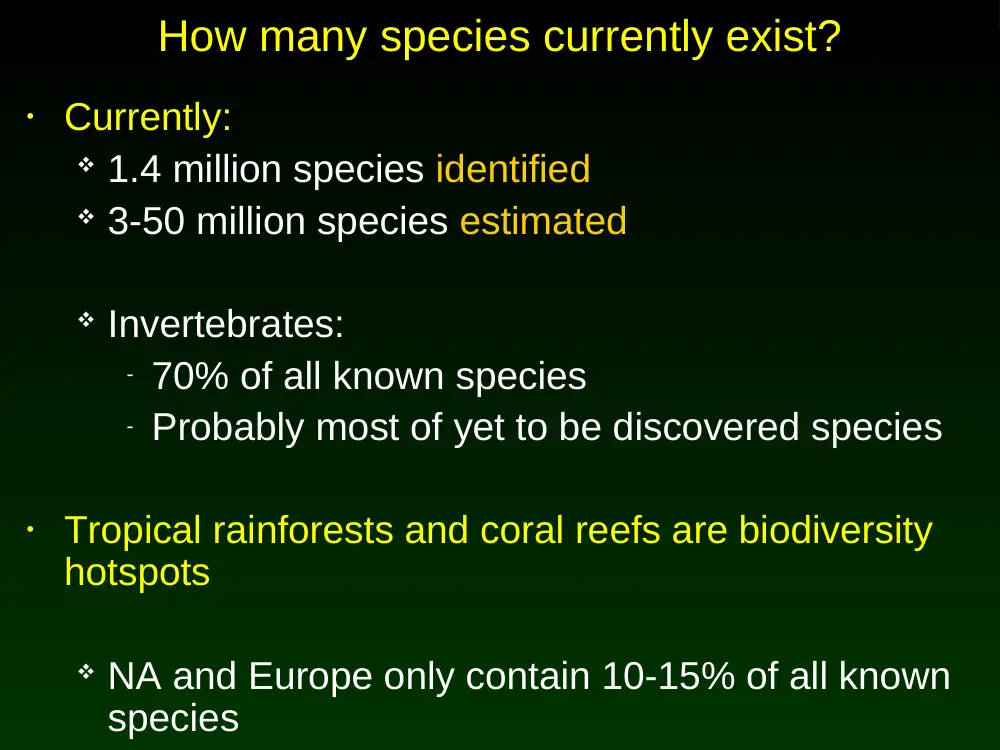
How many species currently exist?
• Currently:
1.4 million species identified
3-50 million species estimated
Invertebrates:
- 70% of all known species
- Probably most of yet to be discovered species
• Tropical rainforests and coral reefs are biodiversity
hotspots
NA and Europe only contain 10-15% of all known
species
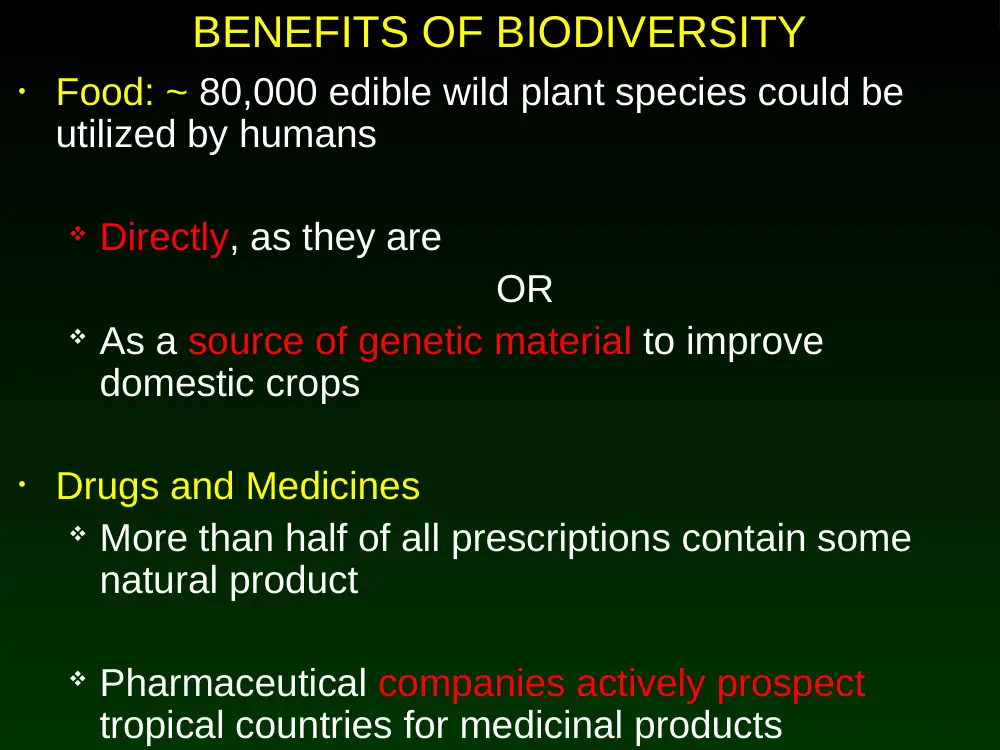
BENEFITS OF BIODIVERSITY
• Food: ~ 80,000 edible wild plant species could be
utilized by humans
Directly, as they are
OR
As a source of genetic material to improve
domestic crops
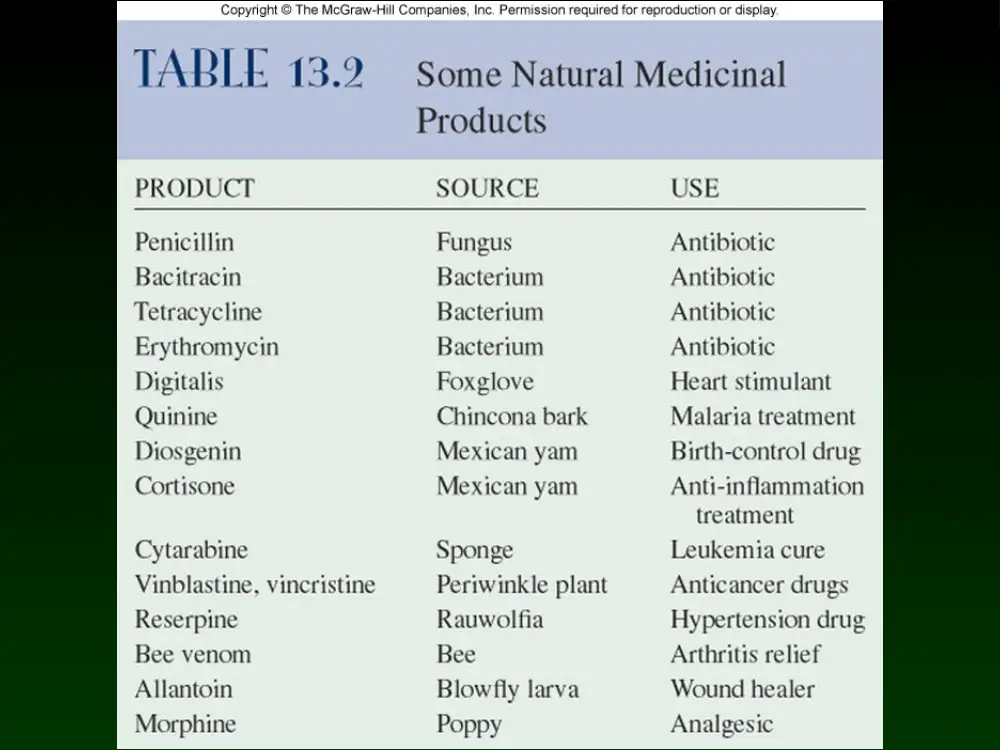
• Drugs and Medicines
More than half of all prescriptions contain some
natural product
Pharmaceutical companies actively prospect
tropical countries for medicinal products
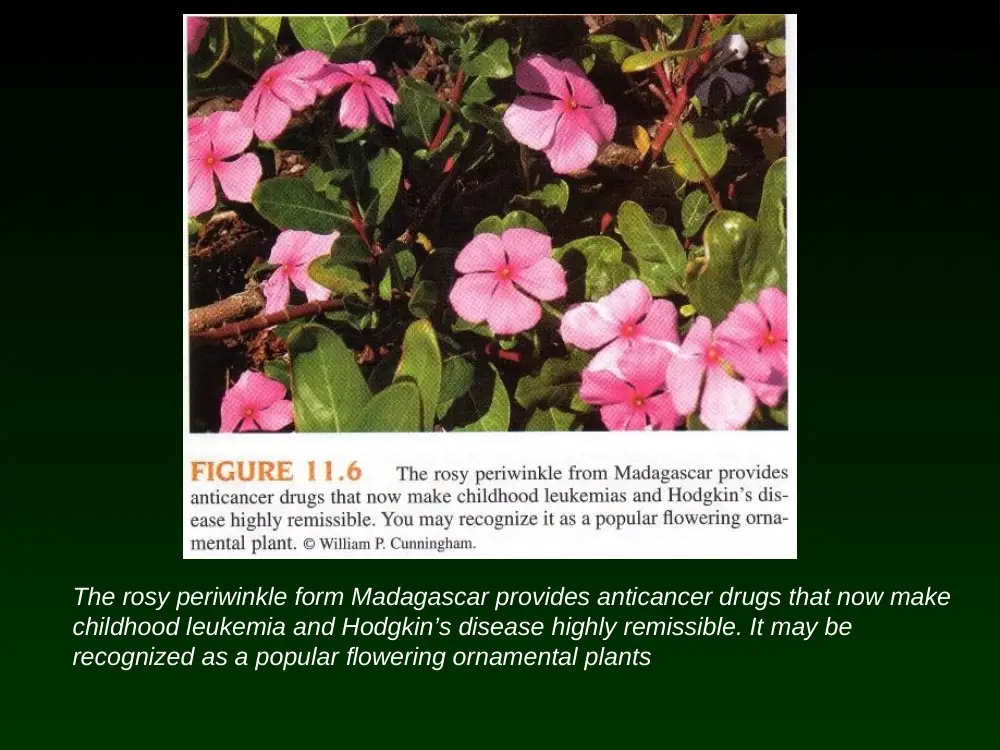
The rosy periwinkle form Madagascar provides anticancer drugs that now make
childhood leukemia and Hodgkin’s disease highly remissible. It may be
recognized as a popular flowering ornamental plants
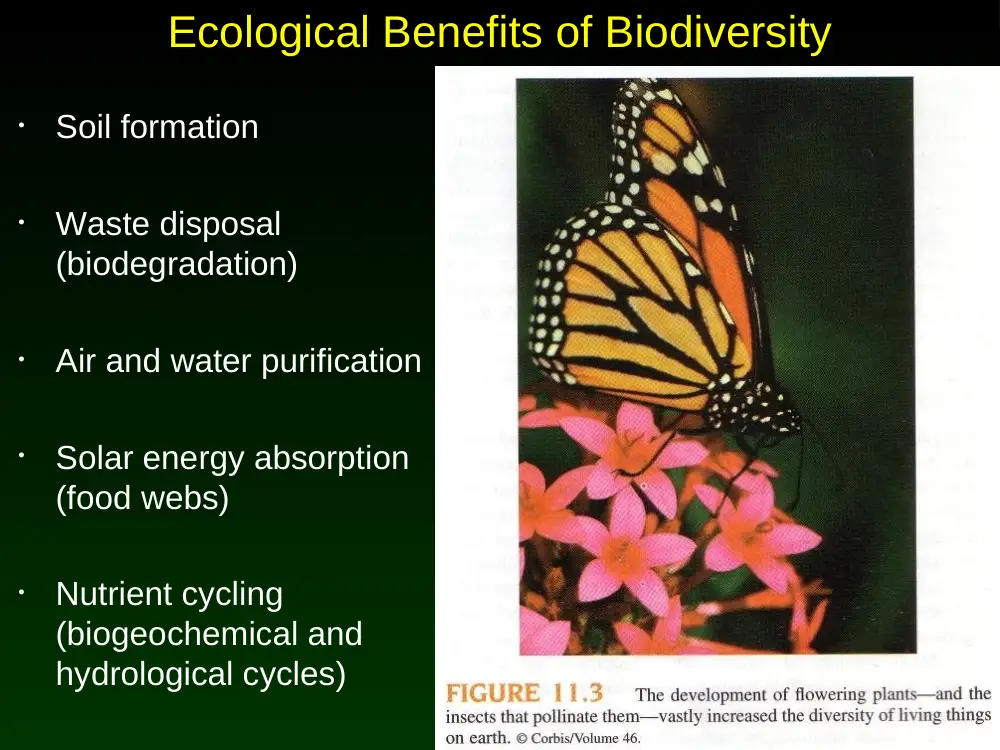
Ecological Benefits of Biodiversity
•
Soil formation
•
Waste disposal
(biodegradation)
•
Air and water purification
•
Solar energy absorption
(food webs)
•
Nutrient cycling
(biogeochemical and
hydrological cycles)
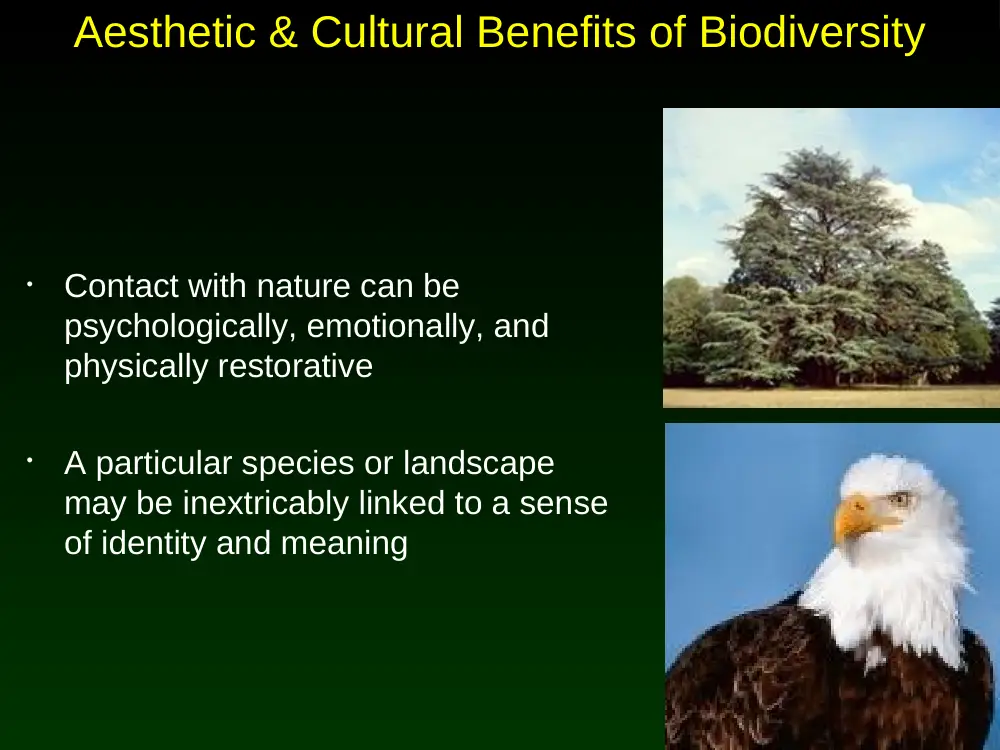
Aesthetic & Cultural Benefits of Biodiversity
•
Contact with nature can be
psychologically, emotionally, and
physically restorative
•
A particular species or landscape
may be inextricably linked to a sense
of identity and meaning
Birdwatching & wildlife
observation contribute more
than $29 million each year to
the US economy
•
Nature appreciation is
economically important
Ecotourism can be an
important form of sustainable
economic development,
provided that we do not abuse
the places & cultures we visit
Threats to Biodiversity
•
Species extinction: elimination of a species
Normal process: in undisturbed ecosystems, the
background rate of extinction appears to be one species per
decade
Currently: human impacts is causing thousands of
extinctions annually
If current trends continue => up to 50% of species may
become extinct in the next 50
- A biodiversity loss of geological proportions (this time not
caused by asteroids or volcanoes)
Human-Caused Threats to Biodiversity
•
Habitat Destruction
Habitat loss is the biggest reason for current increase in
extinction
- Destruction of forests, wetlands, coral reefs, & other biologically-
rich ecosystems around the world threatens to eliminate
thousands to millions of species
Habitat fragmentation: divides populations into isolated
groups vulnerable to catastrophic events
Decrease in wooded area of Cadiz Township in Wisconsin
during European settlement
•
Invasive (Exotic, alien, non-native) Species Introductions
Organisms introduced (accidentally or intentionally) into
habitats where they are not native
In their new territory, they thrive free of predators,
diseases, or resource limitations
Can be thought of as biological pollution
- E.g., Kudzu Vine
Has blanketed large areas of the southeastern US
Can grow 18-30 m/year smothering everything in its
path
Human-caused threats to biodiversity
Human-Caused Threats to Biodiversity
•
Pollution
Toxic chemicals (pesticides, lead, dioxin…) species
extinction
- Direct toxicity at high levels
- Indirect effects (bioaccumulation & biomagnification)
Global warming (fossil fuel combustion) ecosystems
disruption & species extinction
Human-Caused Threats to Biodiversity
•
Overharvesting
Over-harvesting of game species
- American Passenger Pigeon
200 years ago: most abundant bird on earth
Completely extinct within 100 years
- Whales
Fish stocks have been seriously depleted by over-
harvesting
- At least ¾ of commercial oceanic species are over-
harvested
Human-Caused Threats to Biodiversity
•
Commercial Products and Live Specimens
Despite international bans on trade in products from
endangered species, wildlife smuggling (furs, horns, & live
specimen) can be very profitable
- Tiger or leopard fur coats can bring $100,000 in Japan
or Europe
- Birds collectors will pay 10,000 for a rare hyacinth
macaw from Brazil
The mortality rate in live animal trade is very high
Parts from endangered species for sale on the street in China
•
Use of animal products in traditional medicine and prestige diets is a major
threat to many species
•
Predator and Pest Control
Many animal populations have been greatly reduced or
exterminated because they are regarded as dangerous to
humans, livestock, or crops
- Every year the US government animal control agent trap, poison,
or shoot thousands of coyotes, prairie dogs, & other species
considered threats to people, domestic livestock, or crops
Human-caused threats to biodiversity
How can we protect biodiversity?
•
Enacting hunting and fishing laws
•
Identifying all endangered species, & saving as much
biodiversity as possible, regardless of its usefulness to
humans
Endangered species are those considered in imminent
danger of extinction
Threatened species are those likely to become
endangered, at least locally, in the near future
Vulnerable species are those that are
- Naturally rare, or
- Have been locally depleted to a level that puts them at
risk
Endangered species often serve as a barometer for the health of an entire
ecosystem and as protector for a myriad of less well-known creatures
•
Habitat protection
preservation of
ecosystems supporting
maximum biological
diversity rather than
species-by-species
approach
Species are preserved in
the wild
Latest management
strategy is
How can we protect biodiversity?
•
International Wildlife Treaties
E.g.: Convention on International Trade In Endangered
Species (CITES) - 1975
- Regulated trade in living specimens & products derived
from listed species
•
Captive breeding
Breeding programs in zoos and botanical gardens are one
method of saving threatened species
Problems:
- Zoos have limited space for captive breeding, & will
never be able to protect the complete spectrum of
biological diversity
- Ultimate problem: Natural habitat may disappear while
we are conserving the species itself
How can we protect biodiversity?