
ENS 201 Chapter 7, Spring 2008
Notre Dame University–Louaize · Introduction to Environmental Science · 20 pages · Ms. Leila Khalaf

Showing the first 10 of 20 pages. Download the PDF to see all of it.
More ENS 201 files
Show the text of this chapter
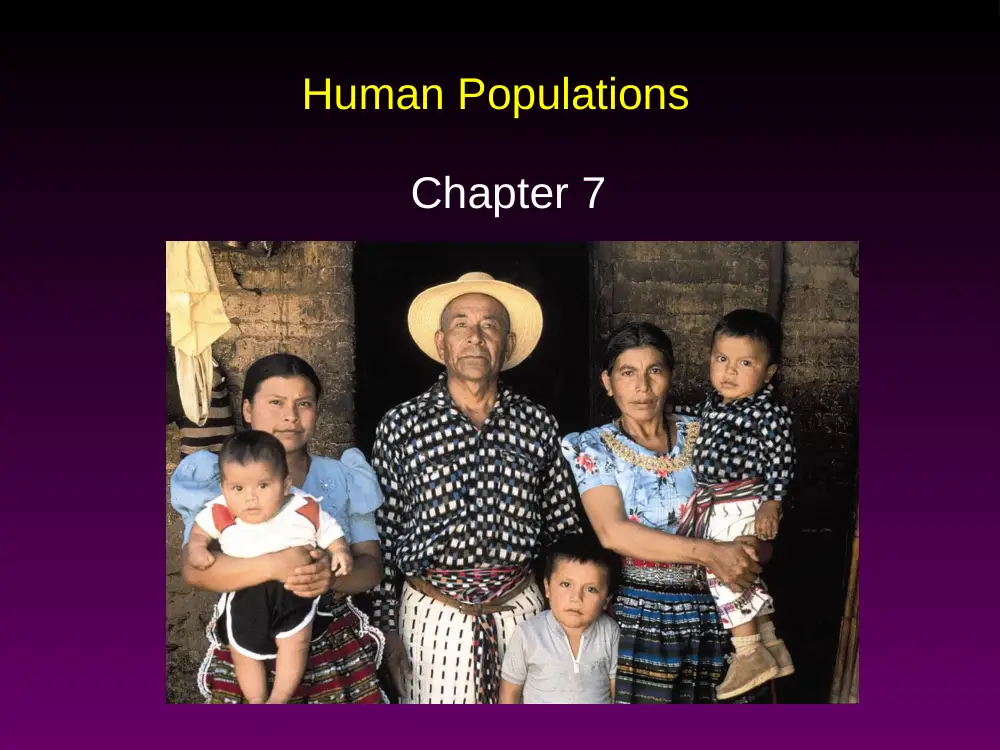
Human Populations
Chapter 7
Outline:
•
Population Growth
Human Population History
Limits to population growth - Opposing Views
The Role of Technology
•
Human Demography
Two Demographic Worlds
•
Future of Human Populations
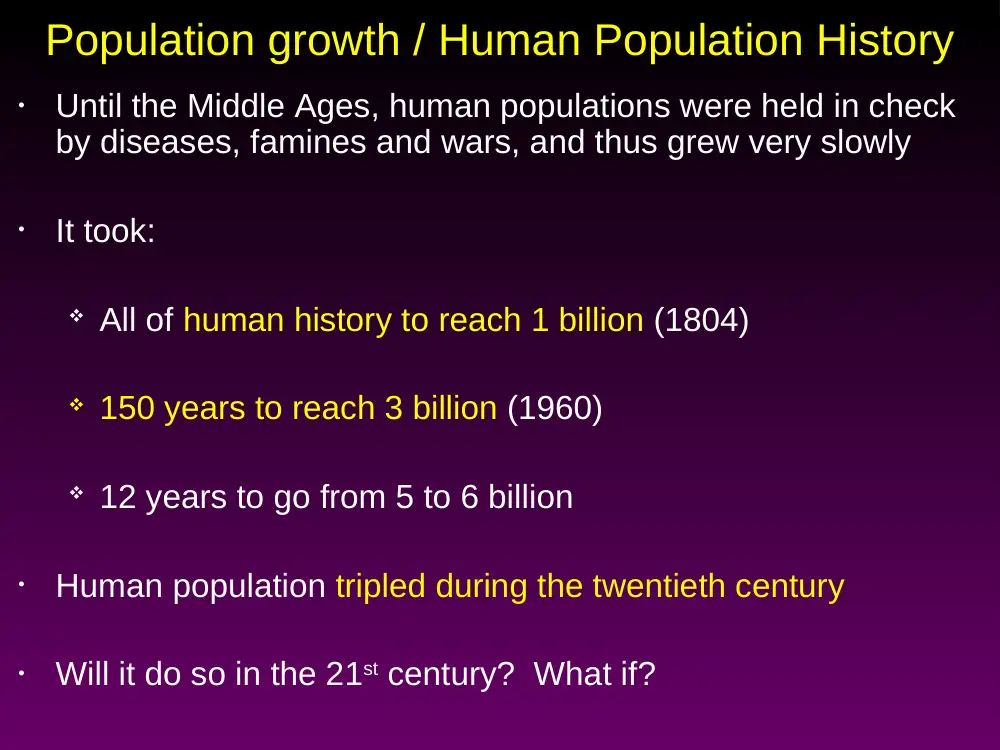
Population growth / Human Population History
•
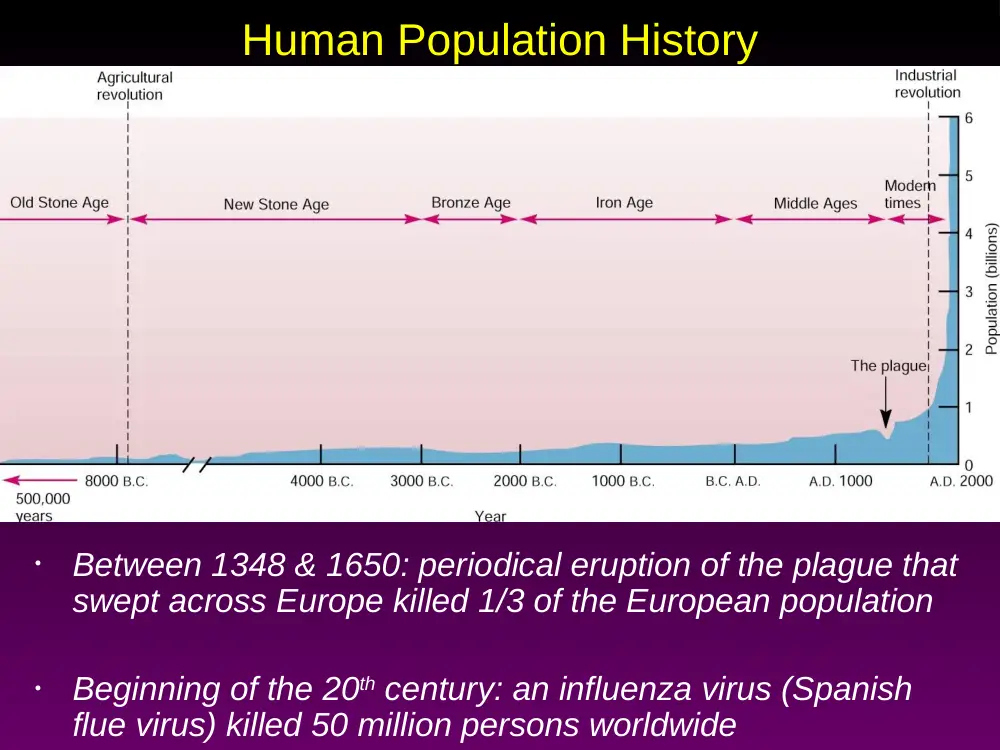
Until the Middle Ages, human populations were held in check
by diseases, famines and wars, and thus grew very slowly
•
It took:
All of human history to reach 1 billion (1804)
150 years to reach 3 billion (1960)
12 years to go from 5 to 6 billion
•
Human population tripled during the twentieth century
•
Will it do so in the 21st century? What if?
•
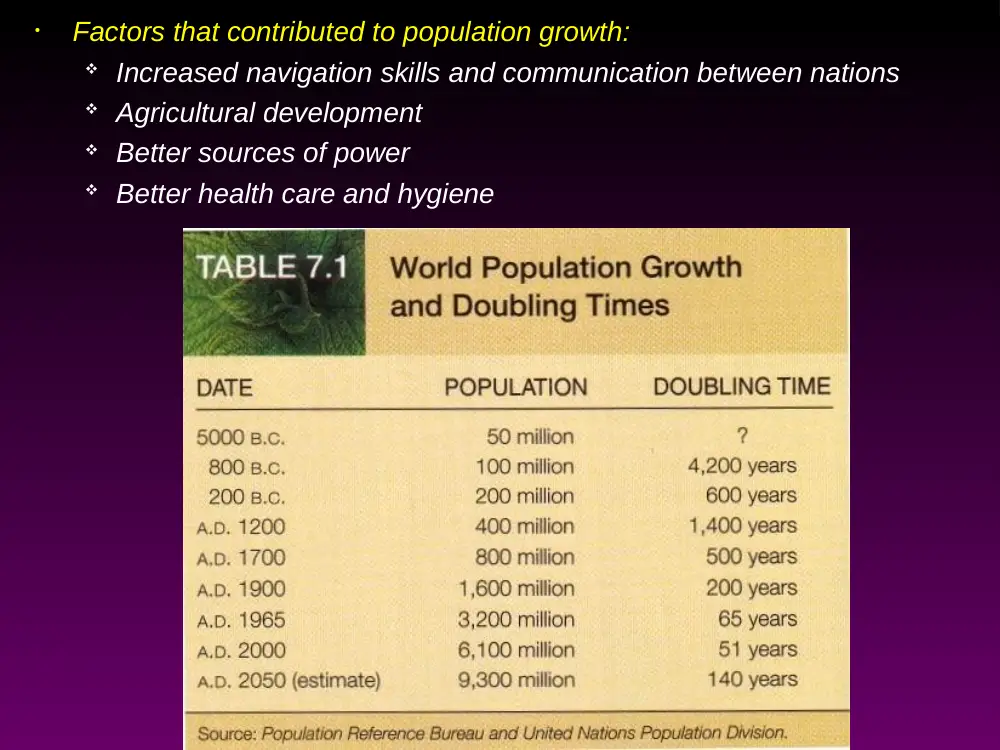
Factors that contributed to population growth:
Increased navigation skills and communication between nations
Agricultural development
Better sources of power
Better health care and hygiene
Human Population History
•
Between 1348 & 1650: periodical eruption of the plague that
swept across Europe killed 1/3 of the European population
•
Beginning of the 20th century: an influenza virus (Spanish
flue virus) killed 50 million persons worldwide
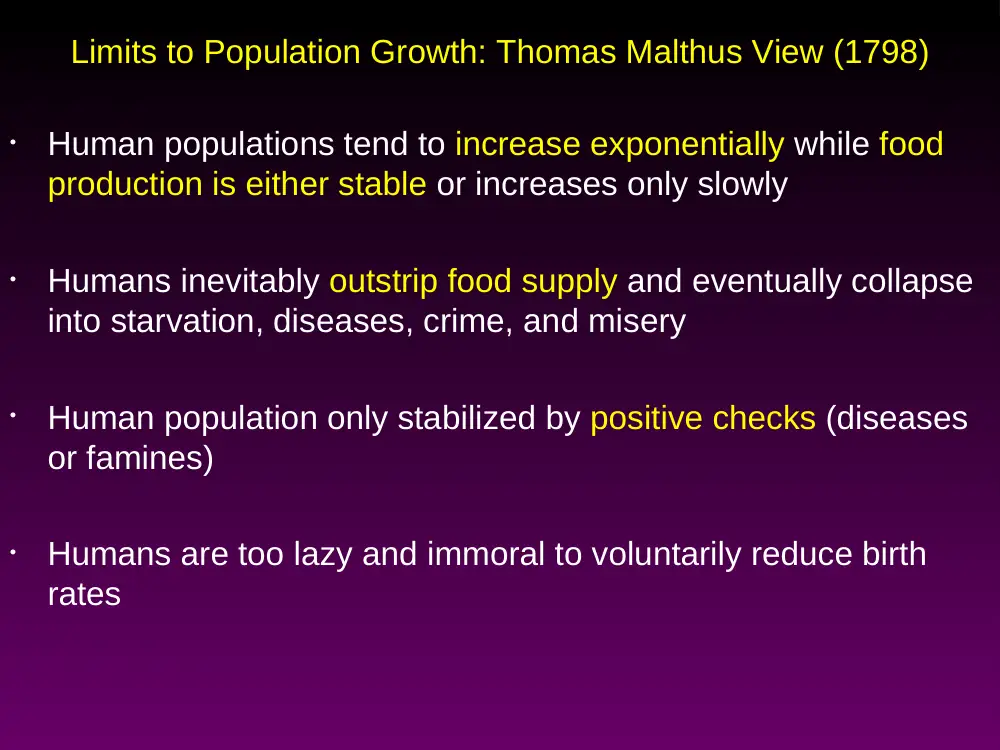
Limits to Population Growth: Thomas Malthus View (1798)
•
Human populations tend to increase exponentially while food
production is either stable or increases only slowly
•
Humans inevitably outstrip food supply and eventually collapse
into starvation, diseases, crime, and misery
•
Human population only stabilized by positive checks (diseases
or famines)
•
Humans are too lazy and immoral to voluntarily reduce birth
rates
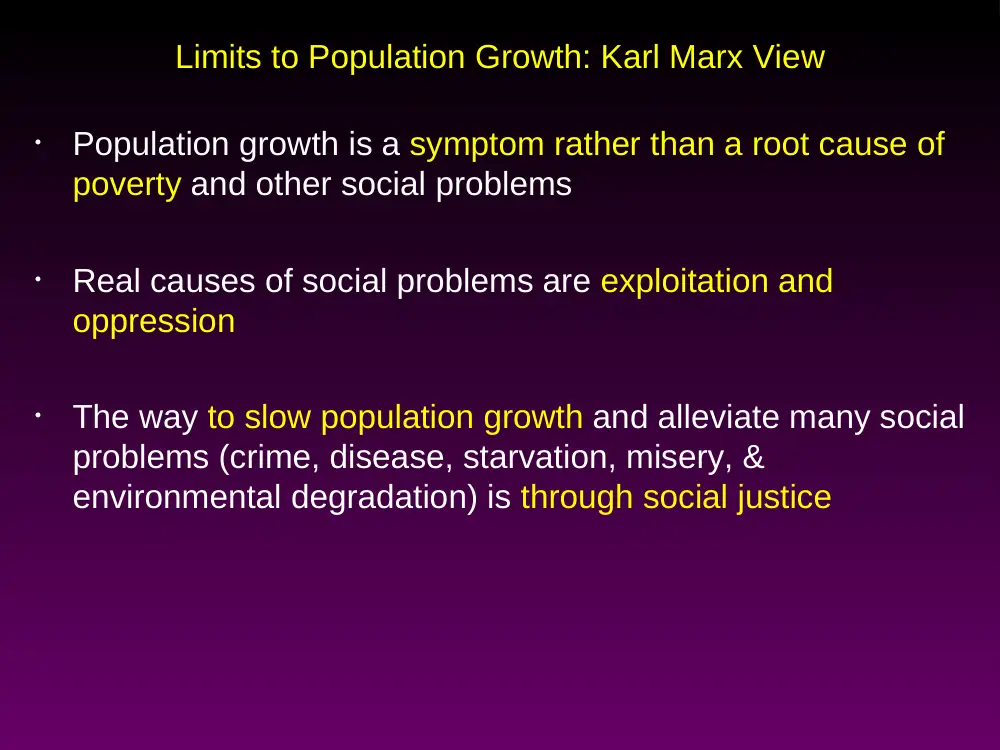
Limits to Population Growth: Karl Marx View
•
Population growth is a symptom rather than a root cause of
poverty and other social problems
•
Real causes of social problems are exploitation and
oppression
•
The way to slow population growth and alleviate many social
problems (crime, disease, starvation, misery, &
environmental degradation) is through social justice
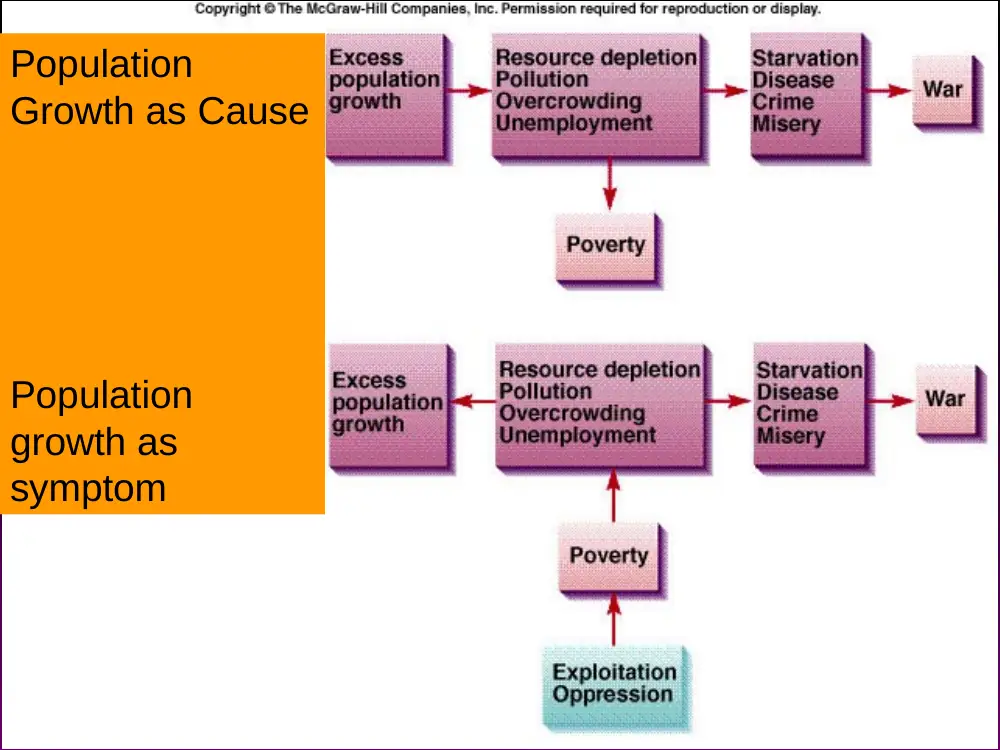
Population
Growth as Cause
Population
growth as
symptom
The Role of Technology in Population Growth
•
Technological optimists argue that Malthus was wrong in his
predictions because he failed to account for scientific
progress
•
Current burst of growth was stimulated by the scientific and
industrial revolutions
Can More People be Beneficial ?
•
Advantages of a larger population:
More people mean larger markets, more workers, and
increased efficiency due to mass productions of goods
Human ingenuity and intelligence can create new resources
Greater numbers also provide more intelligence and
enterprise to overcome problems. E.g.:
- Invention of the renewable energy technologies
- Increased energy efficiency: better home insulation, increased car
performance, efficient lighting…
- New environmentally friendly technologies: recycling,
bioremediation…
- New agricultural technologies that preserve soil and produce more
food
- Progress in medicine, sanitation, engineering…
Human Demography
•
Demography (Demos: people, graphos: to measure):
Encompasses vital statistics about people such as births,
deaths, distribution, and population size
•
October 12, 1999, UN officially declared the human
population reached 6 billion (estimation at best)
Population Density (persons / square km)
Two Demographic Worlds
•
First is poor, young, and rapidly growing
Less-developed countries (Africa, Asia, Latin America…)
- Contain 80% of world population, and will account for
90% of projected growth
•
Second is wealthy, old, and mostly shrinking
Developed countries (North America, Western Europe,
Japan)
- Average age is about 40
- Populations expected to decline during the 21st
century if current trends continue
Estimated Human Population Growth
An age structure graph shows the age distribution (%) of a population
Changing Age structure of the world
Human Population Growth
•
Human population is growing exponentially (Exponential
Growth)
•
Current world annual growth rate is 1.4%
•
Doubling time (yrs)= 70/ annual % growth rate
•
The worldwide human population will double in about 50 years,
if the current growth rate persists
Future of Human Population
•
Most demographers believe the world population will
stabilize sometime during this century
•
Projections of maximum population size by 2050:
- Low
8
billion
- Medium
9.3
billion (most probable)
- High
13
billion