
ENS 201 Chapter 8, Spring 2008
Notre Dame University–Louaize · Introduction to Environmental Science · 32 pages · Ms. Leila Khalaf





Showing the first 10 of 32 pages. Download the PDF to see all of it.
More ENS 201 files
Show the text of this chapter
Environmental Health and Toxicology
Chapter 8
To wish to become well is a part of becoming well. Seneca
Outline:
• Environmental Health Hazards
Infectious Organisms
Antibiotics and Pesticide Resistance
Toxic Chemicals
• Movement and Fate of Toxins
• Minimizing Toxic Effects
• Measuring Toxicity
• Risk Assessment
Environmental Health
•
Health
A state of complete physical, mental, and social well-being
•
Disease
A deleterious change in the body’s condition in response to
an environmental factor
•
Morbidity (illness) and mortality (death) are caused by:
Diet & nutrition, infectious agents, toxic chemicals, physical
factors, and psychological stress
•
Environmental health focuses on external factors (natural,
social, cultural, & social) that cause disease
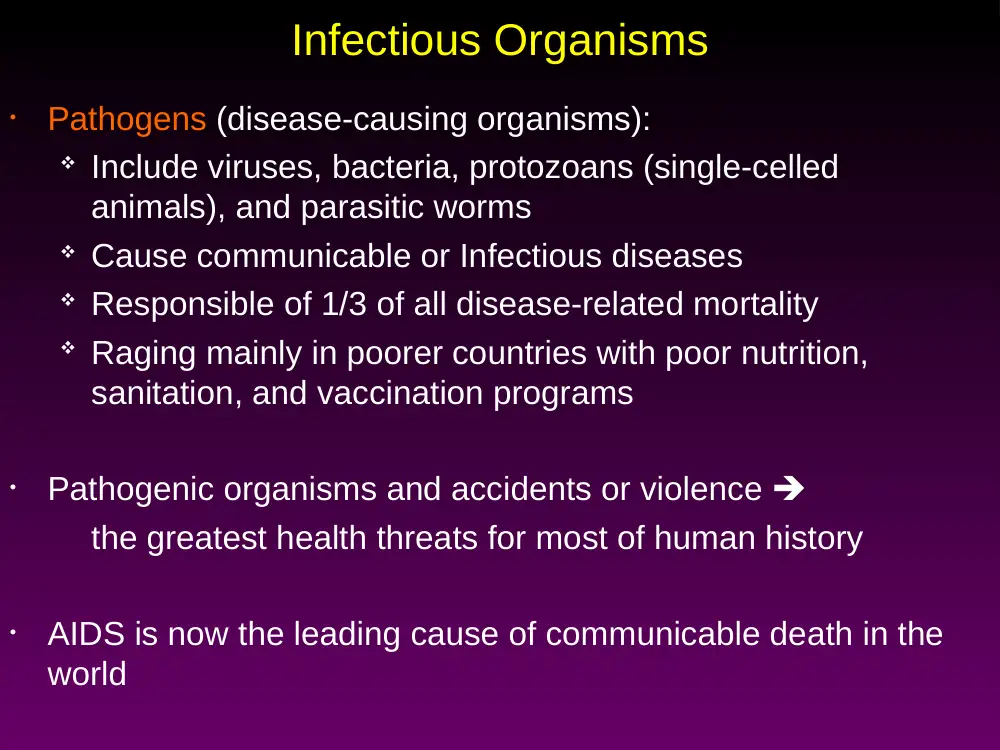
Infectious Organisms
•
Pathogens (disease-causing organisms):
Include viruses, bacteria, protozoans (single-celled
animals), and parasitic worms
Cause communicable or Infectious diseases
Responsible of 1/3 of all disease-related mortality
Raging mainly in poorer countries with poor nutrition,
sanitation, and vaccination programs
•
Pathogenic organisms and accidents or violence
the greatest health threats for most of human history
•
AIDS is now the leading cause of communicable death in the
world
Photos of influenza viruses, Giardia, and Guinea worm
Antibiotic and Pesticide Resistance
•
A large number of disease-causing insects & microbes have
acquired resistance against pesticides & antibiotics
Why?
Natural selection & evolution – speeded up by the short
life spans
Human tendency to overuse & unsafe use of pesticides
and antibiotics
•
Example: The parasite that causes malaria is now resistant
to most antibiotics, while the mosquitoes that transmit it
have developed resistance to many insecticides
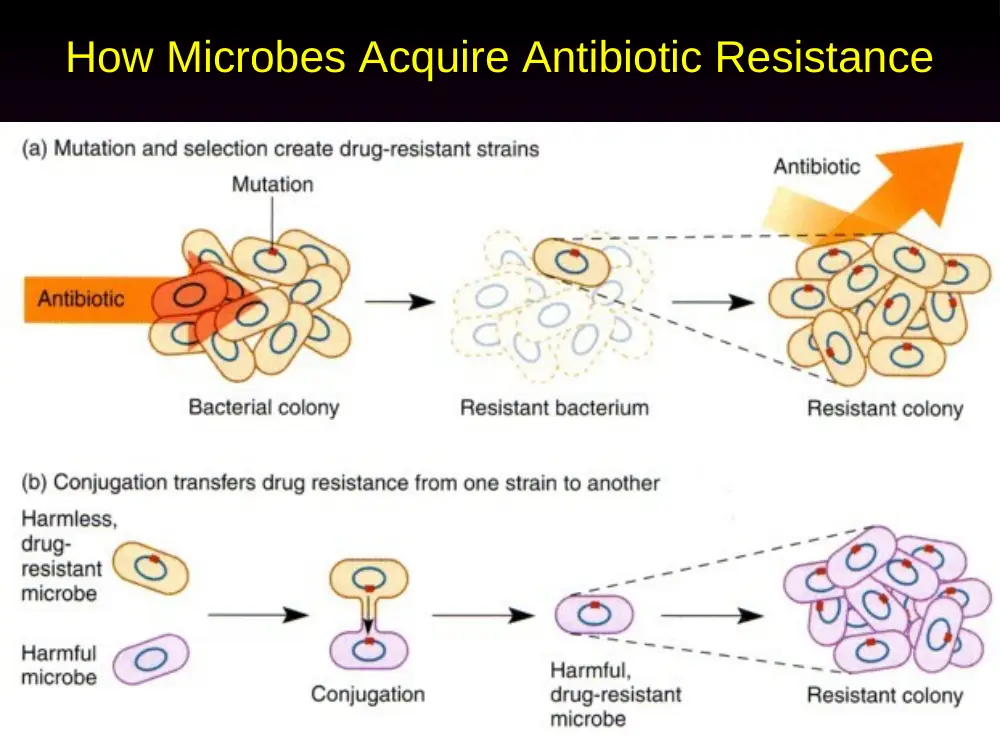
How Microbes Acquire Antibiotic Resistance
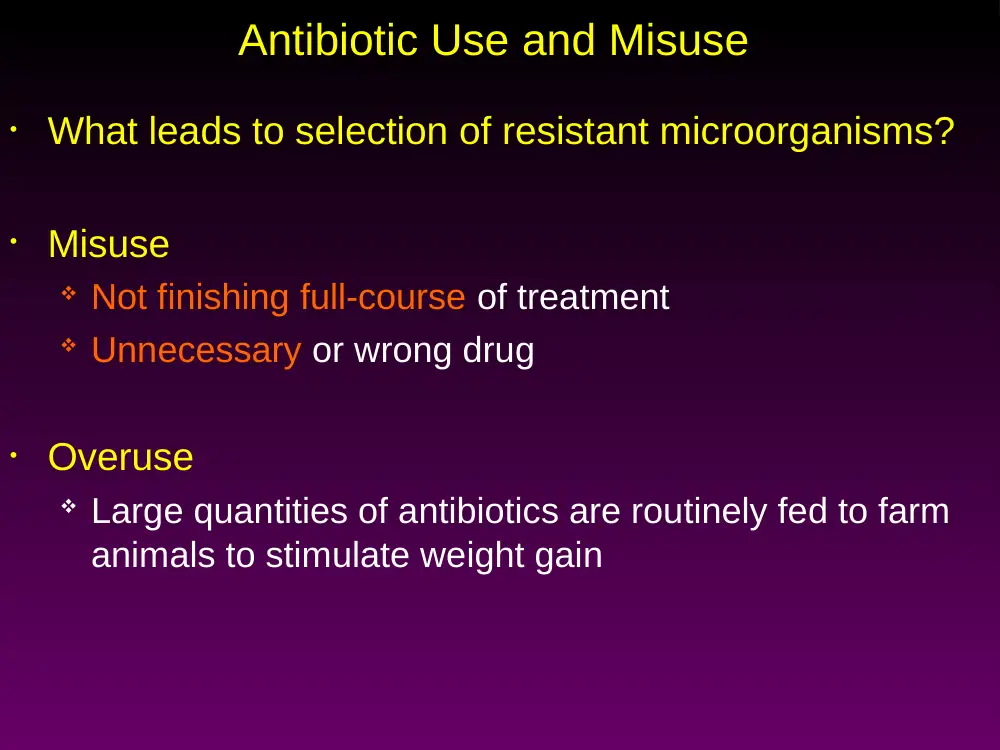
Antibiotic Use and Misuse
• What leads to selection of resistant microorganisms?
• Misuse
Not finishing full-course of treatment
Unnecessary or wrong drug
• Overuse
Large quantities of antibiotics are routinely fed to farm
animals to stimulate weight gain
Harmful Chemicals
•
Two broad categories:
Hazardous - Dangerous
- Flammable, explosive, irritant, acid, caustic
Toxic - Poisonous
- Can be general or very specific
- Often harmful even in dilute concentrations
Toxic Chemicals
•
Allergens
Substances that activate the immune system
Are recognized as foreign by white blood cells and
stimulate the production of specific antibodies
E.g.: Formaldehyde
Toxic Chemicals
•
Endocrine disrupters (environmental estrogens or androgens)
Substances that disrupt normal hormone functions
Include dioxins and PCBs (Polychlorinated Biphenyl's):
- Interfere with normal growth, development and physiology
- Developmental abnormalities
- Sexual dysfunction: reproductive health problems in
females and feminization of males
- Picogram concentrations (trillionths of a gram per liter) of
environmental eustrogens or androgens can exert health effects
Toxic Chemicals
•
Neurotoxins - Special poisons that specifically attack nerve
cells
•
Different neurotoxins act in different ways
- Heavy Metals: kill nerve cells
- Anesthetics: disrupt nerve cell membranes
- Pesticides (organophosphates, carbamates, &
chlorinated hydrocarbons): inhibit signal transmission
between nerve cells
Toxic Chemicals
•
Mutagens - Agents that damage or alter genetic material
(radiation, chemicals)
May trigger cancer (later in life)
Leads to birth defects during embryonic growth
•
Teratogens - Specifically cause abnormalities during
embryonic growth and development
Alcohol - Fetal Alcohol Syndrome
•
Carcinogens - Substances that cause cancer (2nd leading
cause of deaths worldwide).
E.g.: Cigarette smoke
MOVEMENT, DISTRIBUTION,
AND FATE OF TOXINS
•
Solubility - One of most important characteristics in
determining the movement of a toxin through:
The environment
Through the body to its site of action
•
Chemicals are divided into two major groups:
Those that dissolve more readily in water (water soluble):
- Move rapidly through the environment & have ready
access to most human cells
Those that dissolve more readily in oil
Movement & Fate of
Chemicals in the Environment
Routes of exposure to
toxins and hazardous
environmental factors
Bioaccumulation and Biomagnification
•
Bioaccumulation:
Selective cellular absorption, storage, & buildup of a toxin
to dangerous levels inside cells & tissues
•
Biomagnification:
Toxic burden of a large number of organisms at a lower
trophic level is accumulated and concentrated by a
predator at a higher trophic level
- The effect of toxins are magnified in the environment
through food webs
Bioaccumulation &
Biomagnification
Persistence
•
Some chemical are very unstable and degrade rapidly under
most conditions =>
Their concentrations decline quickly after release
•
Others are more persistent
Stability can cause problems as toxic effects may be
stored for long period of time and spread to unintended
victims
- (DDT)
Mechanisms for Minimizing Toxic Effects
•
Every material can be poisonous under certain conditions
Most chemicals have a safe threshold under which their
effects are insignificant
•
Metabolic Degradation
In humans, the liver is the primary site of detoxification of
both natural and introduced poisons
•
Excretion
Waste products of metabolism & environmental toxins
can be excreted from the body via the lungs (by breathing) &
the kidneys (by urine).
MEASURING TOXICITY
•
Animal Testing
Most commonly used and widely accepted toxicity test is
to expose a population of laboratory animals to measured
doses of specific toxins under controlled conditions
- Sensitivity differences pose a problem
Dose Response Curves
LD50 - Dose at which 50% of the test population is
sensitive
Establishing Public Policy
•
It is difficult to separate the effects of multiple hazards and evaluate
their risks accurately, especially when exposures are near the
threshold of measurement and response
May not be reasonable to mandate protection, no matter how
small the risk, from every potentially harmful contaminant in our
environment
Natural systems loaded
with toxic chemicals
Unpolluted Ecosystems