
CMPS 255 Lecture 01, Fall 2012
American University of Beirut · Computer Architecture · 7 pages


More CMPS 255 files
Show the text of this lab
Lecture 1
Chapter 1: Computer
Abstractions and Technology
These slides are based on Patterson and Hennessy’s original slides
Chapter 1 — Computer Abstractions and Technology — 2
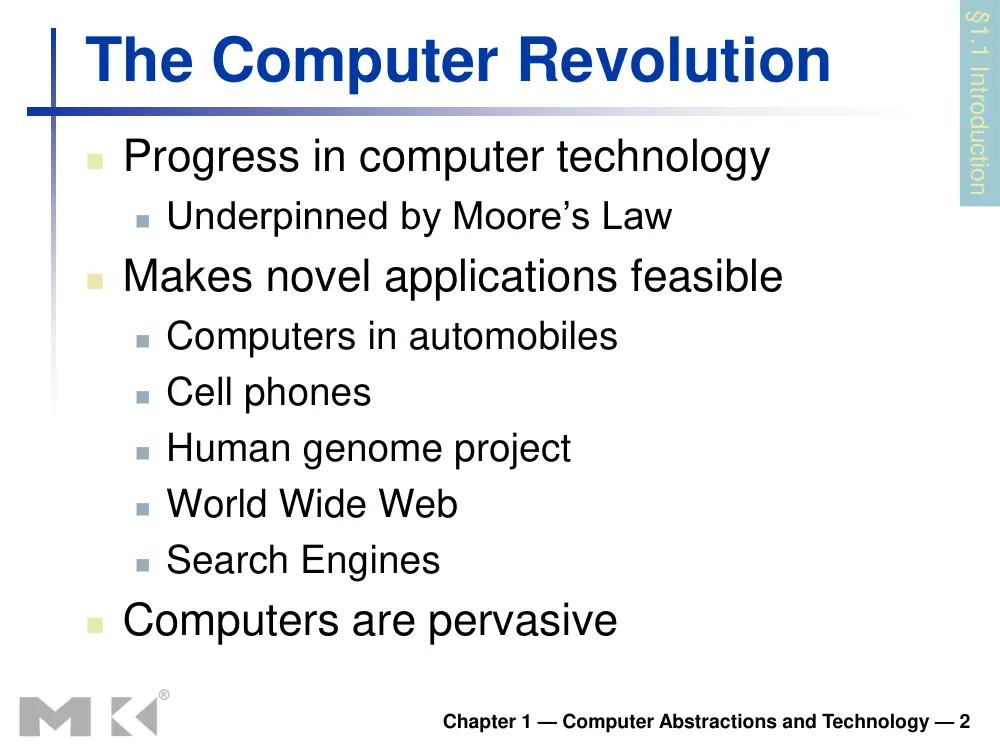
The Computer Revolution
Progress in computer technology
Underpinned by Moore’s Law
Makes novel applications feasible
Computers in automobiles
Cell phones
Human genome project
World Wide Web
Search Engines
Computers are pervasive
§1.1 Introduction
Chapter 1 — Computer Abstractions and Technology — 3
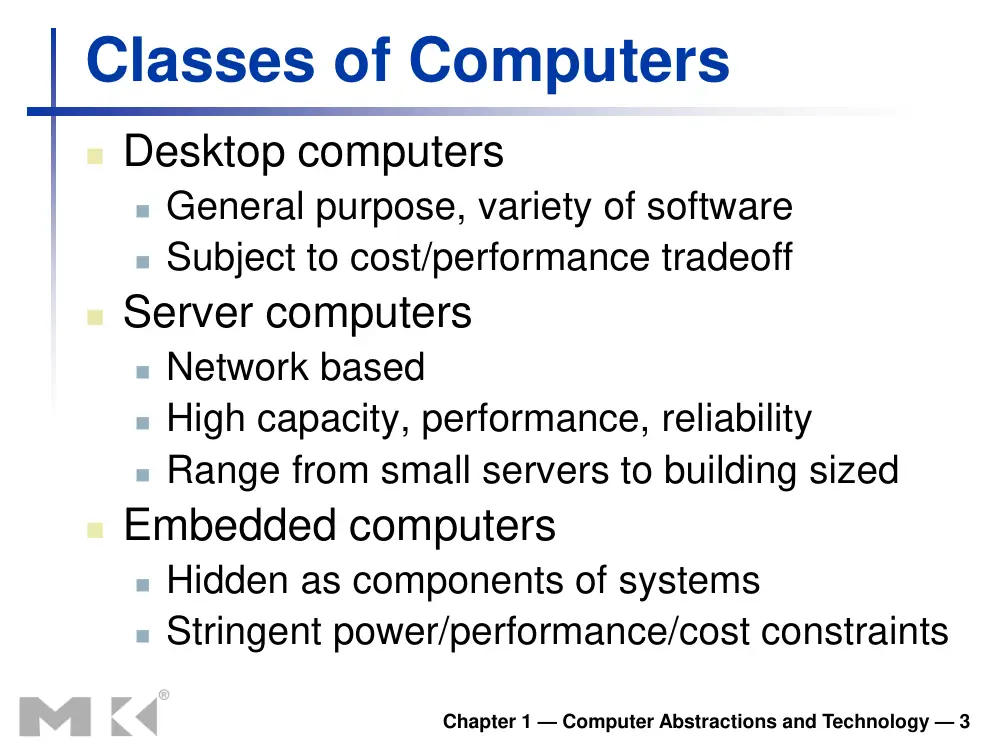
Classes of Computers
Desktop computers
General purpose, variety of software
Subject to cost/performance tradeoff
Server computers
Network based
High capacity, performance, reliability
Range from small servers to building sized
Embedded computers
Hidden as components of systems
Stringent power/performance/cost constraints
Chapter 1 — Computer Abstractions and Technology — 4
The Processor Market
Chapter 1 — Computer Abstractions and Technology — 5
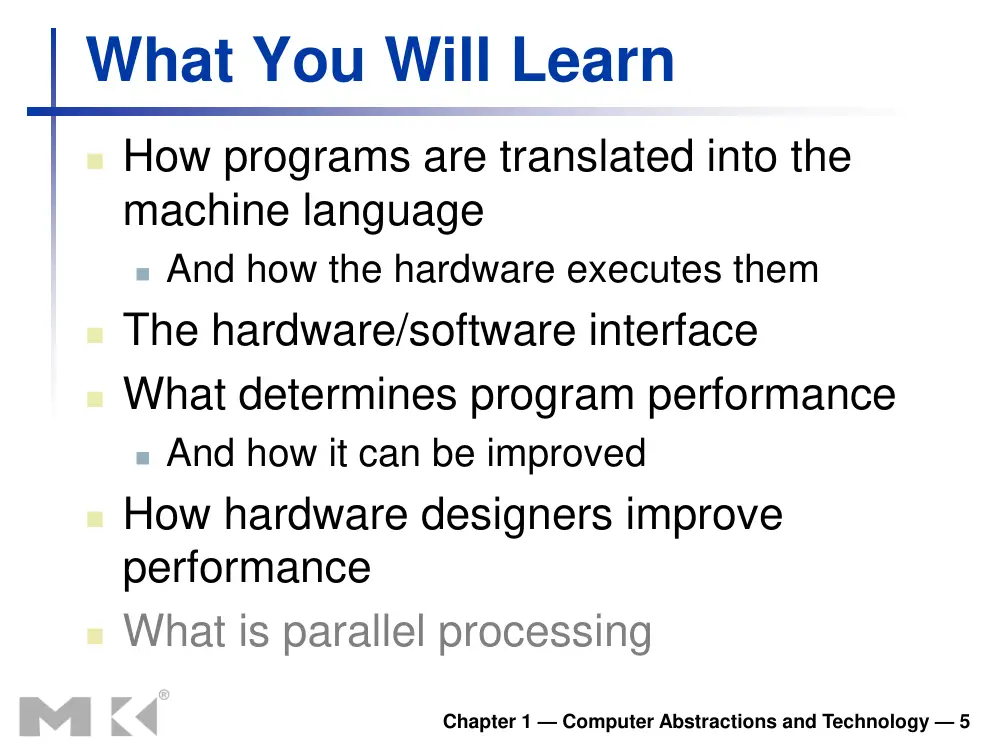
What You Will Learn
How programs are translated into the
machine language
And how the hardware executes them
The hardware/software interface
What determines program performance
And how it can be improved
How hardware designers improve
performance
What is parallel processing
Chapter 1 — Computer Abstractions and Technology — 6
Understanding Performance
What impacts performance?
Chapter 1 — Computer Abstractions and Technology — 7
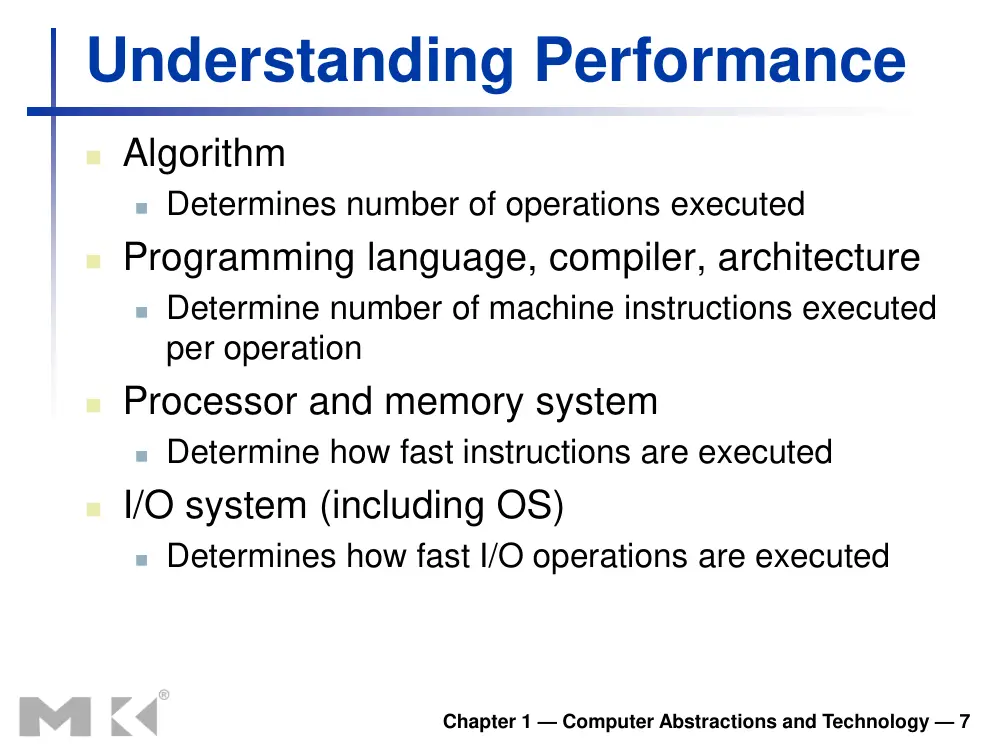
Understanding Performance
Algorithm
Determines number of operations executed
Programming language, compiler, architecture
Determine number of machine instructions executed
per operation
Processor and memory system
Determine how fast instructions are executed
I/O system (including OS)
Determines how fast I/O operations are executed