
EECE 210 Lecture 0, Spring 2012
American University of Beirut · Electric Circuits · 5 pages
More EECE 210 files
Show the text of this lab
Introduction
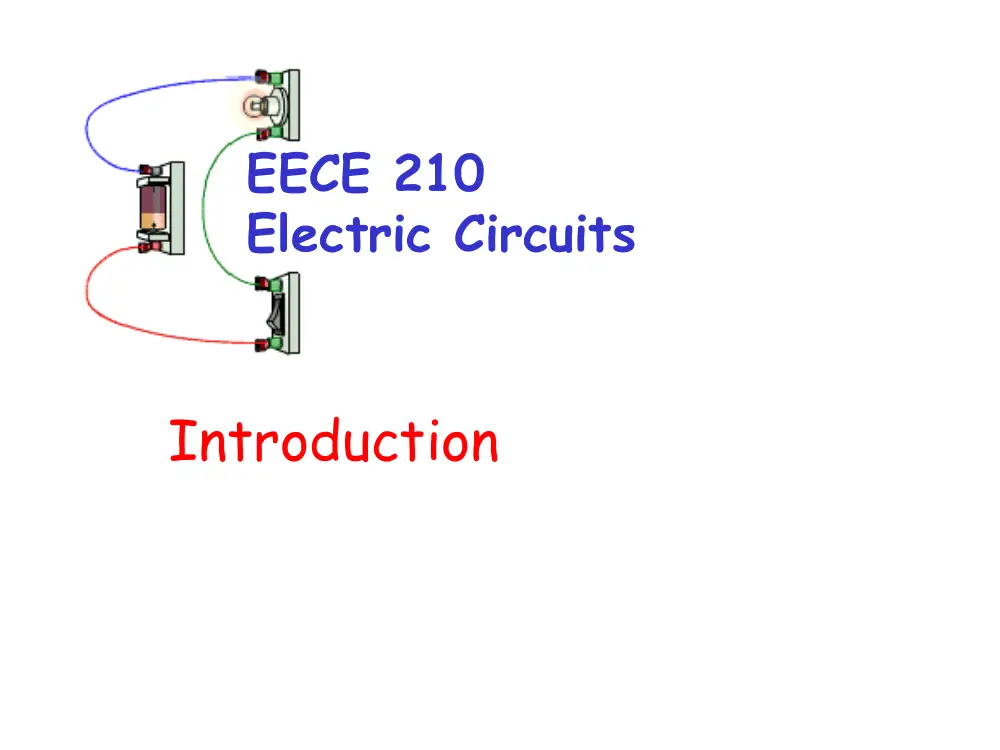
EECE 210
Electric Circuits
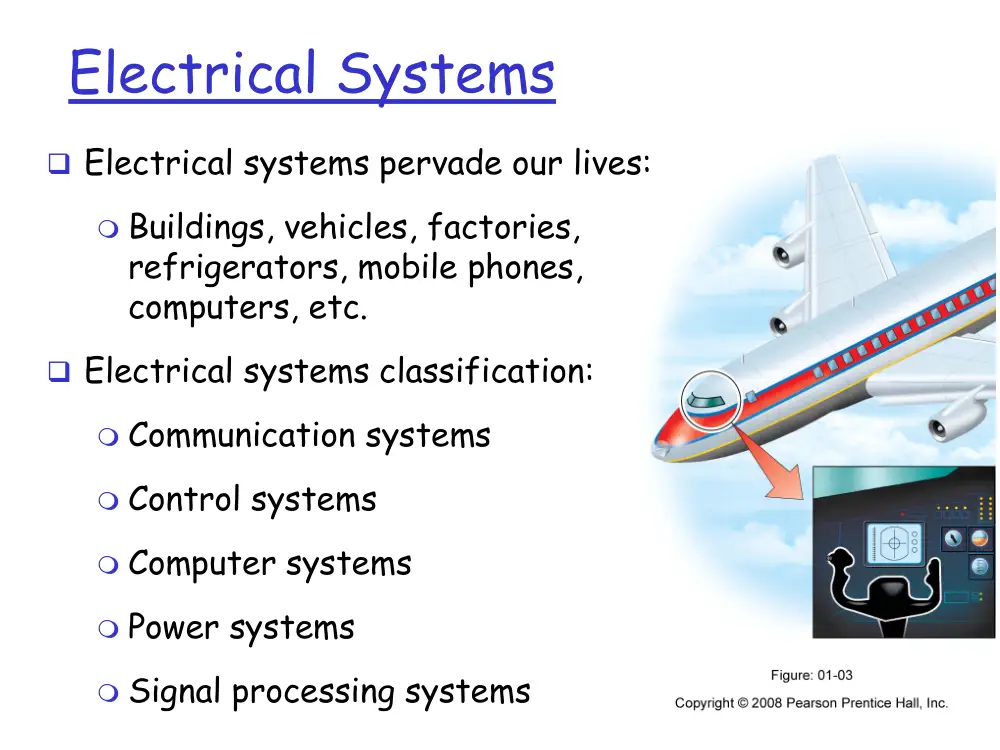
Electrical Systems
� Electrical systems pervade our lives:
� Buildings, vehicles, factories,
refrigerators, mobile phones,
computers, etc.
� Electrical systems classification:
� Communication systems
� Control systems
� Computer systems
� Power systems
� Signal processing systems
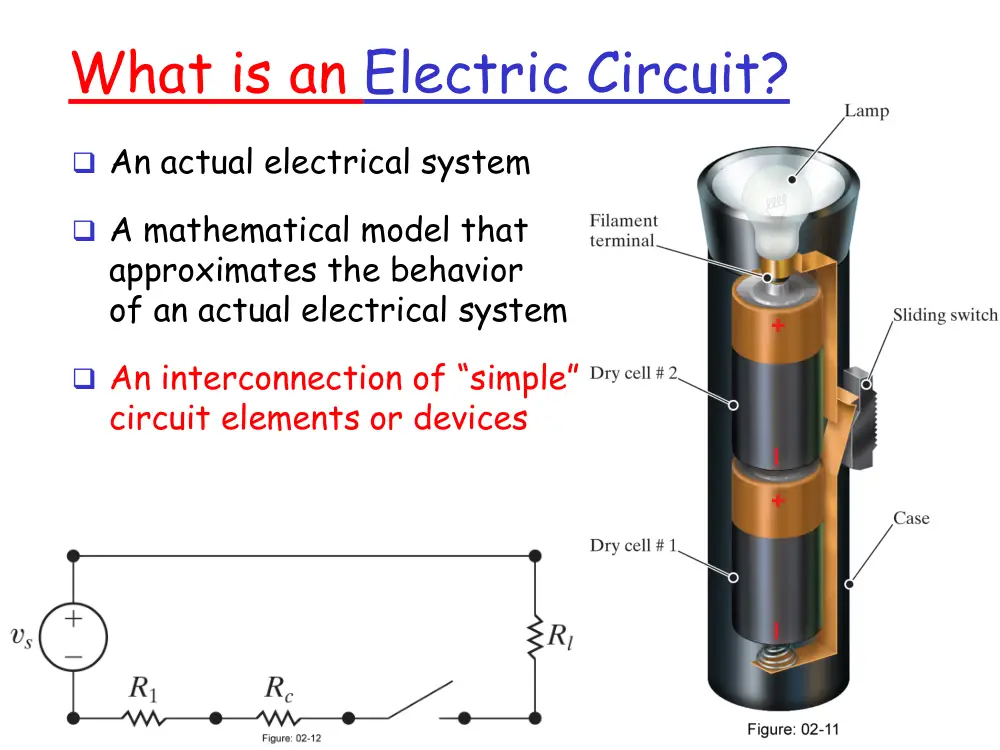
What is an Electric Circuit?
� An actual electrical system
� A mathematical model that
approximates the behavior
of an actual electrical system
� An interconnection of “simple”
circuit elements or devices
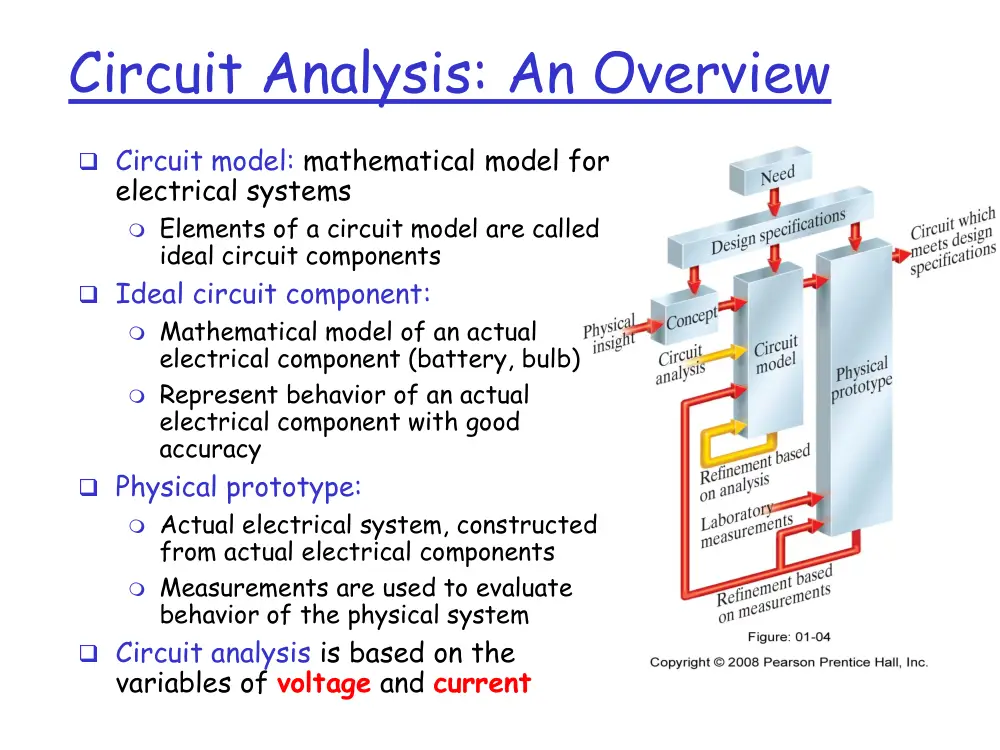
� Circuit model: mathematical model for
electrical systems
� Elements of a circuit model are called
ideal circuit components
� Ideal circuit component:
� Mathematical model of an actual
electrical component (battery, bulb)
� Represent behavior of an actual
electrical component with good
accuracy
� Physical prototype:
� Actual electrical system, constructed
from actual electrical components
� Measurements are used to evaluate
behavior of the physical system
� Circuit analysis is based on the
variables of voltage and current
Circuit Analysis: An Overview
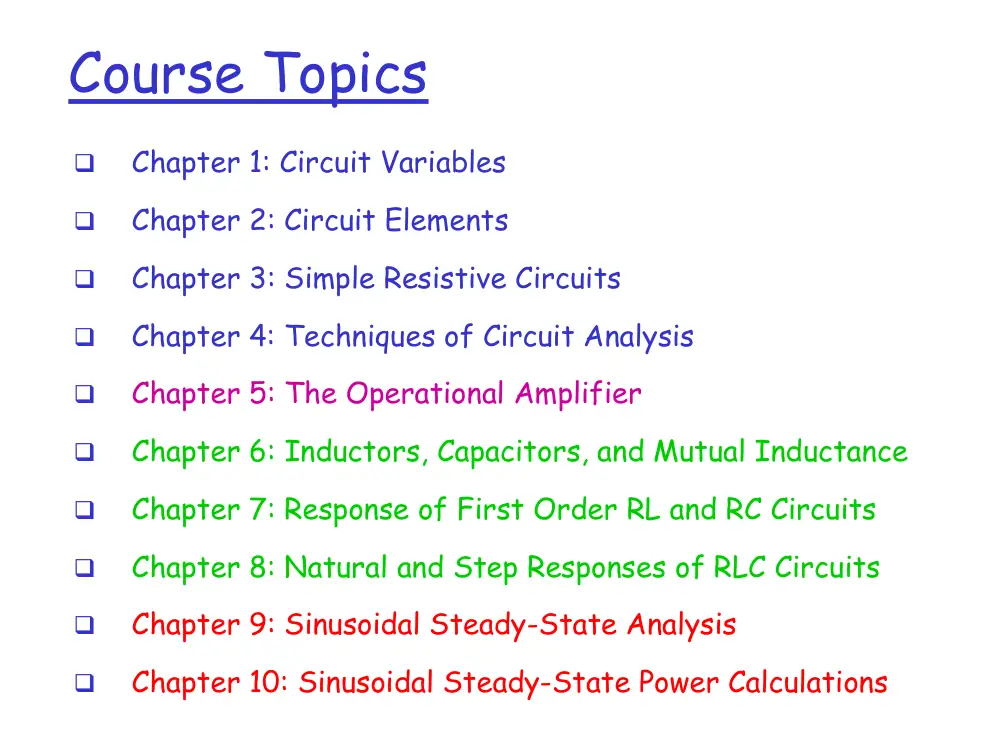
Course Topics
�
Chapter 1: Circuit Variables
�
Chapter 2: Circuit Elements
�
Chapter 3: Simple Resistive Circuits
�
Chapter 4: Techniques of Circuit Analysis
�
Chapter 5: The Operational Amplifier
�
Chapter 6: Inductors, Capacitors, and Mutual Inductance
�
Chapter 7: Response of First Order RL and RC Circuits
�
Chapter 8: Natural and Step Responses of RLC Circuits
�
Chapter 9: Sinusoidal Steady-State Analysis
�
Chapter 10: Sinusoidal Steady-State Power Calculations