
PHYS 205 Chapter 29, Fall 2017
American University of Beirut · Modern Physics for Life Sciences · 26 pages · Mr. Roy Aad
Showing the first 10 of 26 pages. Download the PDF to see all of it.
More PHYS 205 files
Show the text of this chapter
Chapter 29
Particles and Waves
Outline
1. The Wave-Particle
Duality
2. Blackbody Radiation
and Planck’s Constant
3. Photons and the
Photoelectric Effect
4. The Momentum of a
Photon and the Compton
Effect
5. The DE Broglie
Wavelength and the
Wave Nature of Matter
6. The Heisenberg
Uncertainty Principle
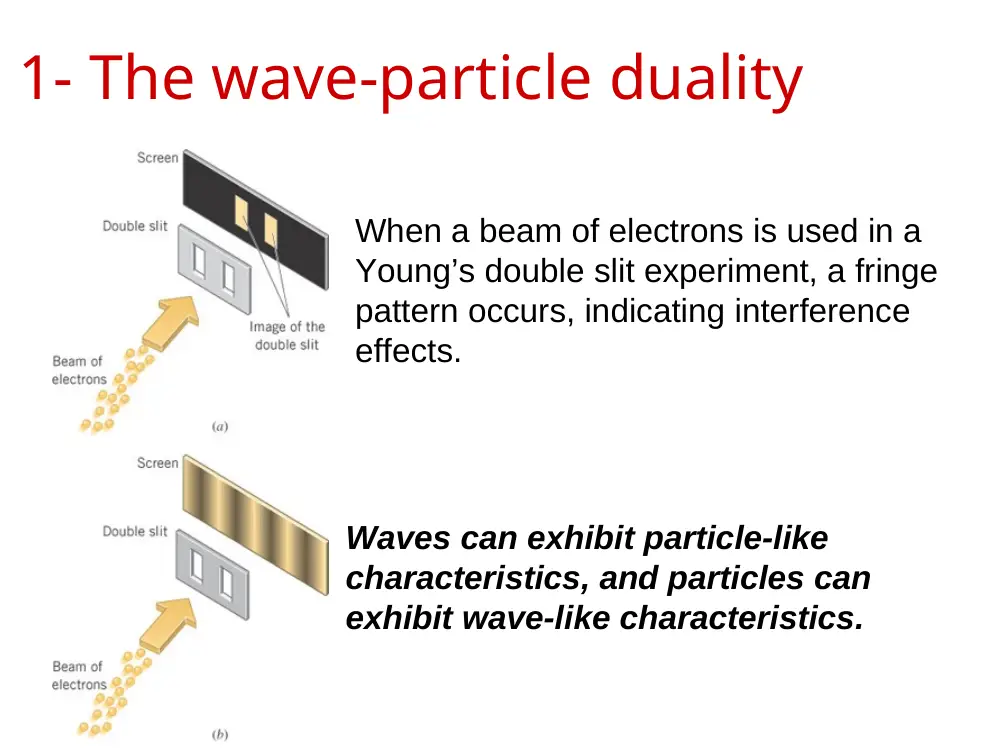
1- The wave-particle duality
When a beam of electrons is used in a
Young’s double slit experiment, a fringe
pattern occurs, indicating interference
effects.
Waves can exhibit particle-like
characteristics, and particles can
exhibit wave-like characteristics.
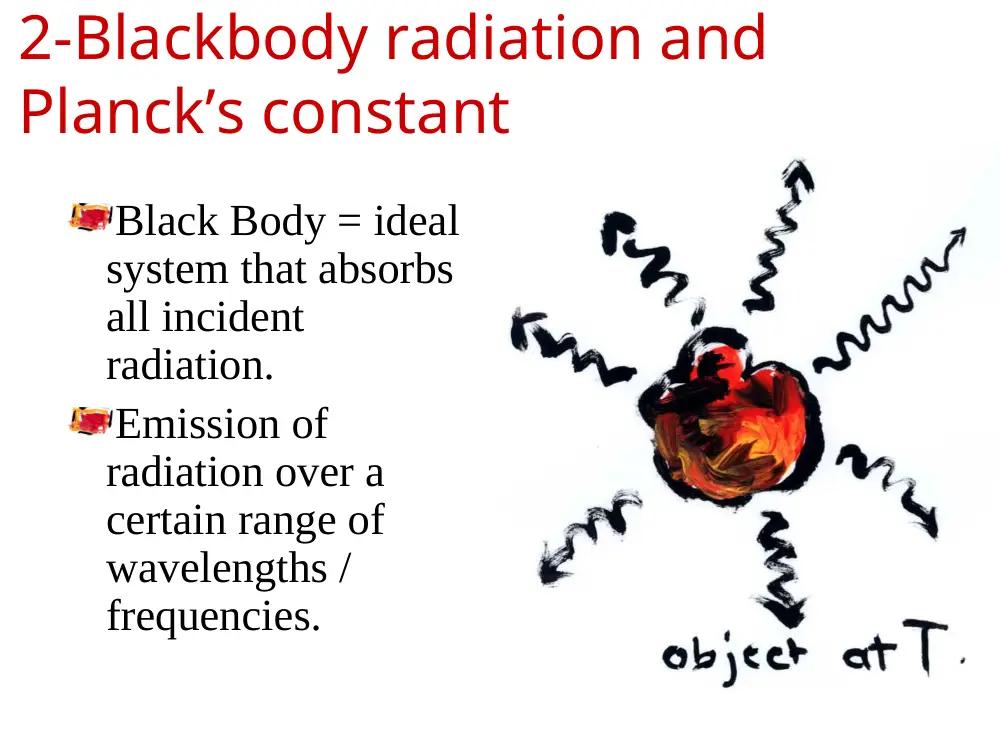
2-Blackbody radiation and
Planck’s constant
Black Body = ideal
system that absorbs
all incident
radiation.
Emission of
radiation over a
certain range of
wavelengths /
frequencies.
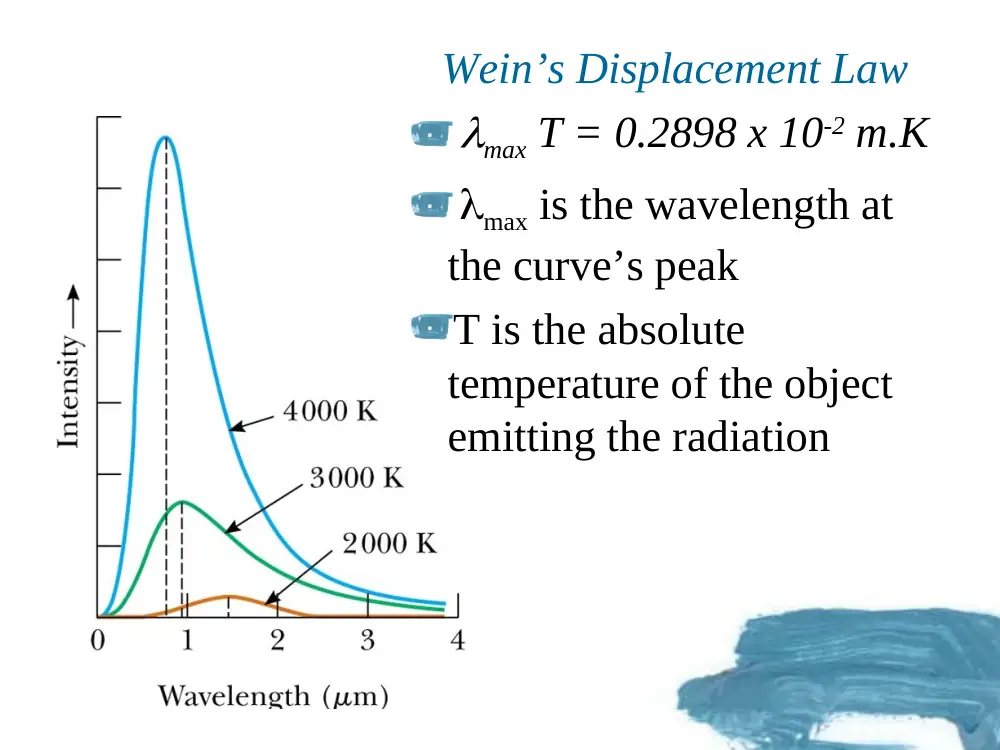
Wein’s Displacement Law
max T = 0.2898 x 10⁻² m.K
max is the wavelength at
the curve’s peak
T is the absolute
temperature of the object
emitting the radiation
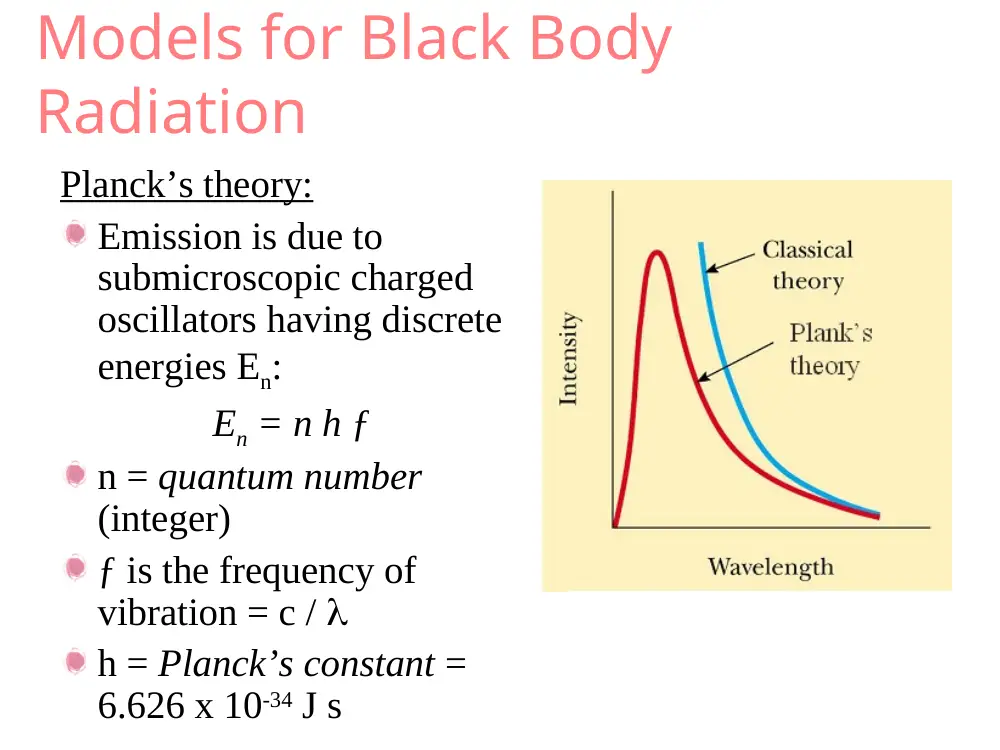
Models for Black Body
Radiation
Planck’s theory:
Emission is due to
submicroscopic charged
oscillators having discrete
energies En:
En = n h ƒ
n = quantum number
(integer)
ƒ is the frequency of
vibration = c /
h = Planck’s constant =
6.626 x 10⁻³⁴ J s
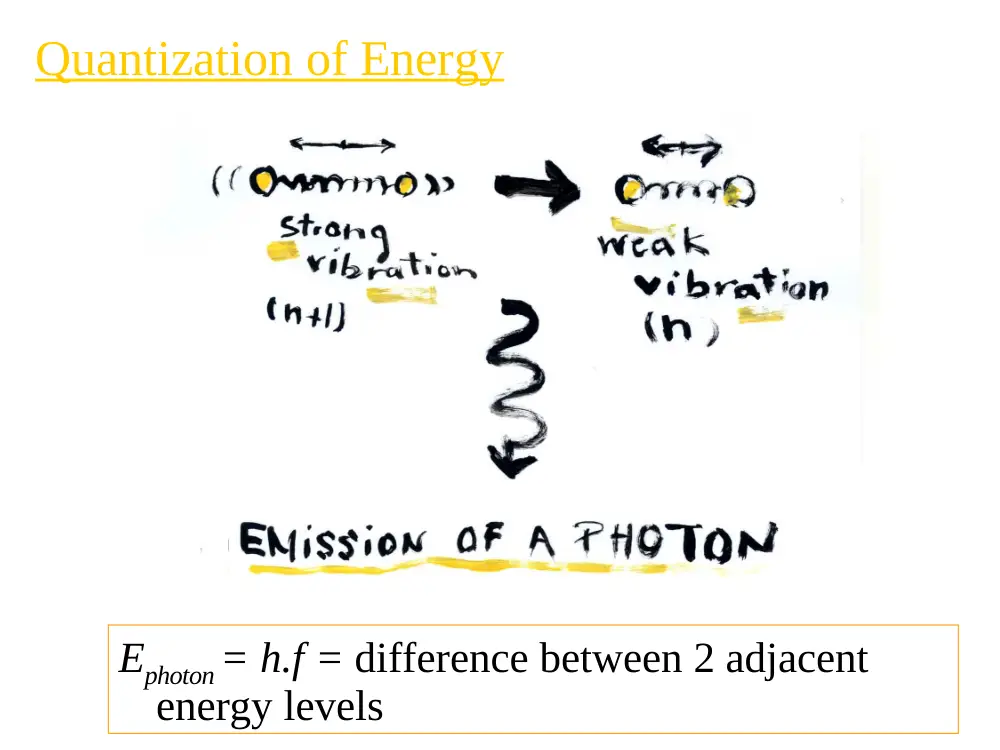
Ephoton = h.f = difference between 2 adjacent
energy levels
Quantization of Energy
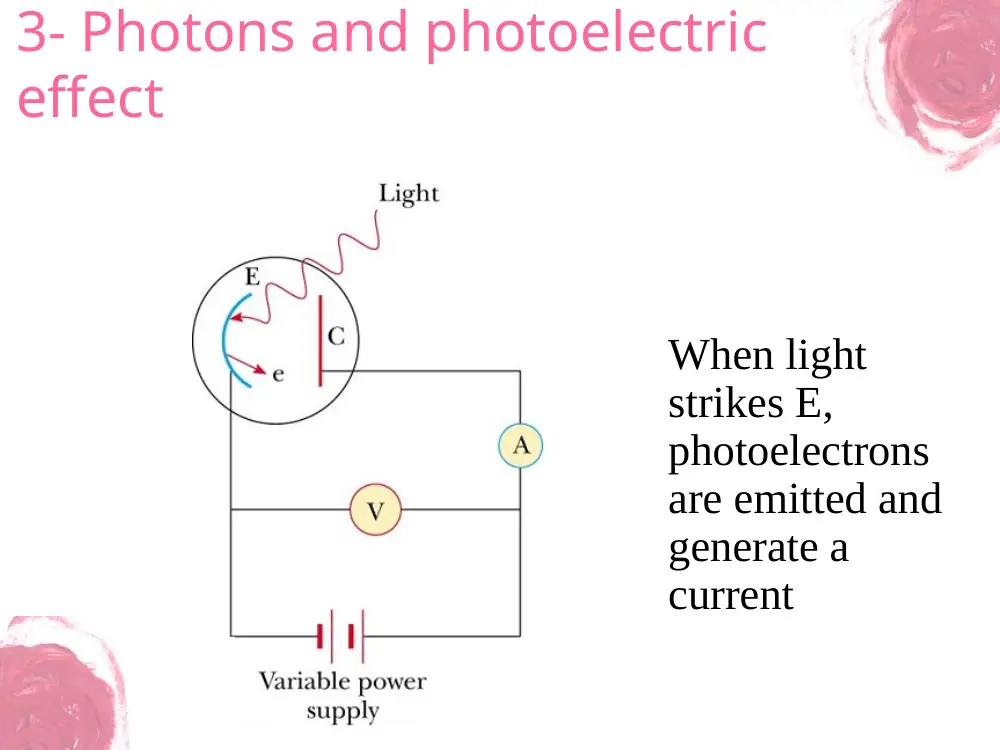
3- Photons and photoelectric
effect
When light
strikes E,
photoelectrons
are emitted and
generate a
current
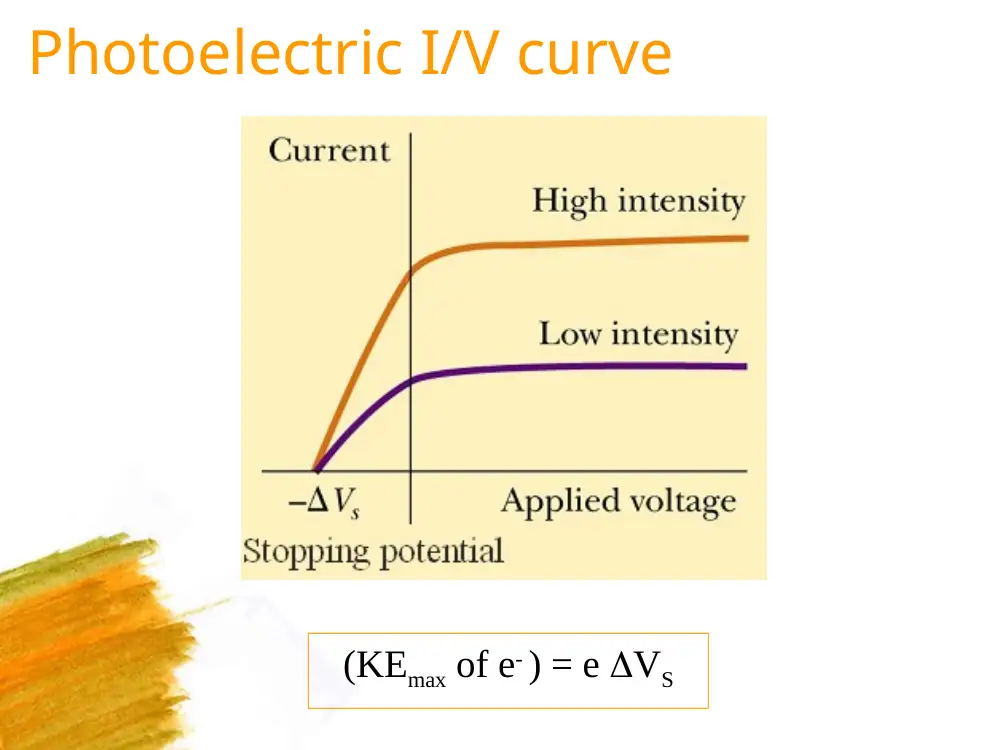
Photoelectric I/V curve
(KEmax of e- ) = e VS
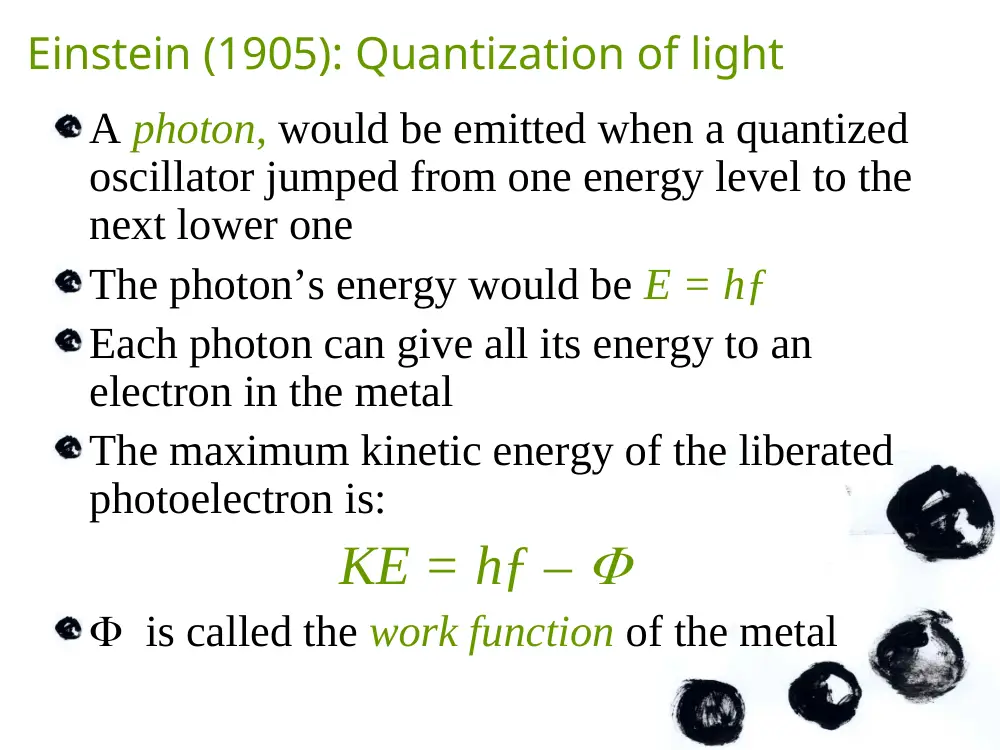
Einstein (1905): Quantization of light
A photon, would be emitted when a quantized
oscillator jumped from one energy level to the
next lower one
The photon’s energy would be E = hƒ
Each photon can give all its energy to an
electron in the metal
The maximum kinetic energy of the liberated
photoelectron is:
KE = hƒ –
is called the work function of the metal
Validity of Einstein’s explanation
Experimental
observations
Photoelectric effect eq:
KE = hƒ –
Cut-off frequency f0
below which no effect is
detected
hf > hf0 =
Otherwise no effect
(KE)max is independent
of light intensity
KE = hf –
I nb of e- current
(KE)max increases if f is
increased
KE = f
Emission of e- is
instantaneous
Energy is absorbed and
immediately emitted as
photons
KEmax vs frequency
KEmax = hf0 –
4- The momentum of a photon and
the Compton effect
The scattered photon and
the recoil electron depart the
collision in different directions.
Due to conservation of energy,
the scattered photon must have
a smaller frequency.
This is called the Compton effect.
1 cos
mc
h
Conservation of Momentum and energy in the
collision
Compton wavelength=0.00243 nm
Conceptual Example 4 Solar Sails and the Propulsion of Spaceships
One propulsion method that is currently being studied for interstellar
travel uses a large sail. The intent is that sunlight striking the sail
creates a force that pushes the ship away from the sun, much as wind
propels a sailboat. Does such a design have any hope of working and,
if so, should the surface facing the sun be shiny like a mirror or black,
in order to produce the greatest force?
5- The DE Broglie Wavelength and
the wave nature of matter
Light has a dual nature:
1. Wave: Long (micro and radio waves)
Ex: f = 2,5 MHz ,
E = hf = 10-8 eV electromagnetic wave
2. Particles: Short (UV, X-rays, – rays)
Ex: = 248 nm
E = hf = 5 eV Particle ( mass less)
Do particles exhibit Wave
Characteristics?
De Broglie (1924):
For a photon: E = hf = p.c
With f = c / p = h /
Therefore, for a particle with a momentum p,
Davisson-Germer: Electron diffraction.(1927)
De Broglie wavelenght of a particle
h
h
p
mv
Frequency of a matter wave
E
f
h
Recall Young’s double slit experiment:
Interference
pattern
(maxima and
minima)
Number of Photons striking the screen, N is almost equal to E2
Electron Interference and Diffraction
Electron beam
The Wave Function
Schrödinger’s equation: the quantum
mechanical equivalent to Newton’s Law:
is the wave function
For particles, rather than E describe the
particles so that 2 , at some location and
at a given time, is proportional to the
probability of finding the particle at that
location at that time
2
r
a0
Example 5 The de Broglie Wavelength of an Electron and a Baseball
Determine the de Broglie wavelength of (a) an electron moving at a speed
of 6.0x10⁶ m/s and (b) a baseball (mass = 0.15 kg) moving at a speed
of 13 m/s.
m
10
2.1
10 m s
0.6
kg
10
1.9
J s
.6 63 10
10
6
31
34
h p
m
10
3.3
15 kg 13m s
.0
J s
.6 63 10
34
34
h p
6- The Heisenberg uncertainty
principle
Momentum and position
4
h
y
py
Uncertainty in y component
of the particle’s momentum
Uncertainty in particle’s
position along the y direction
Energy and time
4
h
t
E
Uncertainty in the energy
of a particle when the particle
is in a certain state
time interval during
which the particle is
in that state
Wave Particle Duality
It is like a struggle between a tiger
and a shark, each supreme in his
own element, each utterly helpless
in the other.
J.J. Thompson