
HEA 201 Chapter 1, Fall 2007
Notre Dame University–Louaize · Health Awareness · 6 pages

More HEA 201 files
Show the text of this chapter
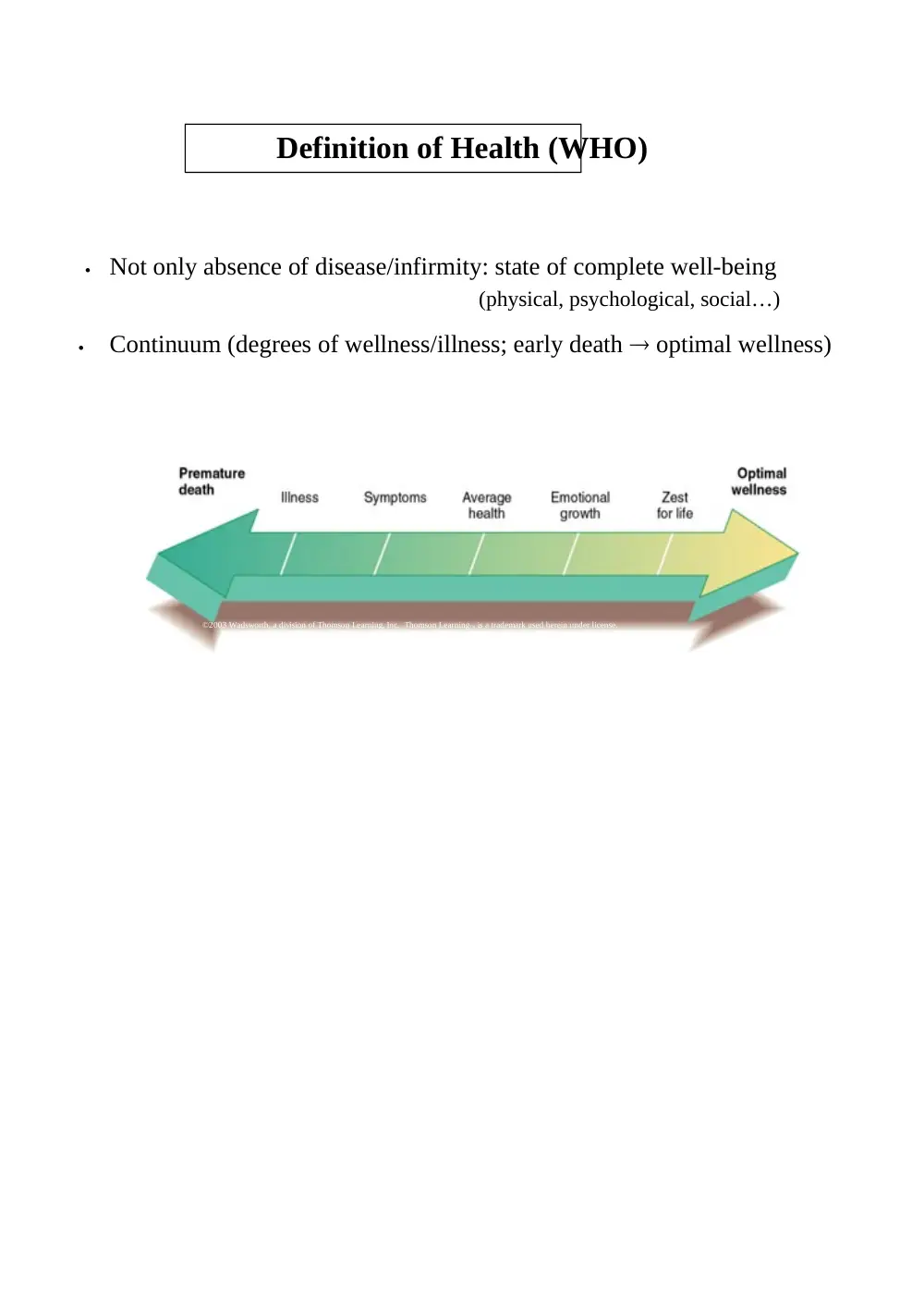
Definition of Health (WHO)
Not only absence of disease/infirmity: state of complete well-being
Continuum (degrees of wellness/illness; early death optimal wellness)
(physical, psychological, social…)
©2003 Wadsworth, a division of Thomson Learning, Inc. Thomson Learning™ is a trademark used herein under license.
Health Components
1. Physical Health
Positive steps towards optimal health
- Adequate nutrition
- Regular exercise
-Avoiding harmful behaviors & substances
- Monitoring of early signs of sickness
- Protection from accidents
(excess sun, unsufficient sleep) (drugs, alcohol, tobacco)
2. Psychological Health
Refers to both
- Emotional state (feelings and moods)
adaptability to circumstances
development of sense of meaning of life
compassion, unselfishness
- Mental state (thoughts, perception of reality & response to it)
ability to function and carry out responsibilities
rational, logical thought processes
Is closely associated to physical health
- Can enhance wellness or trigger/worsen/prolong illness
- Can be disrupted by chronic illness and disability
3. Spiritual Health
Spirituality
- Not only belonging to a formal religion
- Believing in some meaning/order/higher power in the universe
Power of spirituality on physical and mental health
- Less substance abuse
- Lower rates of depression and anxiety
- Quicker recovery from injury or illness
- Longer life expectancy
4. Social Health
Ability to interact effectively with other people
- Developing satisfying relationships
- Participating in one’s community
Affects physical health
- Social isolation risk of sickness/mortality
5. Intellectual Health
Ability to think and learn from life experience
- Openness to new ideas
- Critical thinking skills
Ability to learn/evaluate health information is a safeguard to wellness
6. Environmental Health
Refers to the impact of the environment on one’s well-being
Includes
- Protection from dangers in air, water, soil & products used
- Preservation of the environment itself
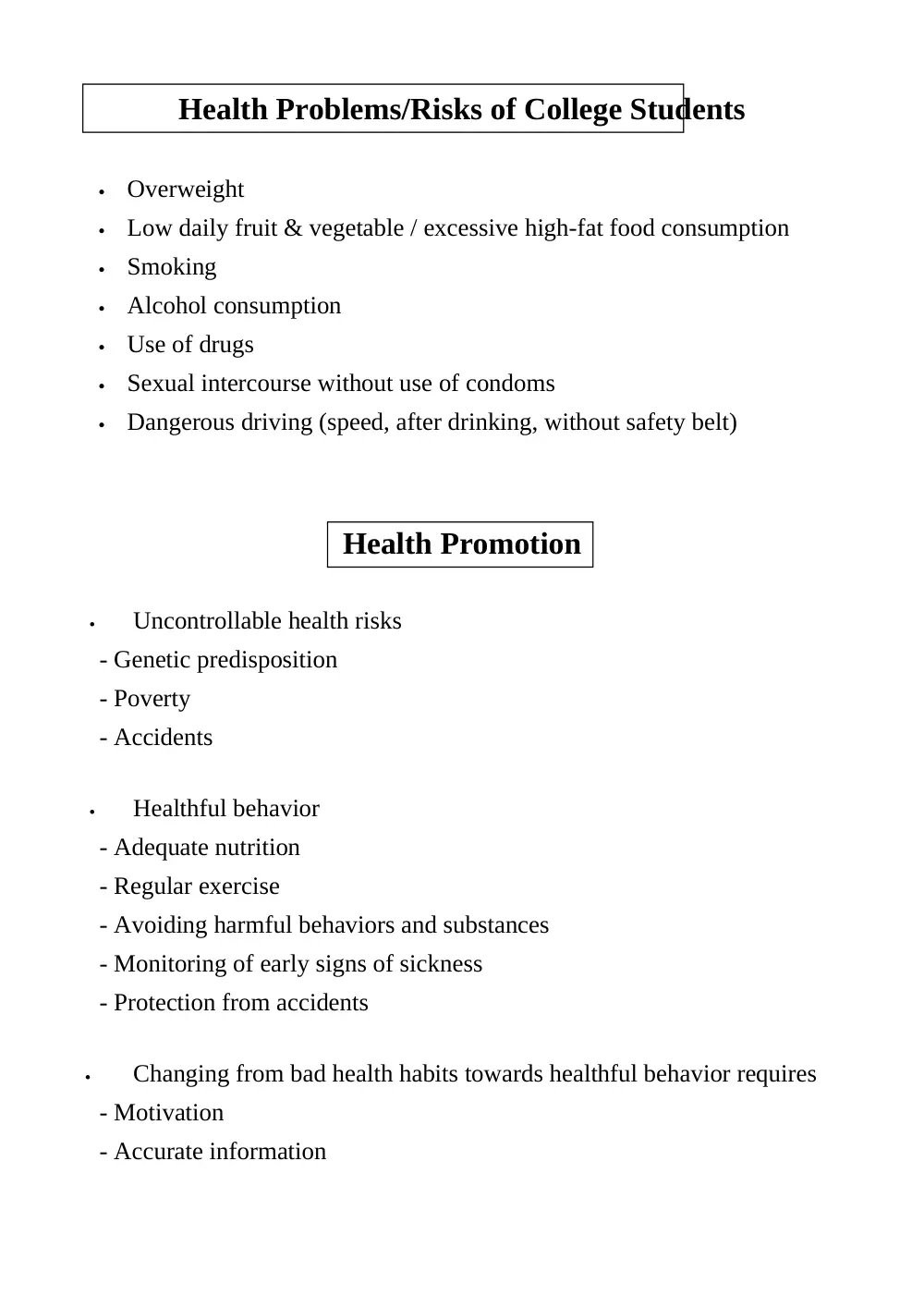
Health Problems/Risks of College Students
Overweight
Low daily fruit & vegetable / excessive high-fat food consumption
Smoking
Alcohol consumption
Use of drugs
Sexual intercourse without use of condoms
Dangerous driving (speed, after drinking, without safety belt)
Health Promotion
Uncontrollable health risks
- Genetic predisposition
- Poverty
- Accidents
Healthful behavior
- Adequate nutrition
- Regular exercise
- Avoiding harmful behaviors and substances
- Monitoring of early signs of sickness
- Protection from accidents
Changing from bad health habits towards healthful behavior requires
- Motivation
- Accurate information
- Workable strategies