
HEA 201 Chapter 7, Fall 2007
Notre Dame University–Louaize · Health Awareness · 15 pages
Showing the first 10 of 15 pages. Download the PDF to see all of it.
More HEA 201 files
Show the text of this chapter
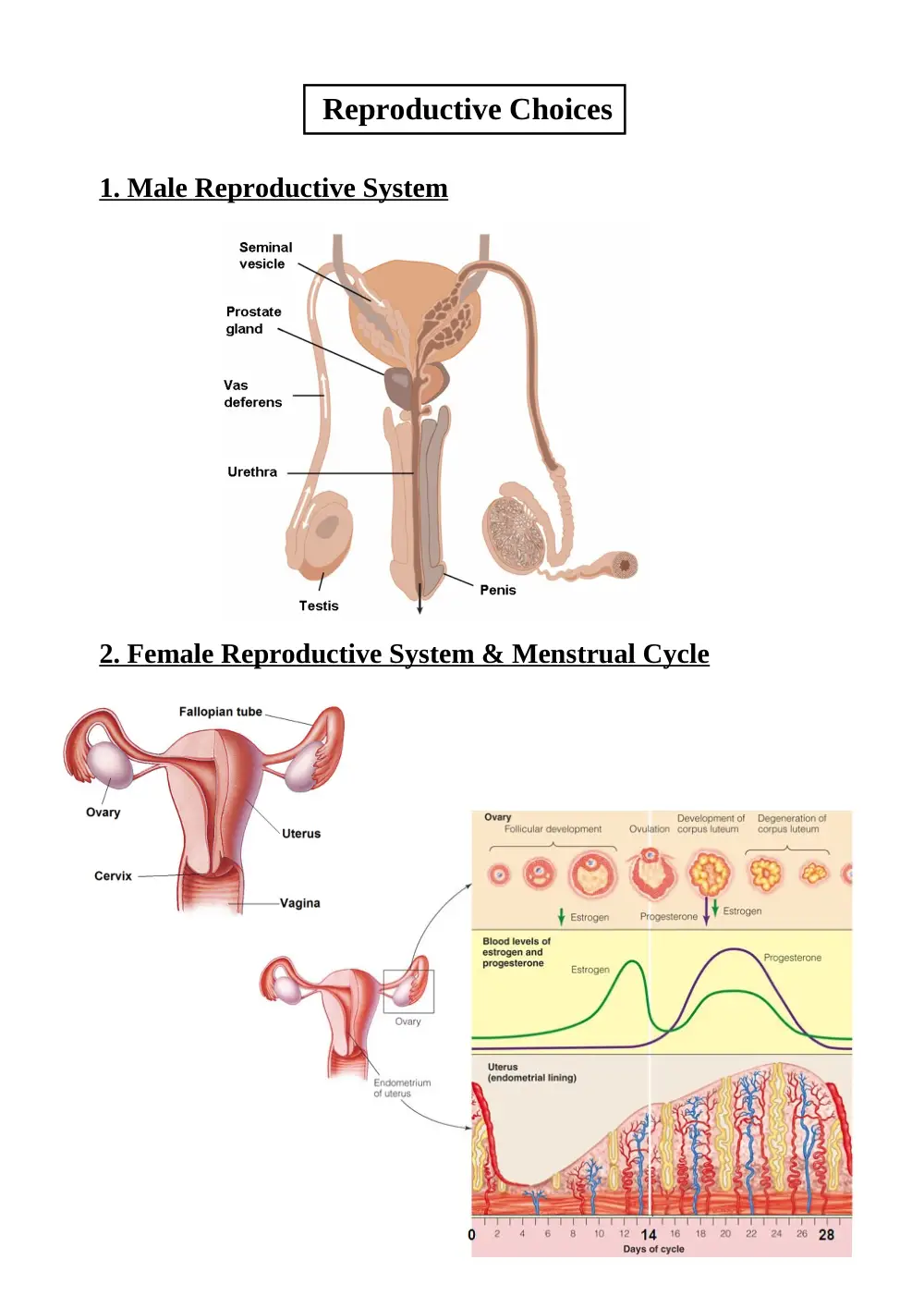
Reproductive Choices
1. Male Reproductive System
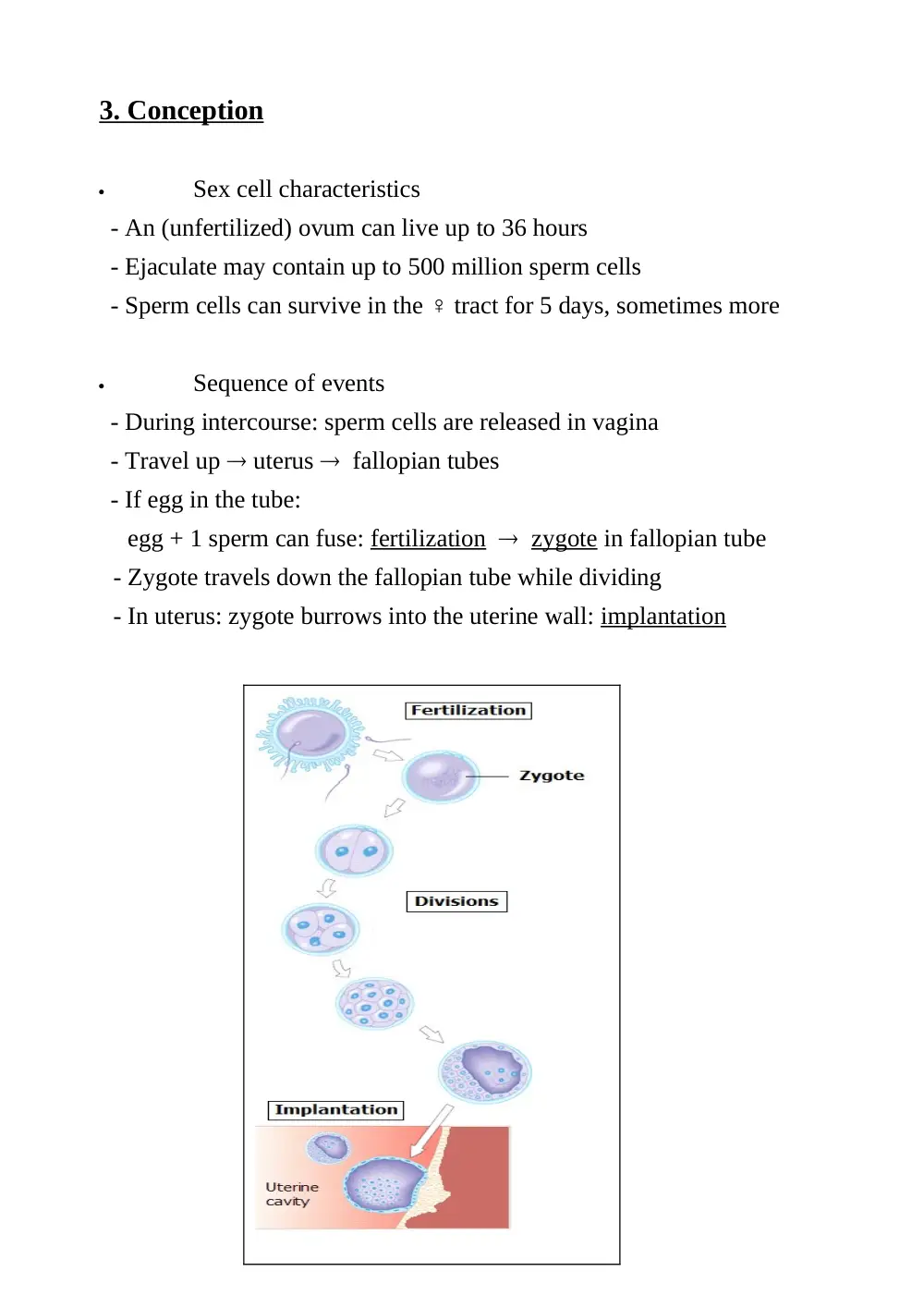
2. Female Reproductive System & Menstrual Cycle
3. Conception
Sex cell characteristics
- An (unfertilized) ovum can live up to 36 hours
- Ejaculate may contain up to 500 million sperm cells
- Sperm cells can survive in the ♀ tract for 5 days, sometimes more
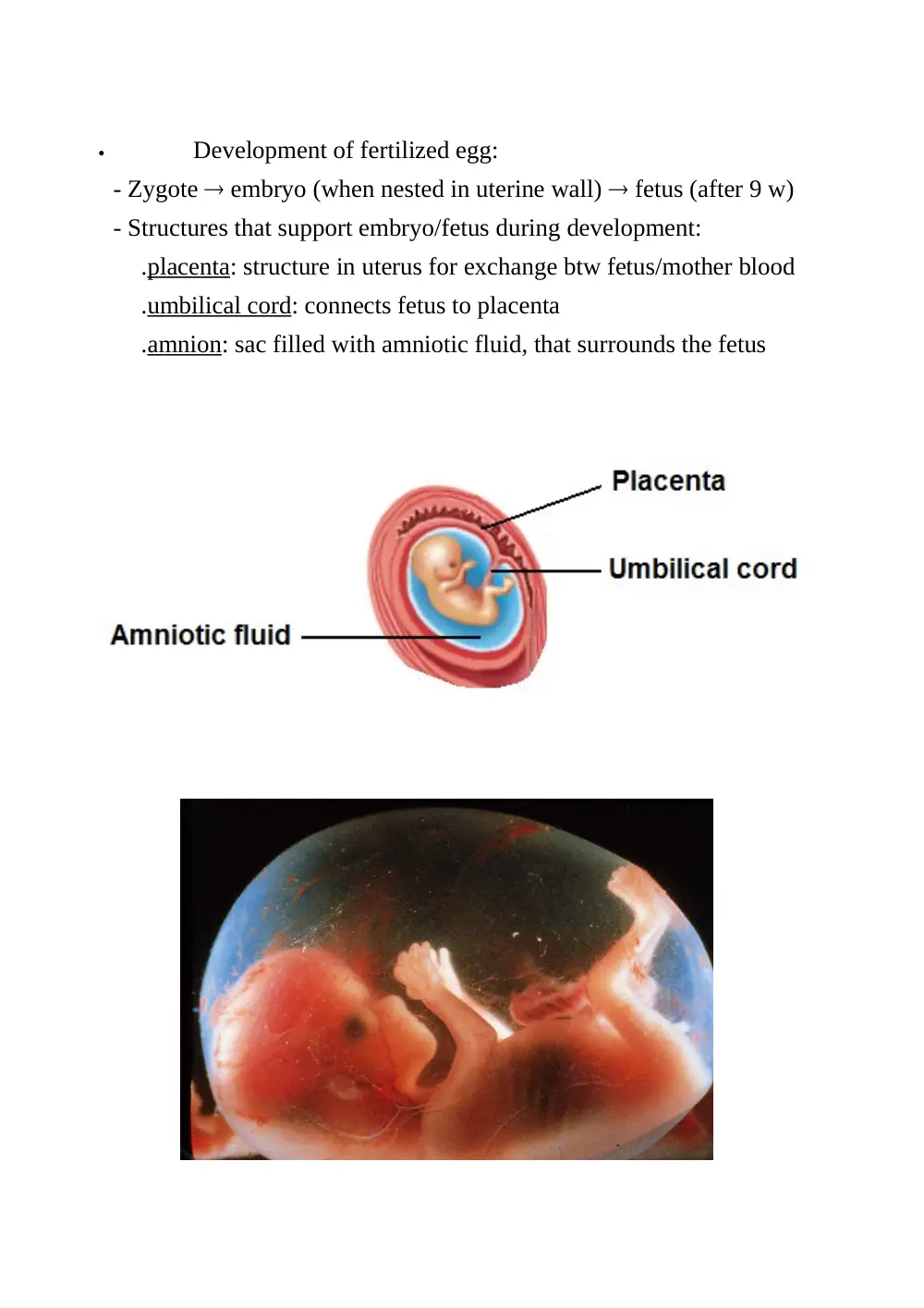
Sequence of events
- During intercourse: sperm cells are released in vagina
- Travel up uterus fallopian tubes
- If egg in the tube:
egg + 1 sperm can fuse: fertilization zygote in fallopian tube
- Zygote travels down the fallopian tube while dividing
- In uterus: zygote burrows into the uterine wall: implantation
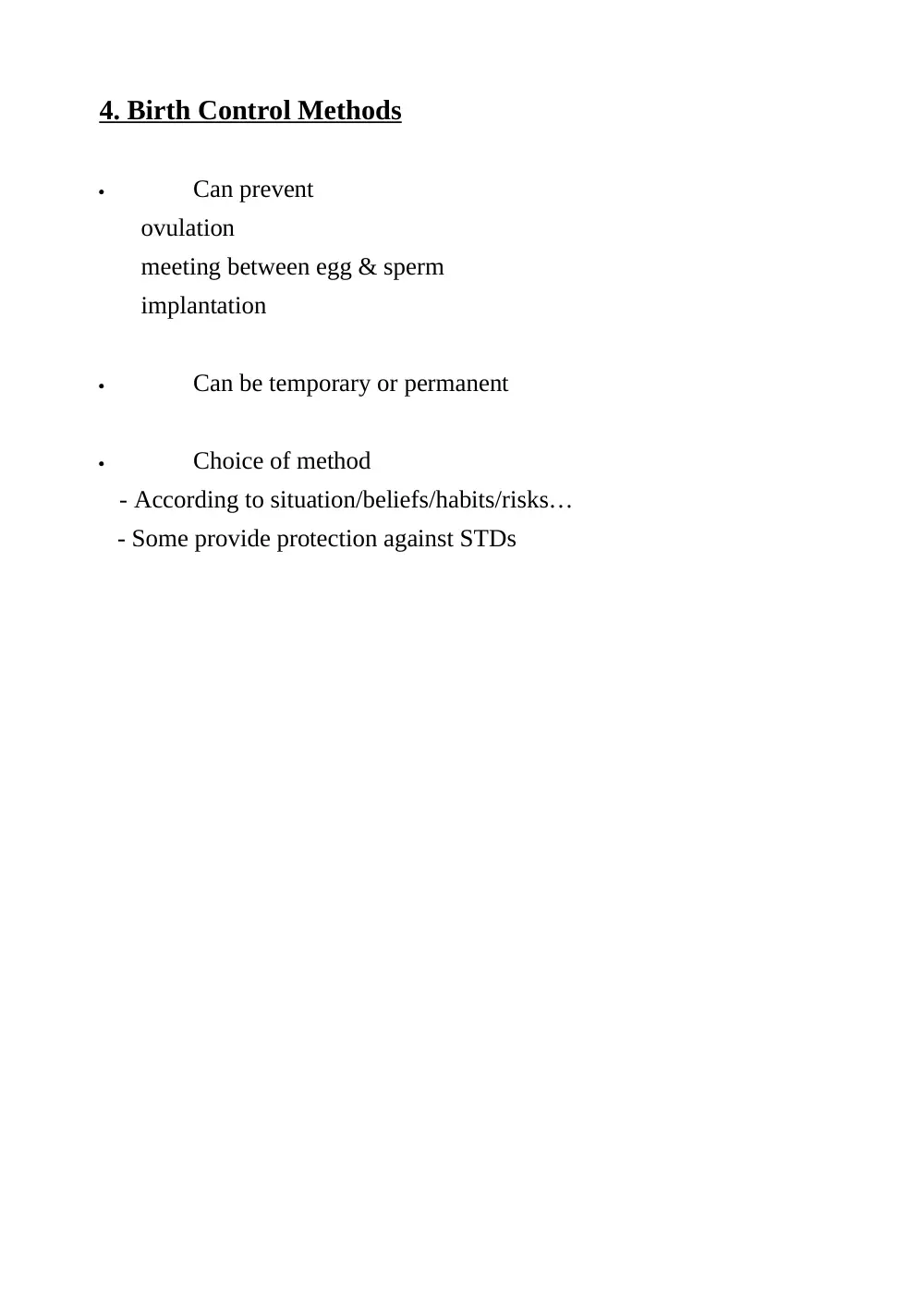
Development of fertilized egg:
- Zygote embryo (when nested in uterine wall) fetus (after 9 w)
- Structures that support embryo/fetus during development:
.placenta: structure in uterus for exchange btw fetus/mother blood
.umbilical cord: connects fetus to placenta
.amnion: sac filled with amniotic fluid, that surrounds the fetus
4. Birth Control Methods
Can prevent
ovulation
meeting between egg & sperm
implantation
Can be temporary or permanent
Choice of method
- According to situation/beliefs/habits/risks…
- Some provide protection against STDs
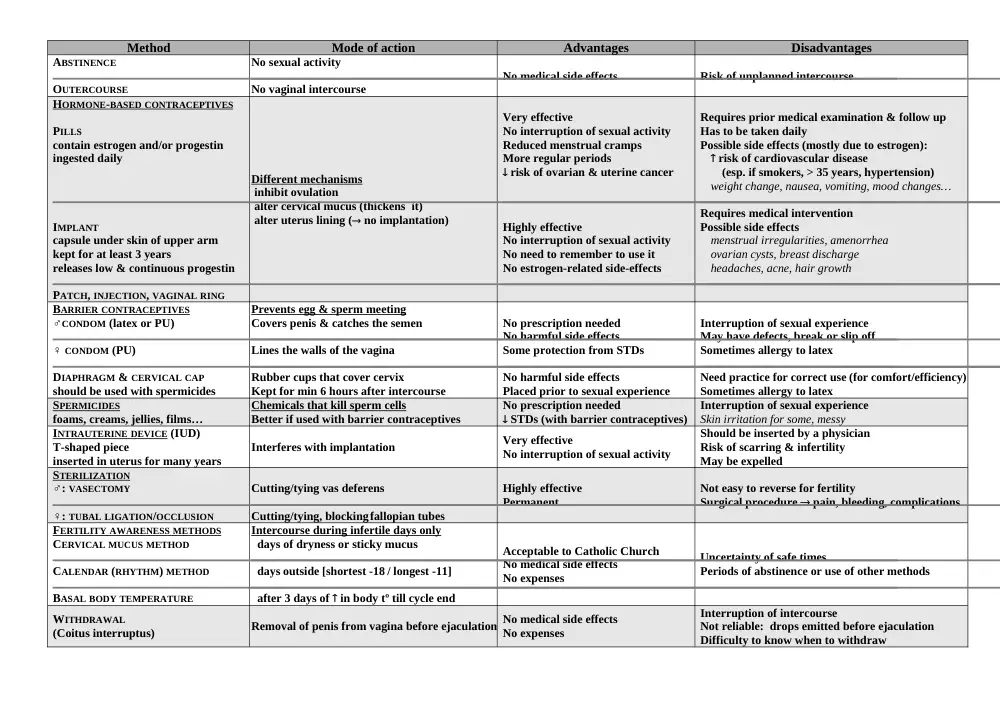
Method
Mode of action
Advantages
Disadvantages
ABSTINENCE
OUTERCOURSE
No sexual activity
No vaginal intercourse
No medical side effects
Risk of unplanned intercourse
HORMONE-BASED CONTRACEPTIVES
PILLS
contain estrogen and/or progestin
ingested daily
IMPLANT
capsule under skin of upper arm
kept for at least 3 years
releases low & continuous progestin
PATCH, INJECTION, VAGINAL RING
Different mechanisms
inhibit ovulation
alter cervical mucus (thickens it)
alter uterus lining ( no implantation)
Very effective
No interruption of sexual activity
Reduced menstrual cramps
More regular periods
risk of ovarian & uterine cancer
Highly effective
No interruption of sexual activity
No need to remember to use it
No estrogen-related side-effects
Requires prior medical examination & follow up
Has to be taken daily
Possible side effects (mostly due to estrogen):
risk of cardiovascular disease
(esp. if smokers, > 35 years, hypertension)
weight change, nausea, vomiting, mood changes…
Requires medical intervention
Possible side effects
menstrual irregularities, amenorrhea
ovarian cysts, breast discharge
headaches, acne, hair growth
BARRIER CONTRACEPTIVES
♂CONDOM (latex or PU)
♀ CONDOM (PU)
DIAPHRAGM & CERVICAL CAP
should be used with spermicides
Prevents egg & sperm meeting
Covers penis & catches the semen
Lines the walls of the vagina
Rubber cups that cover cervix
Kept for min 6 hours after intercourse
No prescription needed
No harmful side effects
Some protection from STDs
No harmful side effects
Placed prior to sexual experience
Interruption of sexual experience
May have defects, break or slip off
Sometimes allergy to latex
Need practice for correct use (for comfort/efficiency)
Sometimes allergy to latex
SPERMICIDES
foams, creams, jellies, films…
Chemicals that kill sperm cells
Better if used with barrier contraceptives
No prescription needed
STDs (with barrier contraceptives)
Interruption of sexual experience
Skin irritation for some, messy
INTRAUTERINE DEVICE
(IUD)
T-shaped piece
inserted in uterus for many years
Interferes with implantation
Very effective
No interruption of sexual activity
Should be inserted by a physician
Risk of scarring & infertility
May be expelled
STERILIZATION
♂: VASECTOMY
♀: TUBAL LIGATION/OCCLUSION
Cutting/tying vas deferens
Cutting/tying, blocking fallopian tubes
Highly effective
Permanent
Not easy to reverse for fertility
Surgical procedure pain, bleeding, complications
FERTILITY AWARENESS METHODS
CERVICAL MUCUS METHOD
CALENDAR (RHYTHM) METHOD
BASAL BODY TEMPERATURE
Intercourse during infertile days only
days of dryness or sticky mucus
days outside [shortest -18 / longest -11]
after 3 days of in body tº till cycle end
Acceptable to Catholic Church
No medical side effects
No expenses
Uncertainty of safe times
Periods of abstinence or use of other methods
WITHDRAWAL
(Coitus interruptus)
Removal of penis from vagina before ejaculation No medical side effects
No expenses
Interruption of intercourse
Not reliable: drops emitted before ejaculation
Difficulty to know when to withdraw
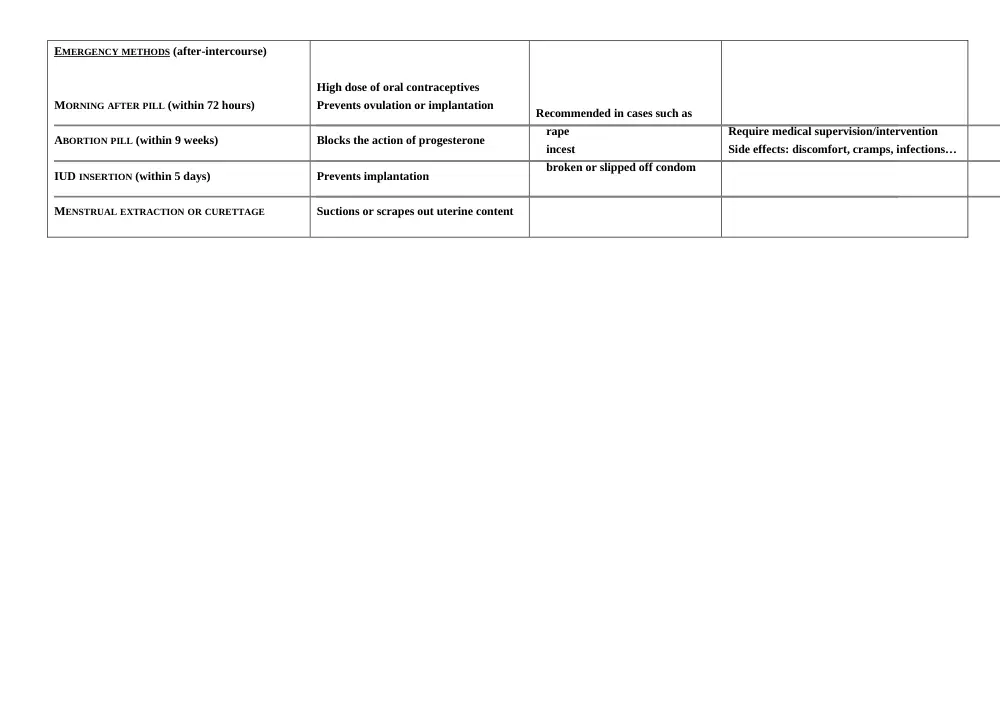
EMERGENCY METHODS
(after-intercourse)
MORNING AFTER PILL (within 72 hours)
ABORTION PILL (within 9 weeks)
IUD INSERTION (within 5 days)
MENSTRUAL EXTRACTION OR CURETTAGE
High dose of oral contraceptives
Prevents ovulation or implantation
Blocks the action of progesterone
Prevents implantation
Suctions or scrapes out uterine content
Recommended in cases such as
rape
incest
broken or slipped off condom
Require medical supervision/intervention
Side effects: discomfort, cramps, infections…
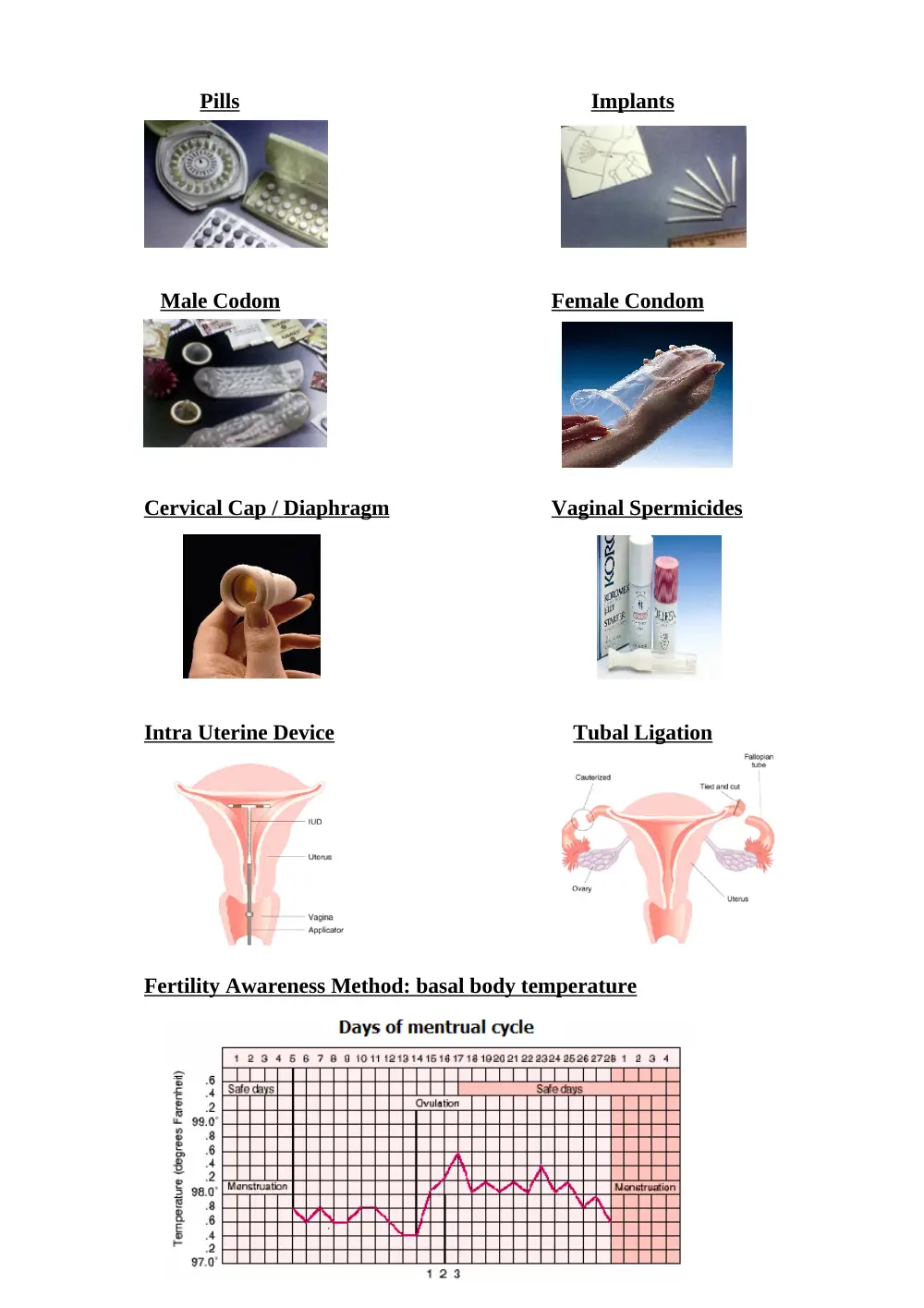
Pills
Implants
Male Codom
Female Condom
Cervical Cap /
Diaphragm
Vaginal Spermicides
Intra Uterine Device
Tubal Ligation
Fertility Awareness Method: basal body temperature
5. Pregnancy
Preconception care
- Crucial for full-size, full-term, healthy infant
- Risks
smoking
drinking alcohol
using drugs
overweight/underweight
suffering from unrecognized infections and illnesses
exposure to environmental toxins
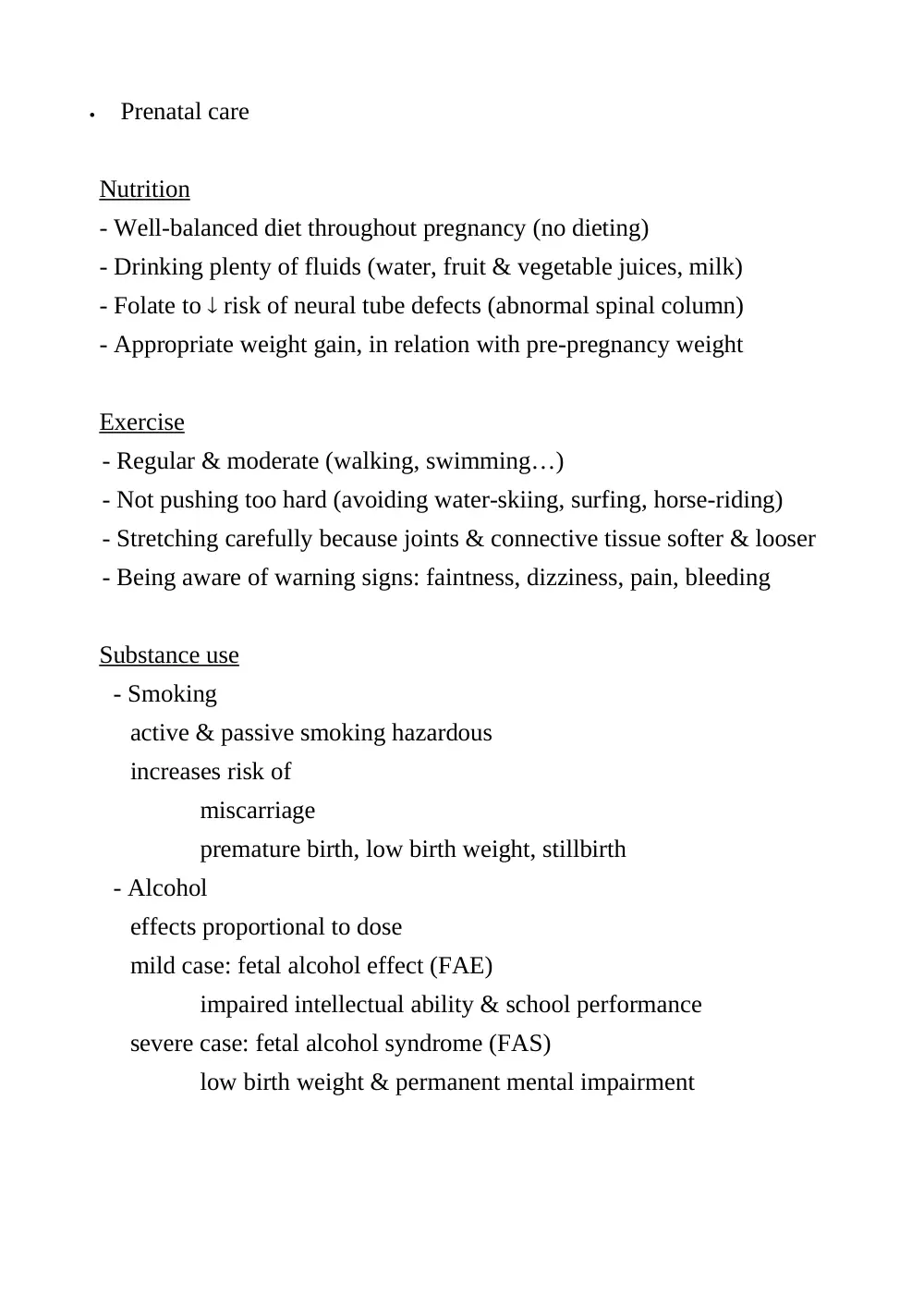
Prenatal care
Nutrition
- Well-balanced diet throughout pregnancy (no dieting)
- Drinking plenty of fluids (water, fruit & vegetable juices, milk)
- Folate to risk of neural tube defects (abnormal spinal column)
- Appropriate weight gain, in relation with pre-pregnancy weight
Exercise
- Regular & moderate (walking, swimming…)
- Not pushing too hard (avoiding water-skiing, surfing, horse-riding)
- Stretching carefully because joints & connective tissue softer & looser
- Being aware of warning signs: faintness, dizziness, pain, bleeding
Substance use
- Smoking
active & passive smoking hazardous
increases risk of
miscarriage
premature birth, low birth weight, stillbirth
- Alcohol
effects proportional to dose
mild case: fetal alcohol effect (FAE)
impaired intellectual ability & school performance
severe case: fetal alcohol syndrome (FAS)
low birth weight & permanent mental impairment
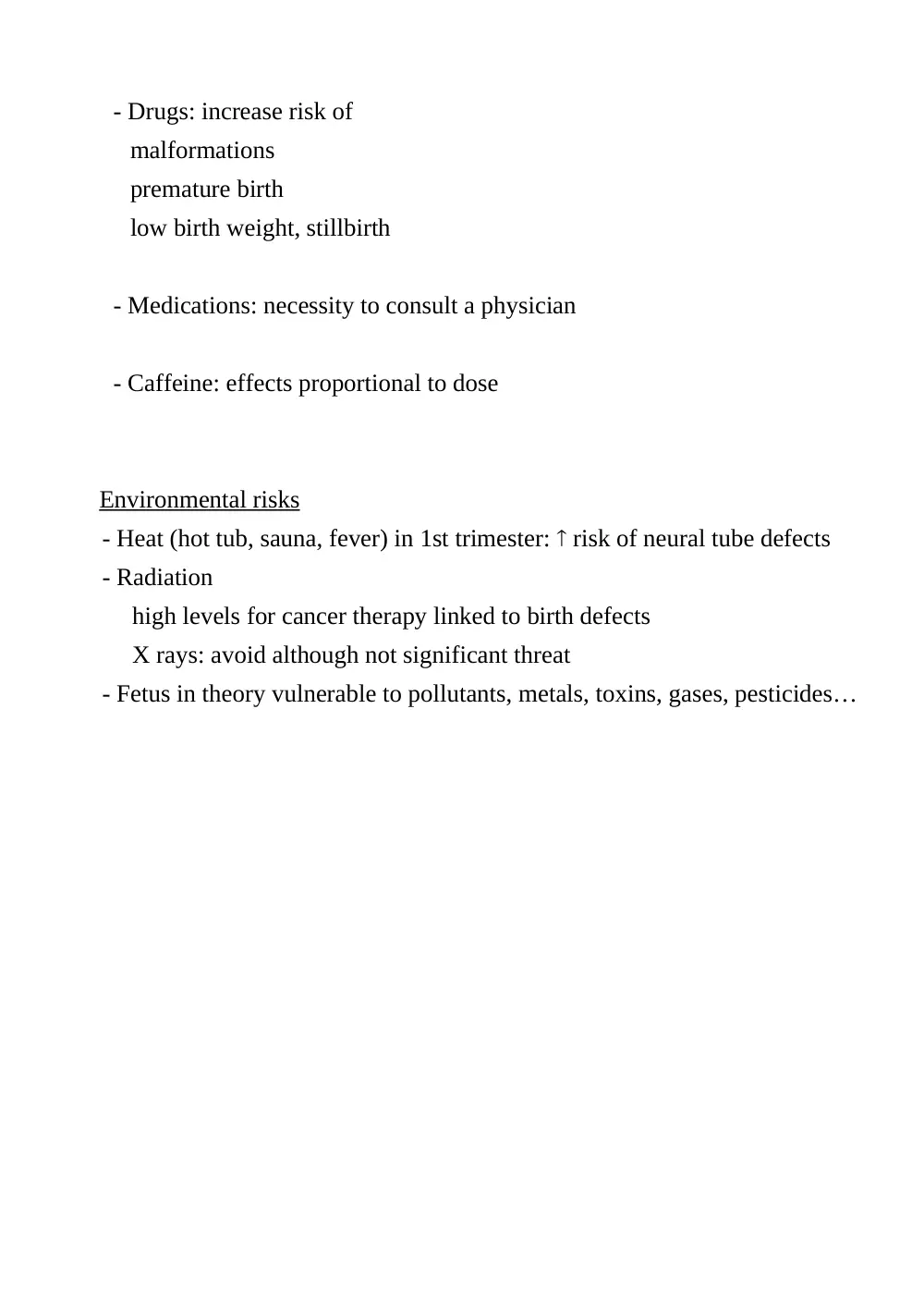
- Drugs: increase risk of
malformations
premature birth
low birth weight, stillbirth
- Medications: necessity to consult a physician
- Caffeine: effects proportional to dose
Environmental risks
- Heat (hot tub, sauna, fever) in 1st trimester: risk of neural tube defects
- Radiation
high levels for cancer therapy linked to birth defects
X rays: avoid although not significant threat
- Fetus in theory vulnerable to pollutants, metals, toxins, gases, pesticides…
Prenatal testing: for identification of defects
- Ultrasonography (no known risk)
use of sound waves to produce an image of the fetus on a video screen
- Amniocentesis (1% risk of miscarriage)
recommended if mother > 35 y, or known carrier of genetic disorder
removing some amniotic fluid (contains cells shed by the fetus)
culturing cells checking for chromosomal defects
- Chorionic villi sampling (1% risk of miscarriage)
suctioning a small sample of fetal placental tissue
analysis for chromosomal defects
can be performed than amniocentesis
Complications
- Ectopic pregnancy: zygote remains in fallopian tube
possible causes: some STDs, use of IUD
symptoms include:bleeding, lower abdominal pain
treatment: surgical
can lead to permanent infertility (irreversible fallopian tube damage)
- Miscarriage: spontaneous abortion
emotionally devastating
causes: genetic, anatomic, hormonal, infectious, autoimmune
Pregnancy and age:
Above 35: risk of birth defects due to chromosome abnormalities
(e.g. Down syndrome)
Infections: major ones
Rubella
leads to birth defects
women should be vaccinated at least 3 months prior to conception
HIV
transmissible to baby during pregnancy, at birth or during lactation
Toxoplasmosis
transmitted by pets (cats) or by consumption of undercooked meat
effects on fetus: brain and retina damage, death
6. Infertility
Failure to conceive after 1 year of unprotected intercourse in young couples
Male
- Linked to sperm quality (inactive, misshapen) or quantity (< 20.106/ml)
- Common causes
genetic
hormonal
blockage of a sperm duct
varicocele (enlarged vein too much blood testicle too warm)
Female
- Common causes
age
genetic
hormonal
blocked fallopian tubes
immune reaction to a man’s sperm
uterine defects
cervical mucus problems
Assisted reproductive technology
- Infertility treatments include
microsurgery (e.g. to open blocked ducts)
hormonal treatments
- Artificial insemination (when ♂ is infertile)
introduction of sperm (from sperm bank) into vagina by artificial means
- In vitro fertilization (e.g. when ♀ has damaged fallopian tubes)
removal of egg from ovary just before ovulation
egg and sperm placed in vial fusion occurs in vitro
few division steps
embryos inserted in uterus development continues
extra embryos can be frozen for later implantation
- Gestational surrogacy (when ♀ cannot maintain pregnancy)
embryo conceived in vitro
implanted in another ♀ uterus (hormonally treated ready for gestation)