
HEA 201 Chapter 6, Fall 2007
Notre Dame University–Louaize · Health Awareness · 7 pages


More HEA 201 files
Show the text of this chapter
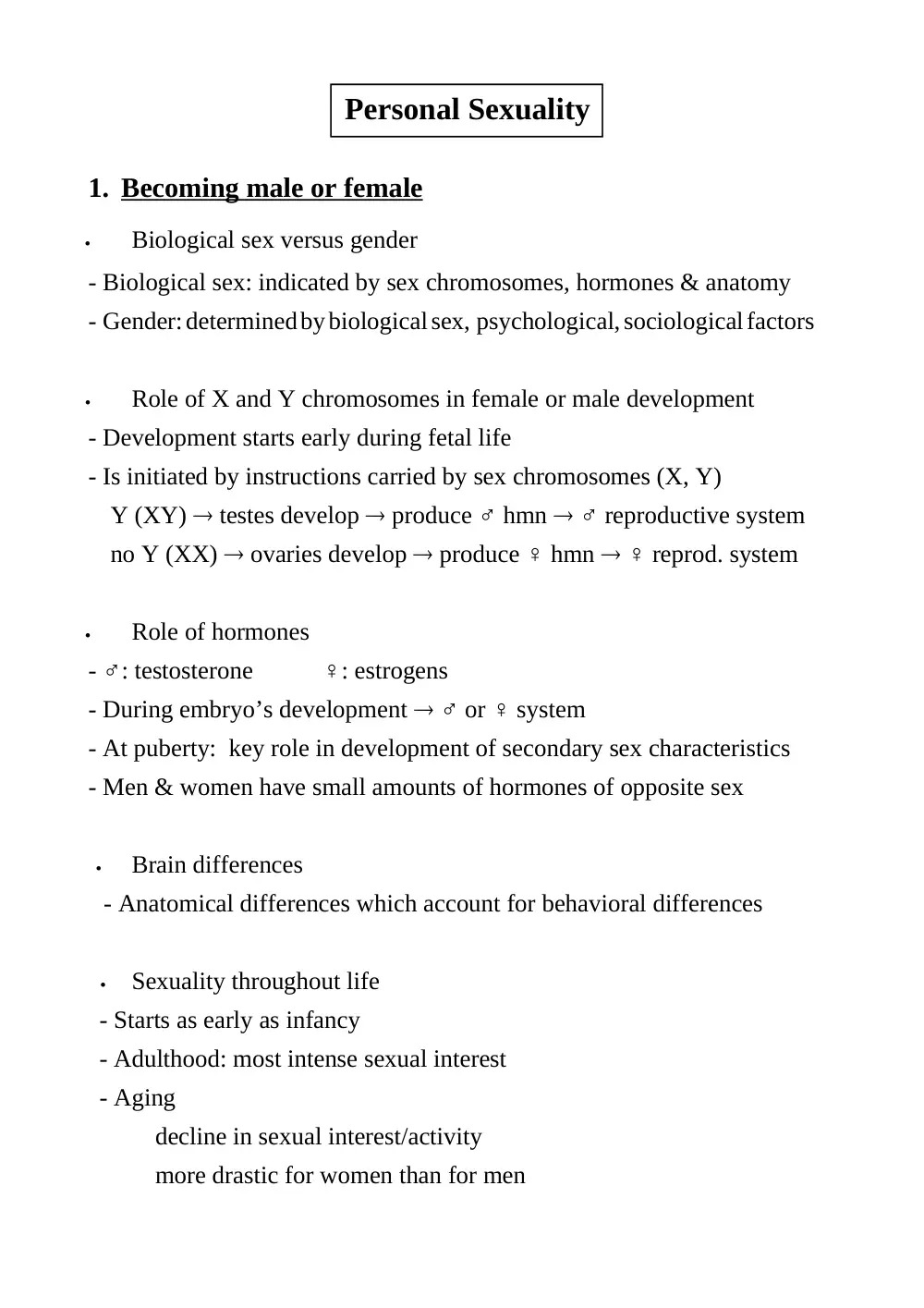
Personal Sexuality
1. Becoming male or female
Biological sex versus gender
- Biological sex: indicated by sex chromosomes, hormones & anatomy
- Gender: determined by biological sex, psychological, sociological factors
Role of X and Y chromosomes in female or male development
- Development starts early during fetal life
- Is initiated by instructions carried by sex chromosomes (X, Y)
Y (XY) testes develop produce ♂ hmn ♂ reproductive system
no Y (XX) ovaries develop produce ♀ hmn ♀ reprod. system
Role of hormones
- ♂: testosterone
♀: estrogens
- During embryo’s development ♂ or ♀ system
- At puberty: key role in development of secondary sex characteristics
- Men & women have small amounts of hormones of opposite sex
Brain differences
- Anatomical differences which account for behavioral differences
Sexuality throughout life
- Starts as early as infancy
- Adulthood: most intense sexual interest
- Aging
decline in sexual interest/activity
more drastic for women than for men
2. Female sexual health issues
Premenstrual syndrome (PMS)
- Physiological disorder that manifest itself as
bodily discomfort
emotional distress
- Can start as soon as ovulation
- Possible causes
hormonal imbalances
changes in brain chemicals
social & environmental factors (mostly stress)
- Symptoms include
mood changes
water retention
digestive problems
appetite changes, cravings (usually for sweet & salt)
- Treatment (depends on specific symptoms) e.g.
diuretics: for water retention
relaxation techniques: for mood swings
Dysmenorrhea
- Discomfort during menstruation, including
abdominal cramps, back & leg pain
water retention
depression
- Probable cause: excessive prostaglandin production during menstruation
- Treatment: prostaglandin inhibitors & exercise
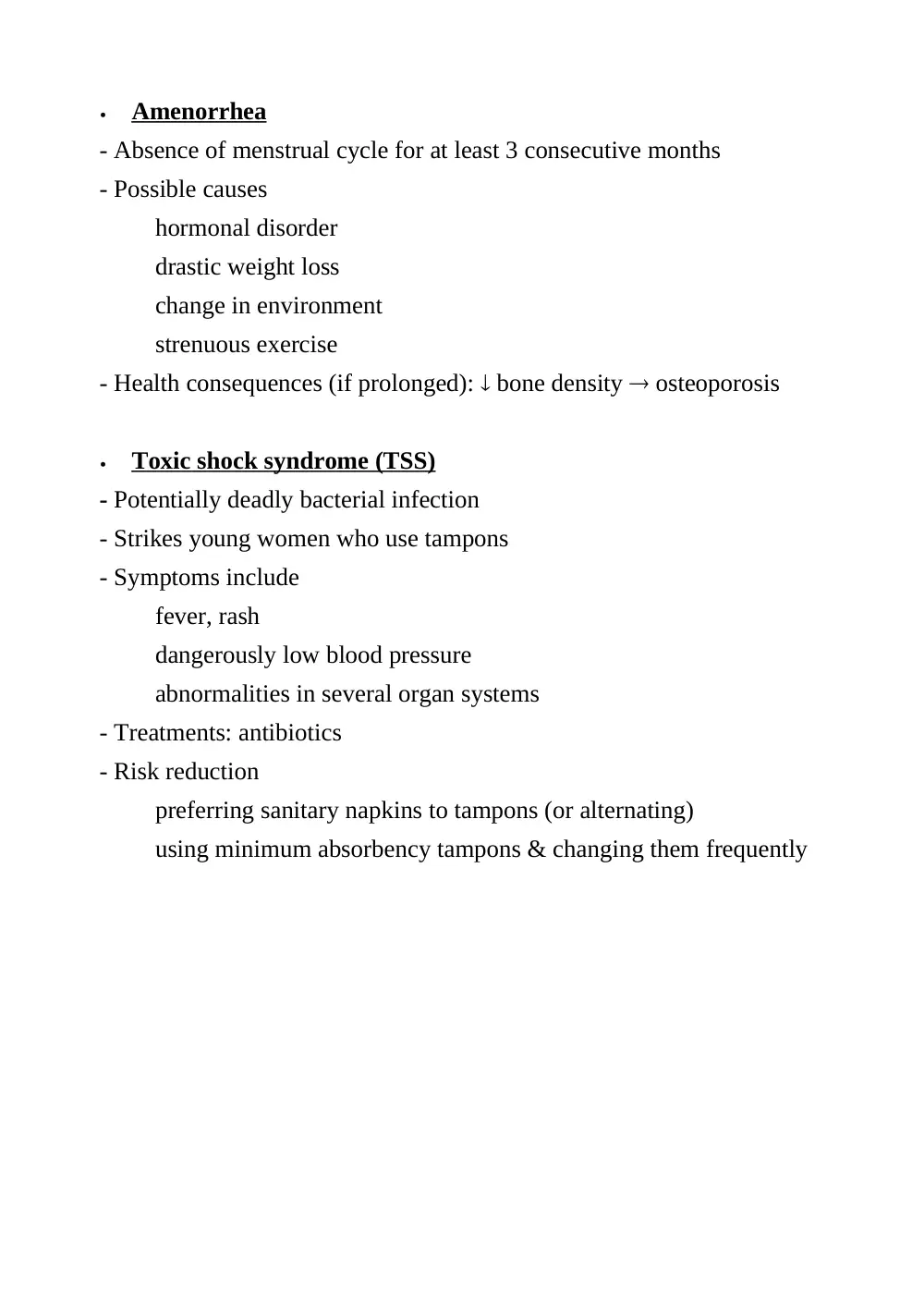
Amenorrhea
- Absence of menstrual cycle for at least 3 consecutive months
- Possible causes
hormonal disorder
drastic weight loss
change in environment
strenuous exercise
- Health consequences (if prolonged): bone density osteoporosis
Toxic shock syndrome (TSS)
- Potentially deadly bacterial infection
- Strikes young women who use tampons
- Symptoms include
fever, rash
dangerously low blood pressure
abnormalities in several organ systems
- Treatments: antibiotics
- Risk reduction
preferring sanitary napkins to tampons (or alternating)
using minimum absorbency tampons & changing them frequently
Perimenopause & menopause
- Occur between age 45 and 54
- Perimenopause: period from first irregular cycles to last menstruation
- Menopause: complete cessation of menstrual periods (generally age 50)
- Symptoms include
hot flashes
hair loss
breast or ovarian cysts
mood swings
dry skin, mouth & genital tissues
- Cause: decline in estrogen levels
- Associated health hazards: atherosclerosis & osteoporosis
- Treatment: hormone-replacement therapy (has pros & cons)
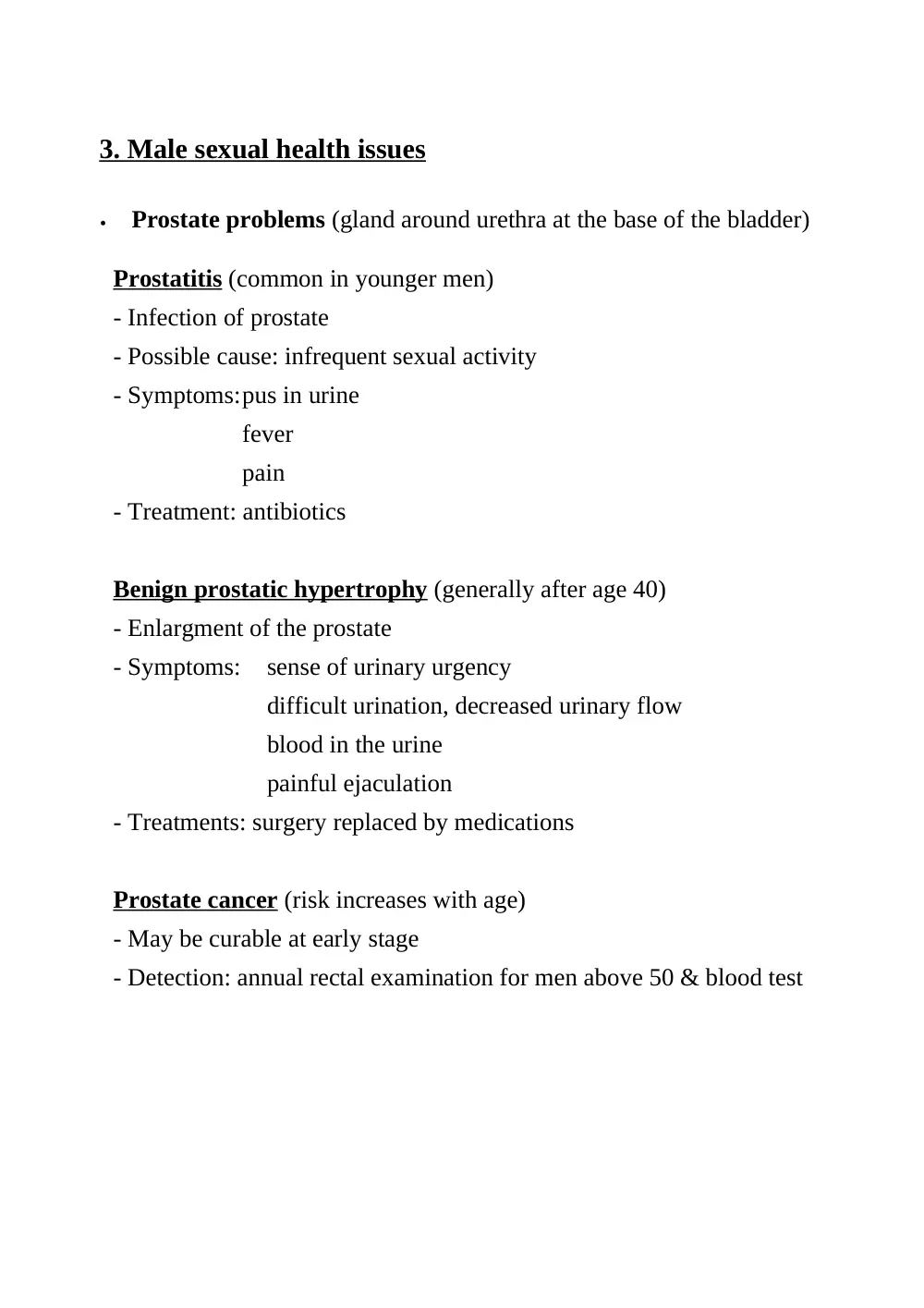
3. Male sexual health issues
Prostate problems (gland around urethra at the base of the bladder)
Prostatitis (common in younger men)
- Infection of prostate
- Possible cause: infrequent sexual activity
- Symptoms:pus in urine
fever
pain
- Treatment: antibiotics
Benign prostatic hypertrophy (generally after age 40)
- Enlargment of the prostate
- Symptoms:
sense of urinary urgency
difficult urination, decreased urinary flow
blood in the urine
painful ejaculation
- Treatments: surgery replaced by medications
Prostate cancer (risk increases with age)
- May be curable at early stage
- Detection: annual rectal examination for men above 50 & blood test
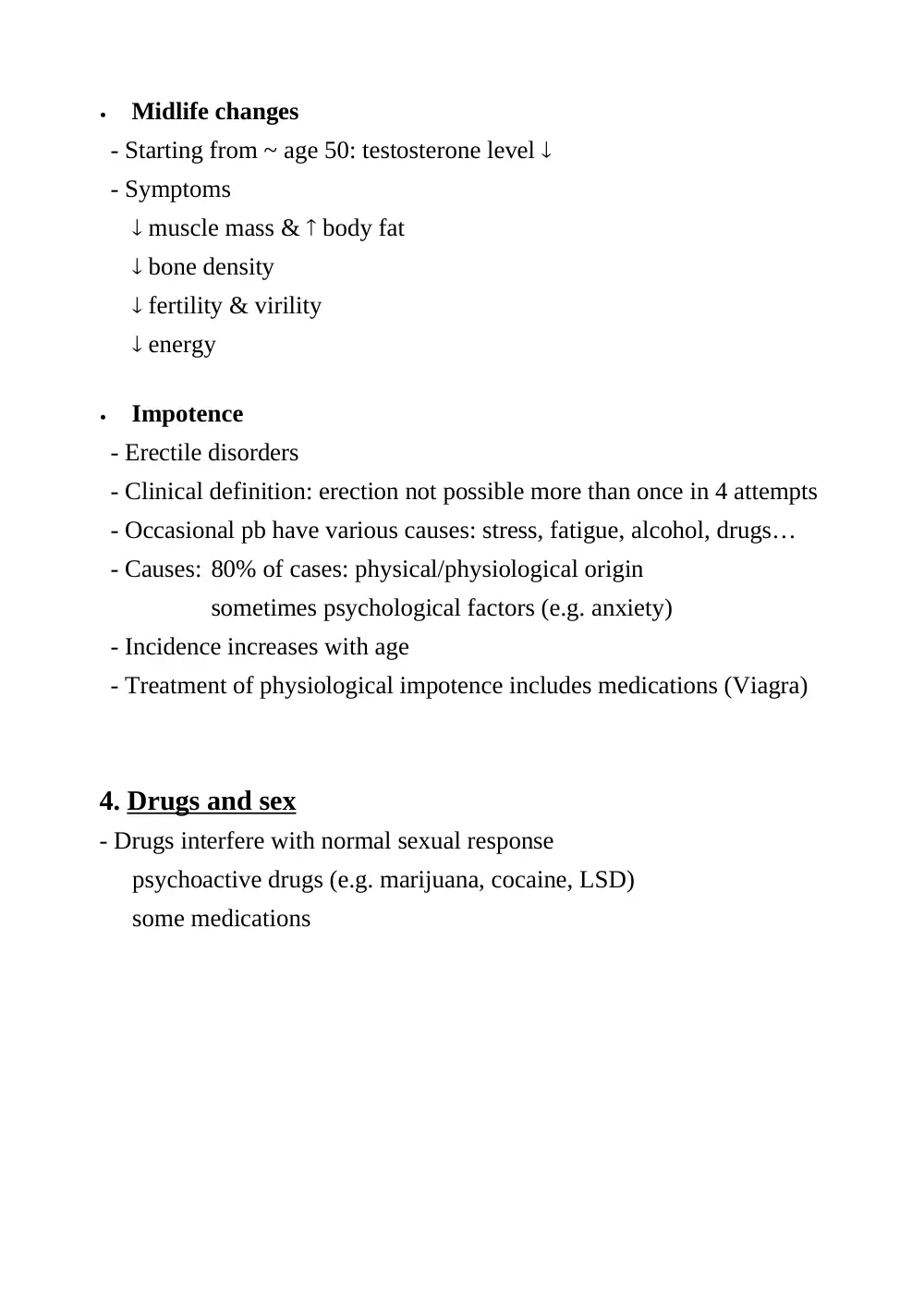
Midlife changes
- Starting from ~ age 50: testosterone level
- Symptoms
muscle mass & body fat
bone density
fertility & virility
energy
Impotence
- Erectile disorders
- Clinical definition: erection not possible more than once in 4 attempts
- Occasional pb have various causes: stress, fatigue, alcohol, drugs…
- Causes: 80% of cases: physical/physiological origin
sometimes psychological factors (e.g. anxiety)
- Incidence increases with age
- Treatment of physiological impotence includes medications (Viagra)
4. Drugs and sex
- Drugs interfere with normal sexual response
psychoactive drugs (e.g. marijuana, cocaine, LSD)
some medications
3. Sexual Diversity
Sexual orientation
- Attraction to members of a certain sex
- Determined by physiological, psychological and social factors
- Types
Heterosexuality: attraction to members of opposite sex
Homosexuality: attraction to members of same sex
called gays (mostly men), lesbians (women)
Bisexuality: attraction to members of both sexes
Atypical behaviors (socially unacceptable)
- Sexual addiction/compulsion: intense/chronic preoccupation with sex
Can be male or female & have different sexual orientations
Relieve Θ feelings only through sex
generally socially unacceptable activities
includes sex with prostitutes, pornography, voyeurism, rape …
- Sexual deviations (predominantly male behaviors)
Pedophilia: sex between an adult & a child
Zoophilia: sex with an animal
Necrophilia: sex with a dead body
Fetishism: sexual pleasure from object or asexual body part
Transvestitism: wearing clothing of opposite sex
Exhibitionism: exposing one’s genitals to an unwilling observer
Voyeurism: observing people undressing or in sexual activity
Sadism: sexual pleasure by inflicting physical or psychological pain
Masochism: sexual pleasure by suffering physical/psychological pain
- Treatment: psychiatric therapy, medications