
HEA 201 Chapter 9, Fall 2007
Notre Dame University–Louaize · Health Awareness · 8 pages


More HEA 201 files
Show the text of this chapter
Cardiovascular Diseases
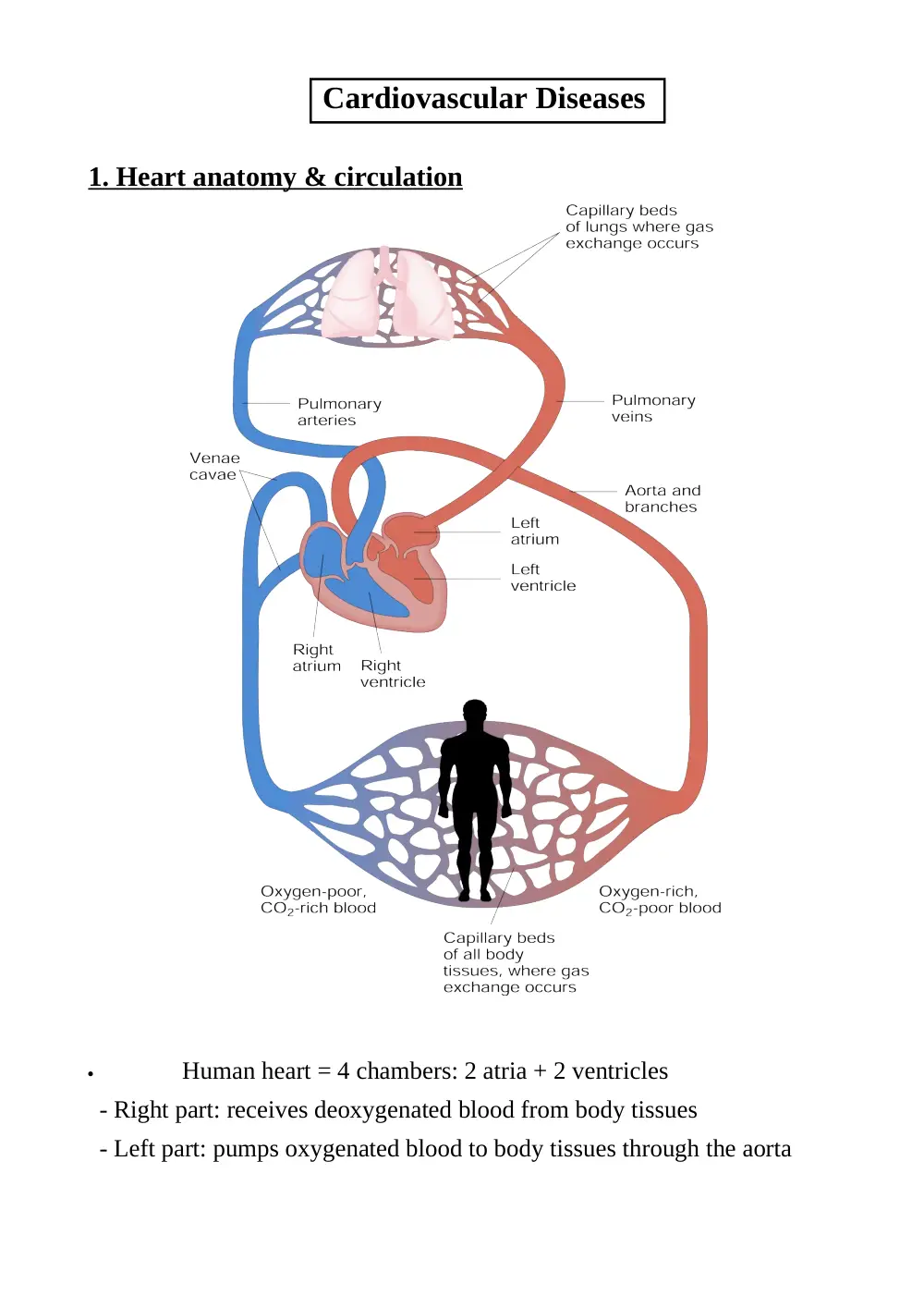
1. Heart anatomy & circulation
Human heart = 4 chambers: 2 atria + 2 ventricles
- Right part: receives deoxygenated blood from body tissues
- Left part: pumps oxygenated blood to body tissues through the aorta
2. Cardiovascular diseases
Hypertension
Blood pressure = result of contraction & resistance of vessels
Reading: systolic ( contracts) / diastolic ( relaxes), in mm Hg
Hypertension: blood pressure, e.g. because of blood vessel
constriction
Consequences of hypertension
- Extra effort of the heart
must work harder to pump enough blood in narrowed vessels
may lead to heart failure
- Damage to vessels
damage of delicate tiny vessels in eye, kidney, brain…
rough spots on which fat can start depositing atherosclerosis
( diameter)
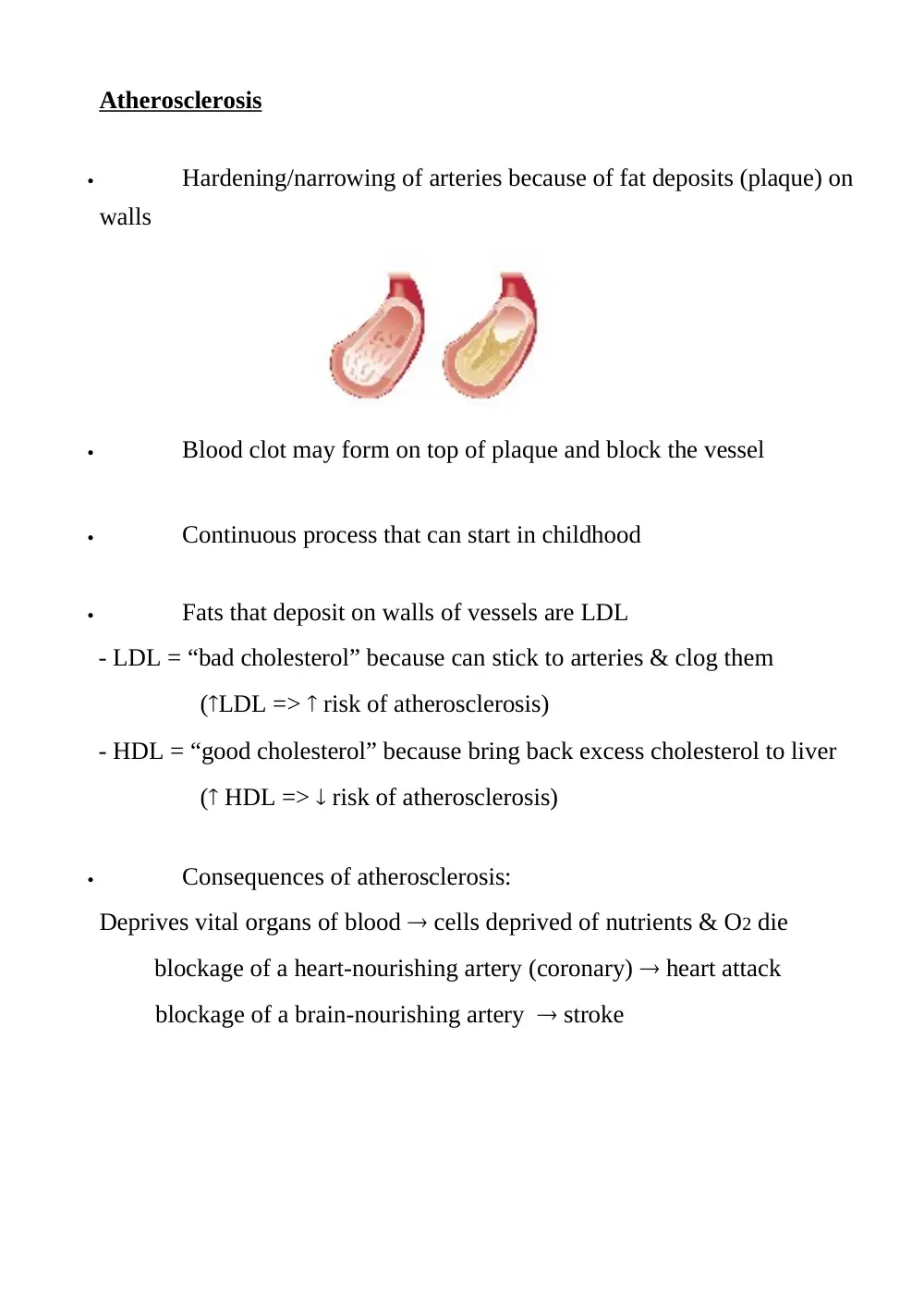
Atherosclerosis
Hardening/narrowing of arteries because of fat deposits (plaque) on
walls
Blood clot may form on top of plaque and block the vessel
Continuous process that can start in childhood
Fats that deposit on walls of vessels are LDL
- LDL = “bad cholesterol” because can stick to arteries & clog them
(LDL => risk of atherosclerosis)
- HDL = “good cholesterol” because bring back excess cholesterol to liver
( HDL => risk of atherosclerosis)
Consequences of atherosclerosis:
Deprives vital organs of blood cells deprived of nutrients & O2 die
blockage of a heart-nourishing artery (coronary) heart attack
blockage of a brain-nourishing artery stroke
Heart attack
Blocked artery O2 & nutrients supply muscle begins to
die
Artery blocked by clot, plaque or spasm
Warning signs include
- Heavy pain/discomfort in the chest
- Pain that may radiate to shoulder, arm, neck, back & jaw
- Dizziness/fainting, shortness of breath, sweating
Stroke
Blood supply to a portion of the brain restricted or blocked cell
death
Cause: clot, rupture of weakened artery…
Damage slight/severe, temporary/permanent depending on
- Size/nature of the damage area
- How much other areas can take over the functions of the damaged area
Possible signs include
- Dimness/loss of vision
- Difficulty speaking or understanding
- Sudden loss of strength, numbness…
3. Risk factors
Sedentarity
Exercise helps: maintaining desirable body weight
lowering LDL/HDL ratio
lowering blood pressure
Overweight
increases blood pressure
increases LDL/HDL ratio
Diet
high SFA (& to a lesser extent, cholesterol) intake: LDL/HDL ratio
low antioxidant intake favor oxidation of LDL more sticky
high sodium intake can increase blood pressure
Smoking
nicotine over-stimulates the heart
CO reduces O2 supply to muscles
substances in smoke damage walls of arteries & LDL/HDL ratio
increases blood clotting
Age
cholesterol plaques build up over decades
heart function declines with age
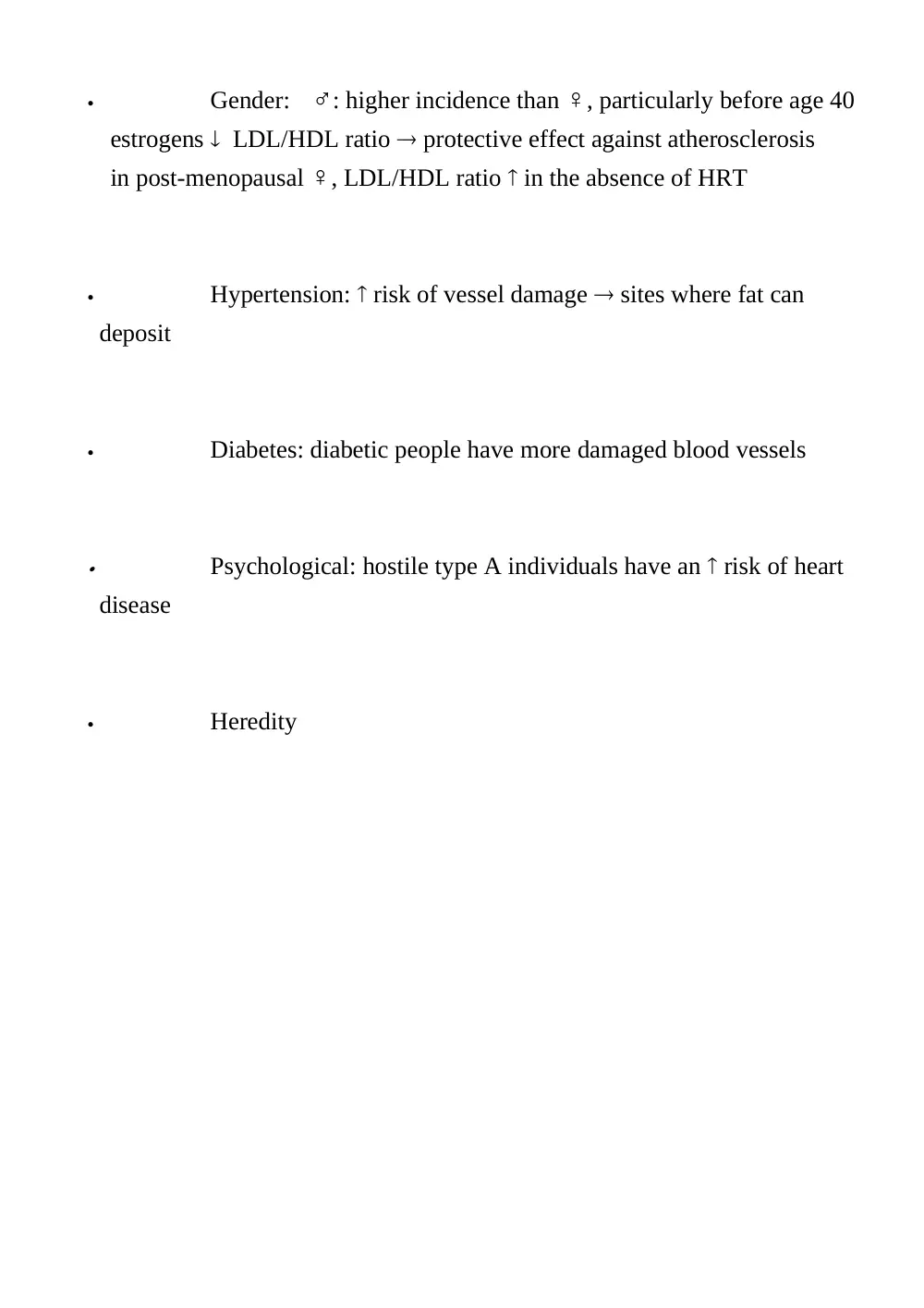
Gender: ♂: higher incidence than ♀, particularly before age 40
estrogens LDL/HDL ratio protective effect against atherosclerosis
in post-menopausal ♀, LDL/HDL ratio in the absence of HRT
Hypertension: risk of vessel damage sites where fat can
deposit
Diabetes: diabetic people have more damaged blood vessels
Psychological: hostile type A individuals have an risk of heart
disease
Heredity
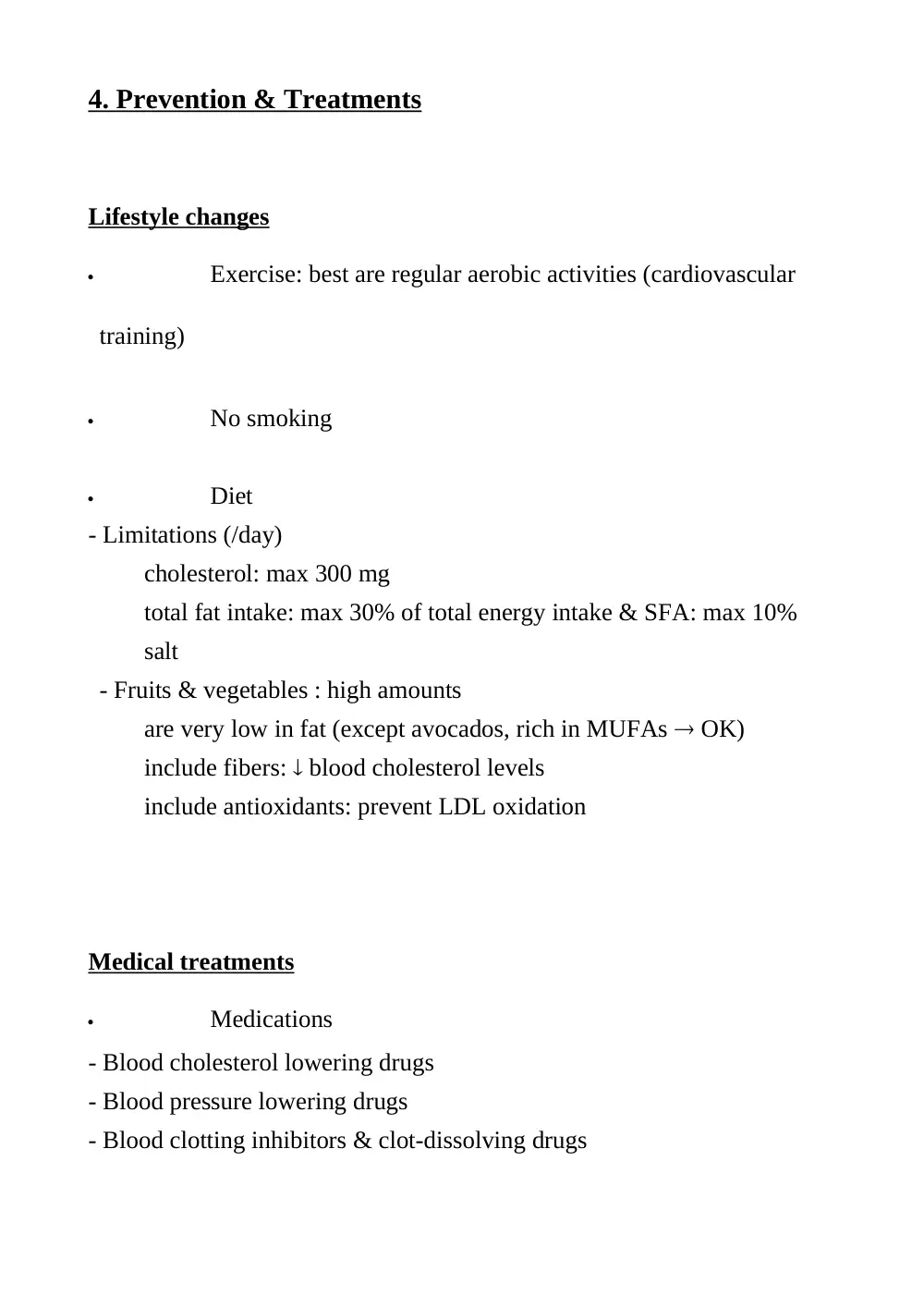
4. Prevention & Treatments
Lifestyle changes
Exercise: best are regular aerobic activities (cardiovascular
training)
No smoking
Diet
- Limitations (/day)
cholesterol: max 300 mg
total fat intake: max 30% of total energy intake & SFA: max 10%
salt
- Fruits & vegetables : high amounts
are very low in fat (except avocados, rich in MUFAs OK)
include fibers: blood cholesterol levels
include antioxidants: prevent LDL oxidation
Medical treatments
Medications
- Blood cholesterol lowering drugs
- Blood pressure lowering drugs
- Blood clotting inhibitors & clot-dissolving drugs
Surgery