
HEA 201 Chapter 3, Fall 2007
Notre Dame University–Louaize · Health Awareness · 12 pages
Showing the first 10 of 12 pages. Download the PDF to see all of it.
More HEA 201 files
Show the text of this chapter
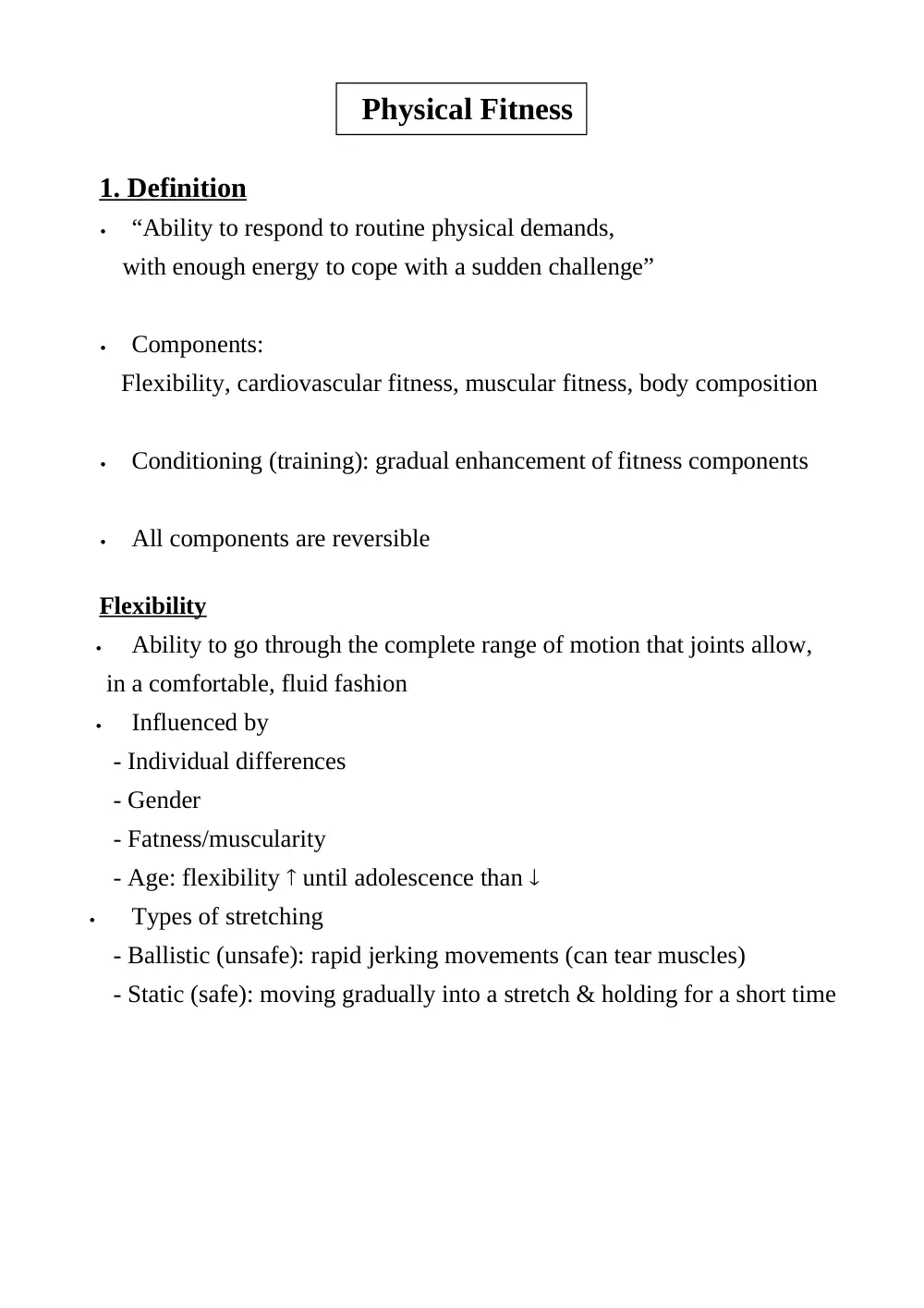
Physical Fitness
1. Definition
“Ability to respond to routine physical demands,
with enough energy to cope with a sudden challenge”
Components:
Flexibility, cardiovascular fitness, muscular fitness, body composition
Conditioning (training): gradual enhancement of fitness components
All components are reversible
Flexibility
Ability to go through the complete range of motion that joints allow,
in a comfortable, fluid fashion
Influenced by
- Individual differences
- Gender
- Fatness/muscularity
- Age: flexibility until adolescence than
Types of stretching
- Ballistic (unsafe): rapid jerking movements (can tear muscles)
- Static (safe): moving gradually into a stretch & holding for a short time
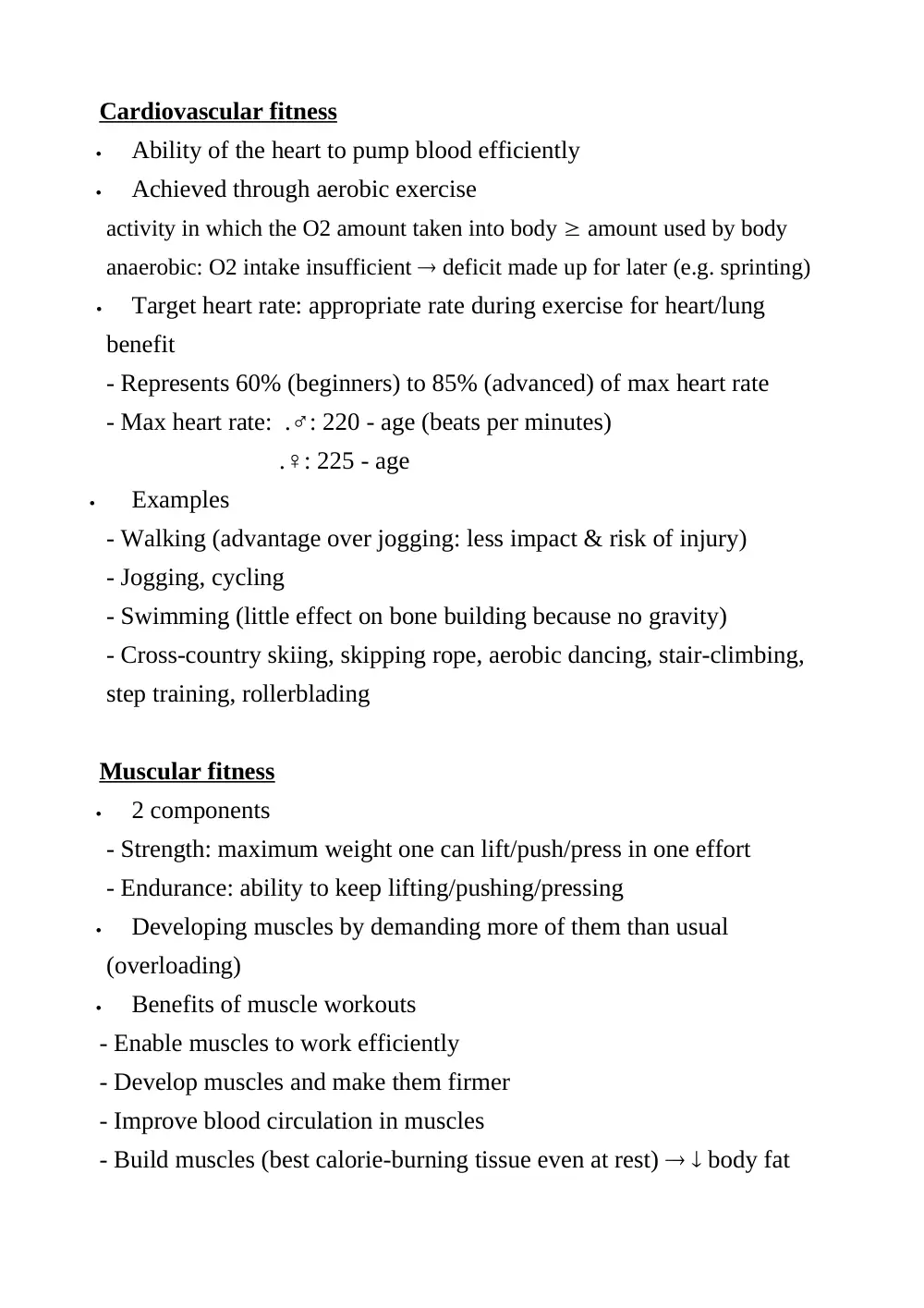
Cardiovascular fitness
Ability of the heart to pump blood efficiently
Achieved through aerobic exercise
activity in which the O2 amount taken into body amount used by body
anaerobic: O2 intake insufficient deficit made up for later (e.g. sprinting)
Target heart rate: appropriate rate during exercise for heart/lung
benefit
- Represents 60% (beginners) to 85% (advanced) of max heart rate
- Max heart rate: .♂: 220 - age (beats per minutes)
.♀: 225 - age
Examples
- Walking (advantage over jogging: less impact & risk of injury)
- Jogging, cycling
- Swimming (little effect on bone building because no gravity)
- Cross-country skiing, skipping rope, aerobic dancing, stair-climbing,
step training, rollerblading
Muscular fitness
2 components
- Strength: maximum weight one can lift/push/press in one effort
- Endurance: ability to keep lifting/pushing/pressing
Developing muscles by demanding more of them than usual
(overloading)
Benefits of muscle workouts
- Enable muscles to work efficiently
- Develop muscles and make them firmer
- Improve blood circulation in muscles
- Build muscles (best calorie-burning tissue even at rest) body fat
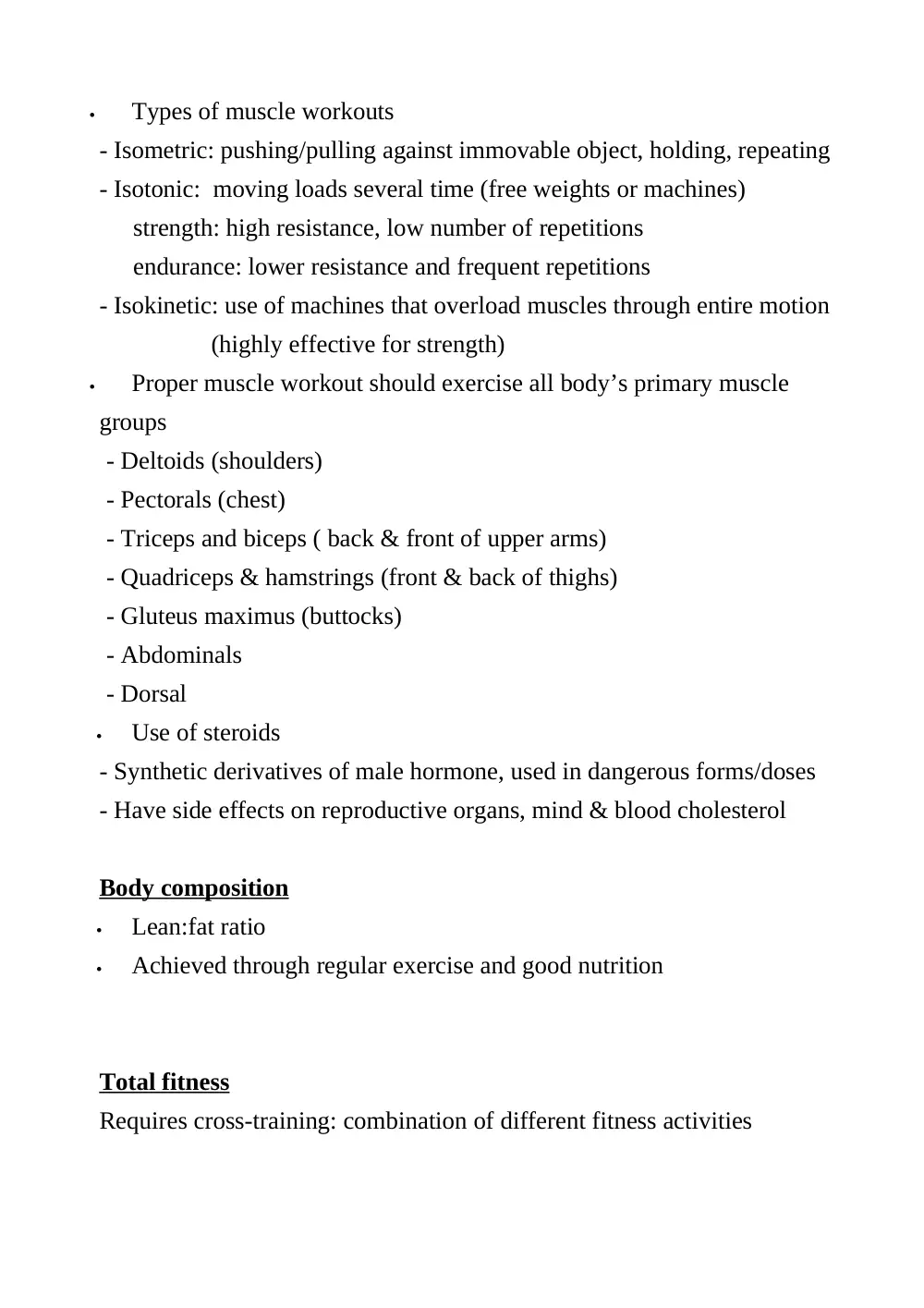
Types of muscle workouts
- Isometric: pushing/pulling against immovable object, holding, repeating
- Isotonic: moving loads several time (free weights or machines)
strength: high resistance, low number of repetitions
endurance: lower resistance and frequent repetitions
- Isokinetic: use of machines that overload muscles through entire motion
(highly effective for strength)
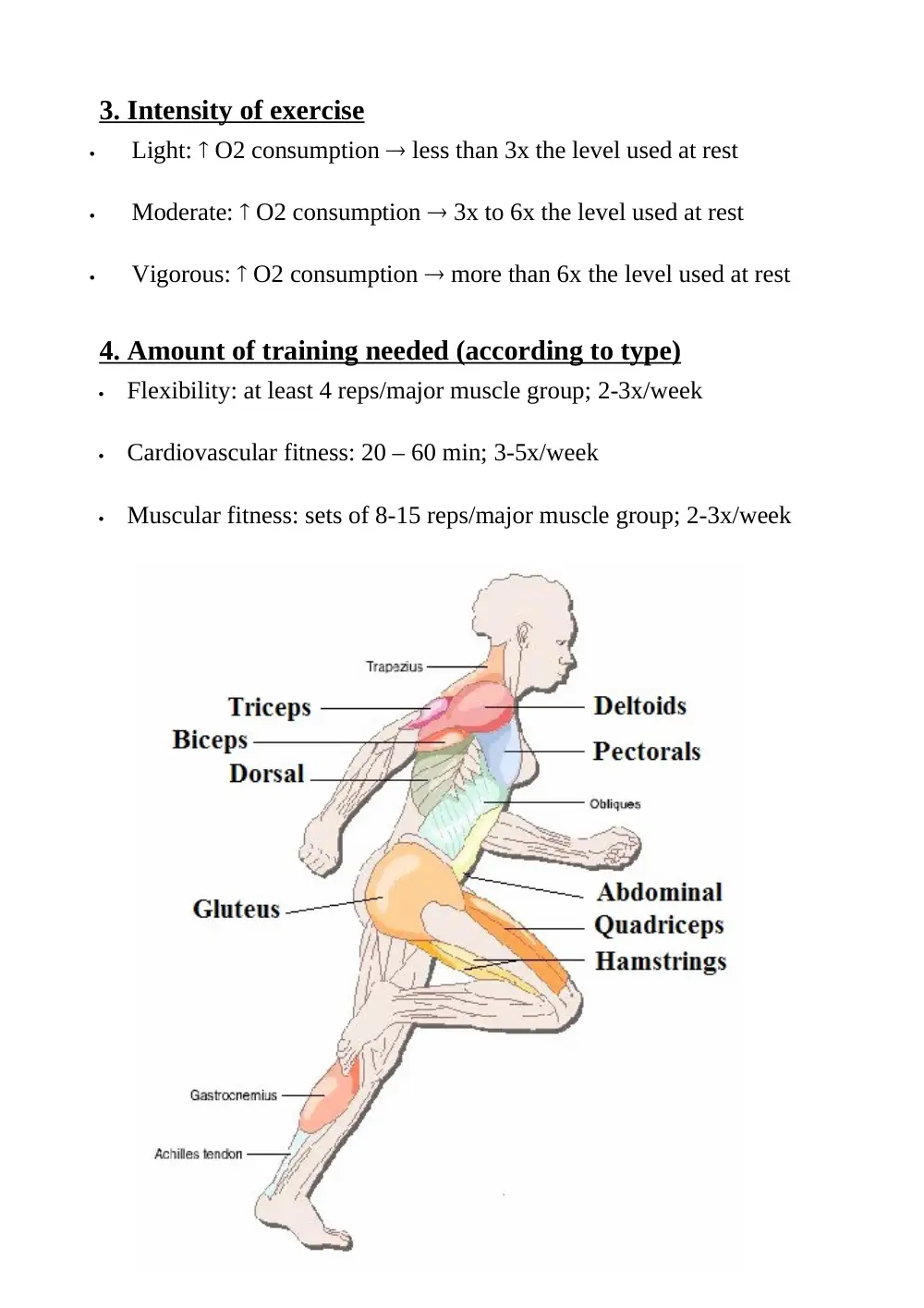
Proper muscle workout should exercise all body’s primary muscle
groups
- Deltoids (shoulders)
- Pectorals (chest)
- Triceps and biceps ( back & front of upper arms)
- Quadriceps & hamstrings (front & back of thighs)
- Gluteus maximus (buttocks)
- Abdominals
- Dorsal
Use of steroids
- Synthetic derivatives of male hormone, used in dangerous forms/doses
- Have side effects on reproductive organs, mind & blood cholesterol
Body composition
Lean:fat ratio
Achieved through regular exercise and good nutrition
Total fitness
Requires cross-training: combination of different fitness activities
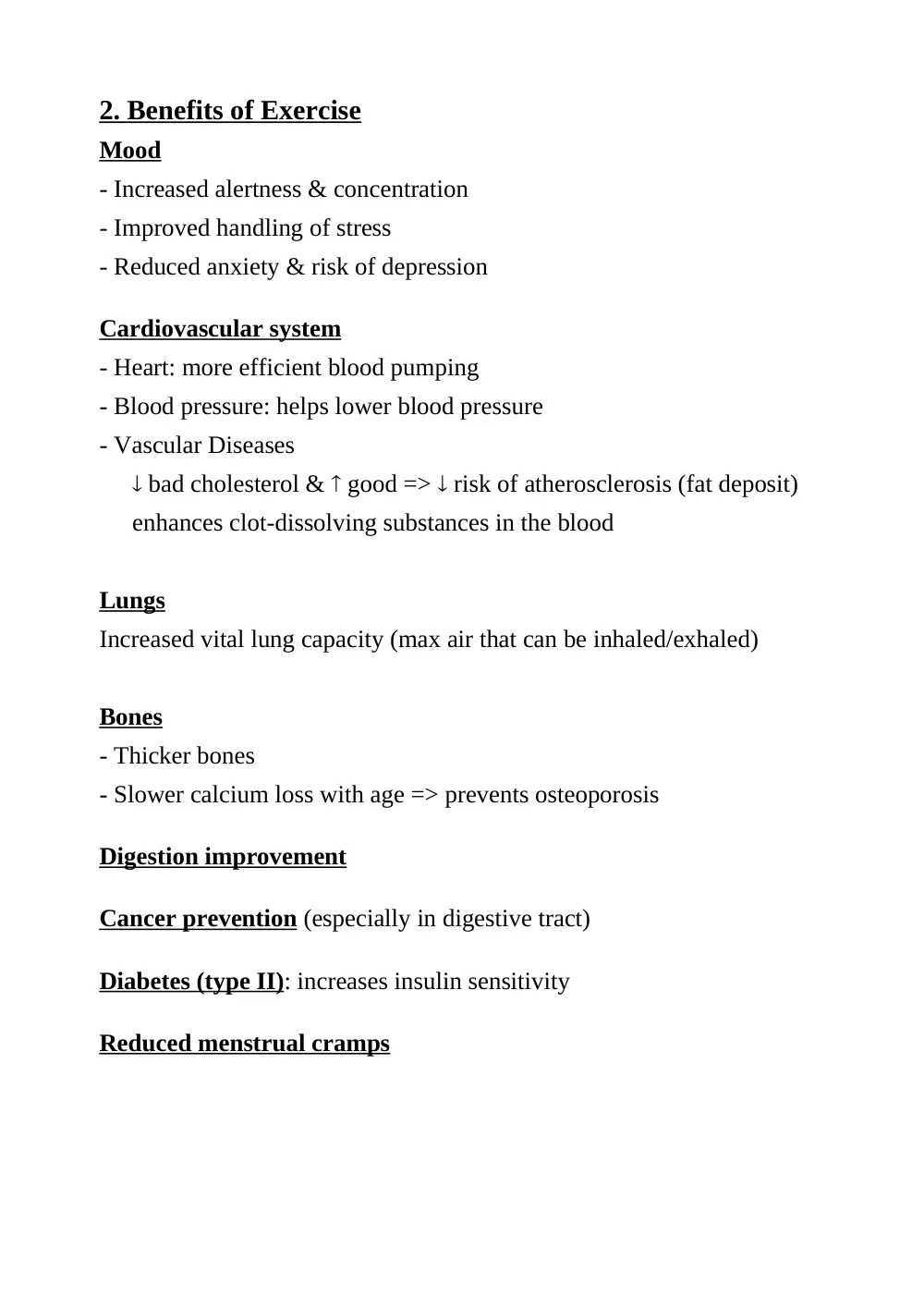
2. Benefits of Exercise
Mood
- Increased alertness & concentration
- Improved handling of stress
- Reduced anxiety & risk of depression
Cardiovascular system
- Heart: more efficient blood pumping
- Blood pressure: helps lower blood pressure
- Vascular Diseases
bad cholesterol & good => risk of atherosclerosis (fat deposit)
enhances clot-dissolving substances in the blood
Lungs
Increased vital lung capacity (max air that can be inhaled/exhaled)
Bones
- Thicker bones
- Slower calcium loss with age => prevents osteoporosis
Digestion improvement
Cancer prevention (especially in digestive tract)
Diabetes (type II): increases insulin sensitivity
Reduced menstrual cramps
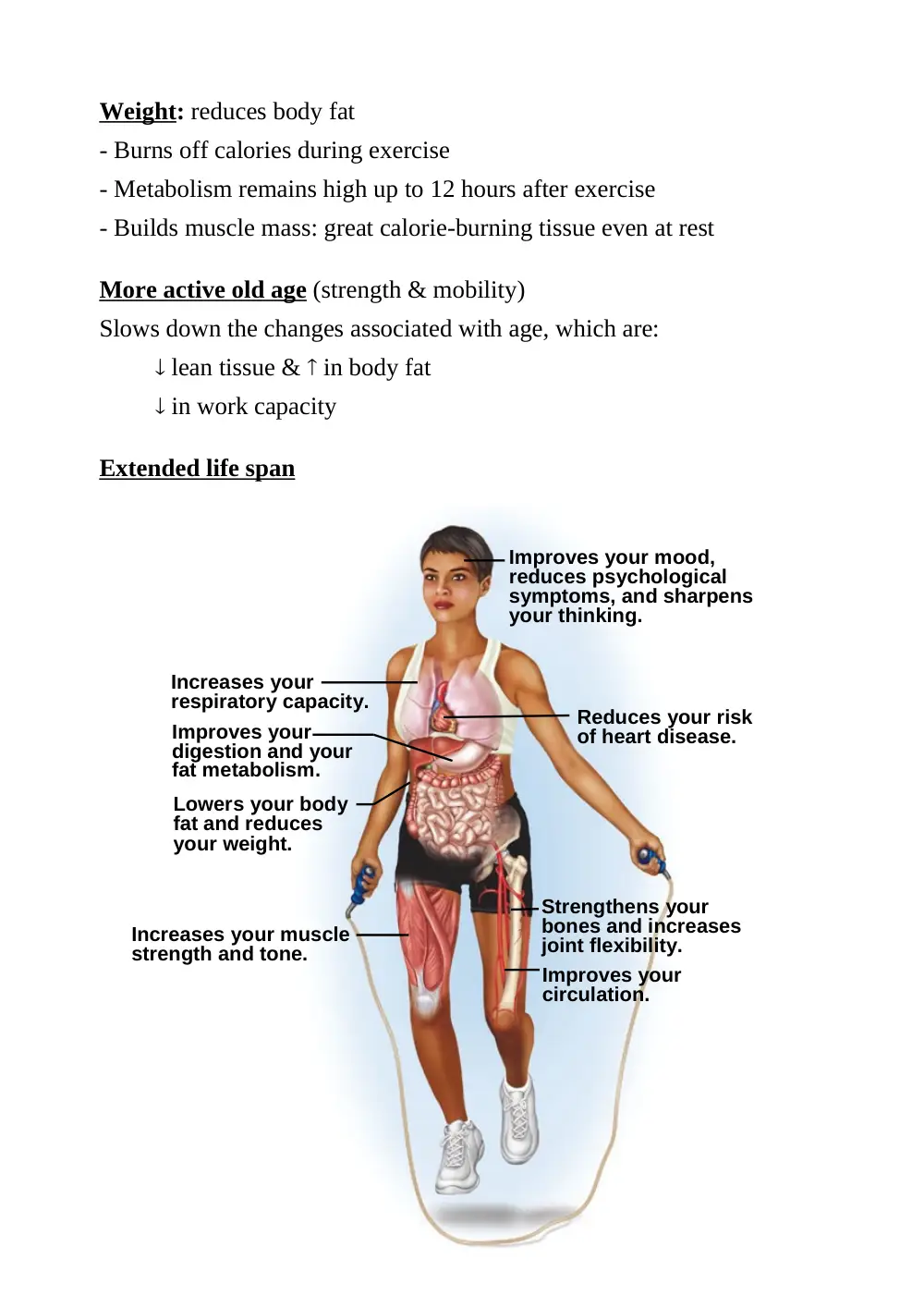
Weight: reduces body fat
- Burns off calories during exercise
- Metabolism remains high up to 12 hours after exercise
- Builds muscle mass: great calorie-burning tissue even at rest
More active old age (strength & mobility)
Slows down the changes associated with age, which are:
lean tissue & in body fat
in work capacity
Extended life span
Fig. 5-2,
Increases your
respiratory capacity.
Improves your
digestion and your
fat metabolism.
Lowers your body
fat and reduces
your weight.
Increases your muscle
strength and tone.
Improves your mood,
reduces psychological
symptoms, and sharpens
your thinking.
Reduces your risk
of heart disease.
Strengthens your
bones and increases
joint flexibility.
Improves your
circulation.
3. Intensity of exercise
Light: O2 consumption less than 3x the level used at rest
Moderate: O2 consumption 3x to 6x the level used at rest
Vigorous: O2 consumption more than 6x the level used at rest
4. Amount of training needed (according to type)
Flexibility: at least 4 reps/major muscle group; 2-3x/week
Cardiovascular fitness: 20 – 60 min; 3-5x/week
Muscular fitness: sets of 8-15 reps/major muscle group; 2-3x/week
5. Making the Commitment
Importance of starting young (building up interest for physical activity)
Choosing a sport one enjoys & going with a buddy
Possible obstacles
- Lack of time, scheduling difficulties
- Lack of discipline
- Dislike of effort
- Injuries or other physical limitations
- Lack of affordable, accessible places to exercise
- Lack of skills or confidence in one’s ability
- Women (in particular)
family matters
misconceptions: fear to bulk up their muscles
Situations that require medical advice before starting
- Known heart problems or family history
- High blood pressure
- Pain in left chest, neck, shoulder or arm during/right after exercise
-
Feeling dizzy/faint after mild exertion (e.g. short walk at moderate pace)
- Bone or joint problems
- Diabetes
- Sedentary above 40 years of age
6. Nutrition for Exercise
High in CHO
- At least 60% of total cal
- Provide enough glycogen & steady blood glc
Proteins
- No significant increase required
- Excess burden on liver & kidneys
Fats: kept low
Water
- Before, during and after exercise
- Best beverage for dehydration (easier absorption than any athletic drink)
Fruits and vegetables: large amounts
- Low in fat, supply CHO
- High in water
- Supply antioxidants:
neutralize cell damaging free radicals
free radical production by exercise due to cell metabolism
Supplements
- Amino acids, salt tablets, energy bars & drinks, creatine …
- To be avoided: risk of nutritional imbalance or useless
7. Sports Safety
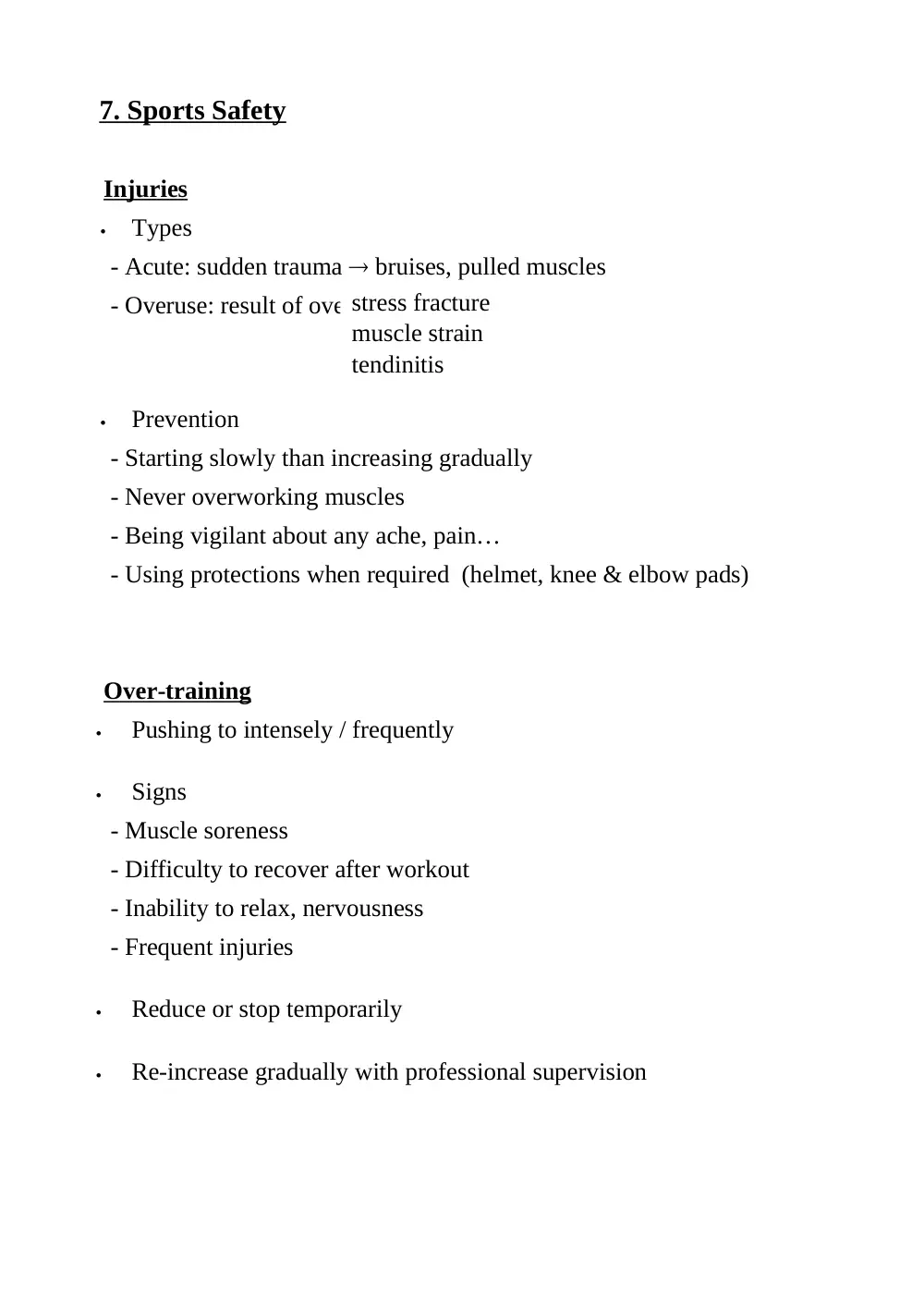
Injuries
Types
- Acute: sudden trauma bruises, pulled muscles
- Overuse: result of overdoing
Prevention
- Starting slowly than increasing gradually
- Never overworking muscles
- Being vigilant about any ache, pain…
- Using protections when required (helmet, knee & elbow pads)
Over-training
Pushing to intensely / frequently
Signs
- Muscle soreness
- Difficulty to recover after workout
- Inability to relax, nervousness
- Frequent injuries
Reduce or stop temporarily
Re-increase gradually with professional supervision
stress fracture
muscle strain
tendinitis
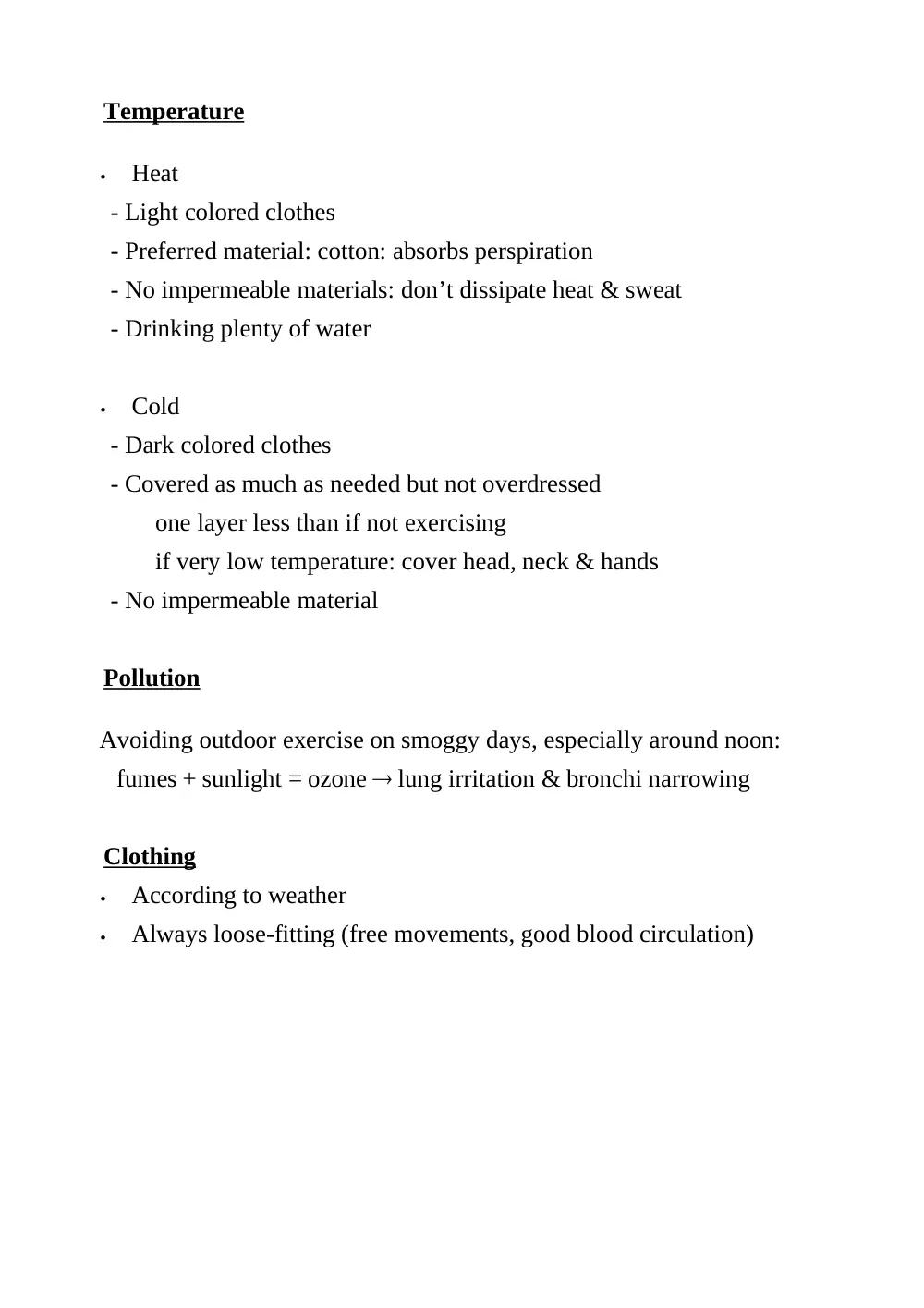
Temperature
Heat
- Light colored clothes
- Preferred material: cotton: absorbs perspiration
- No impermeable materials: don’t dissipate heat & sweat
- Drinking plenty of water
Cold
- Dark colored clothes
- Covered as much as needed but not overdressed
one layer less than if not exercising
if very low temperature: cover head, neck & hands
- No impermeable material
Pollution
Avoiding outdoor exercise on smoggy days, especially around noon:
fumes + sunlight = ozone lung irritation & bronchi narrowing
Clothing
According to weather
Always loose-fitting (free movements, good blood circulation)
Shoes
- Change with miles
- Shop late in afternoon when feet are swollen
- Choose according to type of activity
- Light weight, material that breathes
8. Choosing Fitness Products & Programs
Equipment
- Asking for professional recommendations
- Always trying (5 – 10 min) before buying
Clubs
- Have facilities for complete workouts
- Close to home, work, campus
- Open at convenient hours
Well-padded tongue prevents extensor
tendonitis and irritation of dorsum of foot
Laces not too long so
they stay tied longer
High rounded toe box
(at least 1 1/2” in. high)
prevents sublungual
hematomas
(“black toes”)
Studded sole absorbs
shock and provides
traction in mud and snow
Flexible midsole helps
prevent Achilles
tendon problems
Well-molded Achilles
pad prevents irritation
of Achilles tendon
Firm heel
counter for
hindfoot stability
Flared heel
stability and
beveled or
rounded
heel for
quick roll-off
Soft, raised
heel wedge to
absorb impact
at heel strike
- Visiting
at times of probable use (check if crowded)
to observe classes (personalized attention from instructors)