
HEA 201 Chapter 4, Fall 2007
Notre Dame University–Louaize · Health Awareness · 23 pages
Showing the first 10 of 23 pages. Download the PDF to see all of it.
More HEA 201 files
Show the text of this chapter
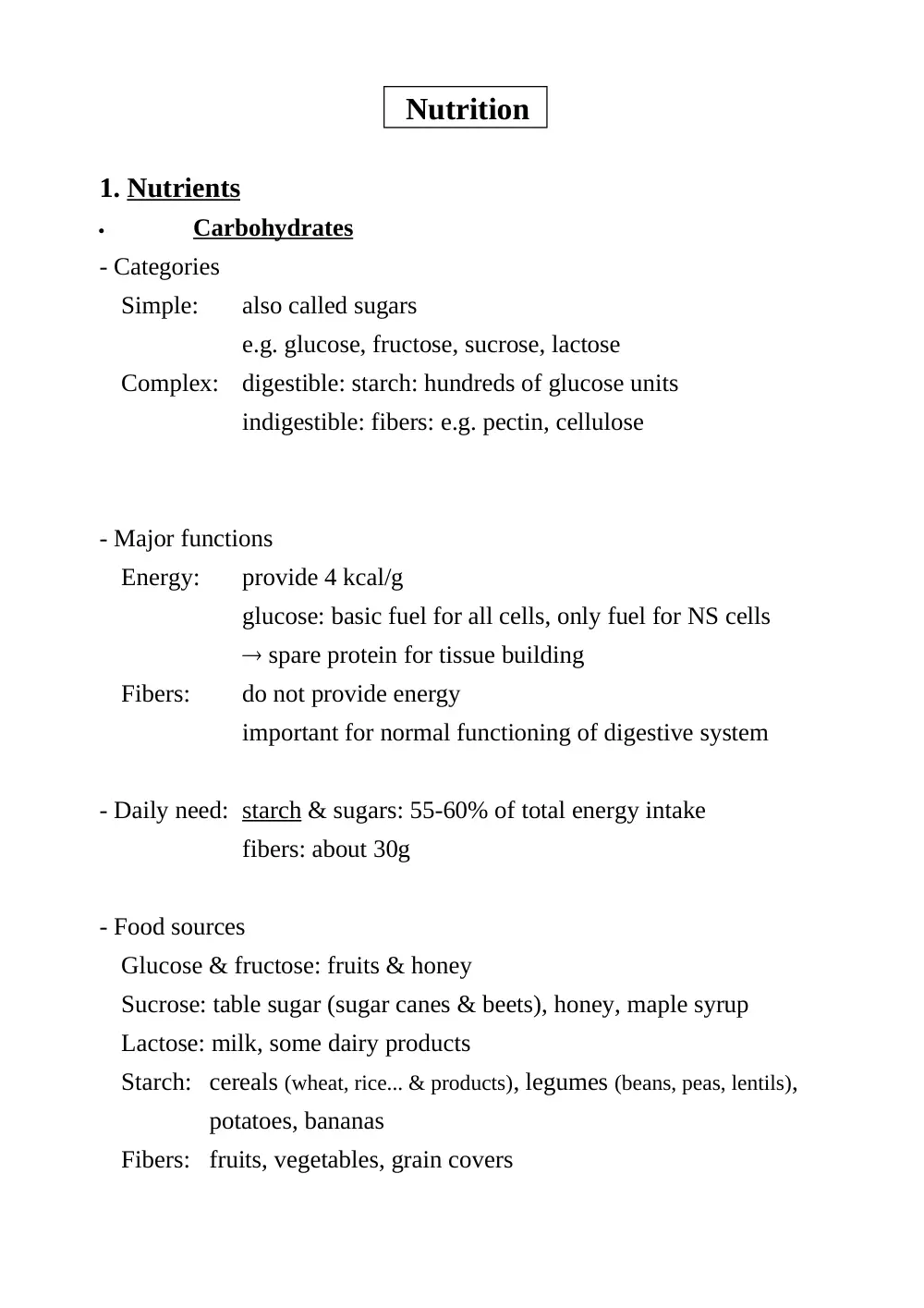
Nutrition
1. Nutrients
Carbohydrates
- Categories
Simple:
also called sugars
e.g. glucose, fructose, sucrose, lactose
Complex: digestible: starch: hundreds of glucose units
indigestible: fibers: e.g. pectin, cellulose
- Major functions
Energy:
provide 4 kcal/g
glucose: basic fuel for all cells, only fuel for NS cells
spare protein for tissue building
Fibers:
do not provide energy
important for normal functioning of digestive system
- Daily need: starch & sugars: 55-60% of total energy intake
fibers: about 30g
- Food sources
Glucose & fructose: fruits & honey
Sucrose: table sugar (sugar canes & beets), honey, maple syrup
Lactose: milk, some dairy products
Starch: cereals (wheat, rice... & products), legumes (beans, peas, lentils),
potatoes, bananas
Fibers: fruits, vegetables, grain covers
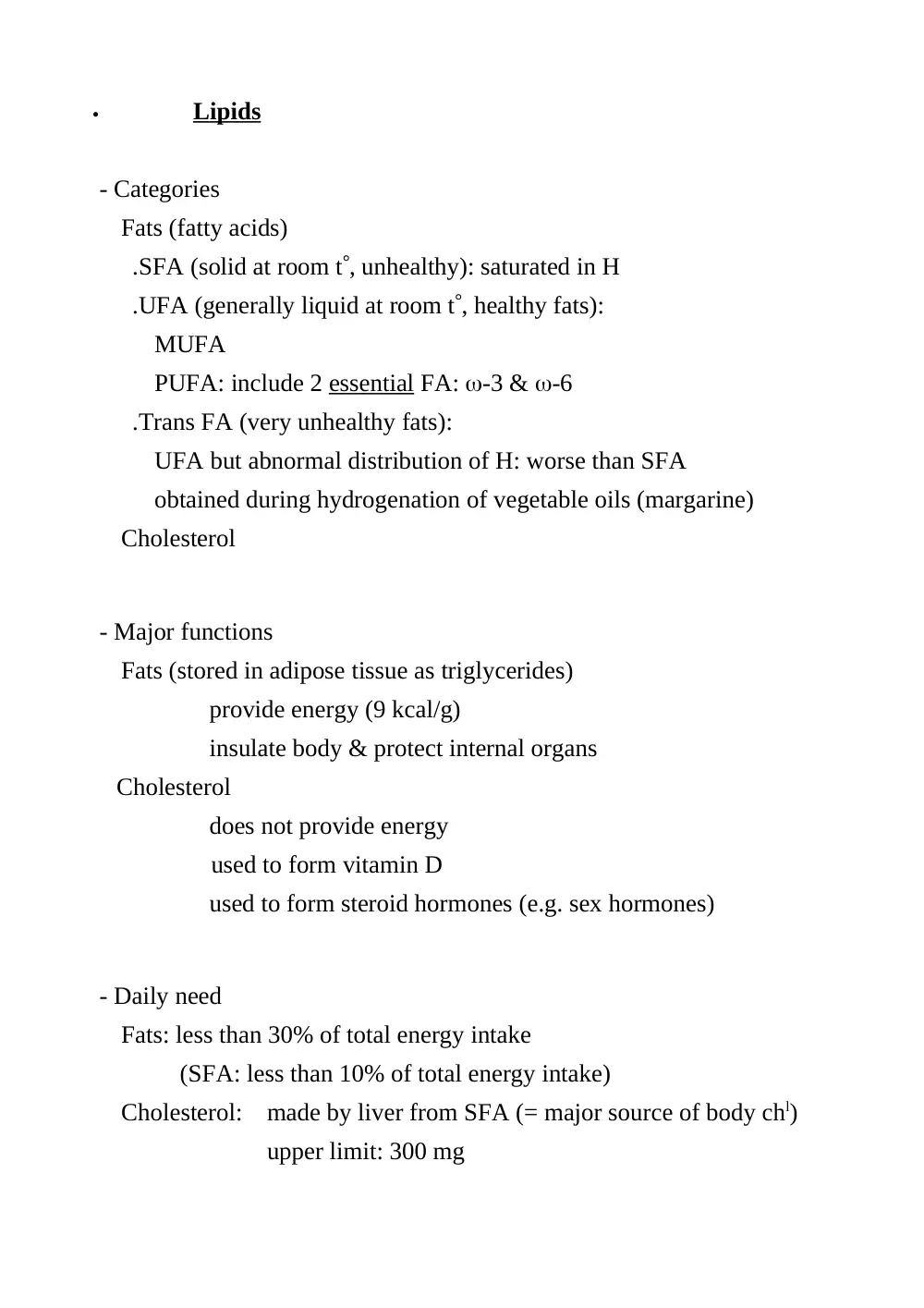
Lipids
- Categories
Fats (fatty acids)
.SFA (solid at room t, unhealthy): saturated in H
.UFA (generally liquid at room t, healthy fats):
MUFA
PUFA: include 2 essential FA: -3 & -6
.Trans FA (very unhealthy fats):
UFA but abnormal distribution of H: worse than SFA
obtained during hydrogenation of vegetable oils (margarine)
Cholesterol
- Major functions
Fats (stored in adipose tissue as triglycerides)
provide energy (9 kcal/g)
insulate body & protect internal organs
Cholesterol
does not provide energy
used to form vitamin D
used to form steroid hormones (e.g. sex hormones)
- Daily need
Fats: less than 30% of total energy intake
(SFA: less than 10% of total energy intake)
Cholesterol: made by liver from SFA (= major source of body chl)
upper limit: 300 mg
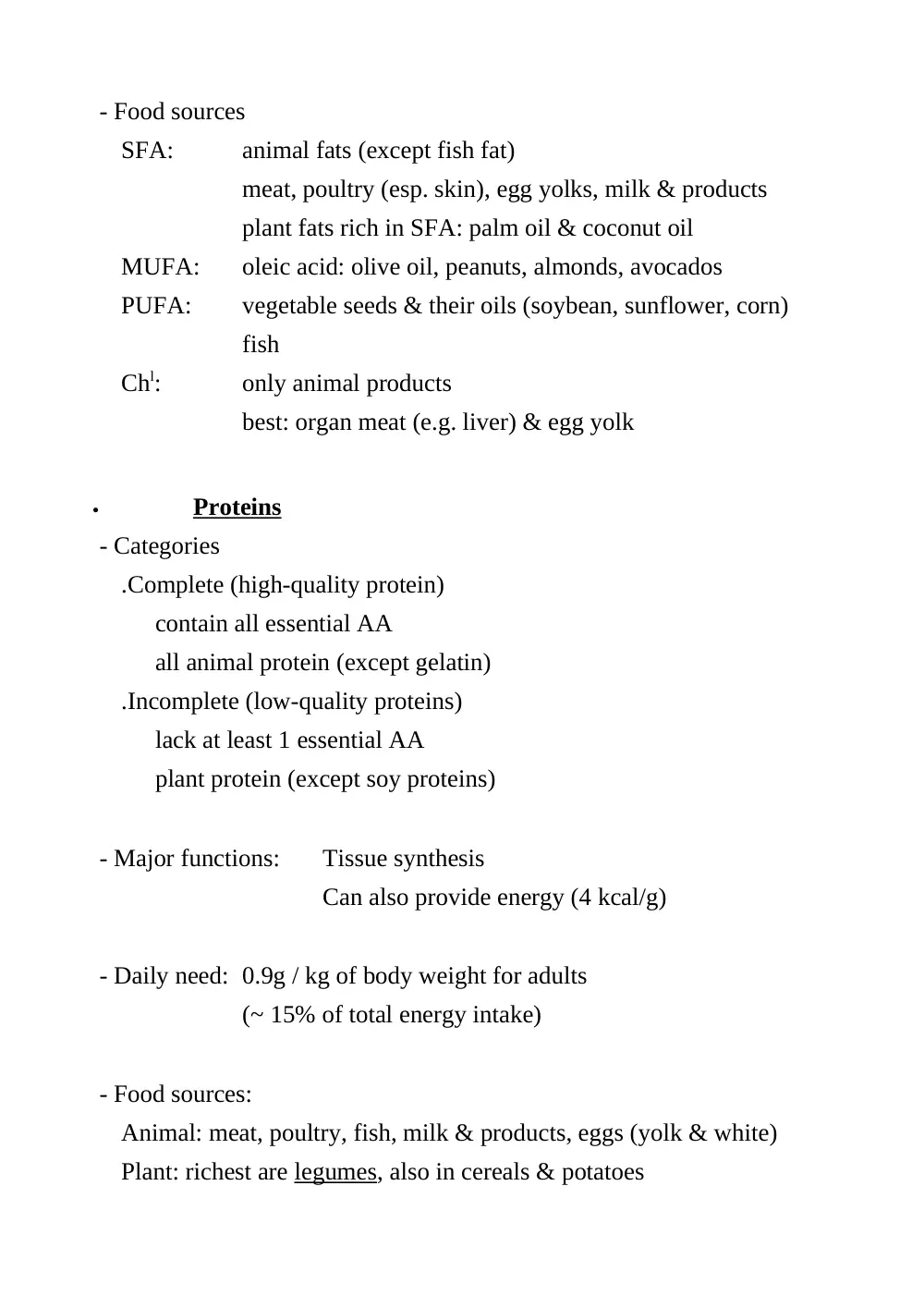
- Food sources
SFA:
animal fats (except fish fat)
meat, poultry (esp. skin), egg yolks, milk & products
plant fats rich in SFA: palm oil & coconut oil
MUFA:
oleic acid: olive oil, peanuts, almonds, avocados
PUFA:
vegetable seeds & their oils (soybean, sunflower, corn)
fish
Chl:
only animal products
best: organ meat (e.g. liver) & egg yolk
Proteins
- Categories
.Complete (high-quality protein)
contain all essential AA
all animal protein (except gelatin)
.Incomplete (low-quality proteins)
lack at least 1 essential AA
plant protein (except soy proteins)
- Major functions:
Tissue synthesis
Can also provide energy (4 kcal/g)
- Daily need: 0.9g / kg of body weight for adults
(~ 15% of total energy intake)
- Food sources:
Animal: meat, poultry, fish, milk & products, eggs (yolk & white)
Plant: richest are legumes, also in cereals & potatoes
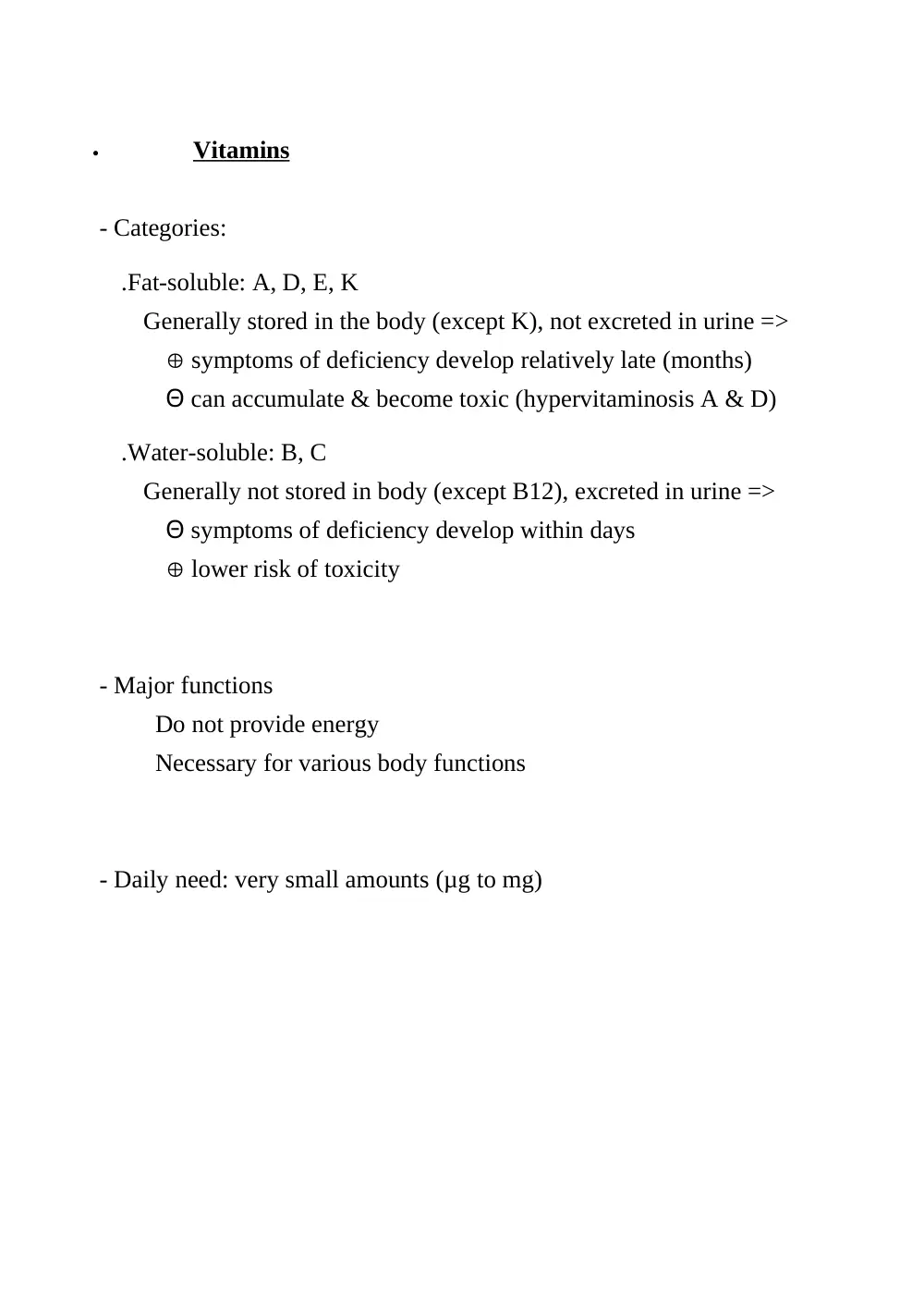
Vitamins
- Categories:
.Fat-soluble: A, D, E, K
Generally stored in the body (except K), not excreted in urine =>
symptoms of deficiency develop relatively late (months)
Θ can accumulate & become toxic (hypervitaminosis A & D)
.Water-soluble: B, C
Generally not stored in body (except B12), excreted in urine =>
Θ symptoms of deficiency develop within days
lower risk of toxicity
- Major functions
Do not provide energy
Necessary for various body functions
- Daily need: very small amounts (µg to mg)
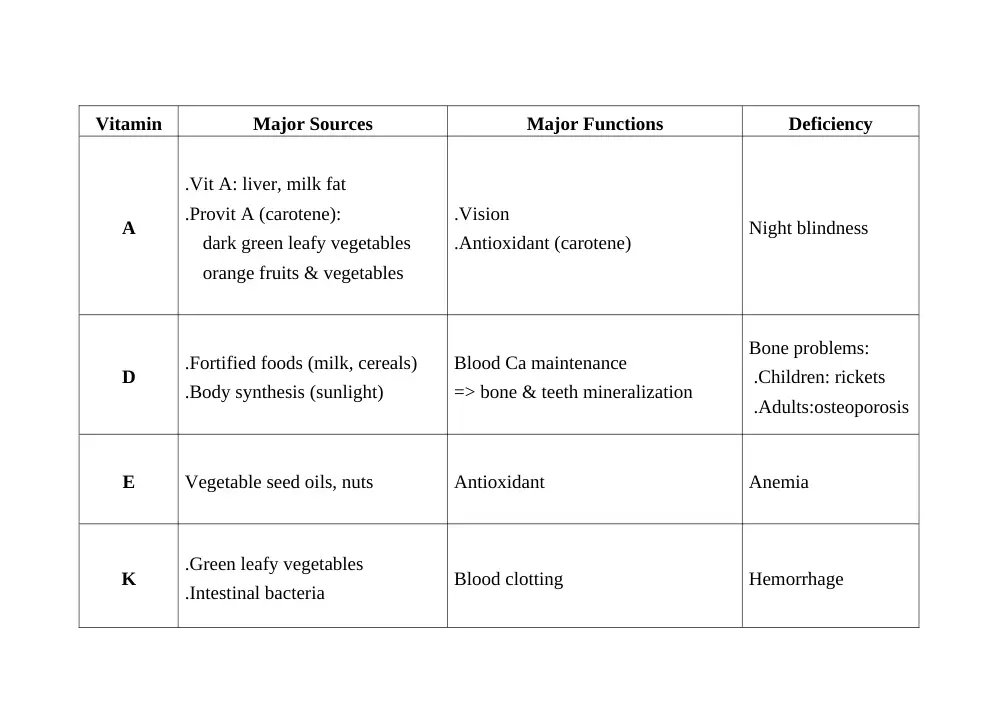
Vitamin
Major Sources
Major Functions
Deficiency
A
.Vit A: liver, milk fat
.Provit A (carotene):
dark green leafy vegetables
orange fruits & vegetables
.Vision
.Antioxidant (carotene)
Night blindness
D
.Fortified foods (milk, cereals)
.Body synthesis (sunlight)
Blood Ca maintenance
=> bone & teeth mineralization
Bone problems:
.Children: rickets
.Adults:osteoporosis
E
Vegetable seed oils, nuts
Antioxidant
Anemia
K
.Green leafy vegetables
.Intestinal bacteria
Blood clotting
Hemorrhage
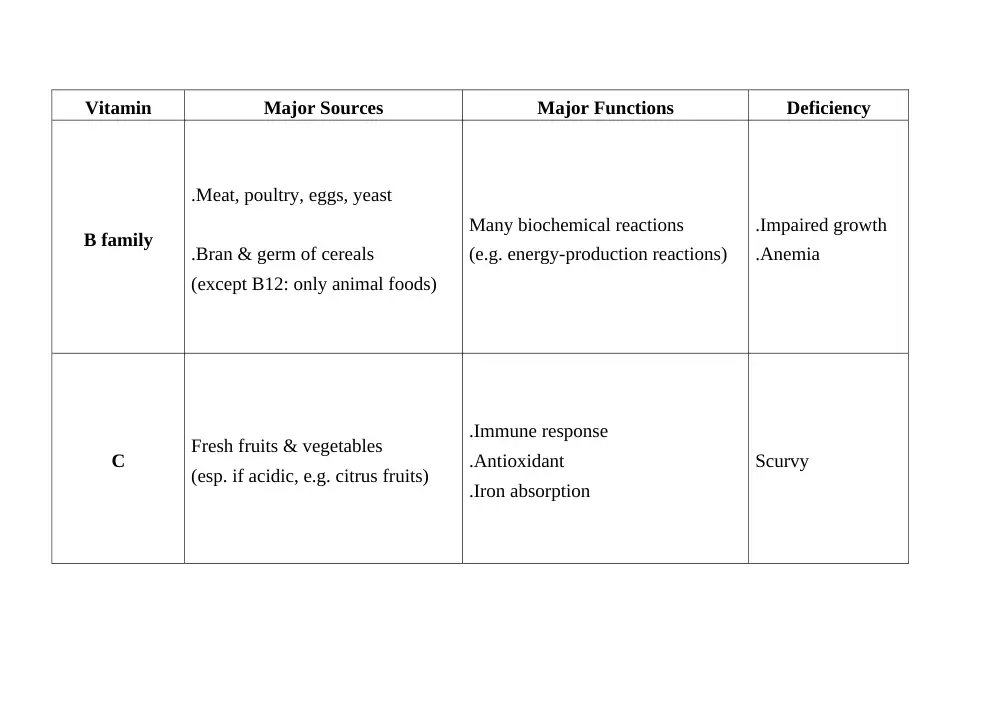
Vitamin
Major Sources
Major Functions
Deficiency
B family
.Meat, poultry, eggs, yeast
.Bran & germ of cereals
(except B12: only animal foods)
Many biochemical reactions
(e.g. energy-production reactions)
.Impaired growth
.Anemia
C
Fresh fruits & vegetables
(esp. if acidic, e.g. citrus fruits)
.Immune response
.Antioxidant
.Iron absorption
Scurvy
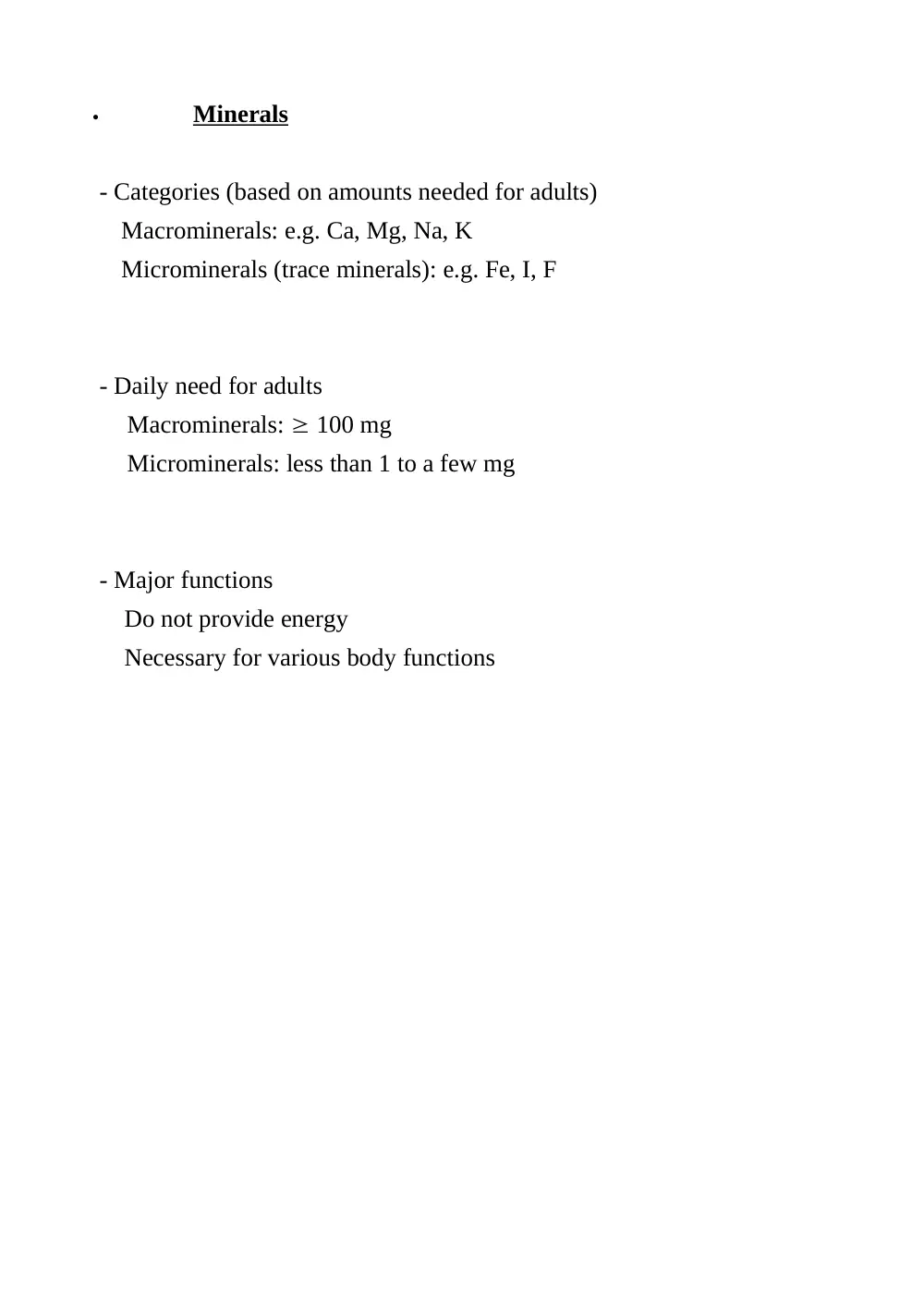
Minerals
- Categories (based on amounts needed for adults)
Macrominerals: e.g. Ca, Mg, Na, K
Microminerals (trace minerals): e.g. Fe, I, F
- Daily need for adults
Macrominerals: 100 mg
Microminerals: less than 1 to a few mg
- Major functions
Do not provide energy
Necessary for various body functions
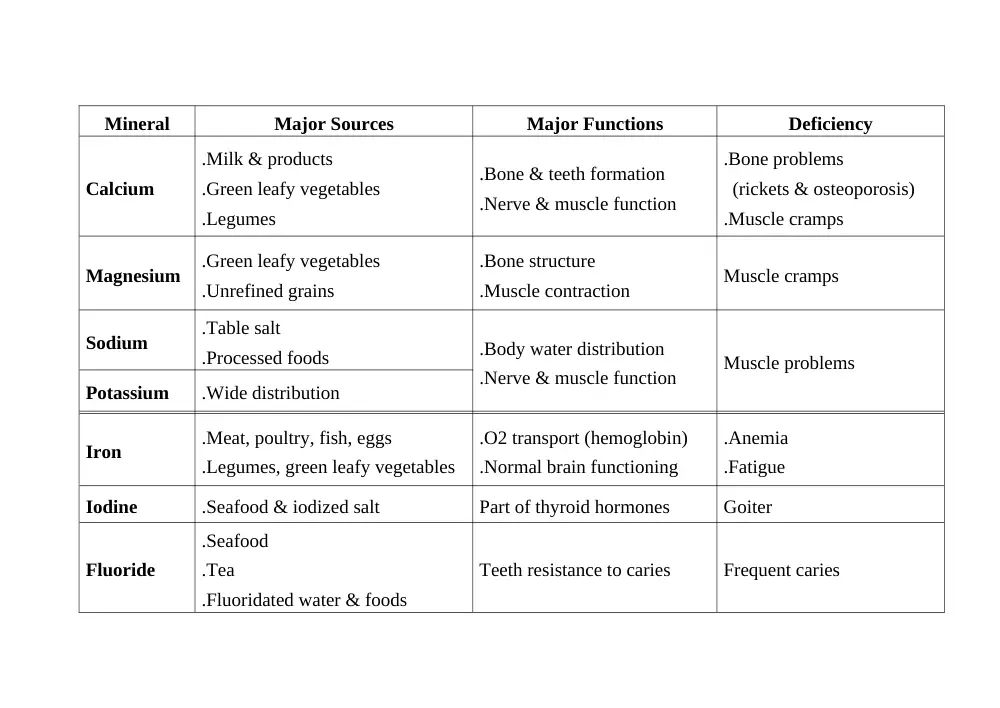
Mineral
Major Sources
Major Functions
Deficiency
Calcium
.Milk & products
.Green leafy vegetables
.Legumes
.Bone & teeth formation
.Nerve & muscle function
.Bone problems
(rickets & osteoporosis)
.Muscle cramps
Magnesium
.Green leafy vegetables
.Unrefined grains
.Bone structure
.Muscle contraction
Muscle cramps
Sodium
.Table salt
.Processed foods
.Body water distribution
.Nerve & muscle function
Muscle problems
Potassium
.Wide distribution
Iron
.Meat, poultry, fish, eggs
.Legumes, green leafy vegetables
.O2 transport (hemoglobin)
.Normal brain functioning
.Anemia
.Fatigue
Iodine
.Seafood & iodized salt
Part of thyroid hormones
Goiter
Fluoride
.Seafood
.Tea
.Fluoridated water & foods
Teeth resistance to caries
Frequent caries
Water
- Represents about 70 % of body weight
- Major functions
Medium for chemical reactions
Transport (blood)
Temperature regulation (sweat)
Lubrication (mucus, tears…)
Waste removal (urine)
- Daily need
About 2.5 liters (1 to 1.5 l from drinks, preferably mineral water)
Need increased by
illness
exercise
high temperatures
high altitude, airplane
high coffee & alcohol intake ( urination)
- Food sources
Beverages (water, juices, sodas…)
Foods (variable amounts)
2. Healthy Nutrition
Dietary Guidelines
- Eating a variety of foods for adequate intake of all nutrients
- Maintenance of a healthy body weight
- Eating plenty of plant products (starch, fibers, vitamins, minerals)
- Keeping fat, SFA and cholesterol intake low
- Moderate consumption of
Sodium (salt): increases risk of hypertension
Sugars: “empty calories” + dental caries
Alcohol: dependence & health (e.g. liver) problems
Food Guide Pyramid
- Includes 5 food categories that cannot substitute for each other
Grains
Vegetables
Fruits
Milk
Meats and beans
- Daily consumption of foods from all 5 groups, in different amounts
- Limited fat (preferably from fish or plant sources), sugars & salt
intake
- Balance between food and physical activity
New Pyramid
Old Pyramid
Ways to decrease fat intake
- Remembering relative fat content of animals: fish < poultry < meat
- Choosing fish & legumes as an alternative protein-source to meat
- Grilling, boiling, steaming instead of frying
- Replacing butter & mayo with mustard & ketchup
- Adding flavor to foods by using herbs, spices, lemon, marinades
- Reducing high-fat snacks & appetizers (chips, salamis, hod dogs…)
- Removing visible fat before cooking & excess fat during or after
- Mixing 1 egg + egg whites to make omelets
- Choosing low-fat/fat-free products (milk, cream, mayo,
butter,dressing)
- Choosing water-packed canned fish & meat (instead of oil-packed)
- Choosing low-fat frozen yogurts & sherbets instead of ice cream
Vegetarian Diets
- Types
.strict vegetarians (“vegans”): only plant products
.lacto: plant products + milk & products
.lacto-ovo: plant products + milk & products + eggs
.lacto-ovo-pesco: plant products + milk & products + eggs + seafood
.lacto-ovo-pesco-pollo: plant products + milk & products
+ eggs + seafood + poultry
- Benefits
.high in fibers, starch, vitamins, minerals and phytochemicals
.low in fat, SFA, no cholesterol
- Health status of vegetarians: lower incidence of
.cardiovascular diseases (lower cholesterol levels)
.overweight
.cancer
.hypertension
.osteoporosis
- Cautions for strict vegetarians
.iron: adequate vitamin C intake increases plant Fe absorption
.vitamin B12: supplements or B12-fortified foods are necessary
.complementary proteins for adequate intake of all essential AA
(e.g. cereals & legumes)
3. Reading Food Labels
Labels focus on following nutrients
Total fat & saturated fat
Cholesterol
Sodium
Carbohydrates: fibers & sugars (starch = the rest)
Proteins
Amounts given per serving
Daily Values (DV)
- Total amount of a nutrient an average adult should get/not exceed
- Sodium, cholesterol, vitamins and minerals: same amounts for all
- Fats, proteins & carbohydrates: amounts based on a 2000 kcal diet
Labels in expanded version, bottom includes general nutrition
info
Criteria for choosing
Calories: the lower the better if one is watching weight
Total fat: no more than 3g / 100 kcal
Saturated fat: no more than 1g / 100 kcal
Cholesterol:
- Avoiding very high amounts
- Careful about plant products w/o chl but cooked with SFA/trans FA
(e.g. chips)
Sugars: trying to keep low
Sodium: keep low
Fibers, Ca & other vitamin & minerals
- Good = 10%DV
- High = 20%DV
4. Antioxidants and Phytochemicals
Antioxidants
- Prevent damage by O-containing free radicals that can
damage membrane cell dies
damage DNA risk of cancer
oxidize LDL stick better to artery walls
- Include
-carotene (provitamin A)
vitamin E
vitamin C
selenium
Phytochemicals
- Chemicals naturally occurring in plants
- Prevent cancers
- Examples of phytochemical-rich foods
Hot peppers
Citrus fruits, tomatoes
Broccoli, cabbage, cauliflower
5. Supplements
Mostly vitamins & minerals, individually or combined
People consume them to
-Protect themselves from diseases (cancer, heart…)
- Have more energy
- Lengthen their life
- Make sure they have adequate amounts if diet supply not enough
Safety concerns
- A and D: risk of hypervitaminosis (D: overcalcification)
- Water-soluble vitamins & minerals
some toxic in large doses (Ca: overcalcification, Na: hypertension)
others excreted anyway useless
=> Best is to get vitamins & minerals from diversified diet
Situations where supplements might be recommended/needed
- Pregnant & breastfeeding women
Iron for RBC
Folate for normal nervous system development & RBC
Calcium for bones
- Post-menopausal women: calcium for osteoporosis
- Strict vegetarians: vitamin B12
- Elderly
- People with illnesses/medications that interfere with appetite/digestion
6. Food Safety
I. Biological Hazards: bacteria, viruses & parasites
Do not generally alter smell, taste or appearance of food
Symptoms of disease classically include
vomiting, abdominal pain, diarrhea
nausea, fever, dehydration
Severity of disease depends on
agent (type and amount ingested)
general condition of individual (health, age…)
immune system status
1. Bacteria
- Are destroyed by proper heating, survive when frozen
- Some can turn into spores to survive harsh conditions (heat, acid…)
- Can multiply on food (PHFs: potentially hazardous foods) that are
moist / rich in protein / neutral pH / at 5 - 60°C
- E.g.1 Salmonella: food sources: mostly poultry & eggs
- E.g.2 Staphylococcus
causes disease through production of heat-stable toxin
food sources: ready-to-eat foods prepared with human contact
found in/on nose, hair & skin (load by antiseptic lotions & soaps)
- E.g.3 Bacterium that causes botulism
causes disease through production of heat-sensitive neurotoxin
can be fatal
food sources: improperly canned foods, esp. if low acid
2.Viruses
- Generally transferred to food from infected persons,
- Do not multiply in food
- Are destroyed by proper heating, survive when frozen
- E.g. Hepatitis A virus
disease duration: weeks (if mild) to months (if severe)
symptoms: classical then swelling of liver & jaundice
3. Parasites
- Are generally present in flesh of infected animals
- Do not multiply in food
- Are killed by heat and appropriate freezing
- E.g. Taenia
segmented flat worm, few m long
causes classical symptoms and weight loss
food sources: raw or undercooked pork & beef
Protecting oneself from biological hazards includes
- Not eating raw/undercooked animal products (flesh, eggs, milk)
- Not leaving PHFs between 5 & 60°C for more than 2 consecutive h
- Avoiding cross contamination (from raw meat to ready-to-eat foods)
can occur through hands, utensils, food contact surfaces…
II. Chemical Hazards
1. Naturally Occurring
- E.g. Mycotoxins produced by molds (food spoilage organisms)
ingestion of small doses over time can cause cancer, liver damage, death
2. Man-Added
Food additives: majority are safe, some are not
- Coloring agents
- Taste enhancers: e.g. MSG can cause Chinese Restaurant Syndrome
- Preservatives
e.g.1 sulfites (prevents discoloration of foods): can cause allergies
e.g.2 nitrites (used in meat curing): can cause digestive tract cancers
Pesticides (chemicals to control insects, weeds, fungi)
- Leave residues on fruits & vegetables
- Ways to decrease exposure to pesticides
buying organically grown products whenever possible
washing carefully
removing outer leaves from leafy vegetables (e.g. lettuce)
peeling removes surface pesticides, but not pesticides inside
Cleaning or sanitizing chemicals
Chemicals from containers
- E.g.1 metals from cans & containers (tin, copper, iron, lead, zinc)
- E.g.2 chemicals from plastic that migrate into food when waving
(headaches & chest tightness)
III. Food Allergies
When IS reacts to a food component as if it was a potential
threat
Exaggerated immune reaction is what causes the symptoms
Symptoms include
headache
vomiting, diarrhea
itching, puffy, teary eyes
runny nose
rash
Commonly allergenic foods
eggs
nuts
wheat
seafood
cow's milk