
HEA 201 Chapter 10, Fall 2007
Notre Dame University–Louaize · Health Awareness · 5 pages
More HEA 201 files
Show the text of this chapter
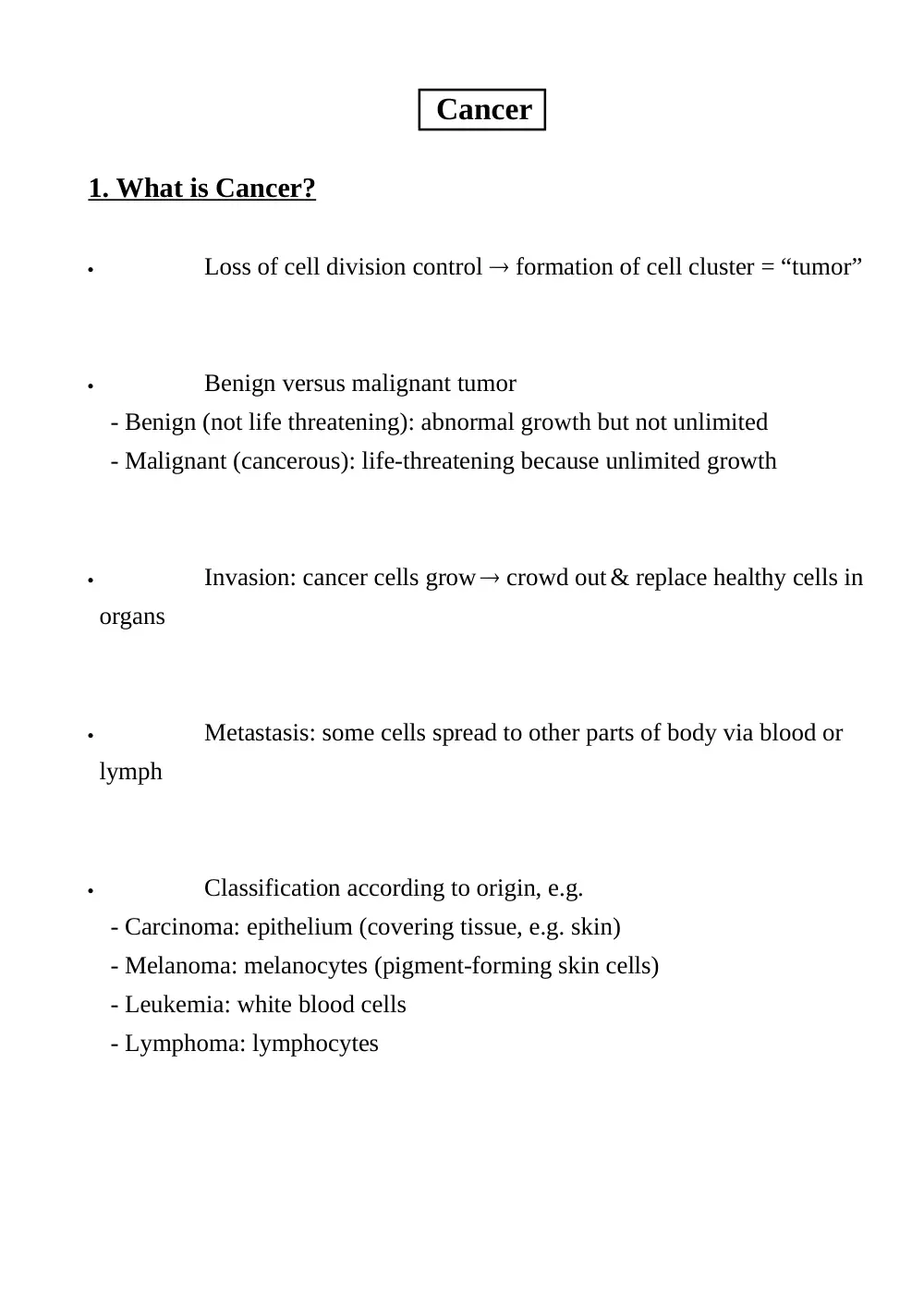
Cancer
1. What is Cancer?
Loss of cell division control formation of cell cluster = “tumor”
Benign versus malignant tumor
- Benign (not life threatening): abnormal growth but not unlimited
- Malignant (cancerous): life-threatening because unlimited growth
Invasion: cancer cells grow crowd out & replace healthy cells in
organs
Metastasis: some cells spread to other parts of body via blood or
lymph
Classification according to origin, e.g.
- Carcinoma: epithelium (covering tissue, e.g. skin)
- Melanoma: melanocytes (pigment-forming skin cells)
- Leukemia: white blood cells
- Lymphoma: lymphocytes
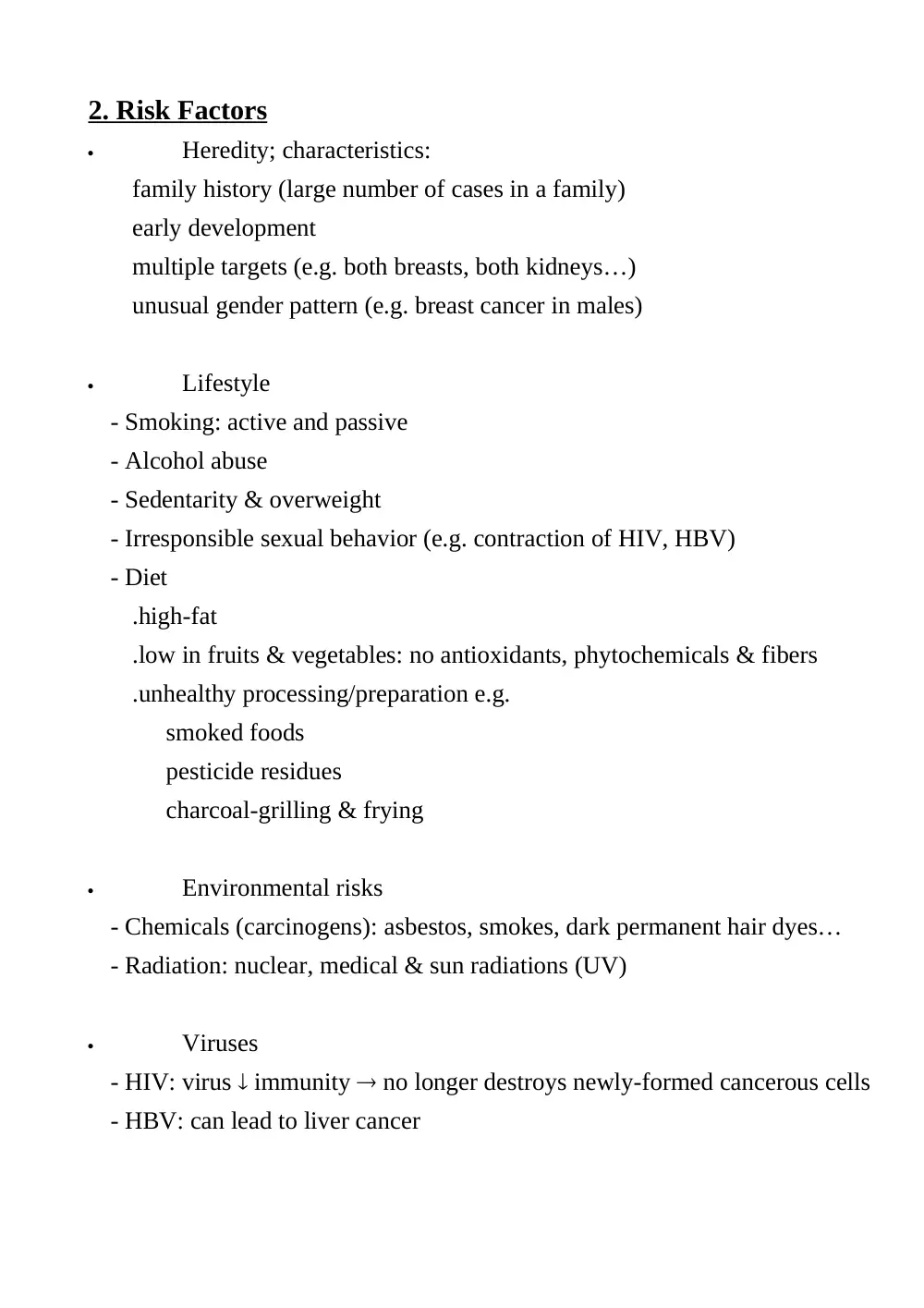
2. Risk Factors
Heredity; characteristics:
family history (large number of cases in a family)
early development
multiple targets (e.g. both breasts, both kidneys…)
unusual gender pattern (e.g. breast cancer in males)
Lifestyle
- Smoking: active and passive
- Alcohol abuse
- Sedentarity & overweight
- Irresponsible sexual behavior (e.g. contraction of HIV, HBV)
- Diet
.high-fat
.low in fruits & vegetables: no antioxidants, phytochemicals & fibers
.unhealthy processing/preparation e.g.
smoked foods
pesticide residues
charcoal-grilling & frying
Environmental risks
- Chemicals (carcinogens): asbestos, smokes, dark permanent hair dyes…
- Radiation: nuclear, medical & sun radiations (UV)
Viruses
- HIV: virus immunity no longer destroys newly-formed cancerous cells
- HBV: can lead to liver cancer
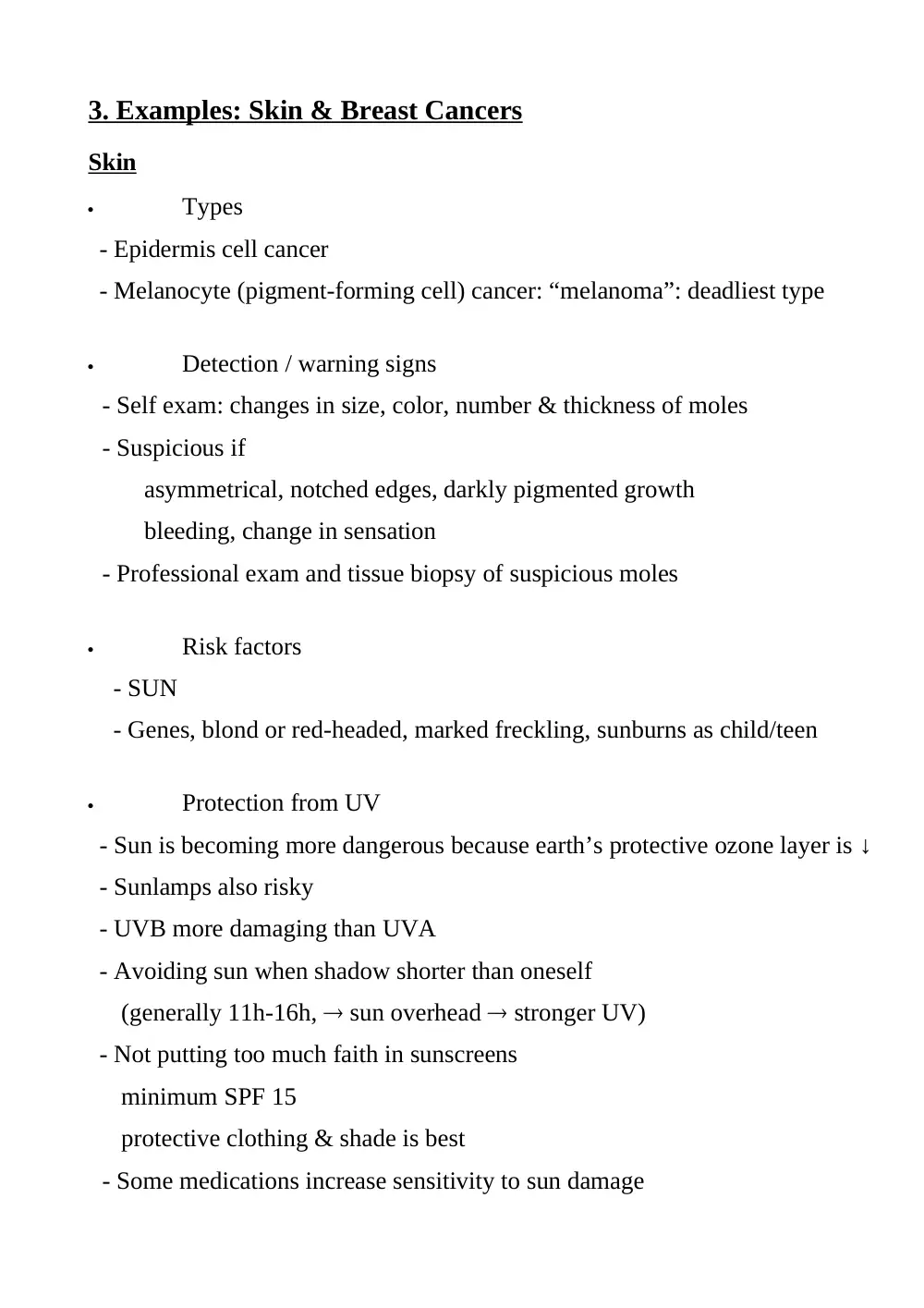
3. Examples: Skin & Breast Cancers
Skin
Types
- Epidermis cell cancer
- Melanocyte (pigment-forming cell) cancer: “melanoma”: deadliest type
Detection / warning signs
- Self exam: changes in size, color, number & thickness of moles
- Suspicious if
asymmetrical, notched edges, darkly pigmented growth
bleeding, change in sensation
- Professional exam and tissue biopsy of suspicious moles
Risk factors
- SUN
- Genes, blond or red-headed, marked freckling, sunburns as child/teen
Protection from UV
- Sun is becoming more dangerous because earth’s protective ozone layer is ↓
- Sunlamps also risky
- UVB more damaging than UVA
- Avoiding sun when shadow shorter than oneself
(generally 11h-16h, sun overhead stronger UV)
- Not putting too much faith in sunscreens
minimum SPF 15
protective clothing & shade is best
- Some medications increase sensitivity to sun damage
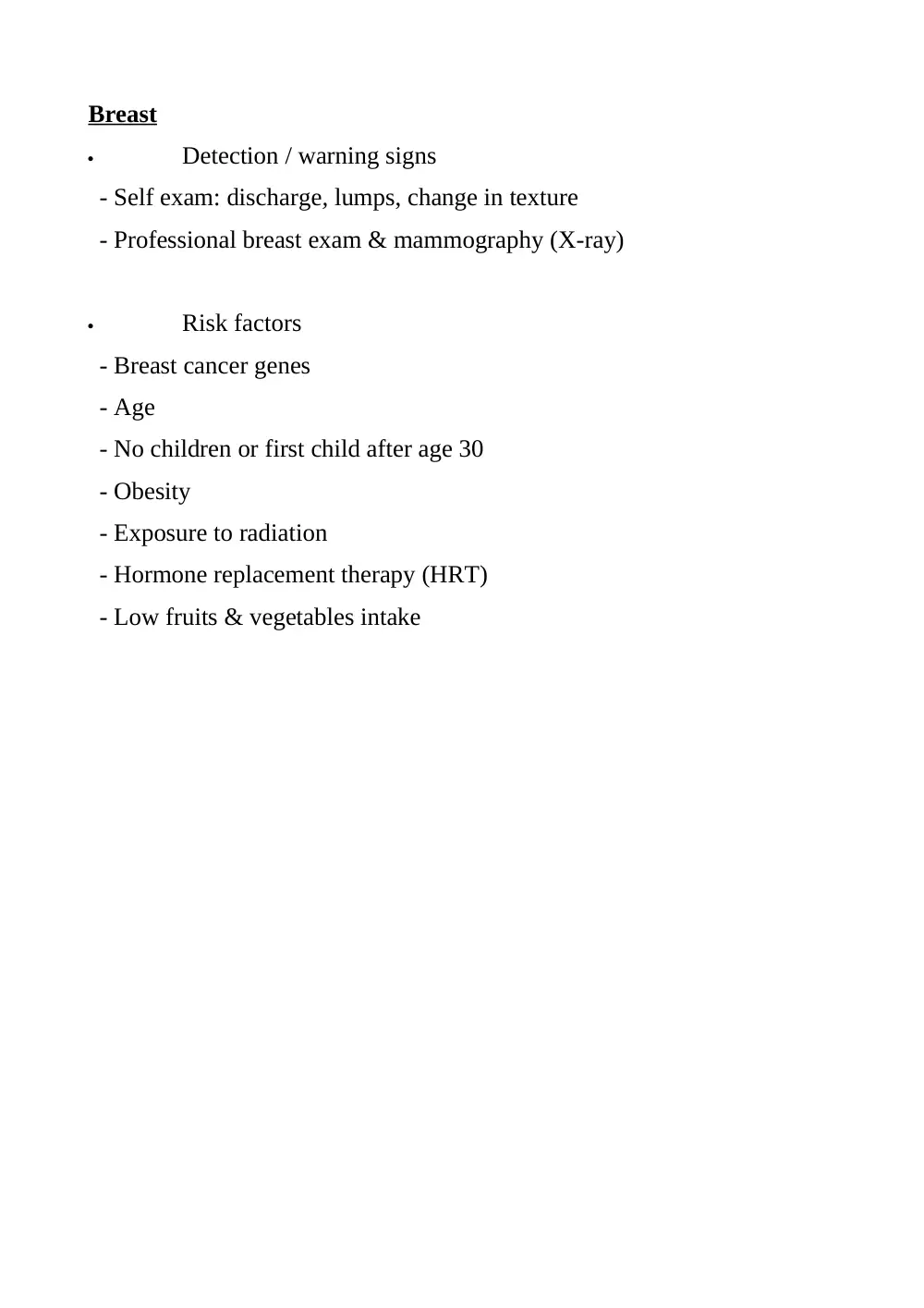
Breast
Detection / warning signs
- Self exam: discharge, lumps, change in texture
- Professional breast exam & mammography (X-ray)
Risk factors
- Breast cancer genes
- Age
- No children or first child after age 30
- Obesity
- Exposure to radiation
- Hormone replacement therapy (HRT)
- Low fruits & vegetables intake
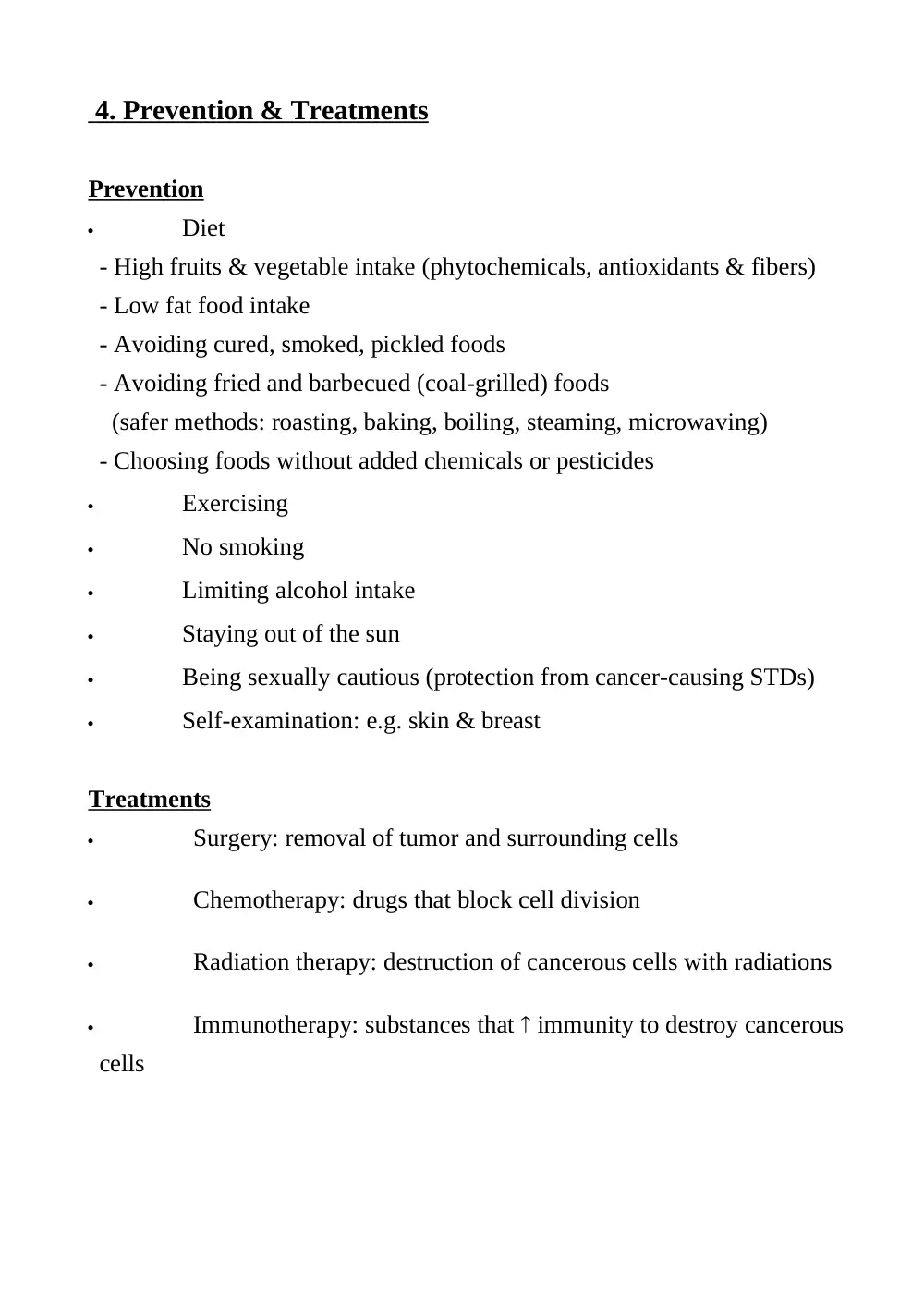
4. Prevention & Treatments
Prevention
Diet
- High fruits & vegetable intake (phytochemicals, antioxidants & fibers)
- Low fat food intake
- Avoiding cured, smoked, pickled foods
- Avoiding fried and barbecued (coal-grilled) foods
(safer methods: roasting, baking, boiling, steaming, microwaving)
- Choosing foods without added chemicals or pesticides
Exercising
No smoking
Limiting alcohol intake
Staying out of the sun
Being sexually cautious (protection from cancer-causing STDs)
Self-examination: e.g. skin & breast
Treatments
Surgery: removal of tumor and surrounding cells
Chemotherapy: drugs that block cell division
Radiation therapy: destruction of cancerous cells with radiations
Immunotherapy: substances that immunity to destroy cancerous
cells